Excerpt: The Argentina warehouse market is not built for small shippers: big warehouses carry high minimums, and customs and last-mile delivery each bring their own traps. Written from a small warehouse owner's point of view, this guide covers site selection around Buenos Aires, cost structure, and practical ways to avoid getting locked into the wrong deal.
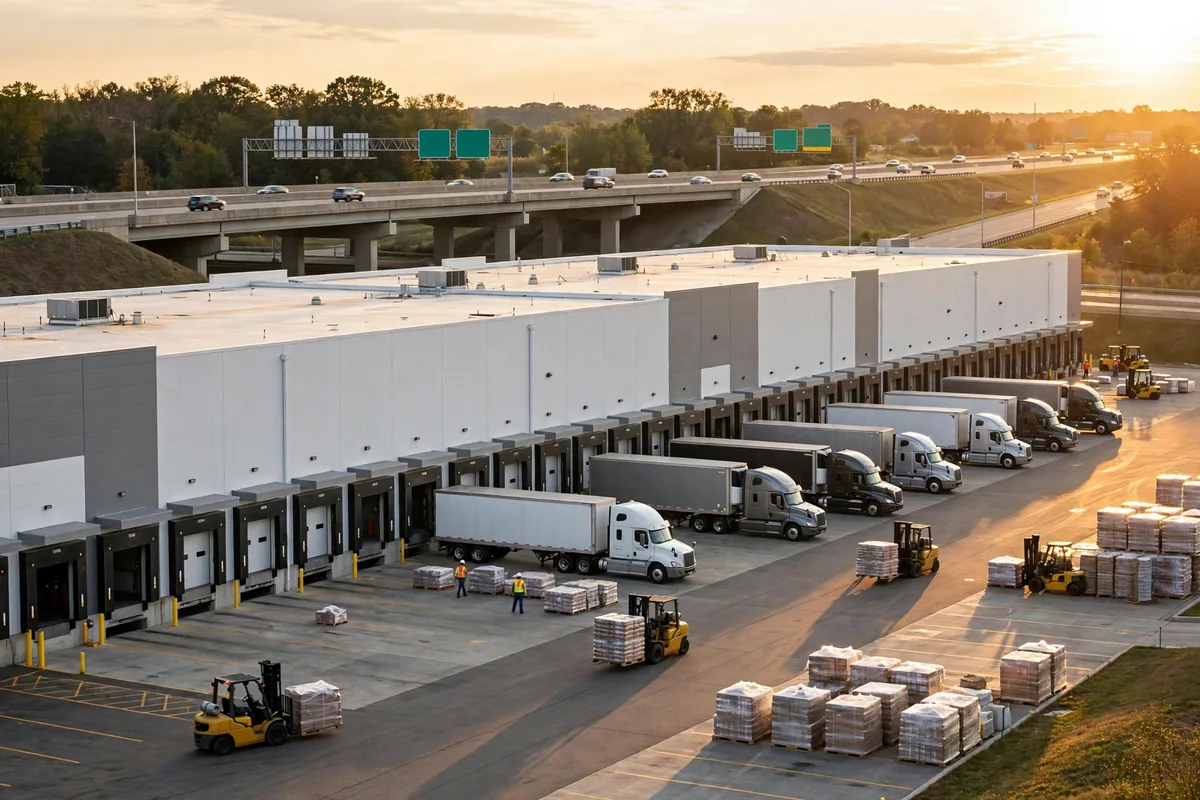
Let me be honest up front: our little warehouse cannot afford to burn money like that. When I first looked seriously at the Argentina warehouse market, I went in thinking I would find a big warehouse, drop my stock there, and be done. After a round of quotes, my enthusiasm cooled fast. The price sheets looked polished, but once you added the minimum rented area, the minimum monthly spend, and the system onboarding fees, a small seller's volume did not even reach the door. That was when I learned the rule for Argentina: do not pick the biggest warehouse. Pick the one that matches your volume.
Our Small-Warehouse Problem Is Invisible to Big Warehouses
I know a seller of small home goods who shipped from China to Argentina and rented a slice of a large warehouse near Buenos Aires. It sounded ideal. In practice, it was all friction. Inbound receiving had to queue behind big clients, and his small-batch orders were processed after theirs. Worse was the invoice: storage, handling, labeling, and returns processing each billed separately, and reconciling the monthly statement took half a day. His lasting feeling was not that his products would not sell. It was that his stock was sitting in a warehouse where he felt like an outsider, with no real say over anything.
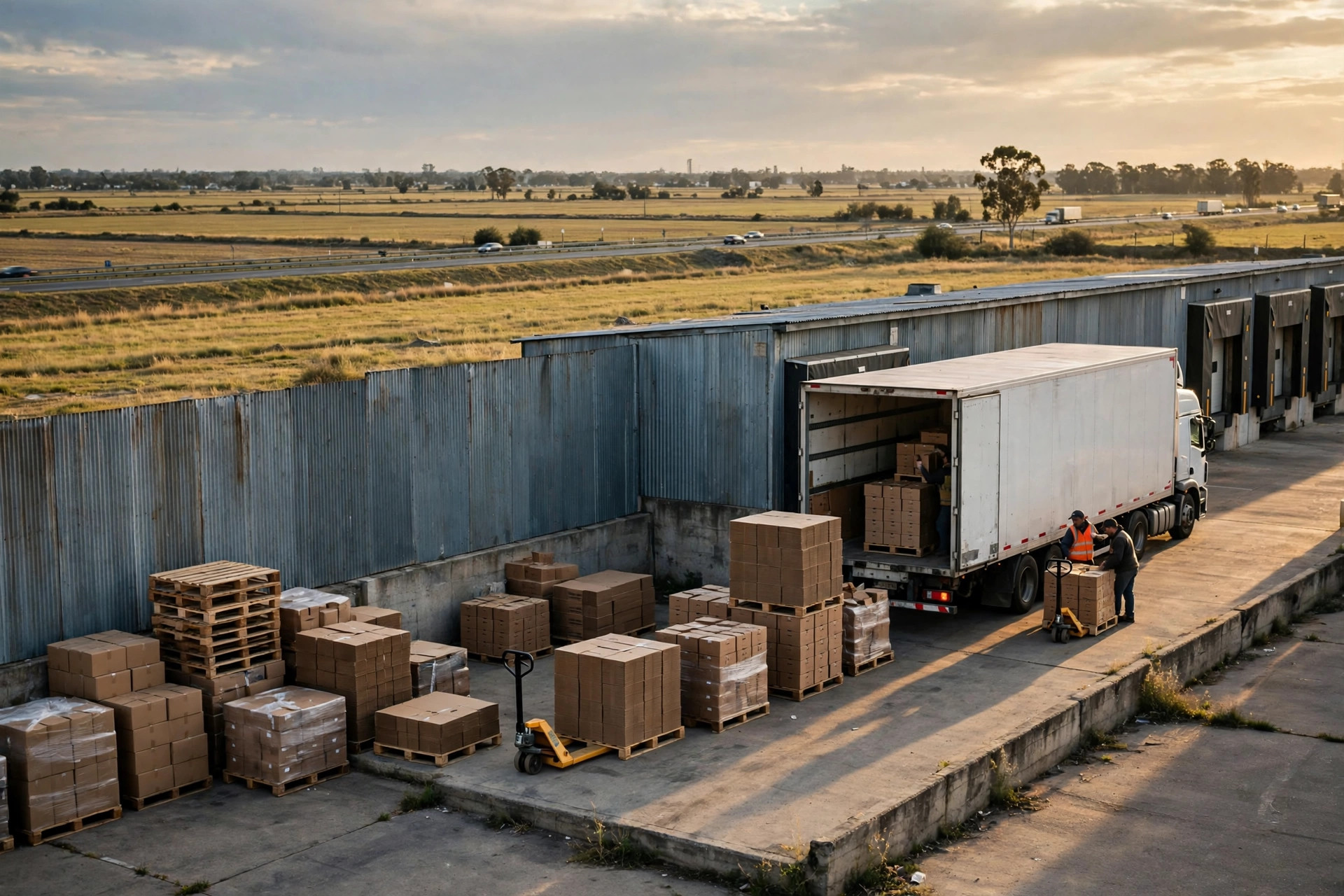
Another friend took the opposite route: shared space in a small warehouse in an industrial area around Buenos Aires. The place was modest, nothing fancy, but the owner would talk directly, and receiving, labeling, and local dispatch could all be worked out in conversation. Before peak season, he sent stock a week early, the warehouse split it by sales channel, local couriers handled last-mile delivery, and returns came back to the same small site for inspection. His volume was not large either, yet because the warehouse was small and communication was fast, nothing blew up. Comparing the two, I keep coming back to the same point: for a small shipper, communication and flexibility matter more than a famous warehouse name.
In the Argentina Warehouse Market, Location Comes Before Rent
The location logic around Buenos Aires is straightforward. Sites near the port and airport make import clearance and receiving easier, but rents and truck traffic pressure run higher. Sites near city consumers shorten last-mile delivery, but space and room to expand are limited. Industrial areas further out offer friendlier rents and more space, at the cost of a longer leg on every order. No location wins on every dimension. It depends on your rhythm: bulk imports that sell slowly suit a site further out, while same-day city delivery pushes you closer to town.
Do not judge a site by map distance alone. Drive the real route. Is the road jammed at commuting hours, are there truck restrictions into the industrial park, and can a truck actually stop at the dock to unload? None of that shows up on a quote. Before signing, I suggest small sellers ask the warehouse three questions: how many days from arrival to stocked and ready, who inspects returns and to what standard, and which local carriers handle last-mile delivery. Those three answers predict your daily life better than the rent per square meter.
How a Small Owner Breaks Down Argentina Warehouse Costs
Big-company cost models are useless to us. We small owners use one rule: separate what you pay every month no matter what from what you pay only when an order moves. Rent and minimums are fixed. Receiving, picking, packing, courier fees, and returns handling are variable. Many small sellers get hurt by staring at rent alone and missing the variable side. A warehouse with cheap rent can charge high per-piece handling, and once your volume rises, the total bill ends up higher.
| Warehouse type | Fixed cost feel | Variable cost feel | Where small shippers usually lose |
|---|---|---|---|
| Large third-party warehouse | High threshold, large minimum area | Detailed price list, many surcharges | Volume below the threshold, statements hard to reconcile |
| Small shared warehouse | Low threshold, negotiable | Negotiated, flexible | Service standards vary, needs hands-on oversight |
| Own small unit plus outsourced delivery | Rent under control | Delivery and labor on your shoulders | Peak season overwhelms a tiny team |
| Shared warehouse billed per order | Almost no fixed threshold | Higher cost per order | Once volume grows, the model stops making sense |
There is no universal answer in this table, only a stage-appropriate one. When you are starting out and volume is unstable, shared space and per-order billing are friendlier. Once volume stabilizes, you have leverage to negotiate fixed space. The mistake to avoid is signing a long contract with a big warehouse before your volume exists, and then being stuck either way.
Customs and Last-Mile Delivery Are One Chain, Not Two Jobs
Many sellers from China treat customs as something that happens before Argentina, and warehousing as something that happens after, leaving the middle stretch unmanaged. In practice, customs documents, tax treatment, and receiving schedules are connected: incomplete documents keep goods waiting at the port, receiving plans slip, and if the tax treatment was never aligned between the warehouse and the freight forwarder, an unexplained charge appears on the books. My low-tech fix is to put the forwarder, the customs broker, and the warehouse in one group chat before shipping, and align the receiving date, the document checklist, and the contact for exceptions. Tax and policy details should follow the latest local rules; do not rely on old forum posts.
Last-mile delivery needs the same early conversation. Argentina's local delivery network does not behave like China's: delivery times and success rates outside the capital region should be asked about separately, not assumed from capital-city promises. Where returns go, whether returned goods can be resold after inspection, and who pays for that inspection should all be written down before cooperation starts. A small owner has nobody to absorb the loss, so anything missing from the agreement ends up on your bill.
The Counterintuitive Call
A big warehouse does not automatically mean reliable, and a small warehouse does not automatically mean second-rate. In the Argentina warehouse market, what usually decides your experience is not floor area, but whether the warehouse will adjust its process for a small client. A small warehouse that gives you a dedicated receiving window, splits stock by your channels, and sends a photo when a return arrives is more useful than a rigid big warehouse. On the flip side, the cheapest rent is not always the cheapest outcome: a site far from your customers, with per-piece fees stacking up, can cost more per order.
Small warehouses have their own way of surviving. My suggestion is to run shared or per-order space for one quarter first, learn your real volume, return rate, and delivery times, and only then decide on a long-term space. If it works, the warehouse will be happy to offer better terms. If it does not, you are not tied to a contract. Small volume is not a flaw. Small volume pretending to be a big operation is.
By Xiao Ma, Small Warehouse Owner