Here is my verdict up front: Angola Lobito Corridor warehouse logistics is worth taking seriously, but not worth betting the whole shipment on yet. It is the Central African Copperbelt's shortest route to the Atlantic, and in August 2024 the first copper from the Democratic Republic of Congo traveled the full corridor and reached the United States. But capacity is still small, and if you want it to carry serious volume, think in years, not months.
Put simply, this story has two sides. The speed is real, and so are the gaps. Whether it fits your cargo comes down to whether you can afford to wait for a corridor that is still growing up.
Angola Lobito Corridor warehouse logistics: what is actually new
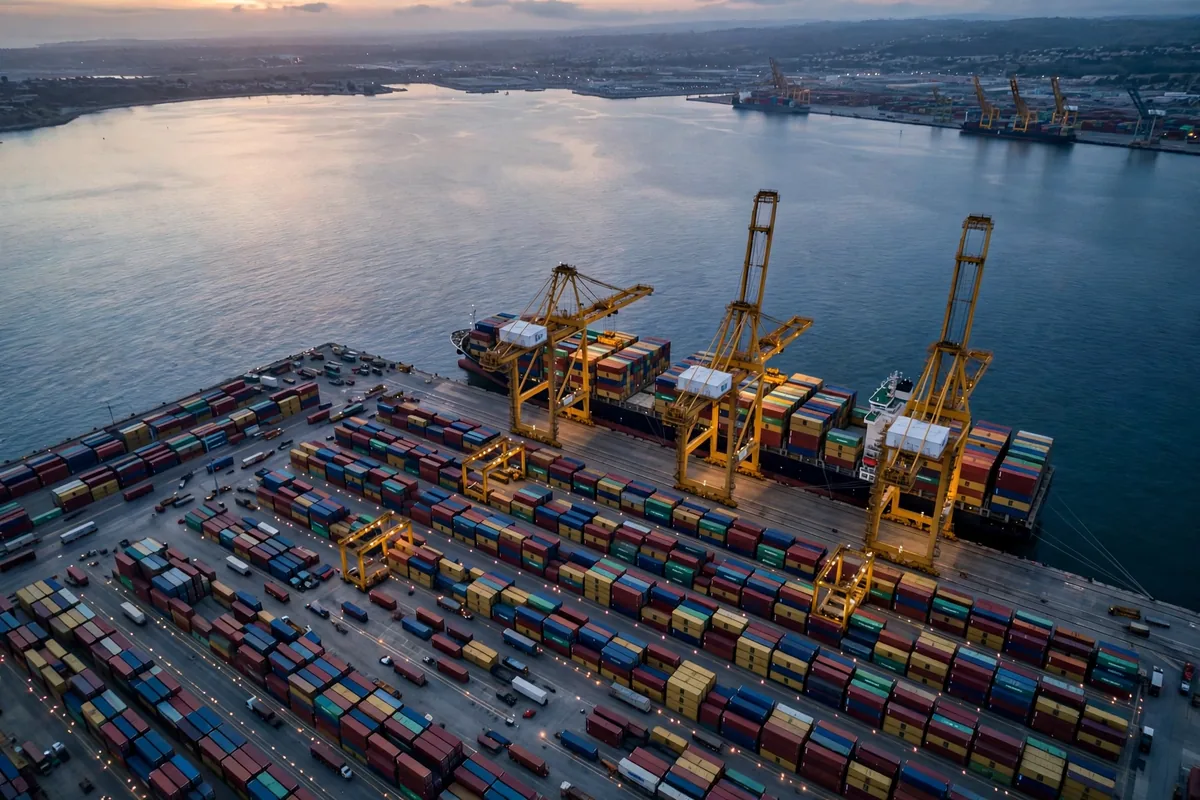
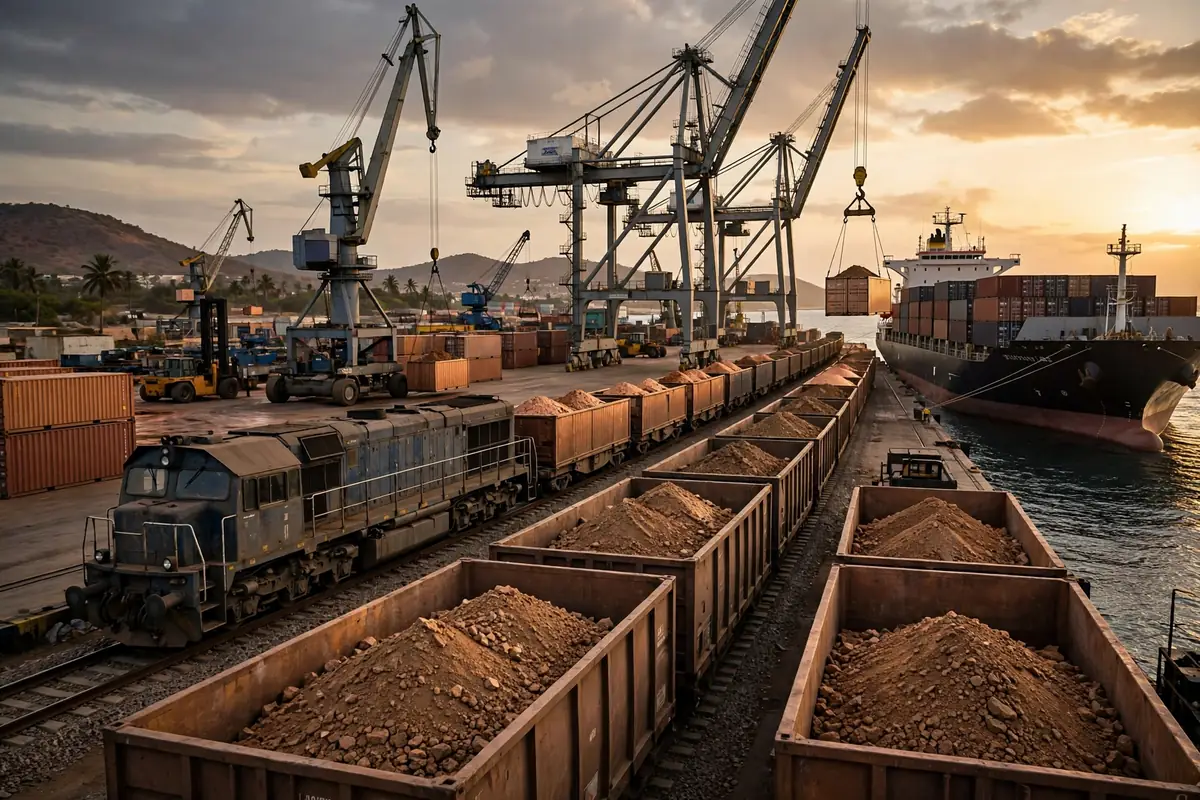
First, let me lay out what this line is. The spine of the corridor is the Benguela Railway, running from the Port of Lobito on Angola's Atlantic coast, across Angola's central highlands, all the way east to the DRC border: roughly 1,300 kilometers. From there it connects onward through Kolwezi and Lubumbashi in the DRC, reaching Zambia's Copperbelt. Cargo loads at the mines, rides the train west, and goes straight onto a ship at Lobito.
This is not a new railway. It was first built in the early twentieth century as a colonial line, then wrecked during Angola's civil war and left derelict for decades. Between 2004 and 2014, a 1.2 billion US dollar oil-for-infrastructure loan from China helped rebuild it, and the line reopened to the border town of Luau in 2015. In 2022, Angola handed a 30-year freight concession for its section to a consortium of a commodity trader, a construction group, and a railway operator, and the G7 and the European Union both put the corridor into their infrastructure programs. August 2024, when the first copper made the full journey to the United States, was the moment the corridor came back to life.
What is new is the direction. For decades, Copperbelt cargo leaving Africa has had two old roads: more than two thousand kilometers east by truck to Dar es Salaam in Tanzania, or more than two thousand kilometers south to Durban in South Africa. Both mean long-haul trucking, border queues, and rainy seasons that make schedules a joke. Lobito runs the other way: west, one railway straight to the Atlantic, the shortest route from the Copperbelt to any African port. Flip the direction and the whole warehousing logic flips with it. Instead of pushing cargo east or south, you stage it along the rail line: pre-positioning yards and container yards at the mining end, bonded and load-out warehousing at the port, and intermediate nodes scheduled around train departures instead of truck fleets.
Two sides of the same corridor
I have seen too many "new corridor" stories. They all start with excitement. They do not all end the same way. Lobito's advantage is genuine: rail straight to the port, fewer borders, fewer transloadings, transit measured in weeks rather than months. For copper, where the cargo is valuable and the vessel schedule matters, time is money.
But the gaps need saying out loud. First, capacity is still climbing. The line carried less than 200,000 tonnes in 2024, with projected capacity of 750,000 tonnes by 2027. The numbers are moving in the right direction, but next to a mature mining railway it is still a small operation. If your volume is large, the first question is blunt: can you even get space?
Second, the feeder link is not built yet. The planned greenfield spur from Luacano in Zambia to Chingola, roughly 800 kilometers, is the piece that plugs Zambia's Copperbelt directly into the corridor, and it is still in planning and development. Until it opens, Zambian cargo reaching Lobito needs an extra leg. Without it, this is still the DRC's corridor more than the whole Copperbelt's corridor.
Third, backhaul. Every mining railway has the same weak spot: loaded trains go out, empty trains come back, and somebody pays for the empty return. For Lobito to work long-term, the return leg has to carry what the interior needs: farm goods, consumer goods, building materials. If the backhaul does not fill up, freight rates cannot come down, and if rates cannot come down, volume cannot grow. It is a chicken-and-egg problem, and it will not be solved in a hurry.
Here is the counterintuitive part: the shortest road to the port is not necessarily the most reliable road today. The old routes are slow, but they are mature: the warehouses, the trucking fleets, the clearing agents, the shipping lines are all already there. The new route is fast, but the chain is still growing. Choosing a route is not choosing a distance. It is choosing whether your cargo makes the vessel on time.
Three checks before you put cargo on Lobito
First, look at cargo value and time sensitivity. High-value, schedule-sensitive cargo like copper and cobalt fits first, because the time saved is worth money. A US mining company has already committed at least 300,000 tonnes of copper a year as anchor volume on this corridor, and that is exactly the calculation behind it. Ordinary bulk cargo that is not time-sensitive can afford to watch from the sidelines.
Second, look at your volume and your slot. Talk to the operator before you decide. Ask for three things in writing: the monthly space they can give you this year, how peak season is prioritized, and what the fallback is when space runs out. If you cannot get a written answer, do not put your main volume on it. Run a small trial shipment first, prove the full chain end to end, and then scale up.
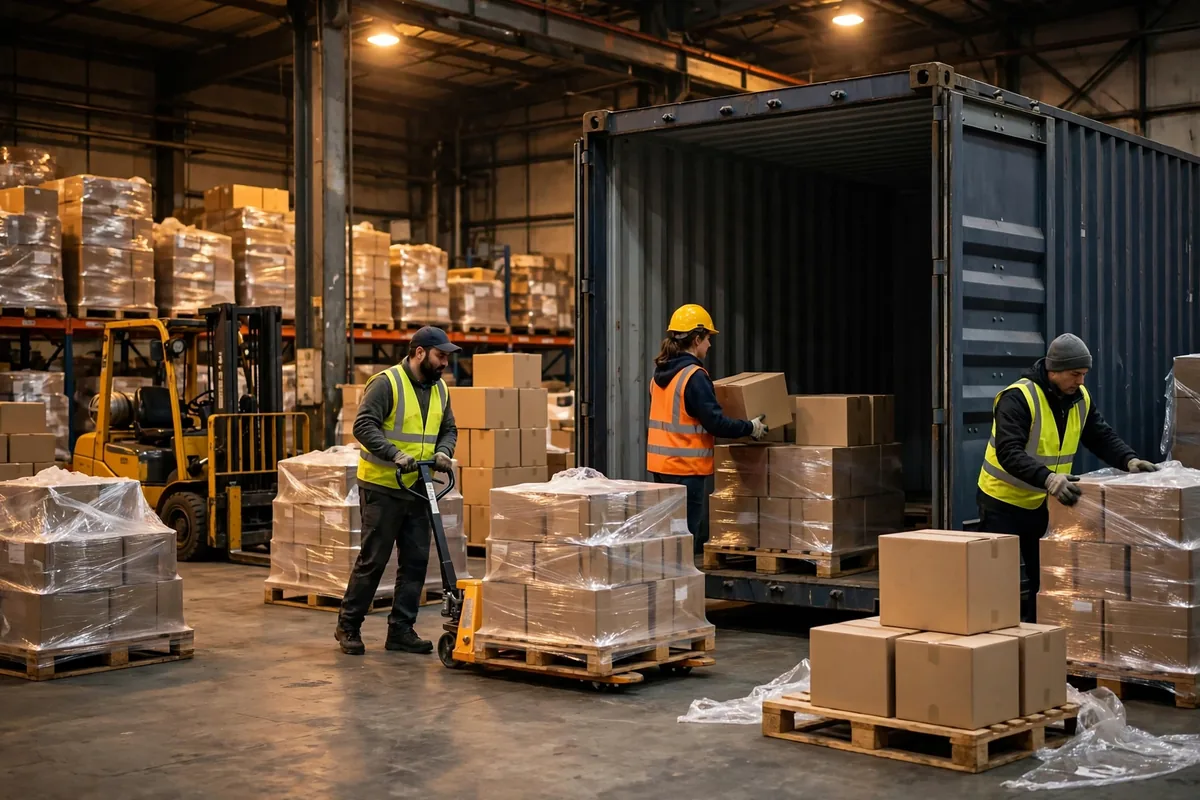
Third, look at how your warehousing is laid out. On Lobito, the warehousing logic has to change with the route: pre-positioning yards and container yards at the mining end, bonded and load-out warehousing at the port end, and intermediate nodes scheduled around train departures rather than truck fleets. If the warehousing plan does not change with the route, the time you save on the train gets handed straight back at the warehouse gate.
So here is the question I would leave you with, and it is the real question behind Angola Lobito Corridor warehouse logistics: can your cargo afford to wait for a corridor that is still growing up? If it can, go talk about space and long-term agreements now, because the early movers usually get the best terms. If it cannot, stay on the old routes for now, but write Lobito into your shipping plan as a live backup. The worst position is neither: the old route never optimized, the new route never prepared, and when peak season hits, neither one can be counted on.
By Lao Mi, Supply Chain Veteran (20 yrs)