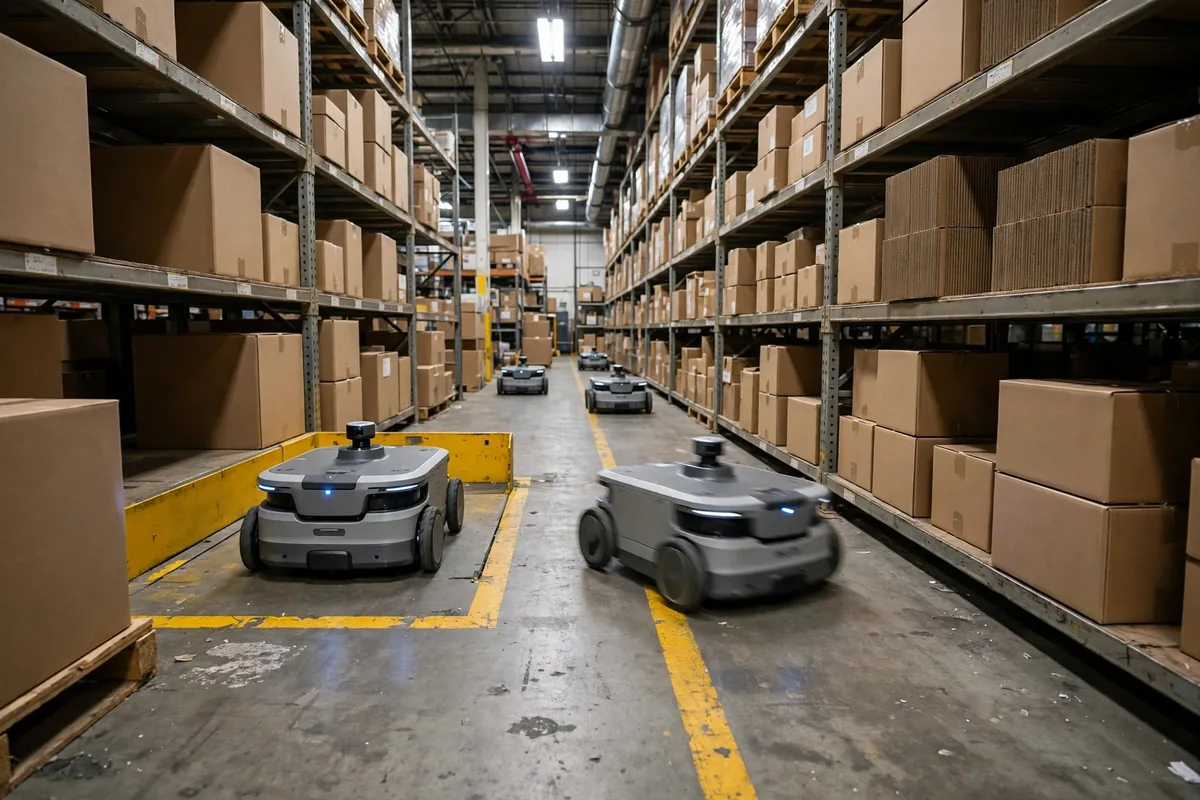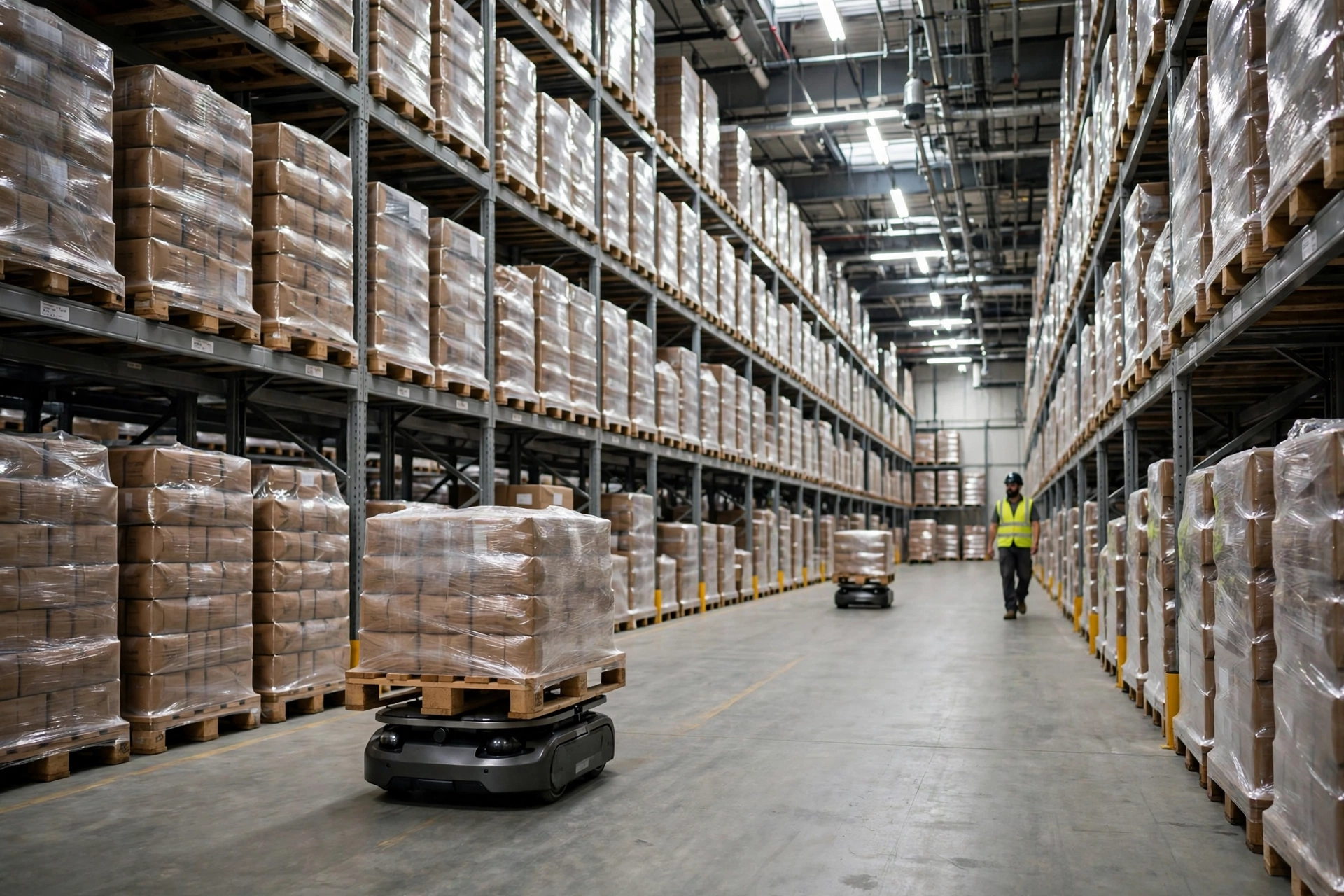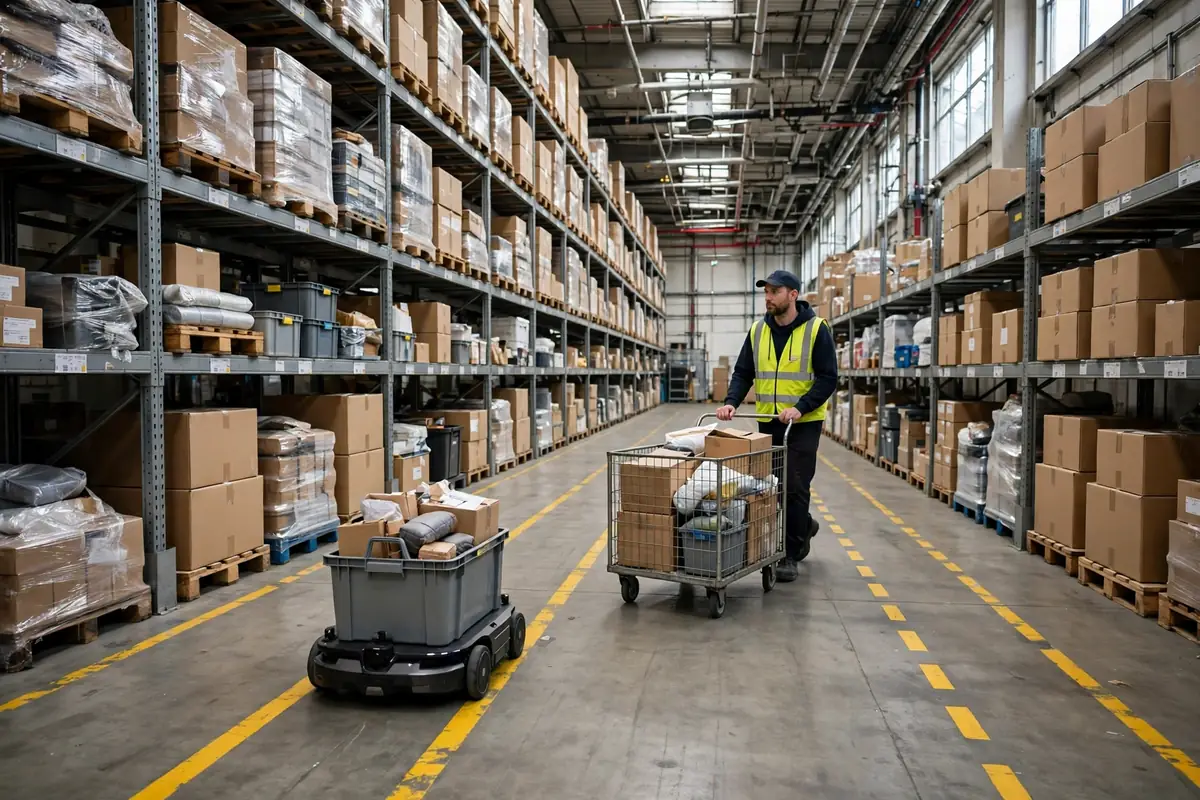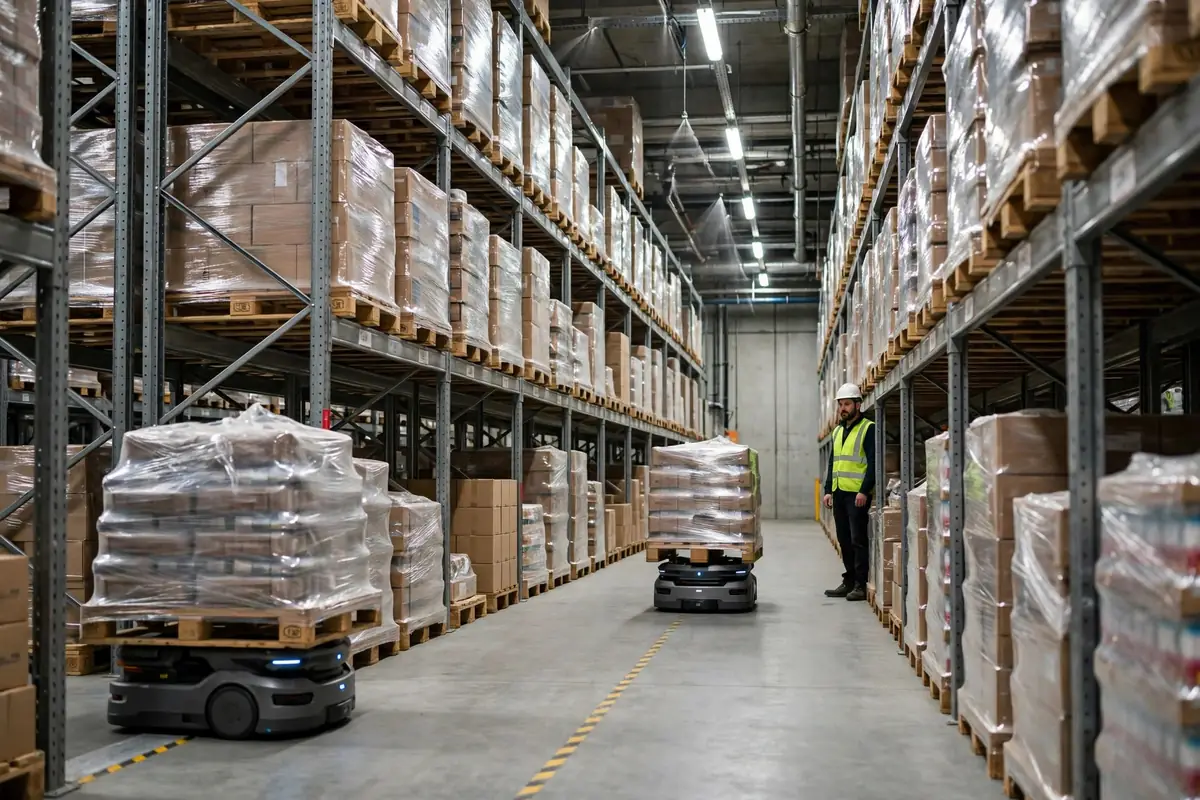
The first rule of AMR deadlock prevention I learned watching a whole fleet freeze in a 1.8-meter aisle. Two AMRs met head-on, each stopped politely to let the other pass, and neither moved. The six robots queued behind them stopped too. The line sat dead for the better part of an hour until someone walked in and drove each robot out by hand. That is an AMR deadlock: two or more robots waiting on each other, nobody moving. The two cases below are illustrative scenarios built from common field situations; the numbers are hypothetical, the lesson is real.
What AMR deadlock prevention actually fixes
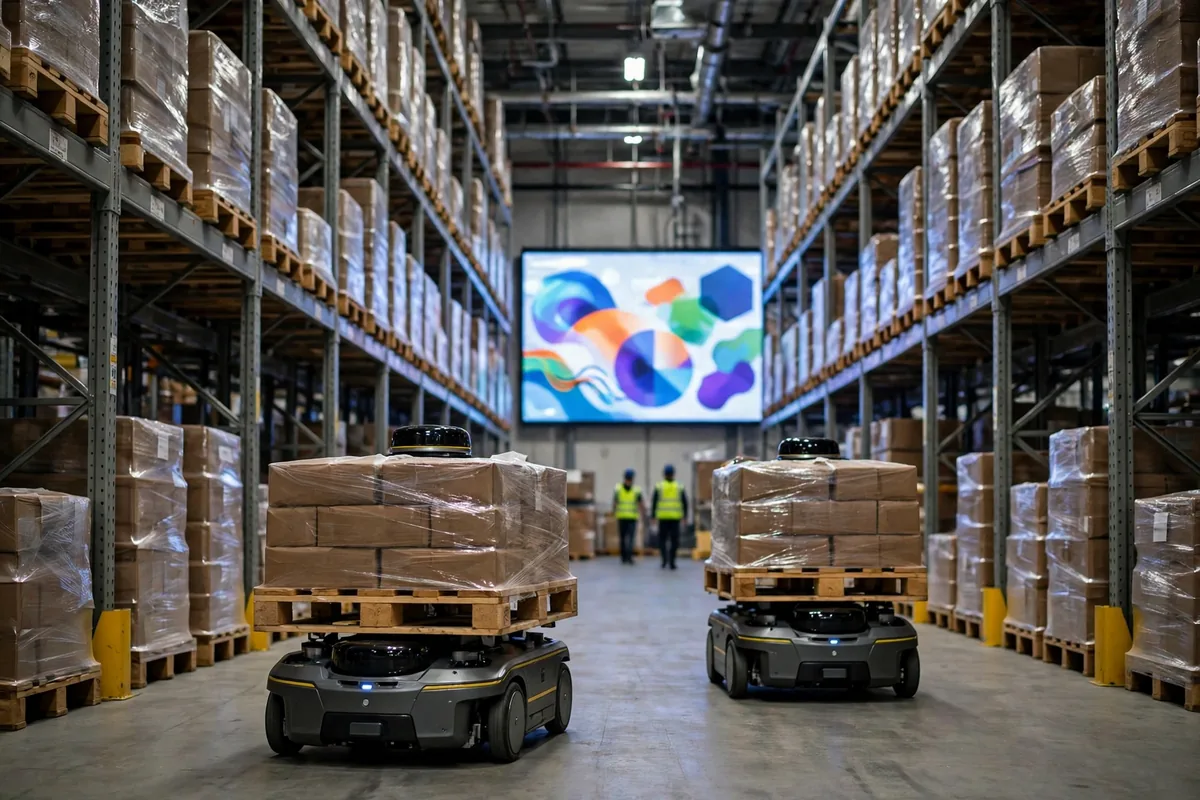
Think of it this way: a deadlock is an intersection with no traffic lights. An AGV runs on a fixed track, like a train — the dispatcher sets the timetable and nothing meets head-on. An AMR has no fixed path. It navigates freely, which is like releasing a group of self-driving cars into the same parking lot without giving them any road rules. Two robots enter a passage that fits only one, each one's obstacle avoidance says "stop and wait for the other," and both wait forever. Published research on multi-AMR traffic management states it plainly: when two or more AMRs enter a narrow passage where only one can pass at the same time, they fall into a deadlock that typically needs a human to clear it.
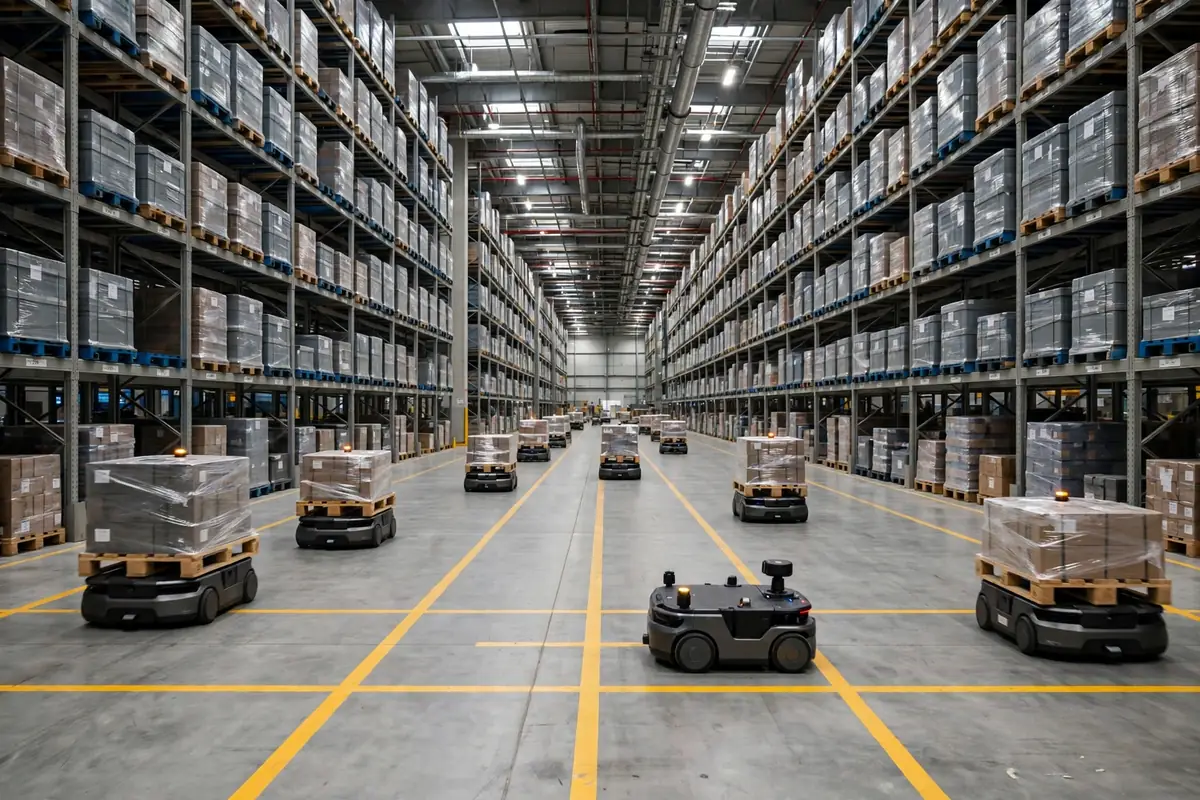
Intersections are worse. Picture four robots arriving from four directions at once, each waiting for the one on its right. The loop closes. Each robot's decision is locally correct, and the fleet as a whole is completely stuck. The bigger the fleet, the more often these loops appear — adding robots without adding rules is just feeding more cars into an already jammed intersection.
One set of numbers is worth memorizing. Take a 600 kg payload AMR such as the MiR600: top speed fully loaded is 2.0 m/s, the standard corridor width for one robot is 1.80 m, and two robots passing need 3.50 m. A 1.8-meter aisle physically fits one robot. Any plan that expects two robots to squeeze past each other in there was wrong from the first sketch. Top speed means nothing when the robot is standing still in a blocked aisle.
Deadlock is not the same as congestion. Congestion is slow; the robots are still moving. Deadlock is stopped; the fleet does not move at all. A second illustrative scenario: the charging area. Several low-battery robots head for two chargers at once down a short lane that fits one robot. The first one docks and charges while the rest can neither get in nor back out, and the whole branch dies with them. You can tell the two apart in the fleet software's waiting-time report: congestion shows every robot's average speed sagging, while a deadlock shows a few robots whose waiting time suddenly hits the ceiling and stays there. If the log says a robot waited twenty minutes without moving a centimeter, that was not traffic. That was a deadlock.
AMR deadlock prevention in practice: one-way aisles first
There are three approaches, and they solve the problem in completely different ways. Picking the wrong one is money down the drain.
| Approach | How it works | What it costs you | Best for |
|---|---|---|---|
| One-way loops | Each narrow aisle allows one direction only; return trips use a different aisle | Longer routes, more travel distance | Warehouses with a grid of aisles to loop through |
| Zone reservation | Only one robot may enter the narrow aisle at a time; the rest wait outside | Queuing at the entrance, tens of seconds per wait | Warehouses with a single aisle and no way around |
| Priority plus timeout escape | Loaded or urgent robots go first; after a set timeout, one robot reverses out | Needs fleet software support and real tuning time | Fleets with many robots and mixed task types |
One-way loops are the crudest option and the most reliable. Think of city one-way streets: they look like a detour, but the chance of a jam drops to near zero. Zone reservation works like a traffic light at a one-lane bridge — one vehicle crosses at a time, and the tens of seconds you wait are cheap compared with a whole fleet standing still. Priority plus timeout sounds the smartest and is the hardest to tune: set the timeout too short and robots keep yielding to each other; set it too long and the deadlock sits there for minutes before anything moves.
Here I have to call out a fake requirement I keep hearing: vendors who lead with "AI smart dispatch" and promise the algorithm will learn to avoid conflicts on its own. Don't buy it. Without one-way rules and reserved zones underneath, even the cleverest algorithm is gambling at an intersection with no traffic lights. Draw the one-way aisles first, mark the exclusive zones, then talk about intelligence. Get the order backwards and the money is wasted.
The choice among the three is a trade-off, plain and simple. One-way loops trade extra travel for no deadlocks. Zone reservation trades entrance waiting for no standstills. Priority rules trade tuning time for peak-hour throughput. There is no free lunch; pick the cost you can most afford.
When you roll this out, don't try to change everything at once. Start with a pilot: pick the worst aisle, mark the one-way direction in chalk, set that aisle as an exclusive zone in the scheduler, and run it for a week. AMR deadlock prevention done this way costs almost nothing — chalk and seven days — and the numbers tell you whether to roll it out or try a different aisle. If the standstill minutes fall, scale it up; if they don't, the jam lives somewhere else. One thing people forget: in aisles shared with humans, the one-way rule has to cover people too. Forklift drivers and pickers need routes that run opposite to the robots, or the robots stop deadlocking and the humans start instead.
Is it worth the money? Watch one number
Forget the demo video where the robots glide around smoothly. Acceptance testing comes down to one number: minutes of deadlock standstill per week. Here is a hypothetical example: a fleet deadlocks 3 times a day, 15 minutes each, which adds up to 315 minutes a week — more than five hours. At 40 pallets moved per hour (assumed), that is 210 pallets that never left the building. In peak season, 200-plus pallets a day means real penalties and real overtime.
Putting one-way aisles and zone reservation in place mostly costs new floor markings and a few scheduling parameters. In a hypothetical rollout, two weeks of work can push weekly standstill under 30 minutes. You don't need a finance model for this one: if the standstill minutes come down, the rules paid for themselves. If they don't, the most expensive robot on the market will still sit there blocked. That is what AMR deadlock prevention buys you — not faster robots, but robots that never stop.
So is it worth the money? Watch that one number — weekly AMR deadlock standstill minutes. Write it down before you change a single rule.
By Da Liu, Automation Engineer