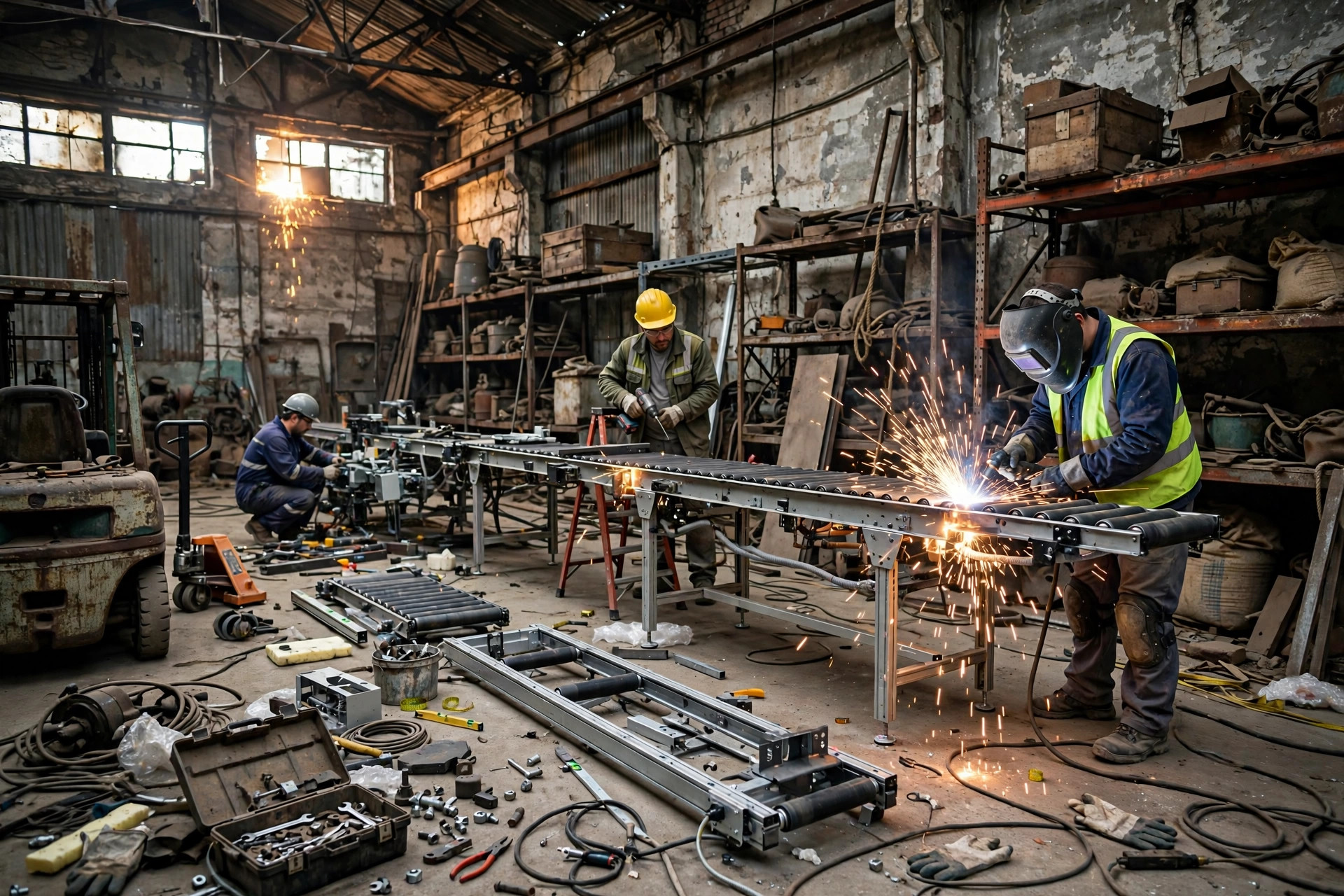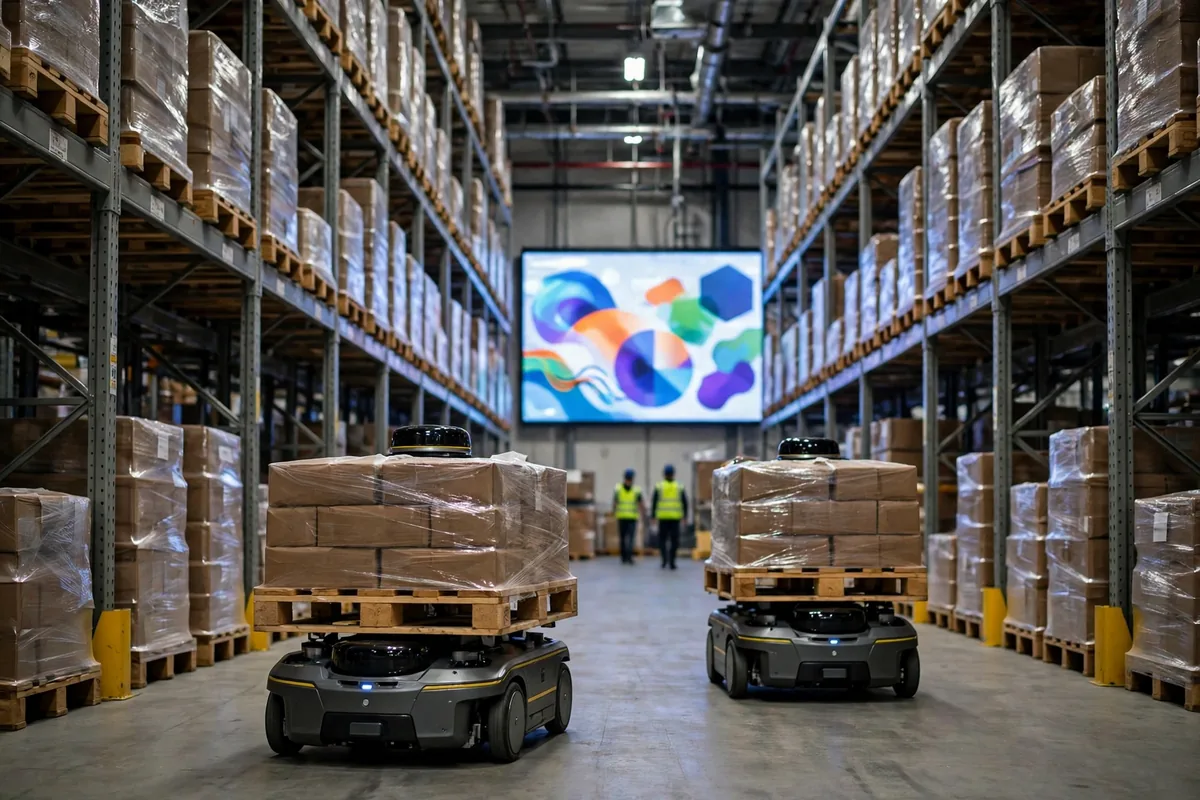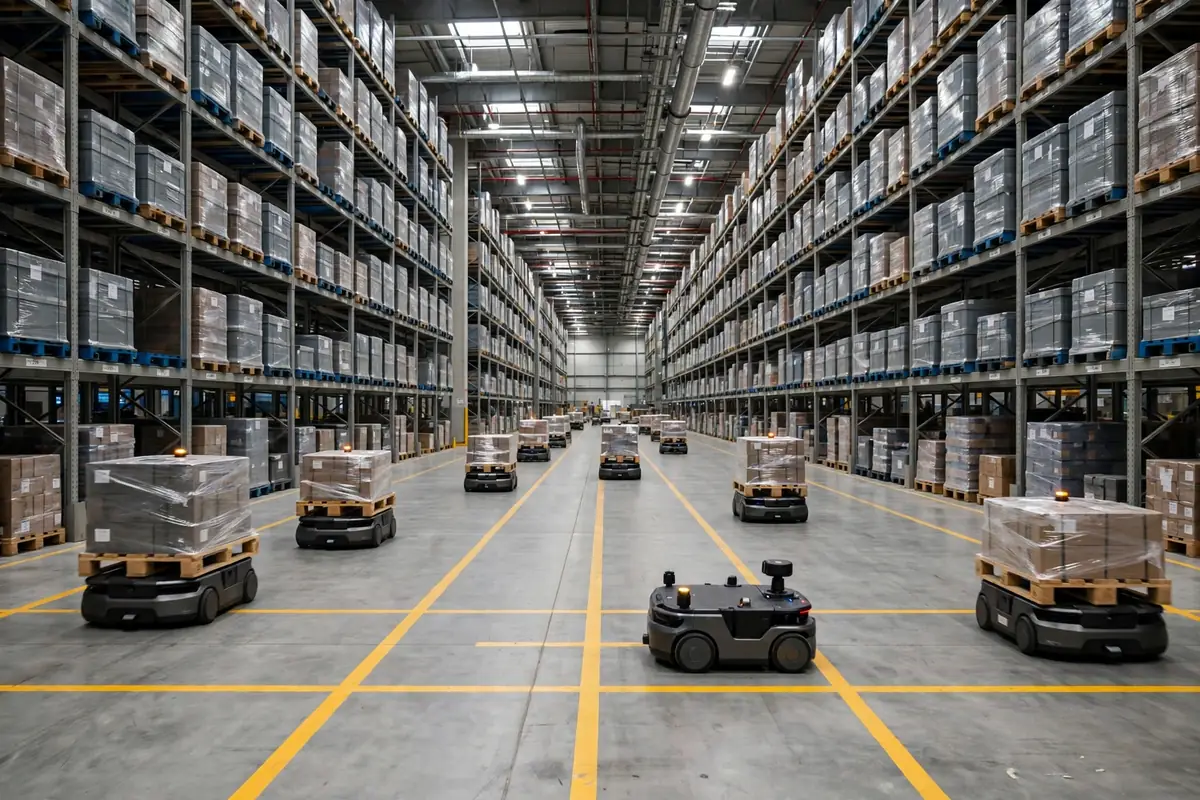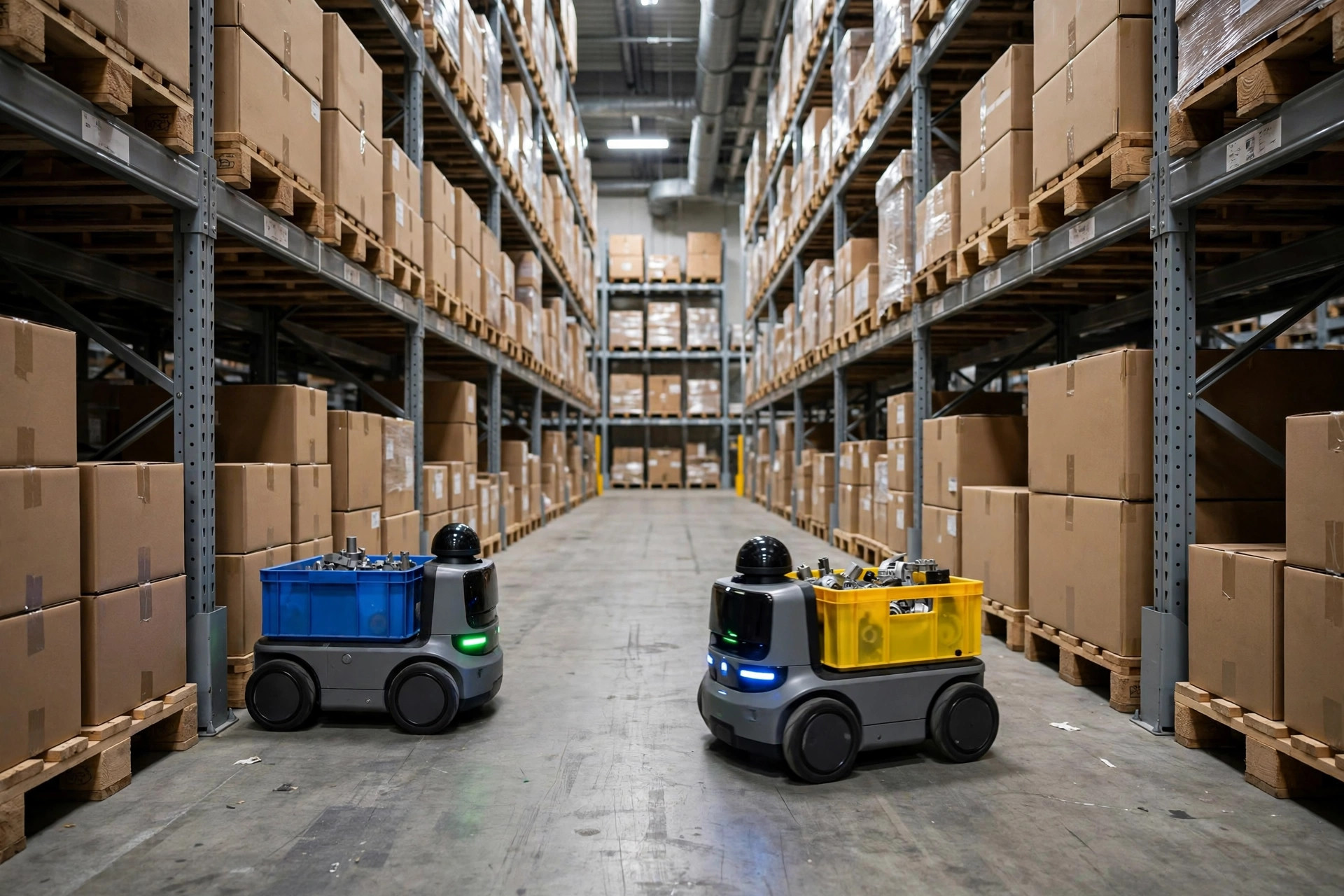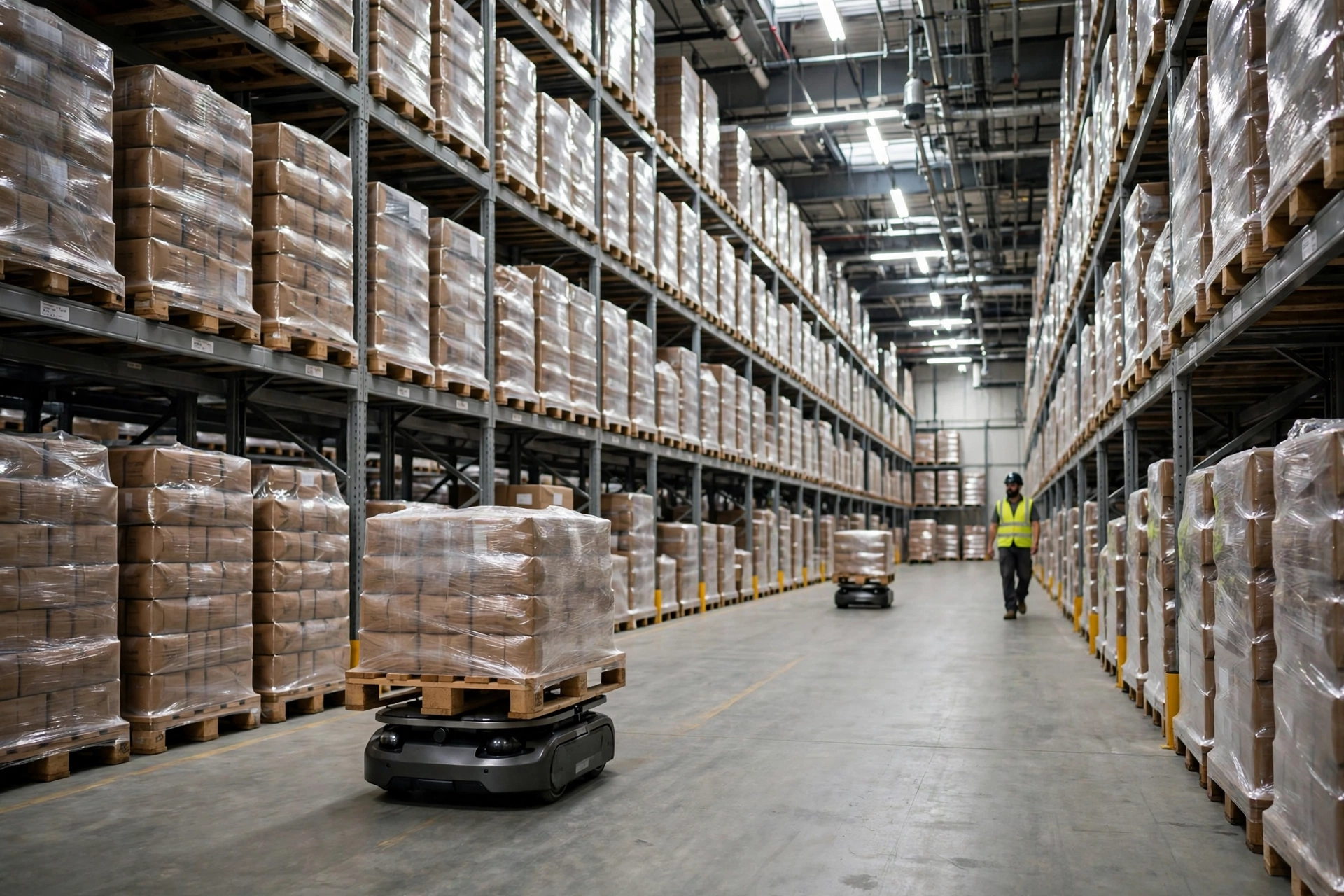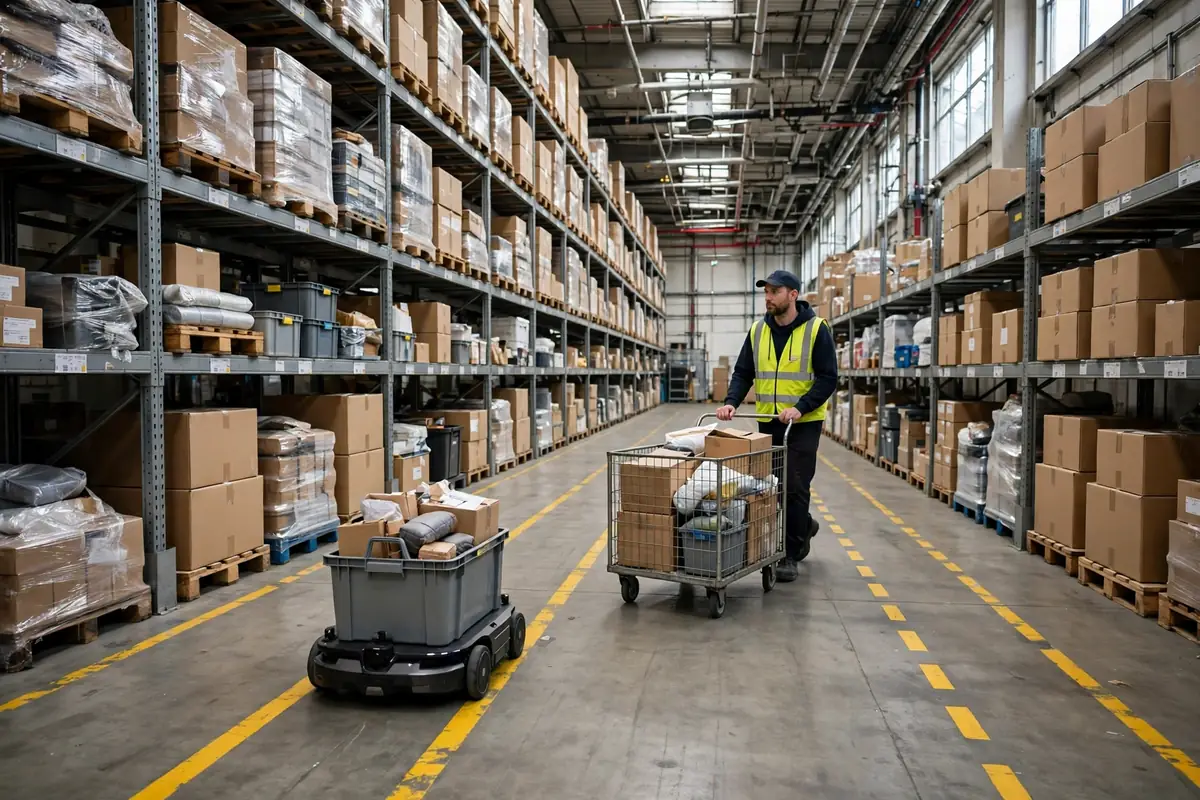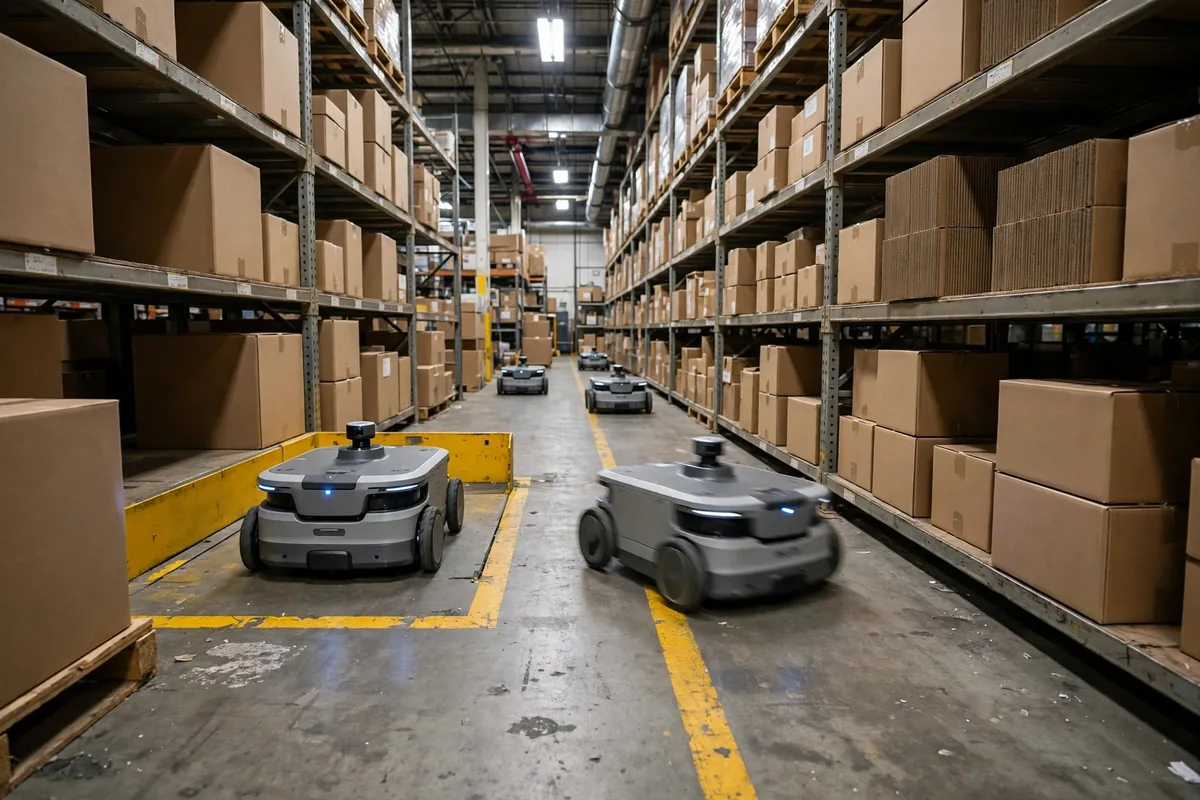
Tuesday, 2 a.m. — a textbook case of AMR deadlock. A warehouse in eastern China, twelve AMRs on the night shift. The fleet management screen showed all twelve vehicles stopped — not broken, not out of battery, just stopped, nose to nose in a 1.8-metre aisle, each one politely waiting for the other to move first. Nobody moved for forty minutes. The shift lead restarted the system twice before someone finally walked in with a handheld terminal and drove one robot out by hand. That night the fleet's uptime was 61%. The robots were fine. The traffic rules were the problem.
If you run more than a handful of AMRs, deadlock is not a freak accident. It is a predictable outcome of geometry plus bad rules. This is a story about why it happens and what actually fixes it.
How AMR Deadlock Happens in a Narrow Aisle
Deadlock needs four conditions at once, and you can understand it as four cars arriving at a one-lane bridge from both ends at the same time. First, mutual exclusion: the aisle is only wide enough for one vehicle, so two robots cannot pass each other. Second, hold and wait: each robot holds the stretch of aisle it is on while waiting for the stretch ahead. Third, no preemption: no robot can be shoved aside — a loaded AMR cannot simply be lifted out of the way. Fourth, circular wait: A waits for B, B waits for C, C waits for A. Break any one of the four and the deadlock cannot form.
Most people blame the robots. The robots are doing exactly what they were told: go to the pick face by the shortest path, stop if something is in front of you, never hit anything. In a narrow aisle, "never hit anything" plus "shortest path" is a recipe for a polite stand-off. I have seen a fleet where two AMRs faced each other for 25 minutes because each one's safety lidar saw the other as an obstacle, and the obstacle never moved. The system logged it as "waiting". It was not waiting. It was deadlocked.
The second classic scene is the cross-aisle junction. Four robots arrive from four directions, each one reserves the junction cell it needs next, and the four reservations form a ring. Nothing is wrong with any single robot. The system as a whole is stuck. The fix is never "buy smarter robots". The fix is traffic rules.
Four Fixes for Narrow-Aisle Traffic, and What Each One Costs
One-way loops. Turn the aisle network into a ring road: every aisle is one direction, robots circulate instead of meeting head-on. This kills the head-on case outright. The price is travel distance — a robot may drive 30–40% further per trip in a small site (illustrative figure, depends on layout). In the eastern China warehouse above, switching the three main aisles to a one-way loop cut deadlock incidents from roughly a dozen a week to zero, and uptime recovered from the low 80s to around 97% in the following two weeks (scenario figures from that site's own logs, as relayed by the project team). The extra travel was real, but the fleet stopped standing still, so net throughput went up.
Passing bays. Widen the aisle at intervals so two robots can pass. You can think of it as a lay-by on a mountain road. Cheap to build — a couple of rack positions per bay — but it only works if the fleet manager knows where the bays are and sends robots to wait there instead of in the middle of the aisle. Bays without scheduling discipline just move the deadlock twenty metres down the aisle.
Priority rules. Give loaded robots priority over empty ones, or give the robot closer to its destination the right of way. This works well at junctions, where the conflict is brief. It fails in long single-lane aisles, because priority does not help when the lower-priority robot has nowhere to reverse to. Priority is a junction tool, not an aisle tool.
Zone scheduling. Divide the warehouse into zones and allow only a fixed number of robots in each zone at a time — one robot per narrow aisle, for example. This is the most reliable fix and the most expensive in throughput terms, because it caps how many robots can work in parallel. Use it where the aisles are truly narrow and the cost of a stand-off is high, such as aisles feeding a packing line that cannot wait.
The honest answer is that most sites end up combining them: one-way loops for the main aisles, passing bays where the building allows, priority at junctions, and zone caps only in the worst bottleneck aisle. Any vendor who tells you one switch in the software solves deadlock is selling you a pseudo-solution. Ask them which of the four conditions their switch breaks. If they cannot answer, walk away.
Aisle Width vs Fleet Size: Where the Line Sits
| Aisle clear width | Fleet size | What works |
|---|---|---|
| Under 2.0 m, single lane | Up to 6 AMRs | One-way loop mandatory; zone cap of 1 per aisle |
| Under 2.0 m, single lane | 7–15 AMRs | One-way loop + passing bays every 15–20 m |
| 2.0–2.5 m | Up to 12 AMRs | Two-way with passing bays + junction priority |
| 2.0–2.5 m | 13–25 AMRs | One-way loop + zone scheduling in the busiest aisle |
| Over 2.5 m | Any size in this range | Two-way with junction priority; watch the junctions, not the aisles |
Treat this table as a starting point, not a standard — your robot's width, turning radius and safety stopping distance move the lines. A 1.2-metre-wide AMR with a 0.5-metre safety buffer needs a very different aisle from a 0.8-metre unit. Measure your own vehicles, then read the table. The most common mistake I see is buying the robots first and measuring the aisles second.
The Maintenance Traps That Bring AMR Deadlock Back
Fixing deadlock once is not the end of it. Three things quietly undo the fix. First, someone adds two more robots for peak season without re-checking the zone caps, and the aisle that held six now holds eight. Second, a racking change narrows a passing bay by half a metre and nobody tells the fleet team. Third, a software update resets the priority rules to defaults. I have seen all three in the same quarter at one auto-parts warehouse: a cross-aisle junction that had been clean for a year started locking up every afternoon, and the cause was a new rack row that turned a two-way cross aisle into a funnel.
So put three checks on a monthly list: count the robots actually running against the zone caps, walk the passing bays and measure them, and after every software update, run a deliberate head-on test — send two robots into the same aisle from opposite ends and watch what happens. A five-minute test beats a 2 a.m. phone call.
Deadlock is not a robot problem. It is a traffic problem, and traffic problems are solved with rules, geometry and discipline — in that order. Get the rules right and the fleet keeps moving.
Is the money worth it? Look at one number: fleet uptime after the fix. If it is not above 95% on a normal week, your traffic rules are still the bottleneck, not your robots.
By Da Liu, Automation Engineer