Start with the physics, because the physics does not negotiate. An amr charging strategy warehouse decision is not really about chargers. It is about how much downtime you schedule, where you schedule it, and what you pay to avoid it. Think of every AMR as a battery that happens to move boxes. Working is discharging. Charging is stopped work. Battery swap, automatic dock charging, and opportunity charging are simply three different ways of arranging that stopped work, and none of them is universally better. Each one matches a different wave pattern, and picking the wrong match is expensive in a way that demo days never show you.
In October 2023 I walked a forty-plus robot e-commerce site in North Rhine-Westphalia, Germany. The money shift was the night shift, roughly ten in the evening to four in the morning. The integrator had sized the charging plan around the daytime demo rhythm, with robots returning to docks in rotation. When the night peak hit, robots began peeling off to charge in the middle of the rush, pick stations started starving for work, and the shift lead ended up on the phone with the vendor at one in the morning. The robots were fine. The charging schedule collided head-on with the wave curve. That collision is the whole subject of this article.
The amr charging strategy warehouse options, in plain terms
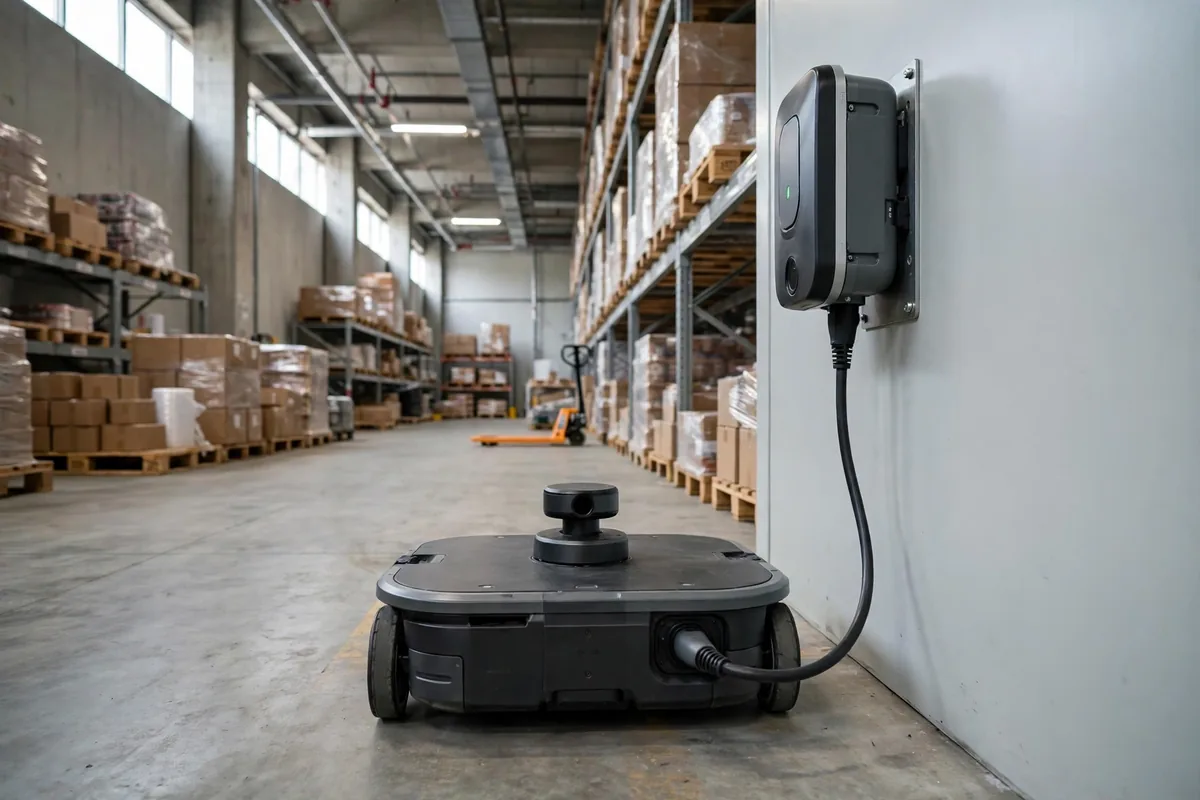
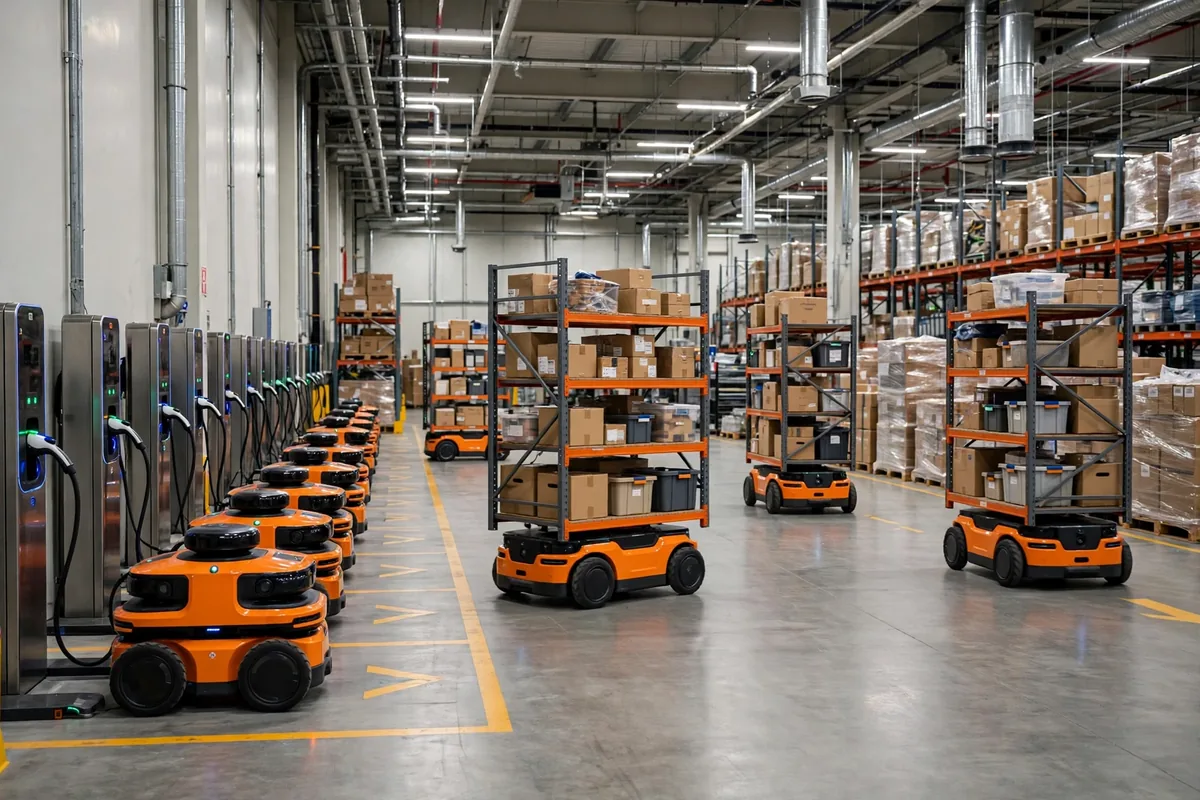
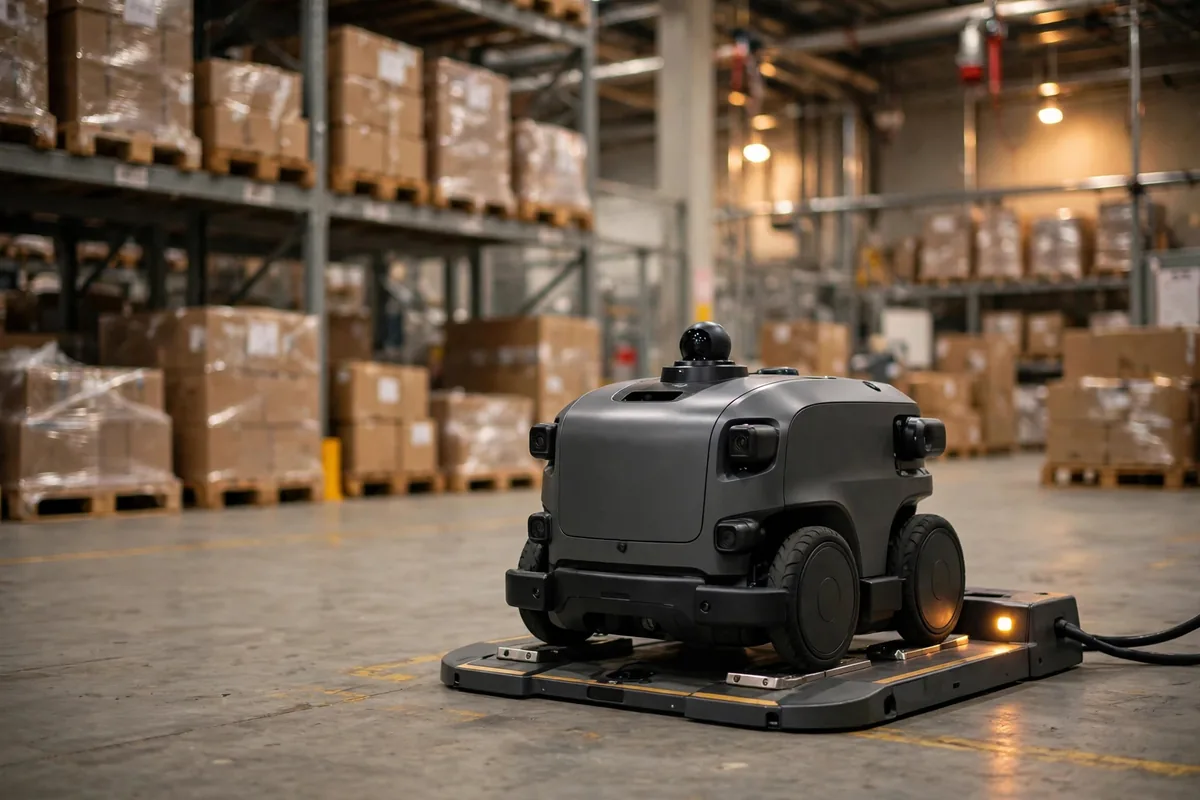
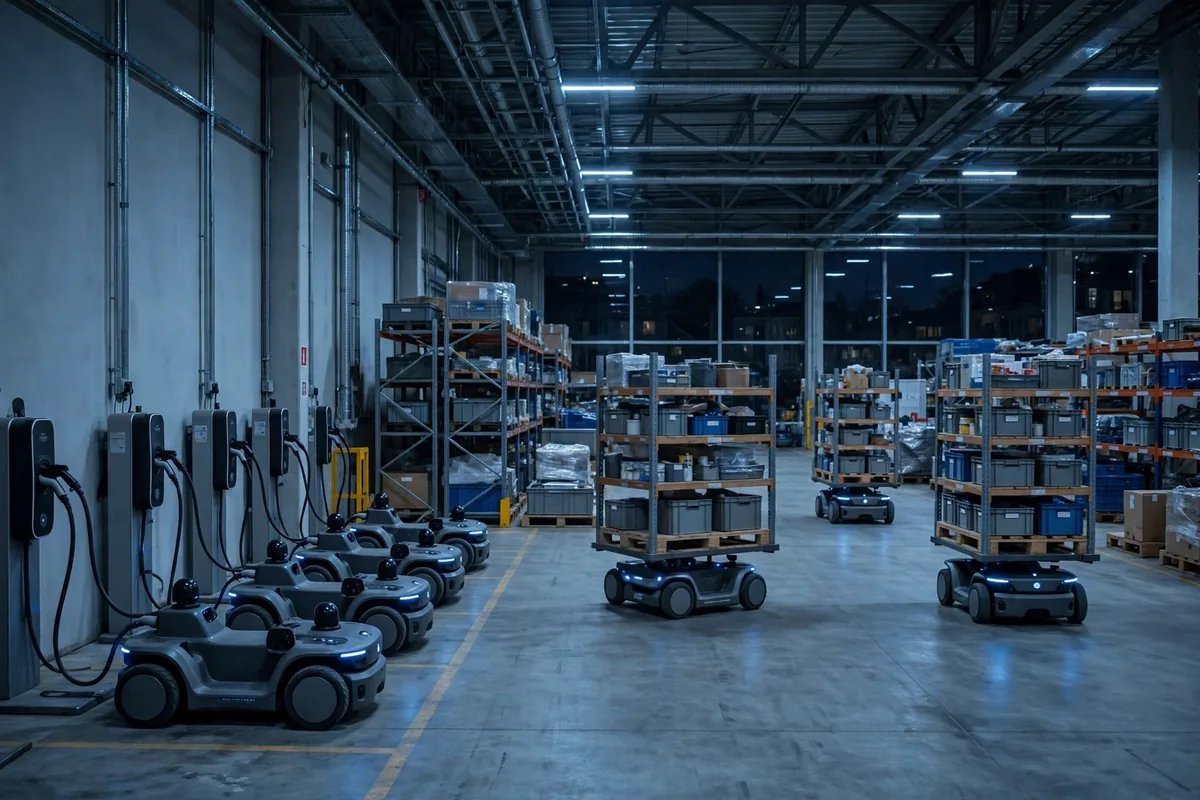
Battery swap means a depleted pack comes out and a full one goes in, by a person or a swap station, in minutes. The robot barely stops; the battery does the waiting in a cabinet. You pay for that with a pool of spare packs, plus someone owning rotation, inspection, and end-of-life disposal. Automatic dock charging is the hands-off option: the robot drives itself to a dock, couples, charges, and returns when the scheduler releases it. Nobody touches anything. The cost is capacity. A robot on a dock is a hole in your fleet, and you fill that hole by buying more robots. Opportunity charging is the middle path. The robot sips power during fragments it would waste anyway, waiting for a task release or idling near a station, grazing instead of feasting. Think of a phone topped up in short bursts all day, hovering in the upper half of its range. The price is sophistication: the scheduler has to be genuinely good, and charge points have to be placed on real travel paths, not on a tidy drawing.
Where is the dividing line? My field rule, offered as a framework and not a procurement standard: if your site runs one or two shifts with a real overnight valley, auto-dock is usually enough, because the valley is a free charging window. If you run three shifts with valleys shorter than a couple of hours, you either graze with opportunity charging or you swap. If your peaks are spiky, with promotional days running far above normal volume, swap earns its keep because spare batteries scale peak capacity without buying whole robots. Always validate the specifics against the manufacturer's latest documentation before you sign anything.
A European night shift, run through the numbers
Take that German site as a worked example. The figures are site assumptions for illustration, not any vendor's promise. Fleet of forty robots, a six-hour night peak where you cannot afford to be short. Compare effective robots during the peak, because that, not charge speed, is what the operation feels:
| Strategy | Robots available at peak (est.) | Extra investment | Night labor |
|---|---|---|---|
| Auto-dock | Roughly 80% when charging overlaps the peak | Extra robots to backfill | Near zero |
| Opportunity | Near full fleet, grazing uses fragments | Charge points on paths, scheduler tuning | Near zero |
| Battery swap | Full fleet, swaps take minutes | Spare pack pool plus swap station | One person owning battery rotation |
Procurement meetings obsess over the question "how fast does it charge?" The floor asks a different question: "how many robots do I actually have at 1 a.m.?" That site eventually moved to opportunity charging as the primary pattern and relocated charge points onto the return paths from the pick stations. Night-time station starvation largely disappeared. They bought no robots. They simply converted charging from a block of collective downtime into background grazing. Whether the money is well spent comes down to that single number: available robots during your peak hour.
Now the long game, battery life, because opportunity charging has a reputation it only half deserves. Shallow cycling, grazing in the middle of the charge range, is generally kinder to a pack than repeated deep discharge followed by a full charge, and long storage at a full charge is unkind in its own way. I will not quote you degradation percentages, because cell chemistry and battery management strategy differ by vendor; use the manufacturer's latest data sheet as your source of truth. What operations can control is behavior: do not let robots sit parked at full charge for days, do not let the fleet habitually run itself flat before docking, and log depth of discharge and cycle counts per robot so the one pack aging abnormally fast gets pulled and investigated instead of quietly dragging a robot's uptime down with it. Batteries are consumables. Management quality decides whether replacement is a three-year conversation or a two-year emergency, and over a fleet that difference is real money.
Swap has its own life ledger. Packs rotate through a cabinet on a controlled rhythm, which is good, but the spare pool is capital sitting on a shelf, and the swap mechanism itself becomes a failure point. In March 2024, at an auto parts warehouse in Poland, I watched oxidized contacts on a swap station cause two consecutive failed swaps on night shift, ending with a technician crouched down cleaning contacts by hand. Swap is a legitimate strategy. Just budget to maintain the swap station as equipment, not furniture.
The hidden bottleneck nobody budgets for
Three pitfalls I meet again and again. First, charge points placed by drawing instead of by traffic. A beautiful, symmetrical charging row that queues robots across a main travel lane will hand back every efficiency gain to detouring forklifts. Simulate the traffic, then verify on the floor; scattered and boring beats centralized and photogenic. Second, counting robots but not power. Dozens of robots docking at once is a real electrical load. Older European buildings do not always have generous spare capacity, and any upgrade cost or timeline is subject to the utility's latest policy, so get facilities involved before the contract, not the night before go-live. Third, freezing the strategy into the contract. Your wave pattern will change. Volumes grow into valleys. Write adjustability into the deal: scheduler policies that can be retuned, charge points that can be added, rather than a vendor's favorite mode declared eternal truth.
And a word against a pet peeve of mine, the five-minute charging demo. A warehouse is not a phone launch event. Fleet economics live in all-day throughput and total cost of ownership; single-robot charge speed is one variable among many. Choosing aggressive fast charging because it demos well hands you the heat and degradation bill later. Evaluate life claims against the manufacturer's latest technical documentation, not against a stopwatch at a trade show.
Decide in this order, or pay for the lesson
Draw your real hourly task curve first. Weekday, weekend, promotion day, three separate curves, and mark how long the valleys are and how sharp the peaks get. Then fit the strategies to the curves. A long valley makes auto-dock the cheapest honest answer. Lots of fragmented waiting makes opportunity charging pay. A flat-out, around-the-clock operation with spikes points to swap, or to opportunity charging with a small buffer fleet. Finally, put battery replacement cycles, spare pack capital, night labor, and any electrical upgrade into one total-cost model across the system's life, not the purchase order.
As I was leaving that German site, the shift lead said the truest sentence I have heard on this topic: we used to think charging was the robot's business; now we know charging is part of the roster. Exactly. An AMR charging strategy is a shift schedule for a robot fleet. Roster it well and you buy fewer robots. Roster it badly and the most expensive fleet in the region will still desert you, one dock at a time, at one in the morning.
By Da Liu, Automation Engineer