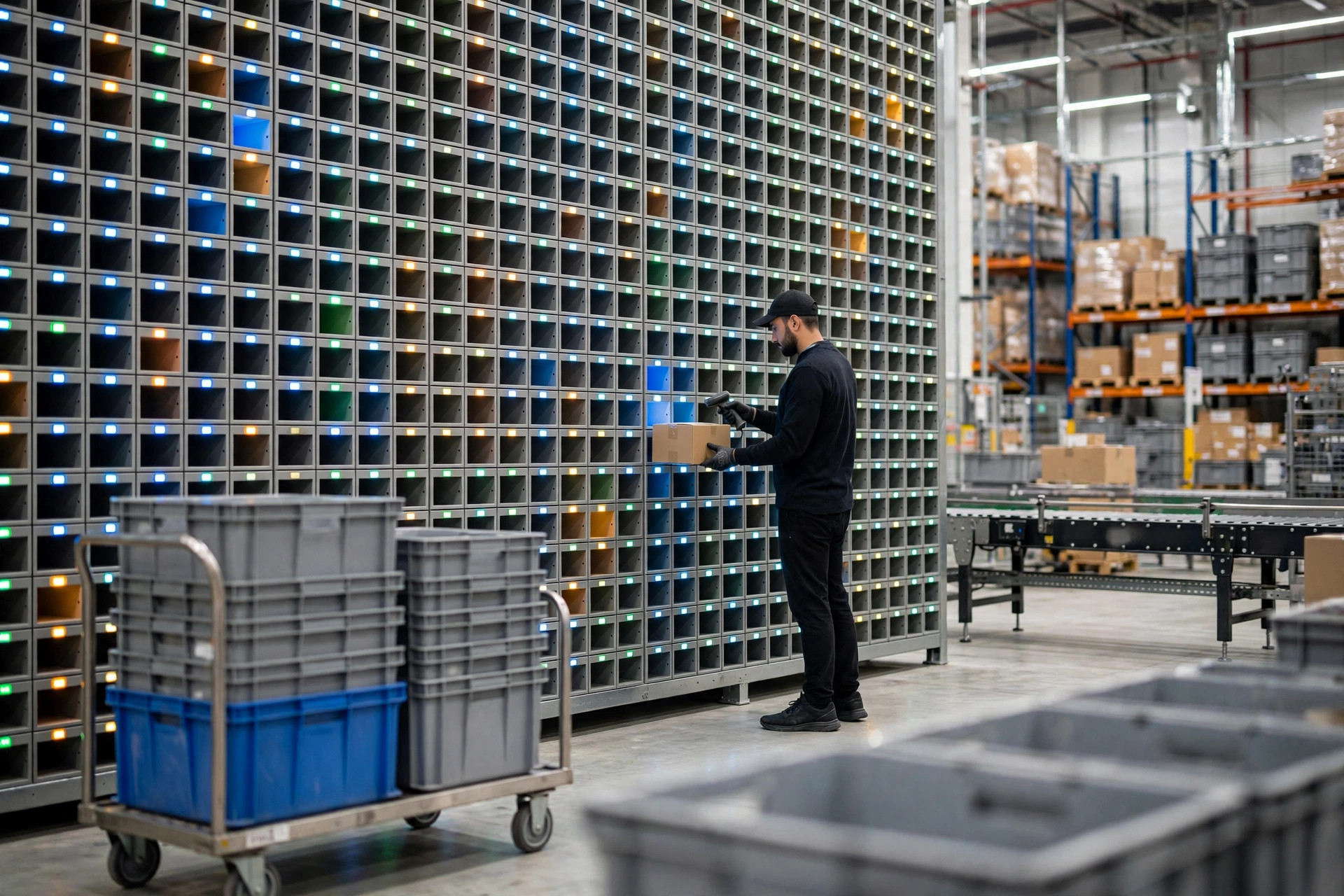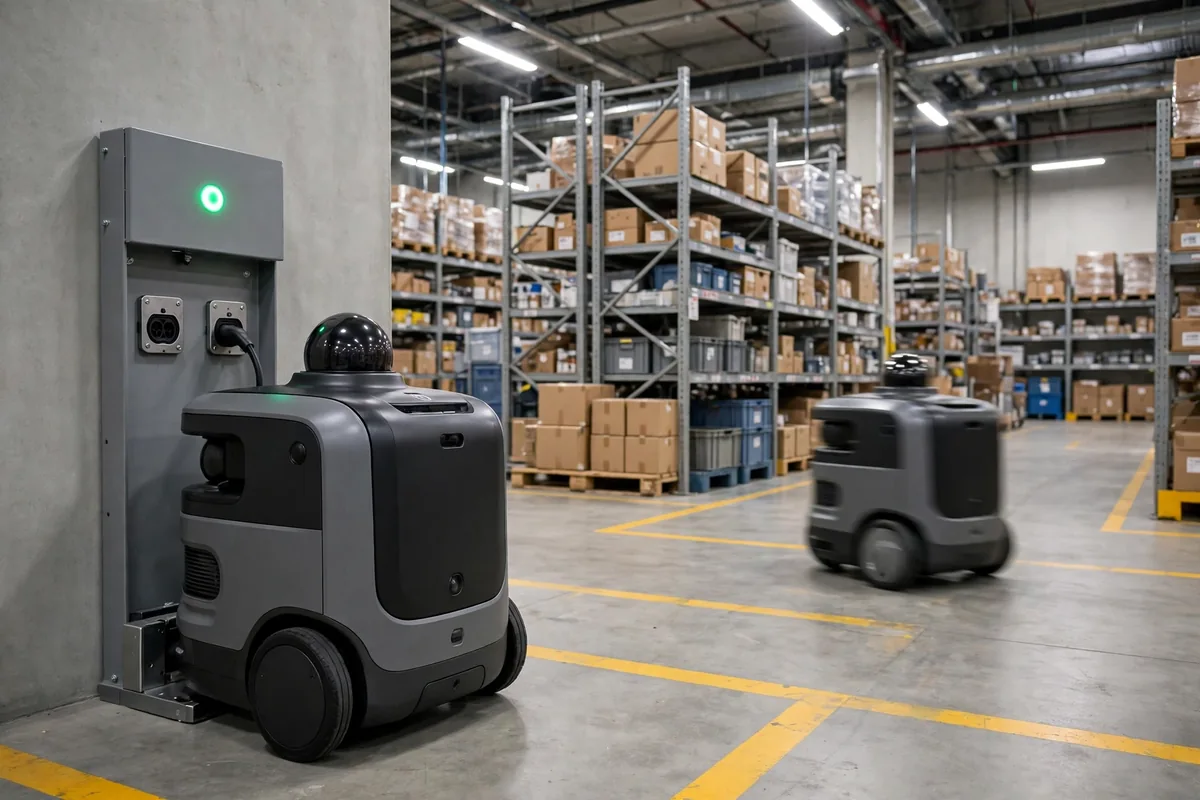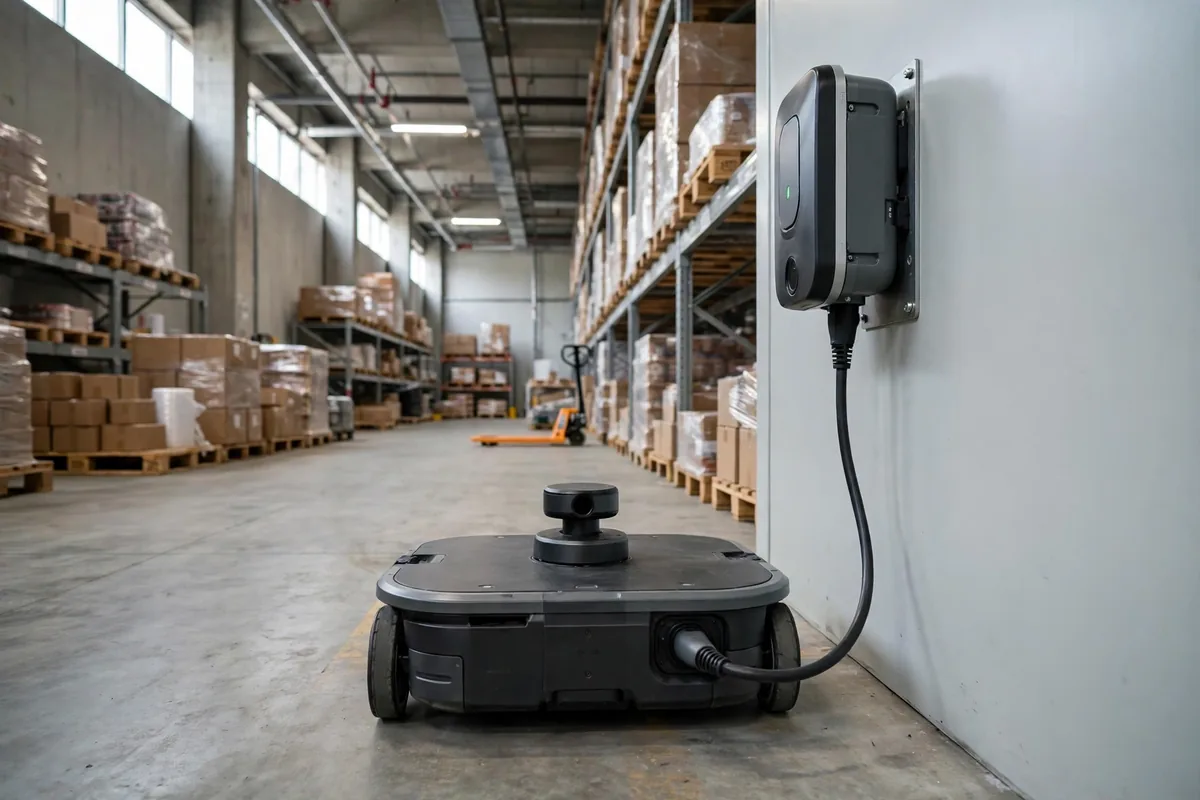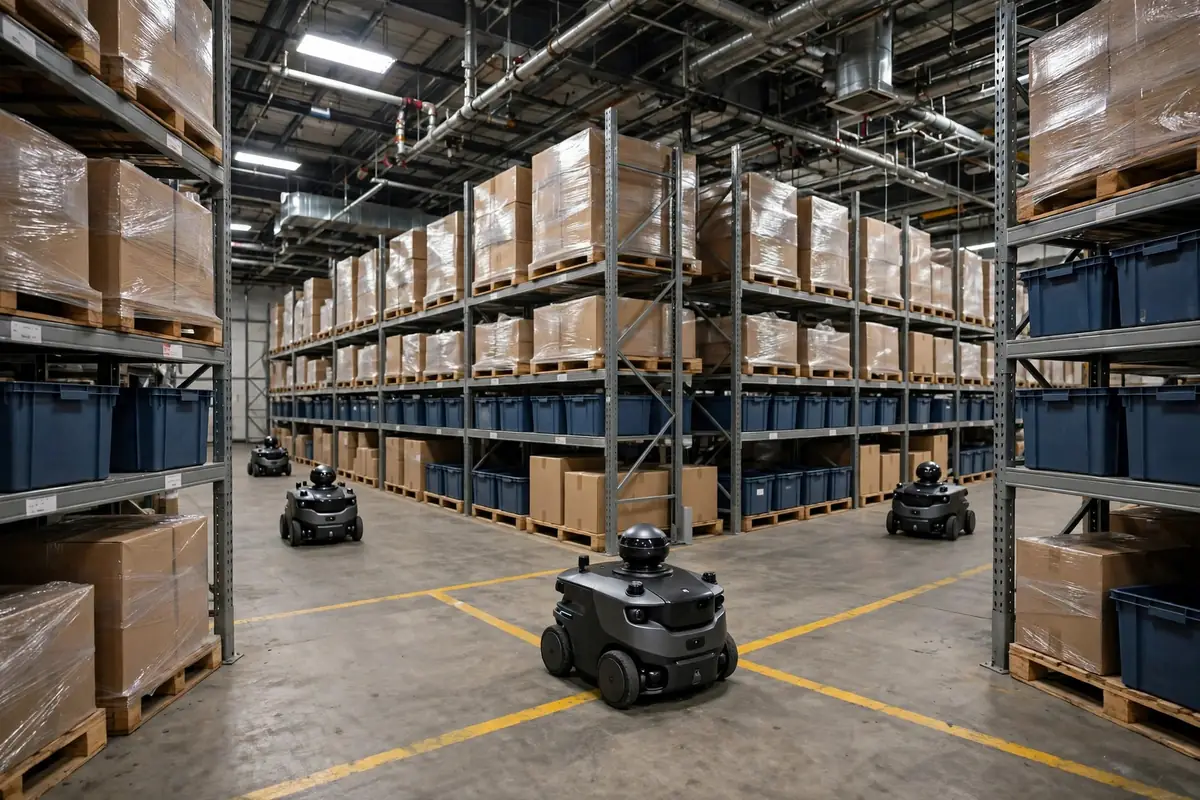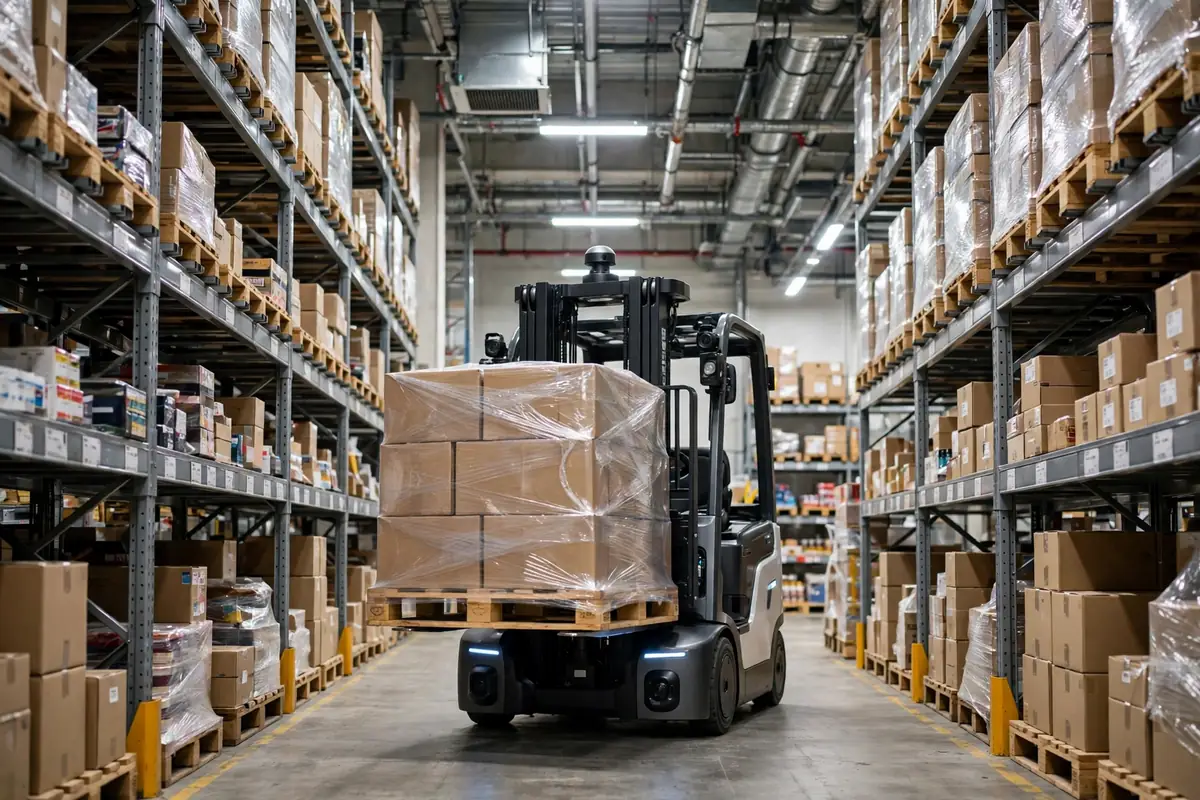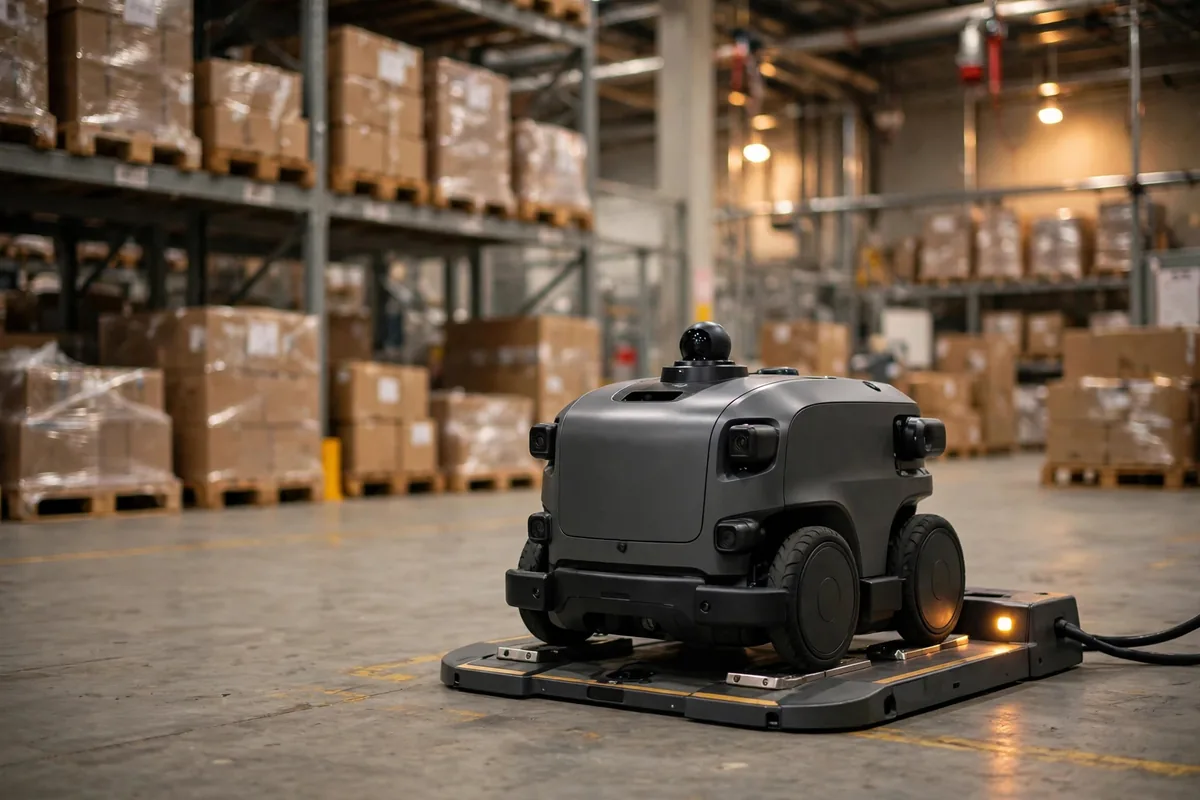
Last fall I walked into a 30,000-square-meter e-commerce warehouse to look at their AMR fleet. Twelve robots, running 20 hours a day in peak season, utilization numbers that looked great on paper. I watched the dispatch screen for a morning and noticed the same thing over and over: two or three robots sitting dead still at the charging docks at any given moment. Not broken. Charging. An AMR charging strategy is the kind of thing nobody thinks about when they buy the robots, and then the fleet is running and you realize the wrong charging strategy is the same as having bought two fewer robots. The two cases below are illustrative scenarios, with the math scaled from published figures — not any single warehouse's measured report.
Opportunity charging: how much can spare minutes really buy?
Start with the principle. Opportunity charging is simple: whenever a robot has a spare minute, it ducks onto a charger and tops up. Think of it like fast-charging your phone — ten minutes plugged in buys you half a day, provided the battery can swallow a big current. Lithium can. Lead-acid cannot. Published data puts it plainly: a lithium iron phosphate pack charges fully in 0.5 to 1 hour, a standard lithium-ion pack in about 1 to 2 hours, while lead-acid needs 8 to 10 hours plus another 8 hours to cool down. That is why any serious conversation about AMR charging strategy assumes lithium. Lead-acid cannot play this game at all.
So how much do those spare minutes actually buy? Published figures give a useful ratio: a lithium fleet needs roughly 10% of its cycle time stopped for charging, against about 30% for lead-acid. Run the math on that 10%: twenty robots, running 24 hours a day, gives you 480 robot-hours in theory, and charging eats about 48 of them — the equivalent of two robots gone. That number is not scary, but it rests on one condition: your task flow genuinely has spare minutes in it.
That condition is where it breaks. Opportunity charging only works when the workload has valleys. When order waves come back to back and fleet saturation pushes past 90%, robots never get a free minute to dock. Battery levels slide down until they hit the threshold, the robot is forced back for a long charge, and a long charge starts at half an hour. The busiest days of peak season are exactly when opportunity charging is least useful. This is not a battery problem. It is a scheduling problem: opportunity charging hands control of charging to the idle gaps in your task flow, and peak season has no idle gaps.
Battery swap: 90 seconds to a fresh pack, at a price you cannot see
Battery swap takes the opposite approach: stop fighting the battery, just change it. Vendor data puts an automated swap at about 84 seconds — under two minutes — and the robot barely stops. For a warehouse running three shifts with saturation above 90% year-round, that number is tempting.
But first ask who pays for the extra batteries. One pack per robot is not enough; you need at least 1.5 packs per robot, so twenty robots means thirty packs. The battery is one of the most expensive components on the vehicle, and ten spare packs are real money. The automated swap station itself costs money, takes floor space, and needs maintenance — the robotic arm and locating pins inside it are wear parts, and when they fail the line stops anyway. Manual swap is more direct: if nobody is on the night shift, who exactly is doing the swapping?
Then there is a cost most people never calculate: cycle life. Published figures put lithium iron phosphate at 3,000 to 6,000 cycles, nickel-manganese-cobalt lithium at 1,000 to 2,000, and lead-acid at 300 to 500. A swap station keeps packs sitting at full charge so a fresh one is always ready; opportunity charging, by contrast, is shallow charge and shallow discharge — the battery is rarely wrung dry. Here is the counterintuitive part: the fastest-charging option is not necessarily the kindest to the battery. Shallow cycling is friendlier to lithium, so opportunity charging actually wins on battery lifespan.
The dividing line: task density and shift pattern
Neither AMR charging strategy is better in the abstract. The dividing line is two numbers: task saturation and shift pattern.
| Fleet condition | Recommended route | Why |
|---|---|---|
| Saturation usually below 70%, one or two shifts | Opportunity charging | Spare minutes are plentiful, zero extra hardware |
| Saturation 70–90%, two shifts | Hybrid: opportunity charging plus one spare robot for peaks | A spare robot is far cheaper than a swap station |
| Saturation above 90%, three shifts nonstop | Battery swap | Robots never get a minute to charge, so change the battery |
| Unattended night shifts | Opportunity charging or automated swap; manual swap is out | No one there to swap, the plan equals zero |
The middle row is the one most people skip. Plenty of warehouses jump straight to battery swap because it feels like the "complete" solution. That is a classic pseudo-requirement: your fleet saturation never reaches 90%, and you are spending swap-station money on a problem you do not have. Put one spare robot in to cover peaks first. When saturation genuinely climbs, then talk about swapping. That is how the money stops being wasted.
Finally, the maintenance pitfalls, which is what I get asked about most. Charging dock contacts fail first: oxidation, dust, vibration from forklifts driving past. Poor contact cuts charging efficiency first, then throws faults. Wireless charging avoids contact wear, and vendors quote 93% efficiency — but that is a lab number under perfect alignment, and your real-world figure depends on how precisely each robot parks. Swap stations have the same problem in reverse: the more mechanical complexity, the uglier the MTBF. My advice is unfashionable: spend ten minutes a week inspecting dock contacts and swap-mechanism wear. It beats any monitoring dashboard.
Whether the money is worth it comes down to one number: divide your fleet's daily charging downtime in robot-hours by total robot-hours. Above 15%, change your charging strategy. Below 10%, stop overthinking it — opportunity charging is enough. Stuck in between, add one spare robot before you even think about a swap station.
By Da Liu, Automation Engineer