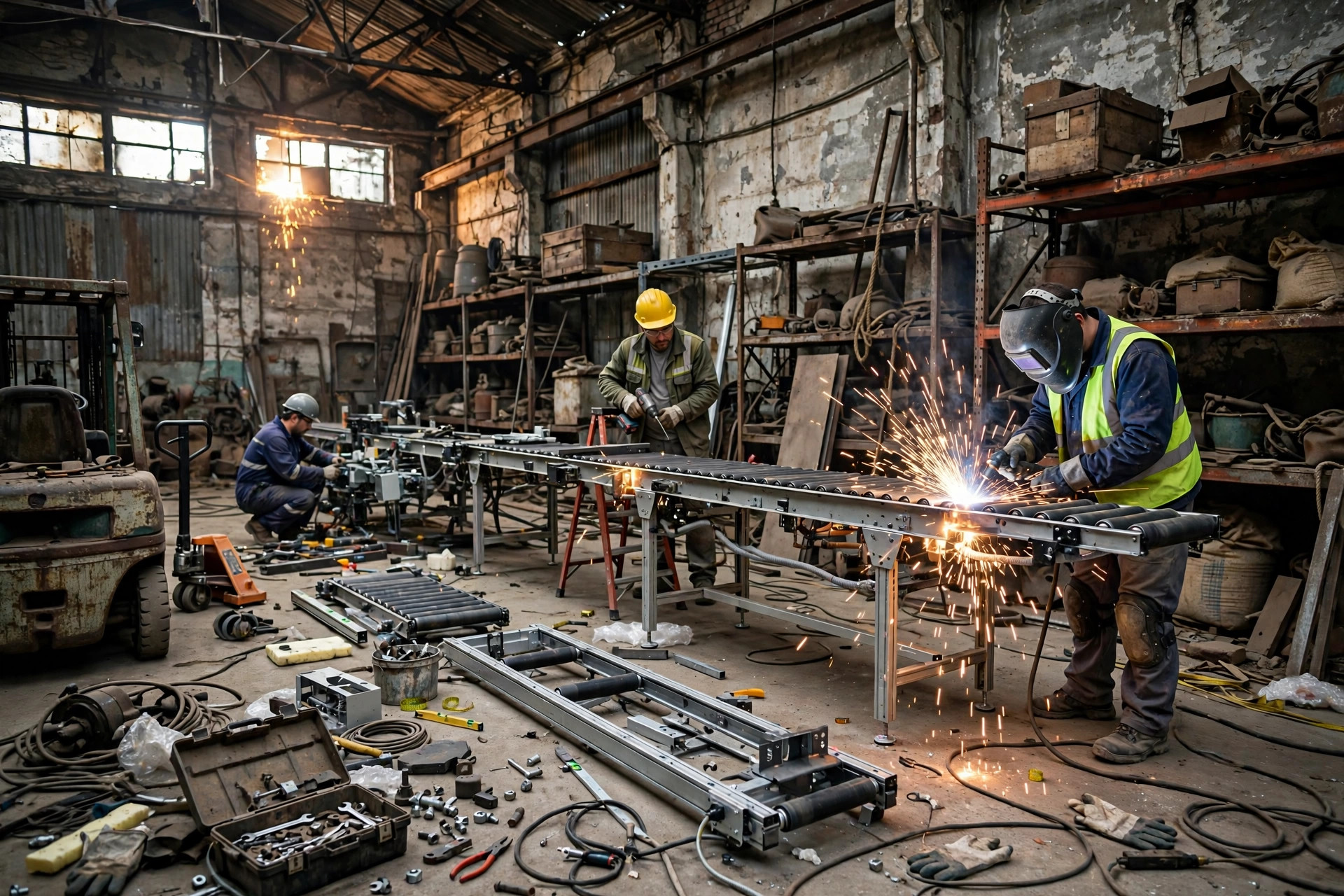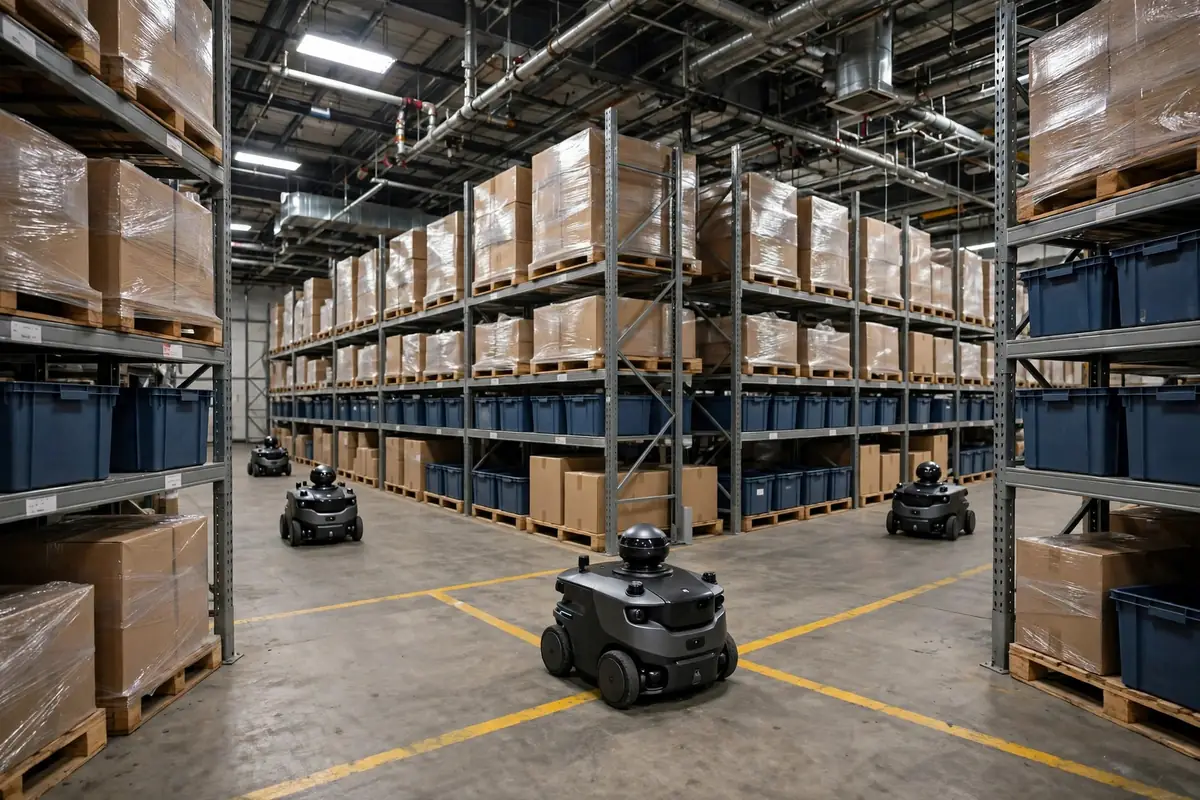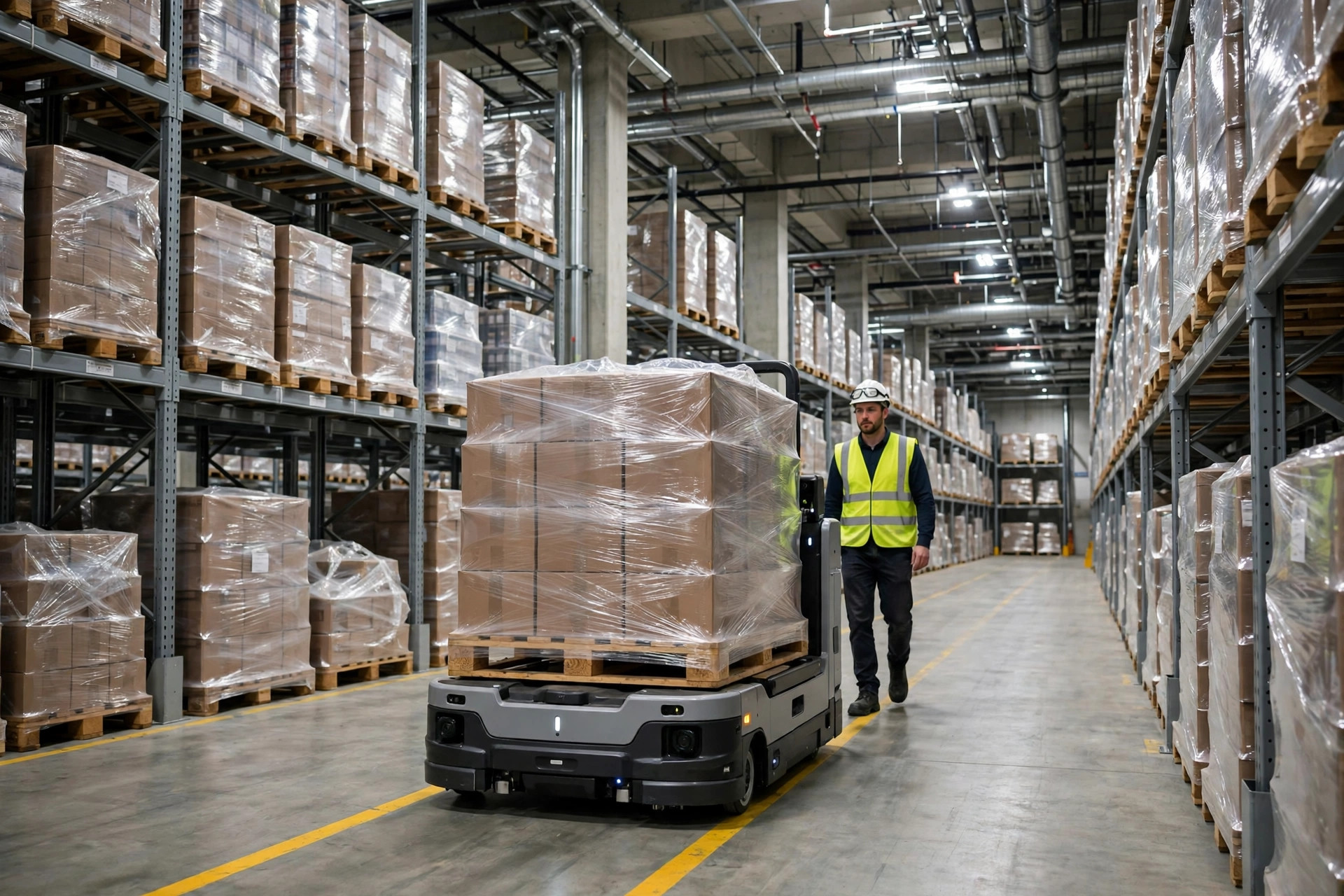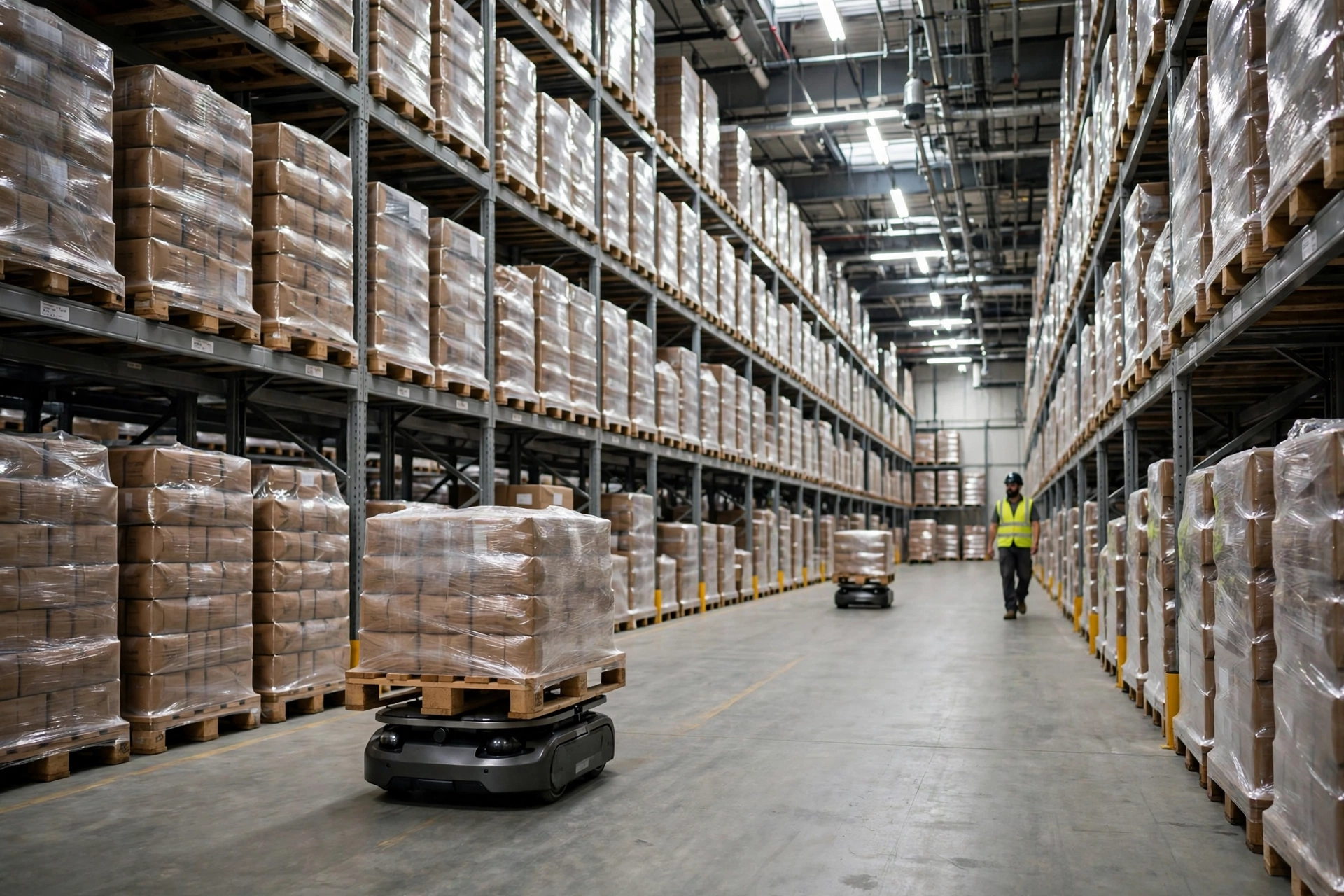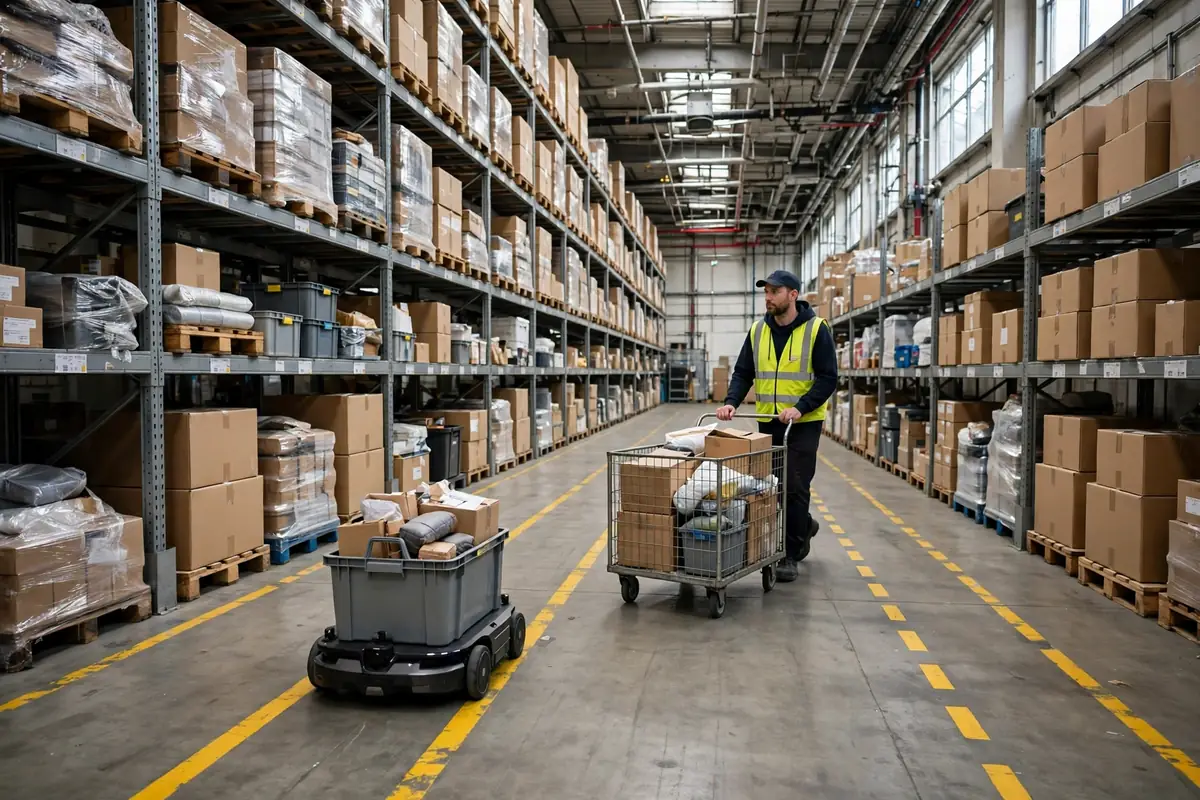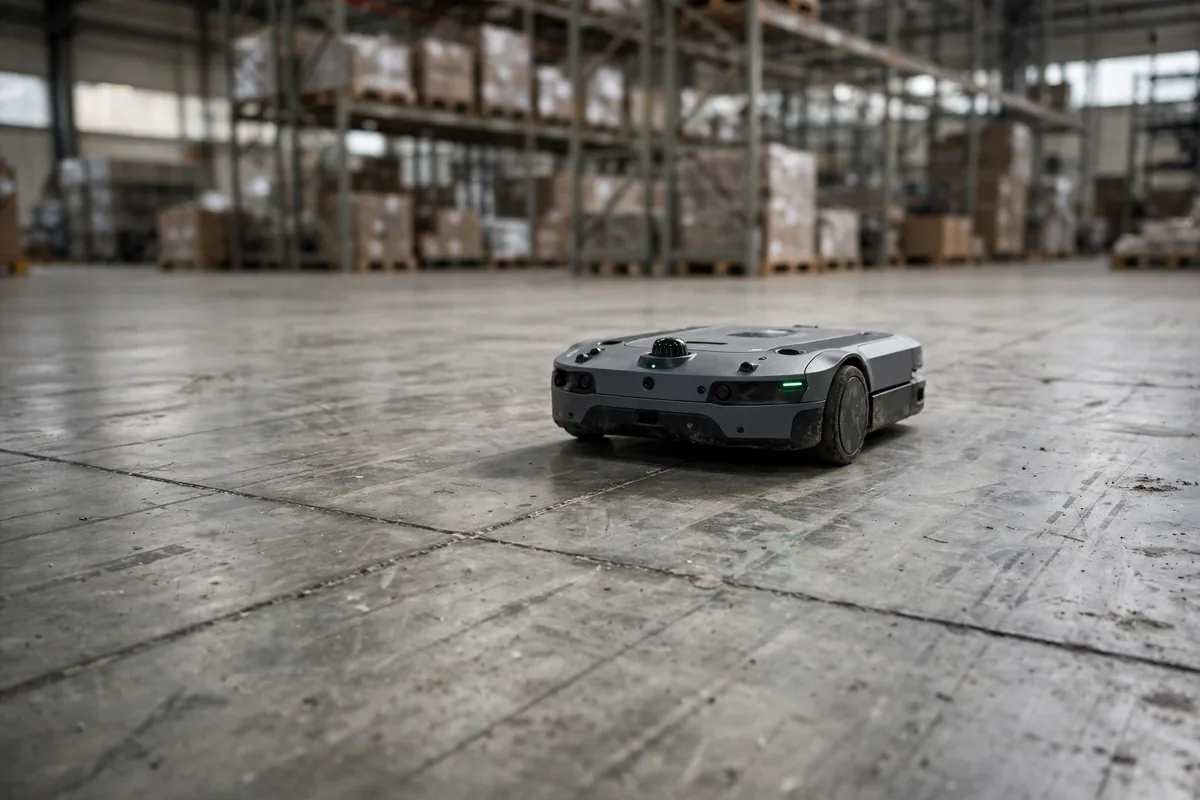
In the fall of 2023, I walked into a 3PL warehouse in Ontario, California, to review an AMR deployment that kept tripping over the floor. Sixty thousand square feet, twelve AMRs, three months in service — and the operations manager was furious. The robots lost localization two or three times a day, had clipped rack uprights three times, and once knocked over a full pallet and stopped the line for forty minutes. The integrator had retuned the navigation parameters, upgraded the firmware, and added reflectors. Nothing stuck. I knelt down, ran my hand across the floor, then laid a straightedge on it: twelve millimeters of rise and fall across four meters. The floor was a washboard. The problem was never the robots.
Think of an AMR as a very picky little cart. It has small wheels, low ground clearance, no suspension worth speaking of, and it finds its way with lidar and wheel odometry. When the floor waves, the whole world it sees starts wobbling.
Warehouse Floor Flatness: What AMRs Actually Fear
Picture pushing a stroller across a washboard road. No matter how steady your hands are, the wheels keep bouncing. Every bounce makes an AMR's drive wheel slip a little, so the odometry counts a little too much distance or a little too little. Meanwhile the lidar is scanning walls and racks from a sensor that is pitching up and down. One pass costs you a few millimeters. Run that all day and the error stacks up to centimeters — and centimeters are the difference between driving down the middle of an aisle and scraping a rack upright.
Flatness has an existing measuring stick, and this is where I get blunt: if your vendor cannot tell you which grade your floor needs, in writing, stop the meeting. In the US, the common scale is the ACI 302.1R FF/FL system — FF for flatness, FL for levelness. Conventional floors start around FF25/FL20, a typical warehouse floor is specified at FF35/FL25, and a superflat floor runs FF60/FL40. In Europe, DIN 18202 sets straightedge limits instead. Which grade your AMR needs is written in the manufacturer's technical manual for that exact model. Not the sales deck — the manual. If nobody can produce that page, you are not doing selection, you are doing wishful thinking.
The Ontario warehouse ended up fixing the problem in the least glamorous way possible: a third-party FF/FL survey of the whole floor, seven out-of-spec zones identified, localized grinding plus epoxy leveling. The bill came in under the price of a single AMR. After the re-survey passed, localization losses dropped from two or three a day to one or two a month. Same robots, same software. Only the floor changed.
Here is the counterintuitive part: smoother is not always better. A floor polished to a mirror shine gives polyurethane tires less grip, so a fully loaded AMR slides further on an emergency stop. What an AMR needs is flat, not slippery. I have seen a warehouse polish its floor until you could see your reflection in it, then pay a second time for an anti-slip treatment after the braking distances grew. Flatness and friction are two different things. Do not confuse them.
AGV versus AMR matters here too, and people mix the two up constantly. A traditional AGV follows magnetic tape or floor QR codes, so a wavy floor bothers its navigation less — it reads marks on the ground, not the walls around it. Its wheels still bounce, its tires still wear, and a wide joint still catches it. An AMR navigates by lidar and its surroundings, so warehouse floor flatness hits it harder: when the floor waves, its entire map wobbles. "The AGV next door runs fine" proves nothing about your floor. The two machines are sensitive to different things.
Joints, Cracks, and Slopes: Small Wheels, Big Problems
Expansion joints and cracks are the second killer. An AMR's polyurethane drive wheel is often only a little over ten centimeters across. When the joint gap gets wide, the wheel drops in and pops back out with a jolt. That jolt costs you a localization fix, shakes the load, and chews a chunk out of the tire. The damage accumulates quietly: tires half worn in three months, bearings dying early.
Early in 2024, an older warehouse near Dallas converted to AMRs on a floor poured in 1998. The expansion joints were over twenty millimeters wide and had essentially never been filled. In the first three months they went through four sets of drive wheels, a few hundred dollars a set. The money was trivial; the downtime to swap wheels was not. The fix was a two-week job — epoxy fill across the whole floor plus cutting and re-pouring the worst sections — with half the warehouse out of service the entire time. A few days of joint filling before selection would have prevented all of it.
Slope deserves a separate look. Climbing a gentle grade is usually fine; every AMR has a rated gradeability, and the exact number is in the manufacturer's manual. The real trap is the break at the top and bottom of a ramp. For one instant, one drive wheel hangs in the air and spins while the other takes the full load, and localization jumps. Dock door ramps and transitions between areas at different elevations are where this happens. My rule: transitions get a gradual slope, never a sharp break, and acceptance testing means running a fully loaded robot back and forth ten times and checking whether the localization error converges.
Floor loading capacity is the third trap, and the most expensive one. An AMR plus a full load presses down through a few small contact patches — concentrated point loads, not evenly spread weight. In an old warehouse where nobody knows the reinforcement or the concrete rating, discovering cracked and settling slabs after the robots are running means a full re-pour. A core sample and a load assessment before selection cost a fraction of a rework.
AMR Floor Requirements: Measure First, Then Buy
| Where the money goes | Rough scale | Cost of skipping it |
|---|---|---|
| Full-floor FF/FL survey | A few thousand dollars, a day or two | Months of chasing localization faults with no root cause |
| Localized grinding and leveling | Priced by area, usually less than one AMR | Localization drift, rack strikes, line stops |
| Epoxy joint filling | A few thousand to low five figures, depending on total joint length | Tires wearing out early, repeated wheel-swap downtime |
| Full superflat re-pour | Often exceeds the purchase price of the whole AMR fleet | Discover it late and you shut down production to redo the floor |
| Load capacity assessment | A few thousand dollars | Slabs cracking and settling, the entire fleet grounded |
The table makes one point: the floor survey is the cheapest item on the list, and the one most often skipped. Skipping it saves a few thousand dollars and gambles equipment worth hundreds of thousands plus daily throughput.
My decision framework is four steps. First, survey the floor before signing the AMR contract — FF/FL survey, joint-width census, and load assessment together. Second, grade the floor by the results: compliant zones run robots, out-of-spec zones get fixed first, and never "run it now and fix it later." Third, re-survey after the repair and write the re-survey report into the AMR acceptance criteria — if the floor fails, acceptance fails. Fourth, put floor re-survey on the annual maintenance calendar, same as tire changes. A warehouse floor is not a one-time acceptance item. Forklifts grind it and pallets hammer it every day, new cracks show up every year, and a floor that passed this year may not pass next year.
In an AMR selection meeting, the vendor will talk about cycle time, payload, and how clever the software is. Your first question should be: what floor does this machine require, and what grade is my floor right now? If those two numbers do not line up, every other number in the room is fiction. The floor passes first. The robots run second. It sounds like a platitude, and I have watched too many projects flip over on exactly that platitude.
By Da Liu, Automation Engineer