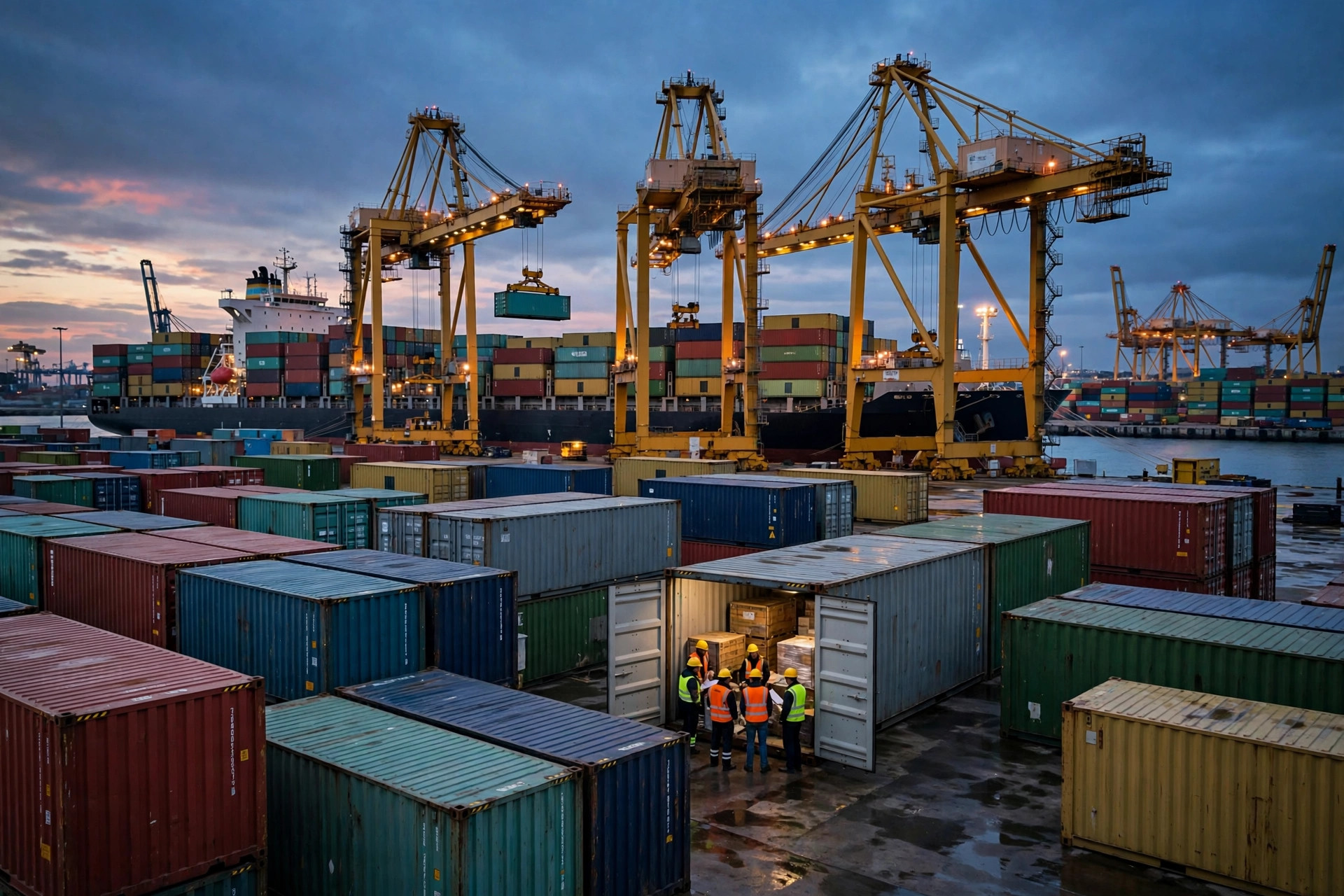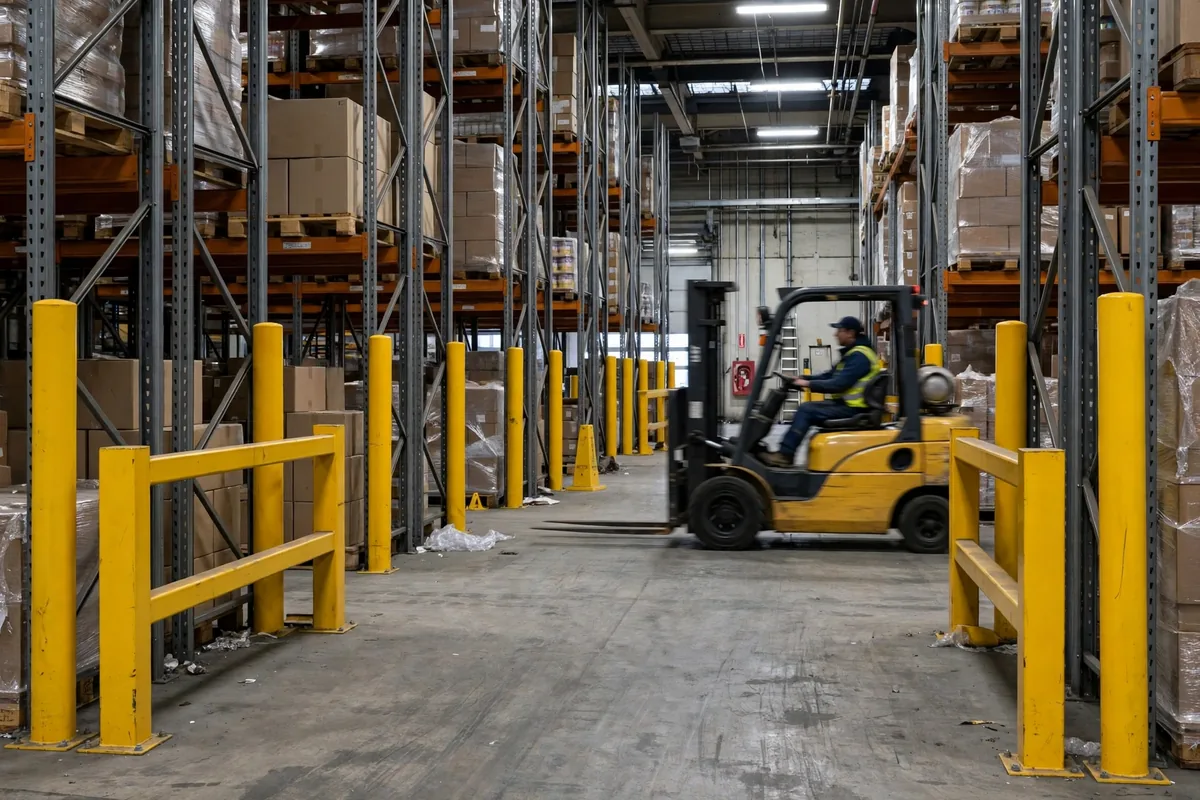
Let me say the uncomfortable part first: the worst dock accidents I have seen were not caused by a forklift driving too fast. They were caused by a trailer moving when nobody expected it to move. That is what warehouse trailer vehicle restraint dock safety really is — a simple accounting question. Are you willing to pay to replace the assumption "the driver surely will not leave early" with a mechanical fact that locks? I have walked too many docks where chocks were bought by the dozen, procedures were posted on every wall, and on the day something went wrong, the chocks were sitting in a corner collecting dust.
My conclusion up front: if you run high-volume doors, night shifts, or a parade of third-party drivers, a restraint is not an option, it is a requirement. If your doors are slow, your fleet is your own, and your supervisors actually watch the process, chocks plus a disciplined procedure can be enough. This cuts both ways. Buying the wrong thing wastes money. Buying nothing bets people's bodies on probability.
warehouse trailer vehicle restraint failures: three chains that end the same way
Let me tell you about a pit I stepped around once. Hypothetical example: a cold-storage food warehouse in the Midwest, a little after eleven at night in winter. A reefer is being loaded with pallets at door three. The driver, tired of waiting in the lounge, hears someone at the next door shout that they are done. He thinks the shout is for him. He climbs in and pulls away. The trailer moves less than two meters, but the forklift crossing the dock plate at that exact moment drops with the operator still on it. Broken leg, product everywhere. No malice, no recklessness — just a signal that matched the wrong truck. Early departure is the most human failure in this business, and that is exactly why a process built only on human attention fails.
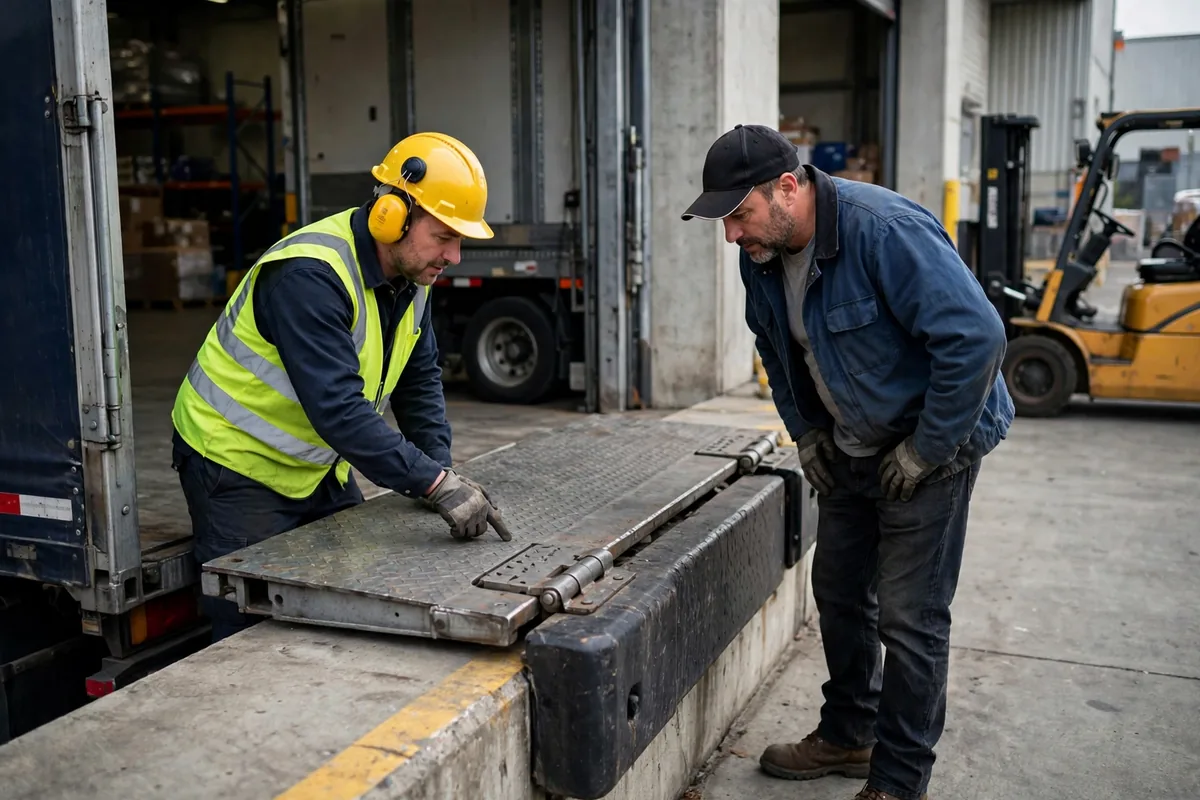
The second chain is quieter. Hypothetical example: a building-materials warehouse in the South in summer heat. A fully loaded trailer sits at the dock waiting to be unloaded. Under the landing gear, the ground and the pads slowly give, and the rear of the trailer settles, inch by inch. The dock plate angle changes. The forklift operator does not notice, drives in, the front wheels lose grip on the shifted plate, and the truck slides sideways into the trailer wall. Landing gear sink rarely makes noise. It happens on soft ground, in heat, under heavy loads parked for a long time — three ordinary conditions that add up to one bad afternoon.
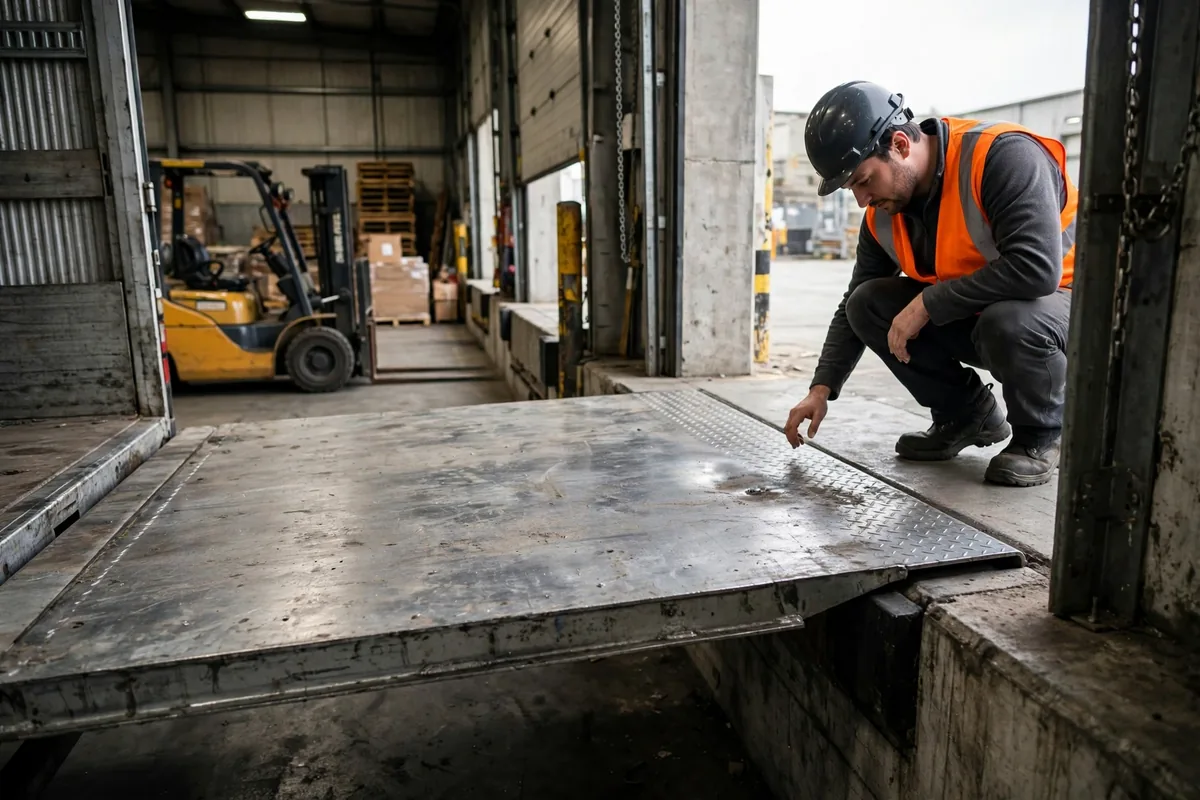
The third chain is trailer creep. Every forklift pass into the trailer nudges it forward a fraction. Braking, acceleration, load shift — each trip steals a little distance. Eventually a gap opens between the dock plate and the trailer bed. A small gap feels like nothing when you step over it. A bigger one swallows a forklift wheel, and then you have a tip-over. So warehouse trailer vehicle restraint dock safety is not really about one device. It is about breaking three chains, one by one: early departure, landing gear sink, and creep.
Chocks versus restraint: the dock safety line is control, not price
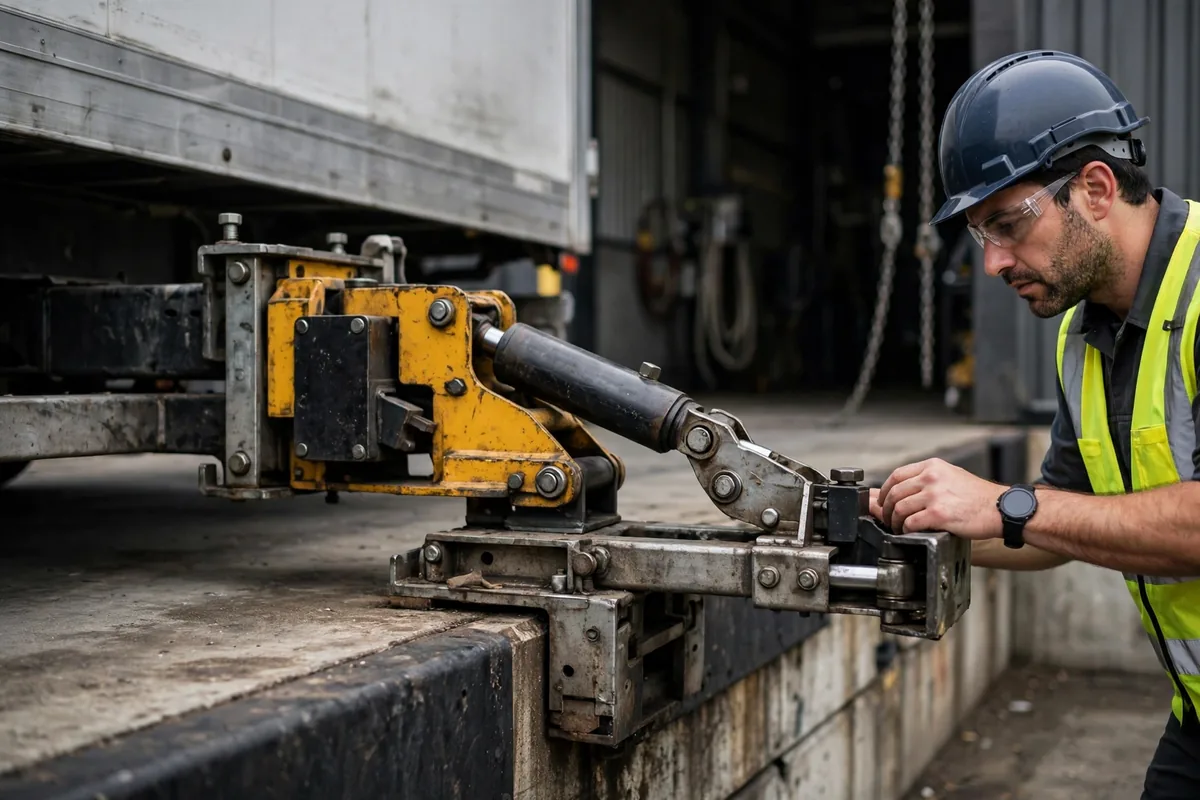
People ask me why they should spend real money on a restraint when a chock costs so little. Here is the honest answer. A chock depends on a person: the driver has to get out, place it correctly, and the forklift operator has to verify it. A restraint depends on a lock: it hooks the trailer's rear impact guard, and until it releases, the trailer is not going anywhere. The difference is not the size of the iron. It is whether you can accept a system whose weakest link is someone remembering, every single time, on the night shift, in the rain.
Use this decision frame and place your own dock honestly:
| Question | Chocks plus process can work | Restraint strongly advised |
|---|---|---|
| Door volume | Few trucks a day, slow pace | High volume, many doors at once |
| Driver pool | Own fleet, regular drivers | Many third-party and spot drivers |
| Shifts | Day shift only, supervisors present | Night or early shifts, thin staffing |
| Equipment | Mostly manual handling | Forklifts entering trailers all day |
| Yard surface | Hard, flat, well drained | Slope, rain or snow, soft spots |
Here is the counterintuitive part: chocks are not useless, and a restraint is not magic. The chock's worst enemy is being forgotten, misplaced, or quietly removed. The restraint's worst enemy is a bent, rusted, or mismatched rear impact guard that the hook cannot grab — at which point crews improvise, grab a chock, and call it double protection. If you buy restraints, budget for inspecting those guards and maintaining the units. Prices vary, so treat any number you hear as a magnitude only and get the vendor's current quote. The trade-off is this: a restraint costs money to buy, power, train on, and inspect. Chocks cost management attention on every single truck. Which one is more expensive depends on how many trucks your doors see in a day.
On compliance, OSHA's basic expectation for dock work, stated as a principle, is that the employer must prevent trailers from moving unexpectedly during loading and unloading and must give workers safe conditions. Chocks, restraints, or equivalent measures can serve that purpose, backed by training and actual enforcement. I will not pin down specific clause numbers here, because getting one digit wrong helps nobody — check the current text on OSHA's official site and your state plan. What an inspector really looks for is not whether you bought the expensive option. It is whether the measure you claim to use is visibly in use on your dock, that day, on that truck.
Making warehouse trailer restraint work: lights, keys, and five steps
Installing the hardware is the easy half. I have seen docks with restraints where drivers and forklift operators still worked in separate worlds and nobody looked at the lights. Three things make it real.
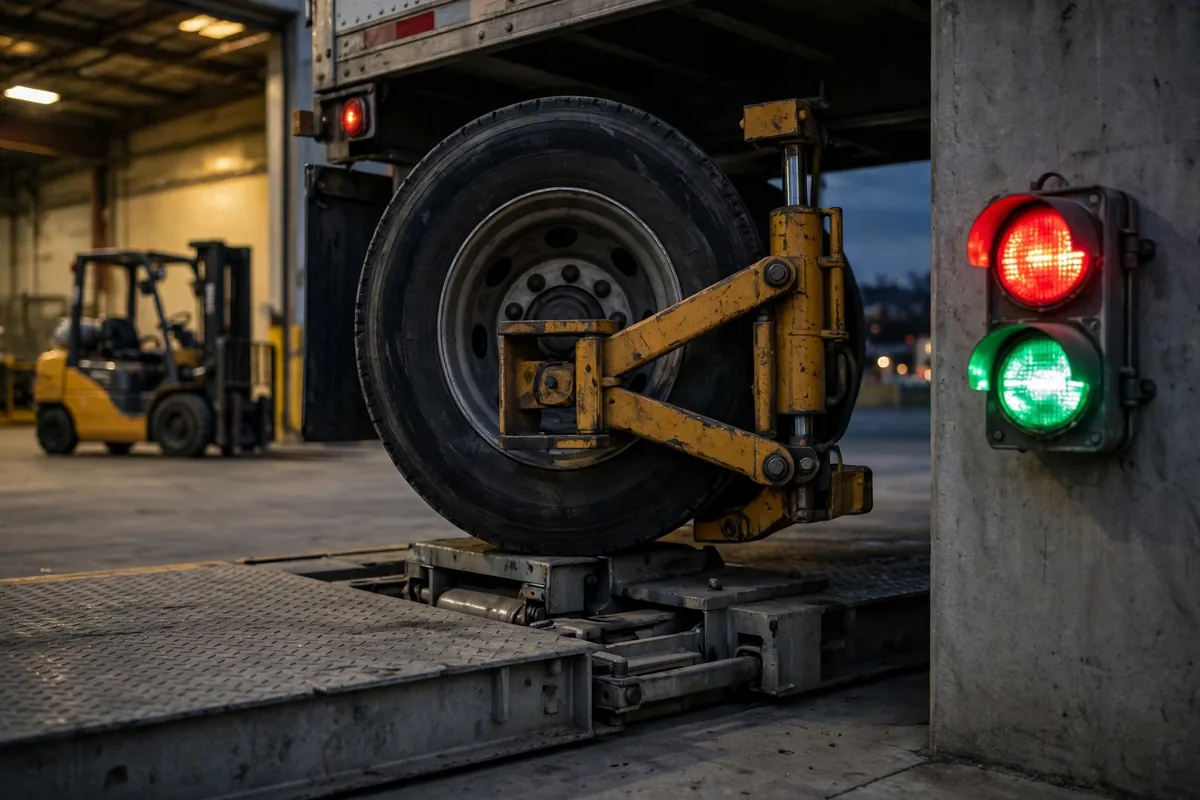
First, signals must come in pairs, inside and outside. Inside, the forklift operator sees red for stop and green for go. Outside, the driver sees a signal that says do not move until released. The logic must interlock: if the restraint is not fully engaged, the inside light cannot go green; if loading is not finished, the outside light cannot go green either. A single-light setup is decoration, not a signal system.
Second, control the keys like you mean it. The old method still works: the driver surrenders the key, or the air line connection, onto a control board at the dock, and gets it back only after loading is done and the restraint is released. If a fleet will not surrender keys, use a steering lock or a signed handover. The point is blunt — make it physically hard for a driver to leave by mistake. This is the cheapest, most effective part of warehouse trailer vehicle restraint dock safety, and it is the part most warehouses skip because they do not want to offend drivers. Apply the rule to every driver equally and nobody takes it personally.
Third, keep the procedure short enough to memorize. Mine has five steps: spot the trailer, engine off and brake set, engage the restraint and confirm the light, load or unload, then check the trailer is empty before releasing. Who does each step and who confirms it goes on one laminated card at the door, not in a forty-page manual. On night shifts, add one line: the lead spot-checks several doors per shift, and a missed lock gets corrected that shift, not read out at a monthly meeting.
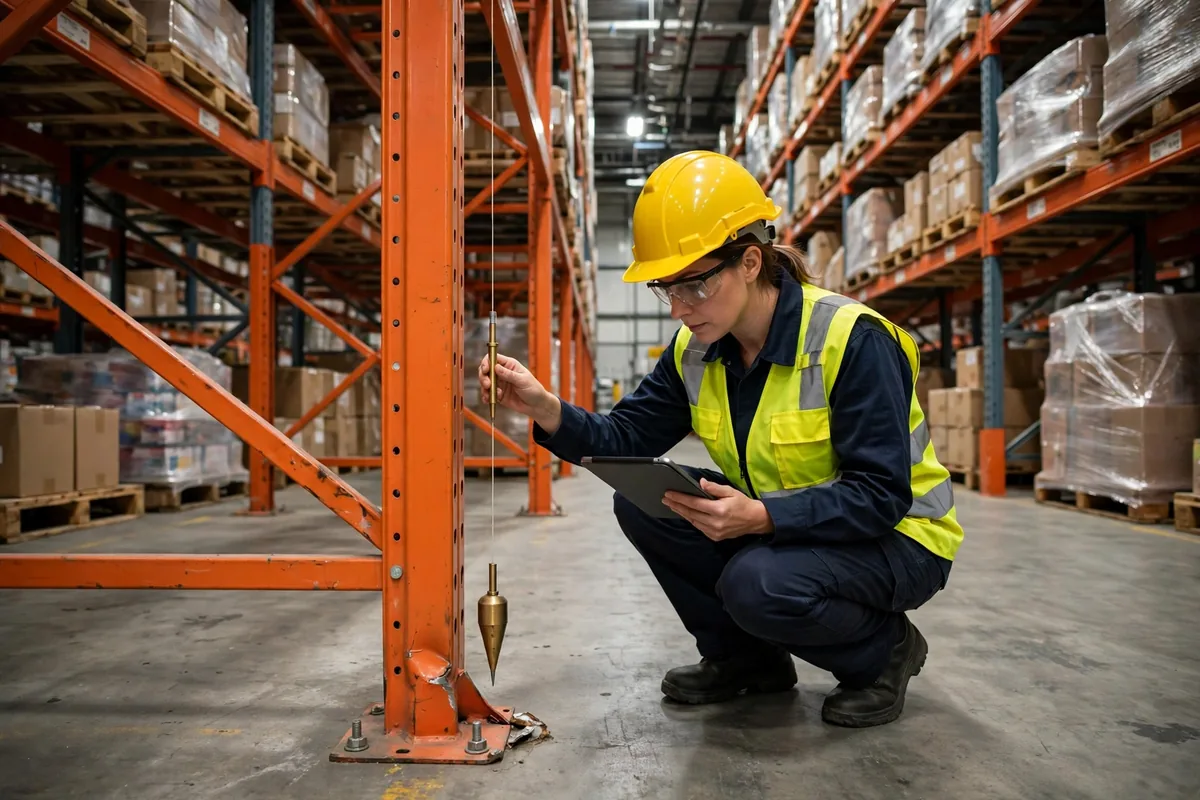
And do not forget the ground. Trailers parked loaded for long stretches need landing gear pads with real surface area, and a yard with a history of settling needs repair before it needs gadgets. Teach forklift operators to take three seconds before entering a trailer to look at the plate and the trailer height. Those three seconds are worth more than most policies I have read.
So how does the account close? If your doors turn trucks all day and the drivers change every week, the money you saved on restraints will come back to collect in a currency nobody wants to pay in. Is your dock held by a lock right now, or by luck — and if you are honest, which one is it? By Lao Mi, Supply Chain Veteran (20 yrs)