According to the U.S. Energy Information Administration's commercial building survey data, a non-refrigerated warehouse uses about 6.1 kilowatt-hours of electricity per square foot per year. A refrigerated warehouse uses roughly four times that. Same building, different temperature, completely different energy profile. That gap is the starting point for any honest discussion of AI warehouse energy optimization, because the technology saves money in very different places depending on which kind of warehouse you are standing in — and the numbers vendors quote rarely say which one they mean.
AI warehouse energy optimization in cold storage: refrigeration is 60 to 80 percent of the bill
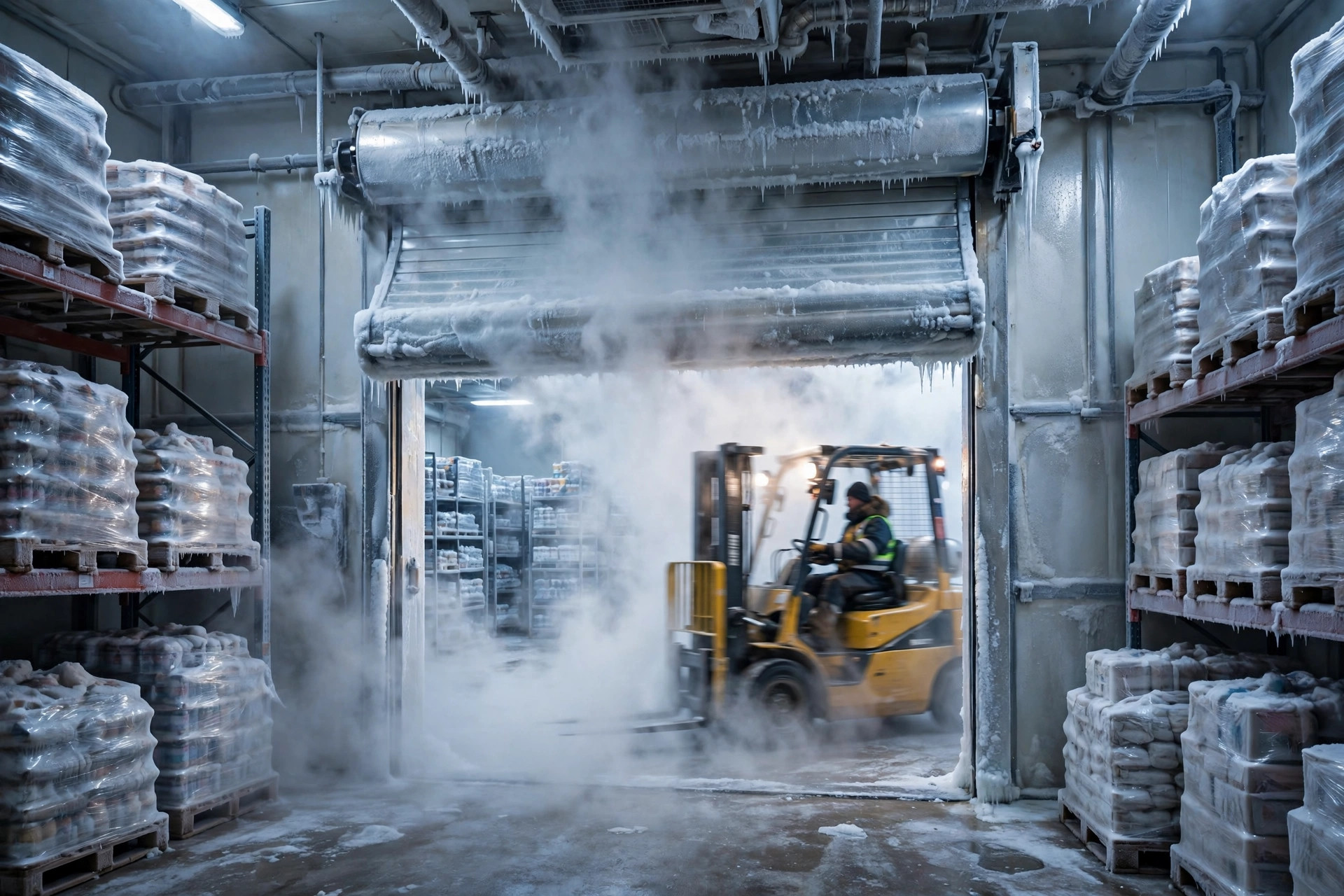
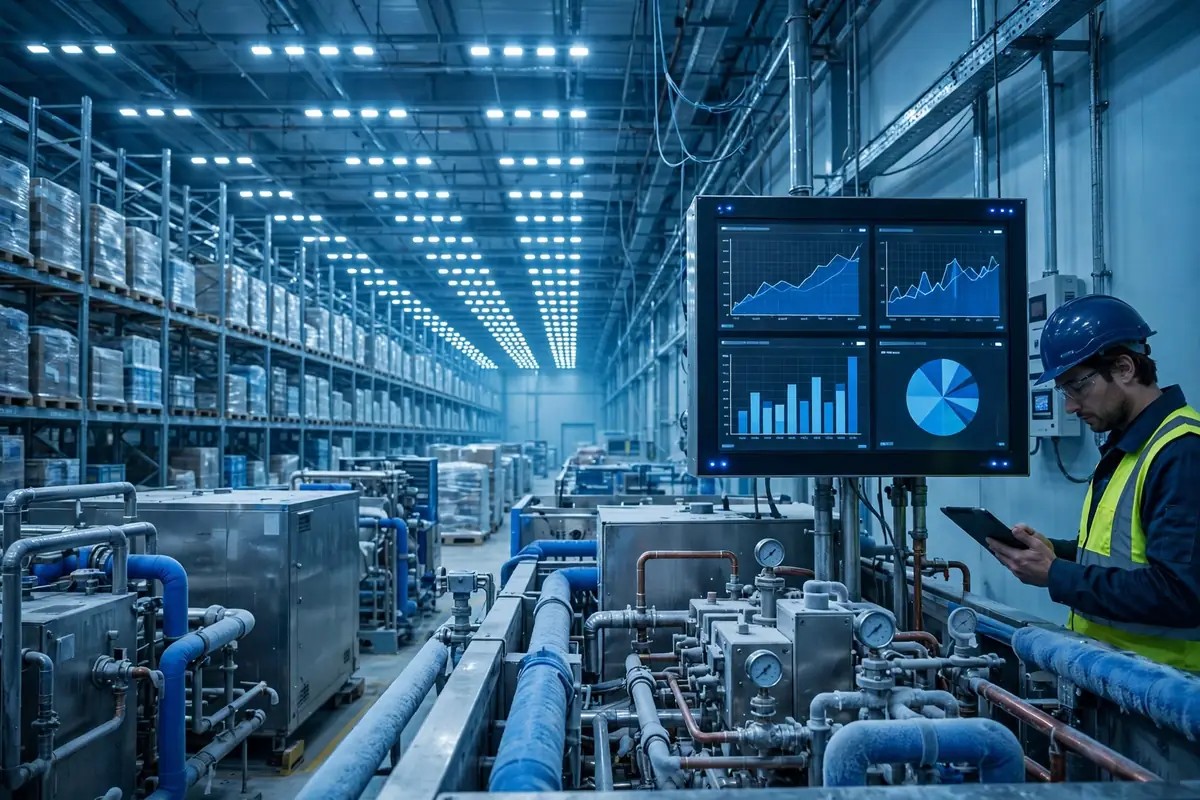
Start with the structure of the load. In a cold storage facility, refrigeration accounts for 60 to 80 percent of electricity use, with compressors taking the largest share and fans and defrost cycles taking the rest. Lighting, by contrast, is only a few percent of the bill. So in cold storage, an algorithm has essentially one job: deciding when the refrigeration system runs, how hard it runs, and when it rests.
Why is there room to optimize at all? A 2025 study published in ScienceDirect applied a continuous deep deterministic policy gradient algorithm to a large-scale cold storage facility and reported a 19.8 percent reduction in energy consumption compared with conventional control, while holding the target temperature steady at minus 10 degrees Celsius. The temperature constraint is what makes that number meaningful. In cold storage, saving electricity by letting temperatures drift is not a saving at all — the cost of spoiled product dwarfs the electricity bill. What the algorithm exploits is thermal inertia: the goods and the air inside a cold store act as a free cold battery. The system over-cools when electricity is cheap and lets the compressors rest when prices spike, staying inside the safe temperature band throughout.
The commercial deployments tell a consistent story. FleXality, a German company whose fEnOMS platform controls refrigeration against live electricity tariffs, reports electricity cost savings of around 15 to 20 percent in real operation, with single days of highly volatile prices reaching nearly 70 percent. A doctoral research project at a refrigerated distribution warehouse of nearly 30,000 square meters in southwestern Norway found that AI control could cut consumption by 30 to 50 percent — but specifically in inefficient buildings that had seen little optimization. In a well-designed new building, the same researcher noted, the gains would be far smaller. Read together, these cases point to the same attribution: a large share of what the algorithm saves is electricity that was previously being wasted by crude, experience-based operating rules.
AI warehouse energy optimization in lighting: the algorithm saves less than changing the lamps
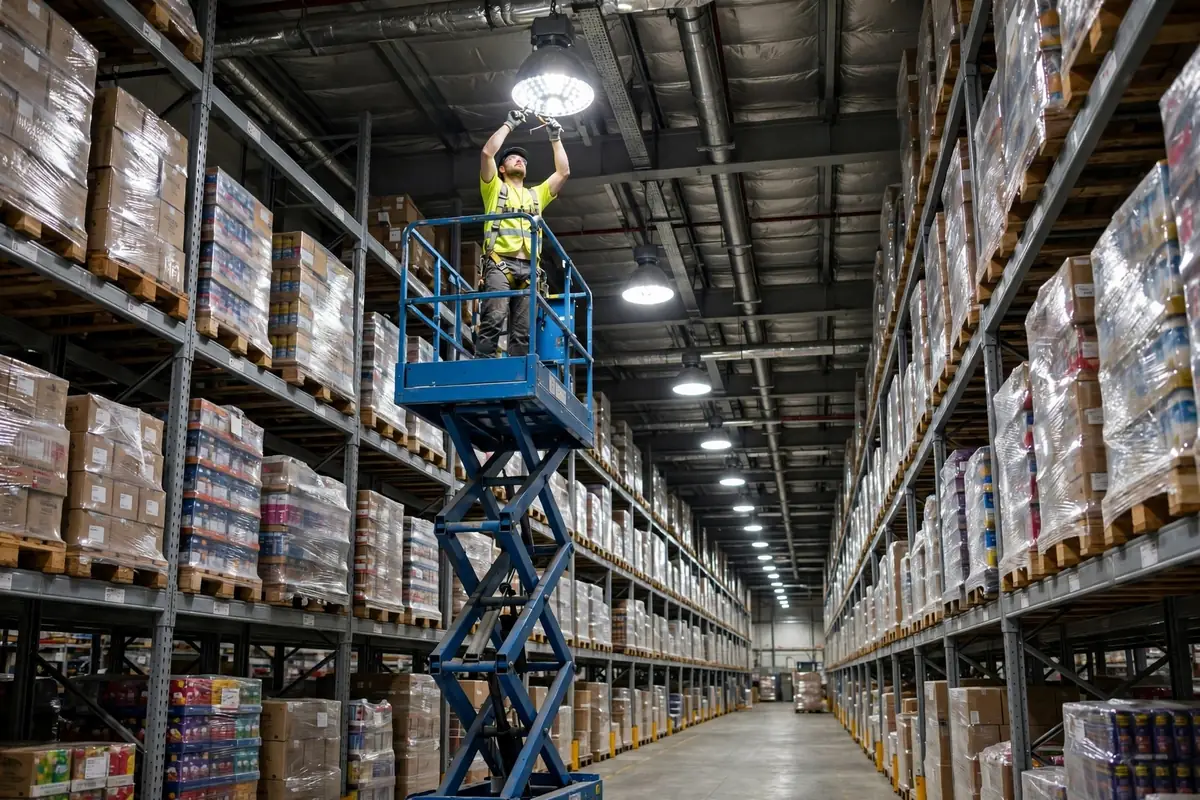
Ambient warehouses present the mirror image. According to the Carbon Trust and similar bodies, lighting can account for 40 to 50 percent of electricity in a conventional warehouse, making it the single largest load. Replacing old metal halide high-bay fixtures with LEDs cuts lighting electricity by 50 to 70 percent, with a typical payback of 12 to 24 months. Smart controls add further savings on top, but the marginal gain narrows quickly.
Here is the counterintuitive finding that deserves more attention than it gets: the return on AI warehouse energy optimization is inversely related to how smart the building already is. A new cold store with variable-speed compressors, good insulation, and zoned temperature control leaves an algorithm little to find. An old cold store running fixed-speed compressors on a fixed defrost schedule, with setpoints chosen by habit, is where the algorithm earns its keep. In other words, the algorithm first replaces rough human decisions, not dumb equipment. A vendor's claim of 50 percent savings usually comes from the second kind of building. Apply it to a new facility and the expectation will not survive contact with the meter.
Lighting deserves the same caution. Occupancy sensing and zone-based dimming are control strategies, not breakthroughs in machine learning, and a rules engine can implement most of them. The genuine AI contribution is forecasting — predicting from the order wave plan which zones will need light in the next two hours. But that only pays off when the warehouse management data is clean and the wave plan is stable; otherwise forecasting errors eat the control gains. Published figures showing networked lighting controls saving 70 to 80 percent of warehouse lighting energy describe the jump from "lights on all day" to "lights on demand." The credit belongs mostly to sensors and control strategy, not to the model.
A hypothetical example: where the saved money actually comes from
To make the arithmetic concrete, the table below is a hypothetical example for a mid-size, 50,000-square-foot cold storage facility adopting AI-based energy optimization. Electricity prices and consumption are set from published industry benchmark ranges, and the scenario is illustrative only:
| Item | Hypothetical example |
|---|---|
| Annual electricity use | About 1.25 million kWh |
| Annual bill (at about $0.13 per kWh) | About $163,000 |
| Refrigeration share | About 70%, or about $114,000 |
| Algorithm savings (midpoint of published 15–20% cases) | About 17%, or about $19,000 |
| Of which: shifting load to cheap-price hours | About 40% of the saving |
| Of which: defrost and fan optimization | About 30% of the saving |
| Of which: compressor start-stop optimization | About 30% of the saving |
The structure is the point. Nearly half of the money saved comes from using electricity when it is cheap, not from using less of it. That means the return on this kind of optimization depends heavily on local tariff design. Where time-of-use pricing creates a large peak-to-off-peak spread, the payback is strong. Where the tariff is flat, the same algorithm may deliver only half the benefit. Before asking how advanced the algorithm is, ask how your electricity is priced.
When it is worth doing, and when to wait
On the evidence so far, my judgment is that adoption will unfold in three stages. The first is already happening: cold storage moves first, because refrigeration dominates the bill and a single control point carries the most leverage, while temperature sensors have become cheap. The second stage follows over the next two to three years, as time-of-use tariffs spread and the value of load shifting grows — the benefit shifts from saving kilowatt-hours to capturing price differences. The third stage depends on data foundations: only when temperature, order, and electricity data are genuinely integrated can an algorithm move from controlling one system to orchestrating the whole building.
Two conditions should be stated plainly. First, an algorithm is only as good as its sensor placement; the 2025 study noted specifically that sensors near the unit cooler mattered most for the algorithm's response, and a sensor in the wrong place teaches the model the wrong causality. Second, energy savings must never come at the expense of temperature compliance, and any proposal should be asked what its fallback is when conditions turn extreme.
If I were advising a cold storage owner on sequence, it would be this: start with an energy audit that establishes the split between refrigeration, lighting, and fans; then install variable-speed drives and basic automation to close the crudest waste; only then bring in AI control, with temperature compliance and electricity savings both written into the acceptance criteria. Get the order wrong and the algorithm becomes a smart thermostat on a leaking building — an impressive dashboard, and a bill that barely moves.
How much can AI warehouse energy optimization really save? Perhaps that question is framed the wrong way around. The better question is: given your tariff structure, your equipment's age, and your data foundations, what does each saved kilowatt-hour cost you? The answer to that question is what should decide whether to proceed — and it will be different for every warehouse.
By Dr. Chen, Supply Chain Researcher