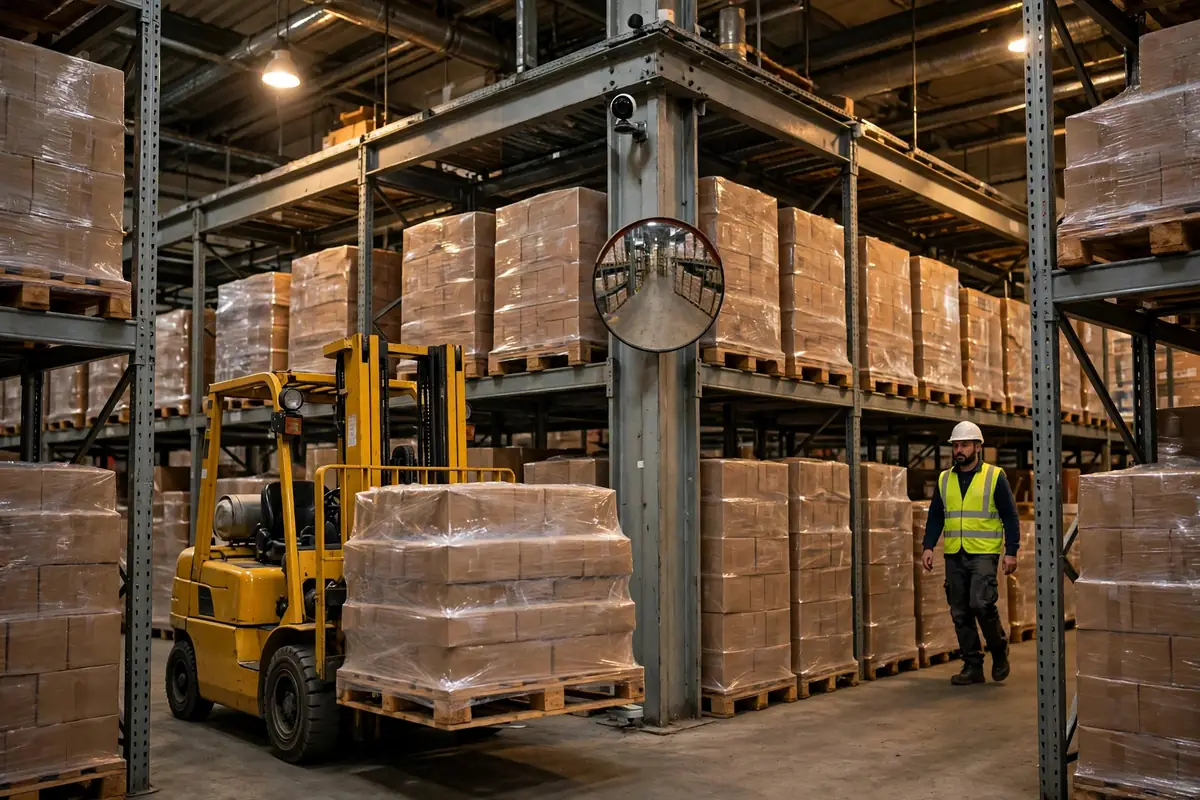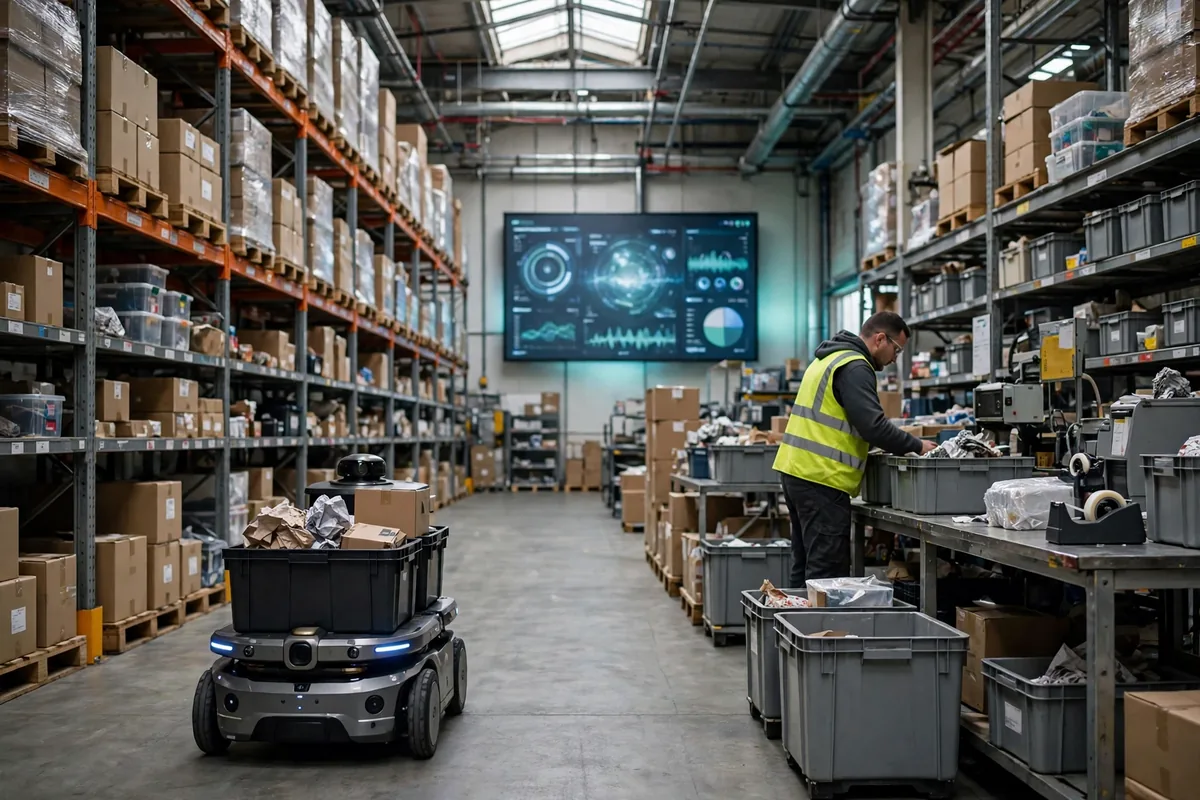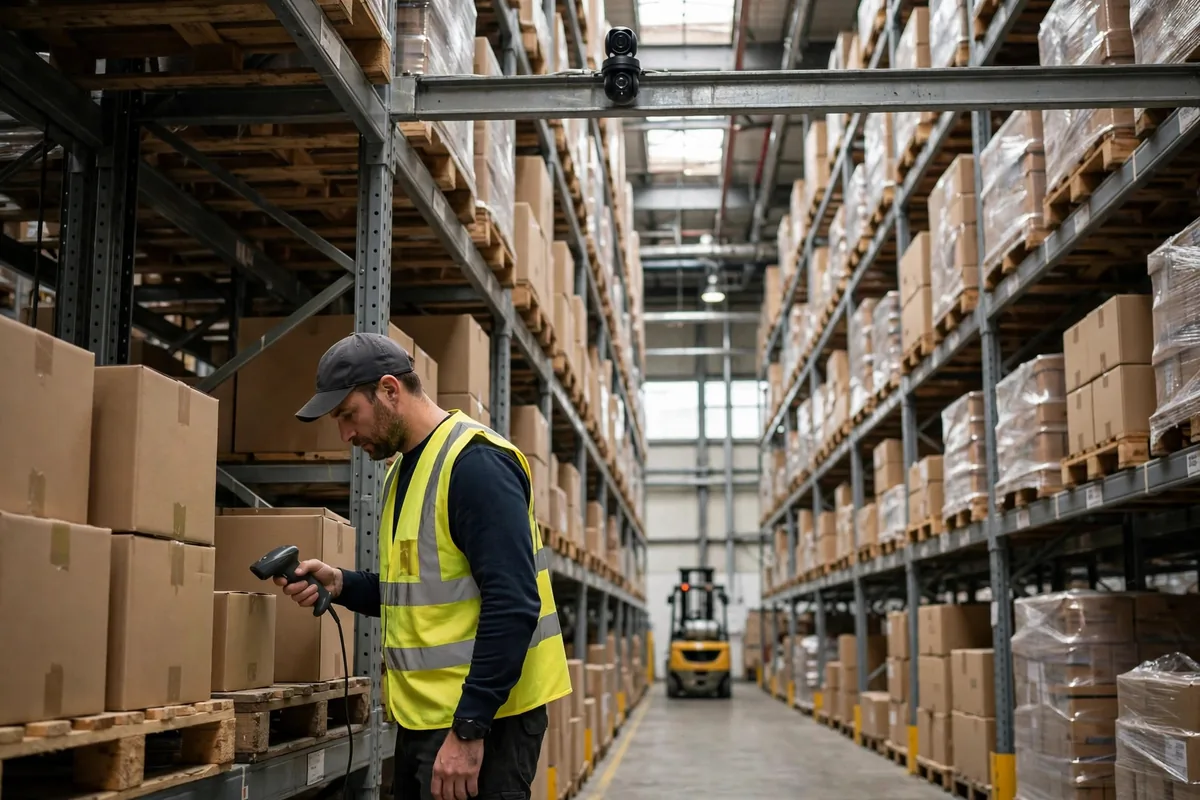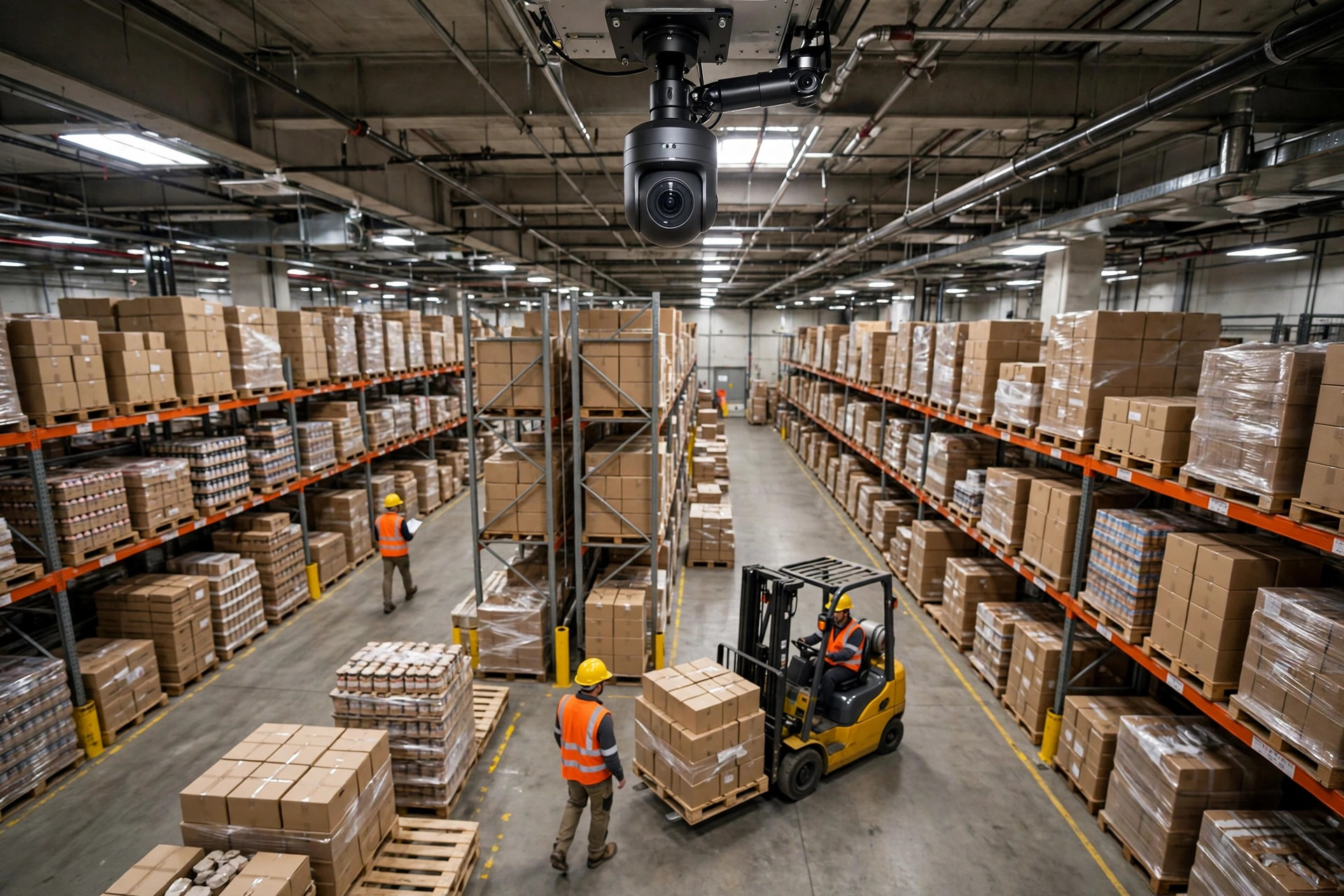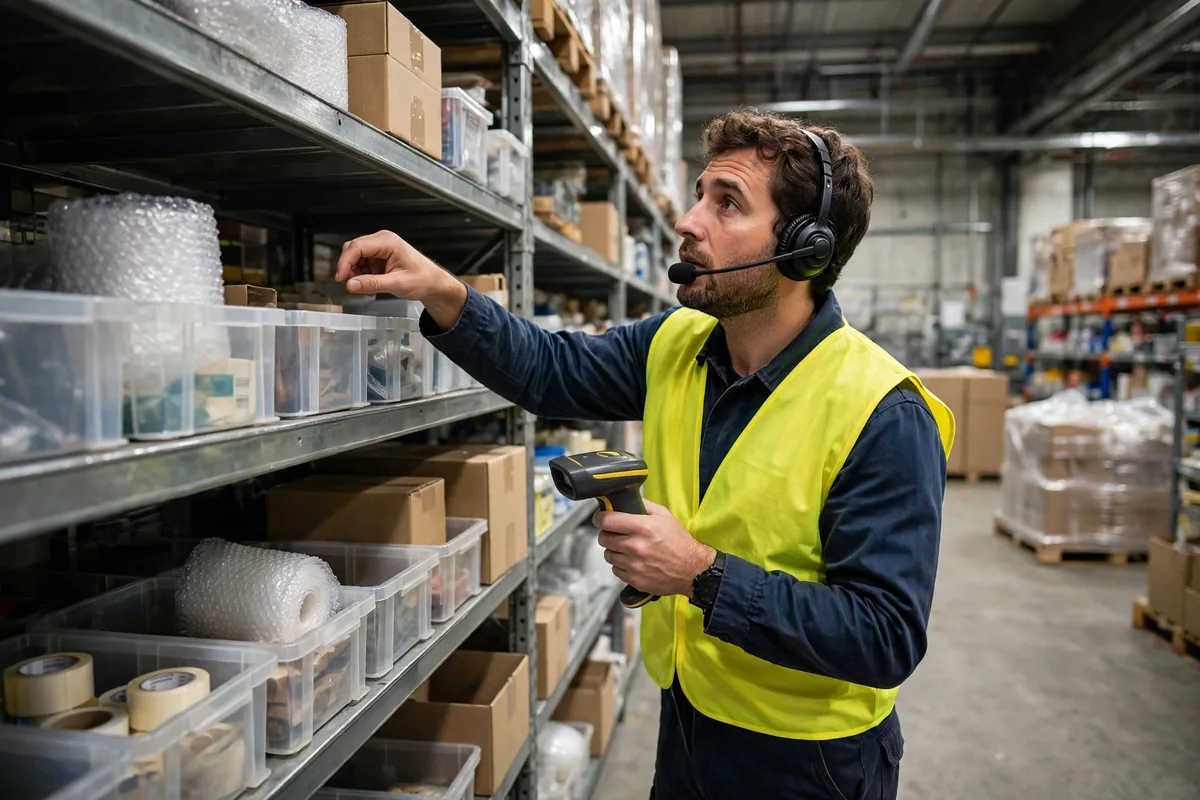
Let me give you the conclusion first: voice picking is genuinely good when it works, and genuinely miserable when it doesn't. In mid-2025, a warehouse in East China handling 3C accessories switched to voice: pickers put on headsets, both hands came free, and a typical order of a dozen lines could be picked without ever looking at a paper list. The supervisor told me the night-shift error rate "dropped visibly," his exact words: "We used to dread mis-picks. Now we dread dead headset batteries." In that same year, another warehouse in North China rolled out voice too — and quietly pulled it back within three months, headsets locked away in a cabinet. Same technology, two opposite endings. The difference was not the equipment. It was whether the warehouse itself was a fit. This piece takes that question apart.
Voice Picking, First Principles: How It Actually Works
Think of it this way: voice picking changes the workflow from "eyes read the list, brain remembers the number, hands grab the goods" to "ears hear the instruction, mouth reports a number, hands only grab the goods." The system calls out locations and quantities in sequence. The picker walks to the spot, takes the goods, and speaks a check code into the headset. The system confirms it and moves on to the next line. Eyes and hands are freed up; only ears and mouth are working.
It is like driving with GPS instead of a paper map: GPS says "turn left at the next intersection" and you never look away from the road, while a paper map means you drive a stretch, then stop and look. The value of it is not the word "high-tech." It is one specific thing: pickers stop switching their attention between the pick list, the shelf, and the scanner. Every attention switch is another chance to make a mistake or lose a few seconds.
So what does an AI voice assistant actually upgrade? Old-school voice systems ran on rigid scripts: they only recognized a handful of standard phrases, choked on strong accents or background noise, and when a check code failed they just repeated "please re-enter." An AI voice assistant is different in three ways. First, it understands natural speech with an accent, so pickers need no "standard pronunciation" before they can work. Second, it holds a multi-turn conversation — when a picker says "this location is out of stock," it asks whether to report a shortage and move on, instead of freezing on the spot. Third, it catches its own mistakes: when the reported quantity does not match what the system expects, it asks again instead of letting it through. Those three changes are what move it from "usable" to "actually good." One more thing people overlook: the voice assistant holds no stock data itself. It is only the mouth and ears of the warehouse management system — locations, inventory, and wave logic all still live in the WMS. So when the voice system fails, the root cause is usually WMS data quality, not the headset.
Is Voice Picking Right for You? Three Dividing Lines
When an engineer talks about selection, start with dividing lines. It is not a cure-all. Cross them and it works well; fail them and you are paying to suffer.
Line one: order structure. Voice pays off best where one order has many lines and many different SKUs — the time saved by not looking at a list adds up across every line. Flip it around: a warehouse where most orders are one or two lines, mostly full-case shipments, saves so little time per order that it does not even cover the hassle of putting on a headset. That kind of warehouse should not bother.
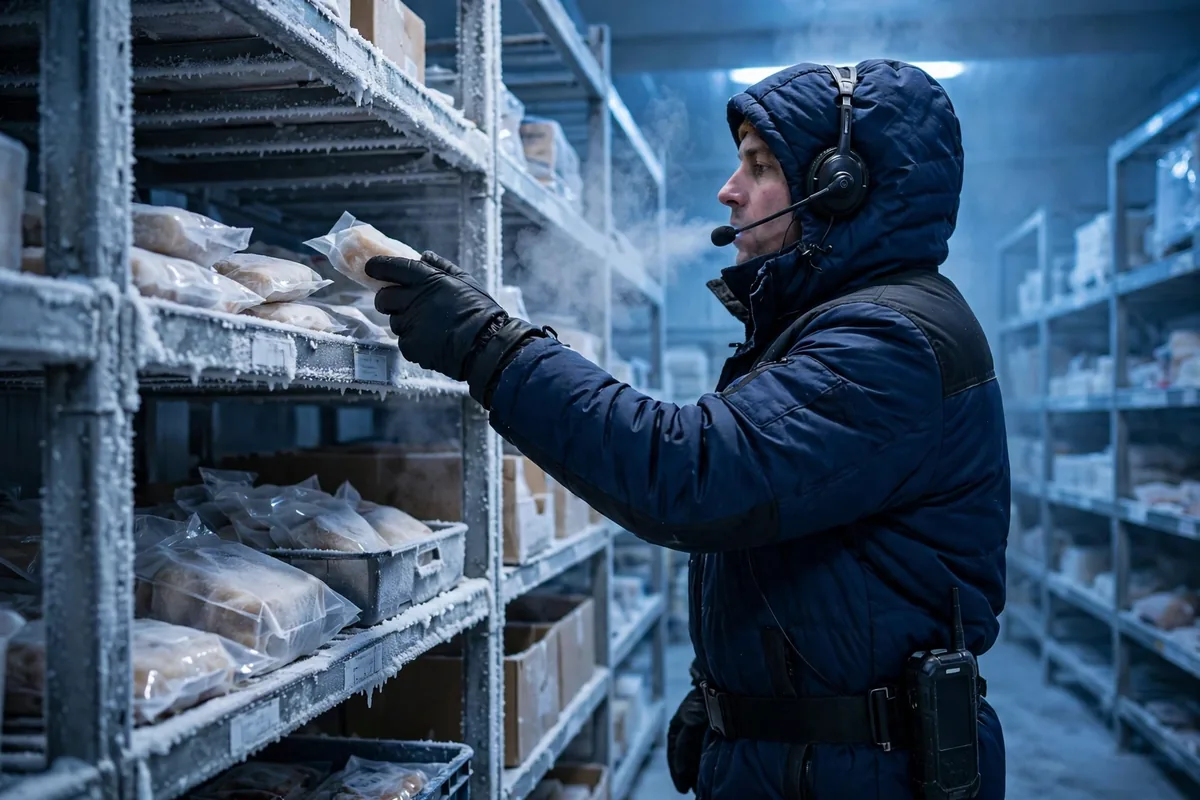
Line two: the working environment. A cold storage warehouse is the classic example. In the winter of 2024, a pharmaceutical distribution warehouse in North China trialed voice in its cold room: pickers wore thick gloves, scanners were awkward to press, and paper lists went damp and soft. Voice turned out to be the smoothest option in that environment. The counter-example is a noisy warehouse: conveyors, sorters, and forklift alarms all mixed together. No matter how strong speech recognition gets, it cannot hold up against constant background noise. In that environment, bring the noise down first and talk about voice second — the order matters.
Line three: workforce stability. Voice work carries a hidden cost: new hires must learn to work by listening, and experienced workers must unlearn "look at the list first." The ramp-up takes days at best, weeks at worst. In a warehouse with very high turnover, half of each trained batch walks out the door before the investment pays back, and the returns on voice never catch up with the training cost. In a warehouse where people stay put, the math works.
Those three lines fit into a simple decision table. Hold it up against your own warehouse and check the boxes:
| Question | Good fit for voice | Not yet — hold off |
|---|---|---|
| Lines per order | Many lines, many SKUs per order | One or two lines, mostly full cases |
| Environment | Quiet or controlled noise, cold rooms, glove work | Constant loud noise, heavy interference |
| Workforce | Relatively stable, training accumulates | Very high turnover, train them and they leave |
| Accuracy requirement | Mis-picks are expensive, line-by-line checks needed | High error tolerance, mistakes cost little |
If two or more boxes land on "good fit," keep going; if only one does, fix the weak spots first. If you are unsure, pilot one zone first — many lines, many SKUs, a stable crew — run it for a few weeks and record the mis-pick rate, time per order, and every picker complaint. Expand when the numbers look good; stop when they don't. A pilot costs far less than a warehouse-wide flop.
The Three Traps People Fall Into
Trap one: treating the demo as the acceptance test. A vendor demo always happens in a quiet meeting room, in standard pronunciation, with prepared shelves. Acceptance testing has to happen in your real environment: the noisiest shift, the hardest product names to pronounce, the most confusing locations, and the quietest picker on the team. A system that runs smoothly in the demo and falls apart on the floor — I have seen that story far too many times. Cut corners on acceptance and you will pay for it in rework.
Trap two: sloppy check-code design. The check code is the lifeline of the whole setup: too short and codes collide, too long and pickers struggle to say them, all digits and they blur together, all letters and they are hard to remember. Generate short check codes from the location coding scheme, with the picker speaking once and the system confirming once — two-way confirmation. Any setup that skips this and just asks for "the quantity, please" will eventually get bitten by mis-picks.
Trap three: maintaining the equipment but not the people. Headsets are consumables: microphone sensitivity drops with wear and battery life shrinks with age, so both belong in a daily inspection routine — keep spares on hand instead of ordering replacements after things break. But people are harder to maintain than equipment: new hires need someone to walk them through the voice workflow, and experienced workers moving to a new zone need to relearn the announcement rhythm. A warehouse that buys equipment without building a maintenance routine for both will see equipment condition and staff confidence decline together within three months — and then blame the technology. That is not fair to the technology.
Is the Money Worth It? One Number Decides
Time to run the numbers. Suppose a warehouse picks 5,000 lines a day, and voice saves 2 seconds per line compared with reading a list. That is nearly 3 hours saved per day, and dozens of hours of labor per month. Convert that into your warehouse's labor cost, compare it with the investment in equipment, implementation, and maintenance, and the answer comes out: if the labor saved covers the investment within roughly a year, it is worth it. If not, wait — or start with a single-zone pilot instead of rolling it out everywhere at once. And count headset wear, spare units, and new-hire training time on the investment side — any calculation that only counts the equipment price is an optimistic one.
In the end, voice picking is not a question of "should we adopt it" but "does our warehouse qualify." Cross all three dividing lines and an AI voice assistant is a genuinely good helper. Miss one, fix the weakness first — buying the equipment later costs nothing. In warehouse automation, the most expensive thing was never the equipment. It is buying the wrong equipment and ripping it out to start over.
By Da Liu, Automation Engineer