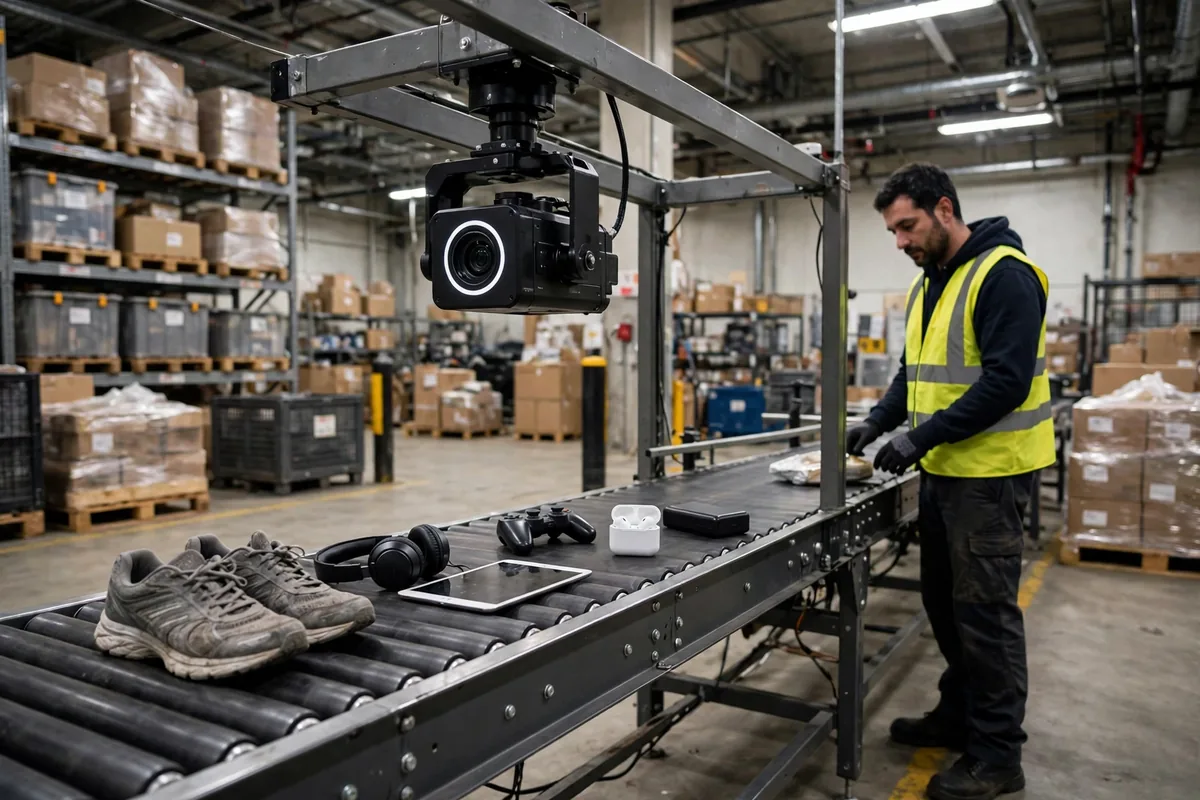
Let's be blunt: AI visual quality inspection warehouse packing only pays off when the cost of its mistakes stays below the labor it saves. A camera that checks every parcel sounds like a clean win until you watch what happens on the floor. Every false alarm stops a parcel, and every miss ships a problem to a customer. There are two sides to this, and I have seen too many warehouses buy the camera, then discover the real bill arrives after installation. The labor you save is real money. The trouble it adds is real money too.
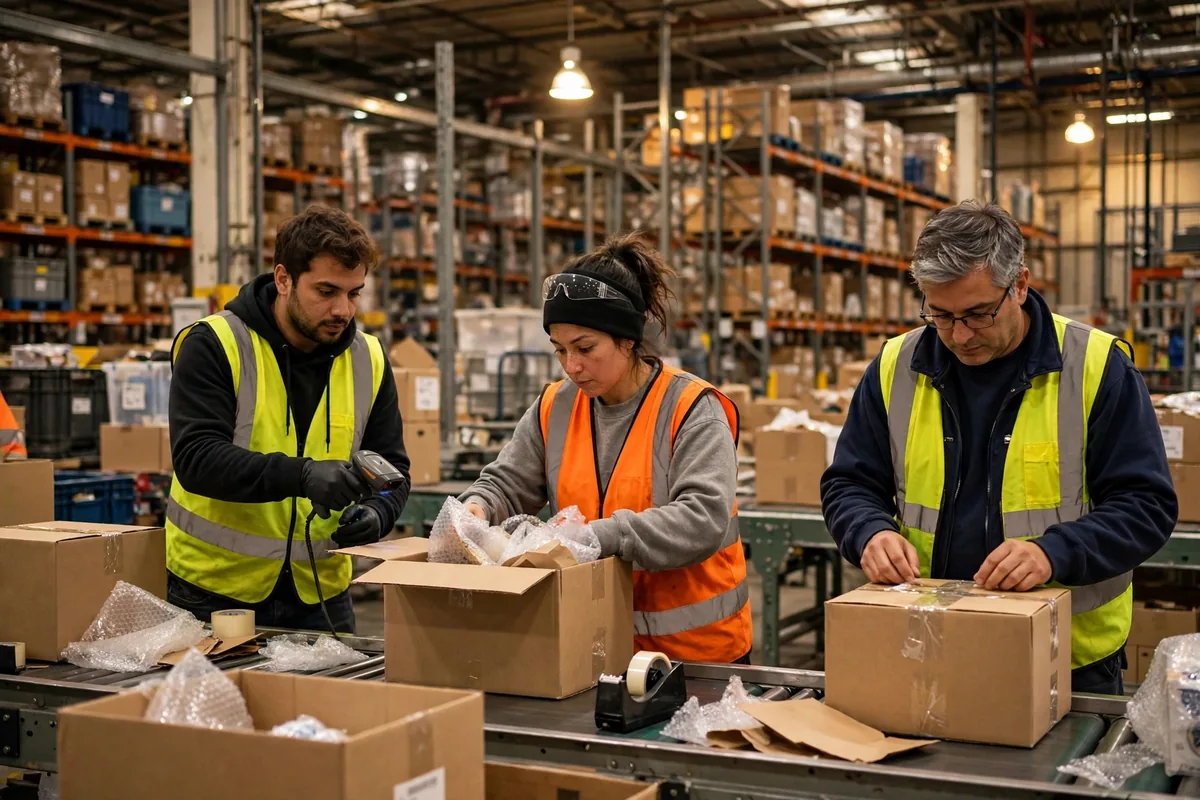
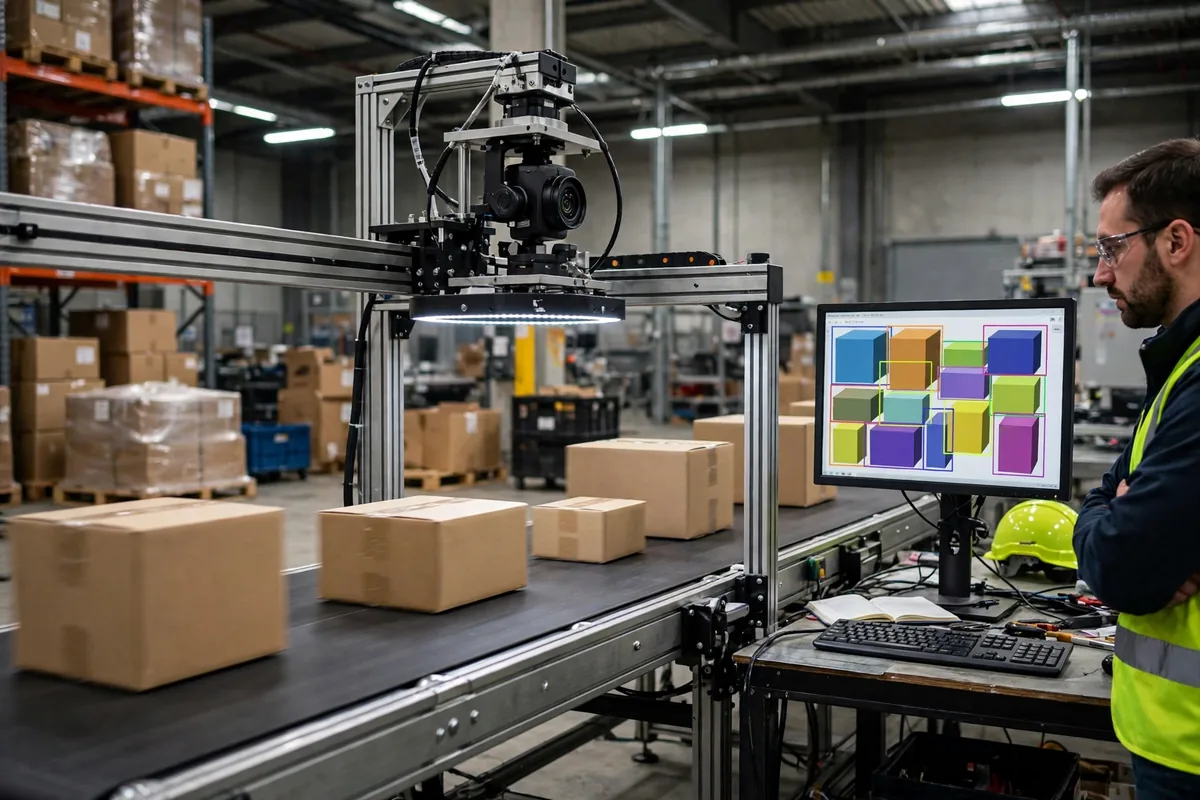
In the fall of 2023 I walked a 3PL outside Los Angeles that ships home goods. About 8,000 parcels a day crossed their packing benches, double that in peak. They had put cameras over the benches two months earlier, and the operations supervisor was already fed up. The cameras were diligent to a fault. A bottle catching the light, a label tilted two or three millimeters, a strip of tape with one extra crease — a human would have glanced and passed all of them, and the camera flagged every one. A queue formed at the review bench, the conveyor kept stopping, and packing was arguing with review. I stood there for half an hour. Fewer than one in three flagged parcels had anything actually wrong with it. The camera was not lazy. The standard was set too tight. The two inspectors the warehouse had saved came straight back as reviewers, just at a different bench.
AI Visual Quality Inspection Warehouse Packing: Count the False Alarms First
False alarms and misses are two ends of one lever. Tighten the threshold and misses fall, but false alarms climb. Loosen it and the line runs smooth while bad parcels slip through to customers. No warehouse gets both ends for free, so before you pick a side, price both sides.
Every number in the table below is a hypothetical worked example, included only to show how to do the math. It is not measured data from any warehouse, and it is not a vendor's promised performance figure:
| The bill | Assumed conditions | What it costs |
|---|---|---|
| False alarms | 10,000 parcels a day, 2% flagged wrongly, about 1 minute to review each | About 200 extra minutes of review a day, roughly half a shift |
| Missed defects | 10 missed parcels a day, about 300 a month | Returns, reshipping, customer service hours, lost repeat orders |
Here is the counterintuitive part: a stricter camera is not a better camera. I have seen too many pitches sell "better safe than sorry" as if flagging more parcels proves the system works. A false alarm charges you on the spot — a stopped line, a pile-up, an extra pair of hands. A miss charges you later — a complaint, a return, a lost customer. Because the two bills arrive on different schedules, managers tend to stare at the one in front of them and pretend the later one does not exist. The right move is to put a price on each: what does one false-alarm review cost, and what does one missed defect cost? Once both numbers sit side by side, the threshold almost sets itself. Where the average parcel is expensive, a miss costs more, so run it tighter. Where parcels are cheap and volume is king, a false alarm costs more, so run it looser.
How do you actually set the threshold? My way is to run loose for the first two weeks. A week of loose running gives you real false alarms and real misses from your own floor, not lab data. Take that week's samples and go through them one by one, then tighten one notch. Move one notch, run two days, watch whether the review bench queues up, then decide about the next notch. The worst mistake is cranking the threshold to maximum on day one. The review bench jams, the whole warehouse decides the camera is a nuisance, and after that nobody cooperates when you try to tune it. Let the floor find the camera easy to live with first. Only then can it get more accurate.
Lighting, Angles, and New SKUs: Three Hurdles at the Packing Station
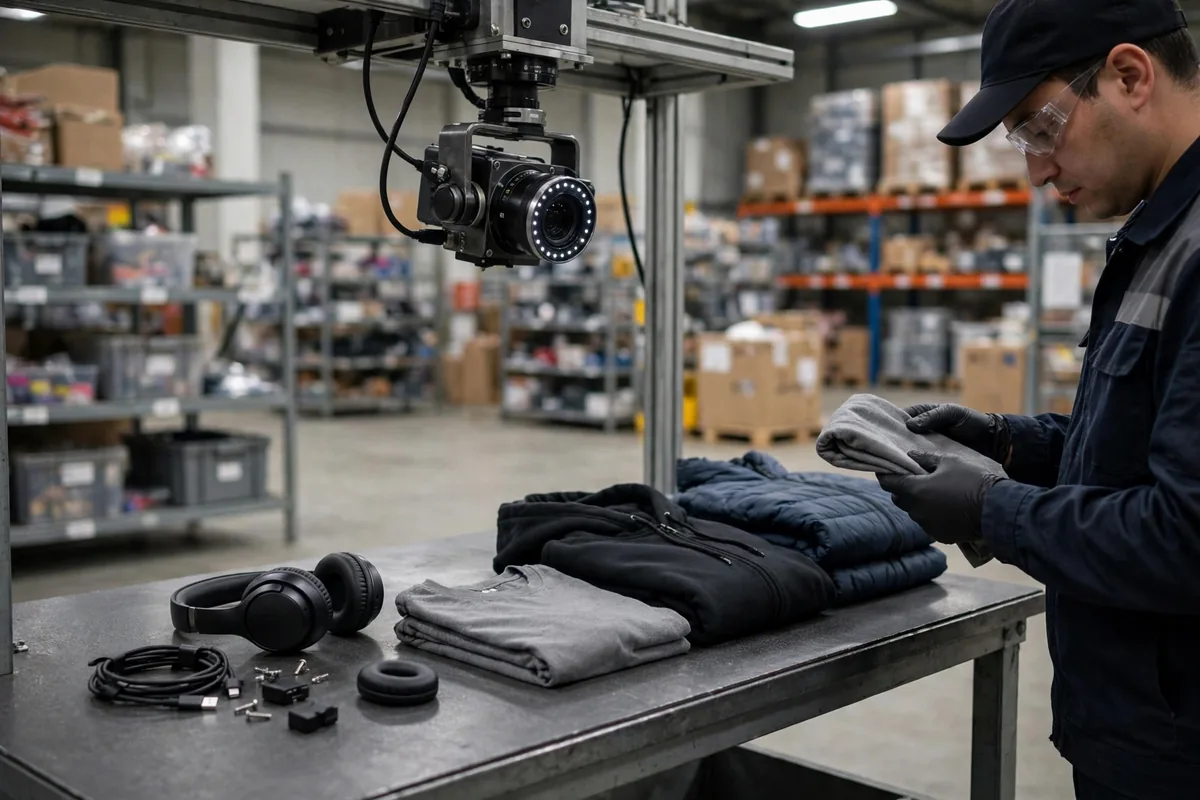
A camera does not just inspect the parcel. It inspects the conditions around the parcel. The first hurdle is lighting. The lights above a packing bench can look bright enough, and then a glossy bottle throws a reflection that eats half the label, or a matte carton casts a shadow that hides the seal line. Until the lighting is right, any talk of accuracy is empty. My approach is low-tech: take a dozen of the hardest parcels you have and photograph them in the morning, at midday, and in the evening. Whichever shift fails most tells you which light to fix first. Lamp position, shades, the angle of a fill light — getting those right beats buying a more expensive camera.
The second hurdle is angle. A human inspector flips a parcel, turns it, looks at the bottom. A camera only sees its own angle. In the summer of 2024, a cosmetics warehouse launched a new lipstick box with a foil stripe down one side. Shot from directly above, the stripe caught the light, and three or four parcels in ten were judged damaged. People were ready to blame the camera. The camera was fine. Nobody had fed the new packaging to the system on launch day, and nobody had told the reviewers what the new box looked like. The system inspects what it recognizes. What it has never seen, it can only treat as suspicious.
That is the third hurdle: new SKUs. New packaging, new sizes, new suppliers arrive every week, and if the inspection rules do not keep up, the camera turns into a guard who only recognizes old faces. The fix is simple, but someone has to own it. On the first day a new product arrives, run it past the camera, capture samples, set the standard, and show the reviewers how this product is judged. For the first week, replay the false alarms every day. If nobody owns that job, the system falls behind the floor within three months, and within six months nobody trusts it.
Where Human Review Belongs in AI Visual Quality Inspection
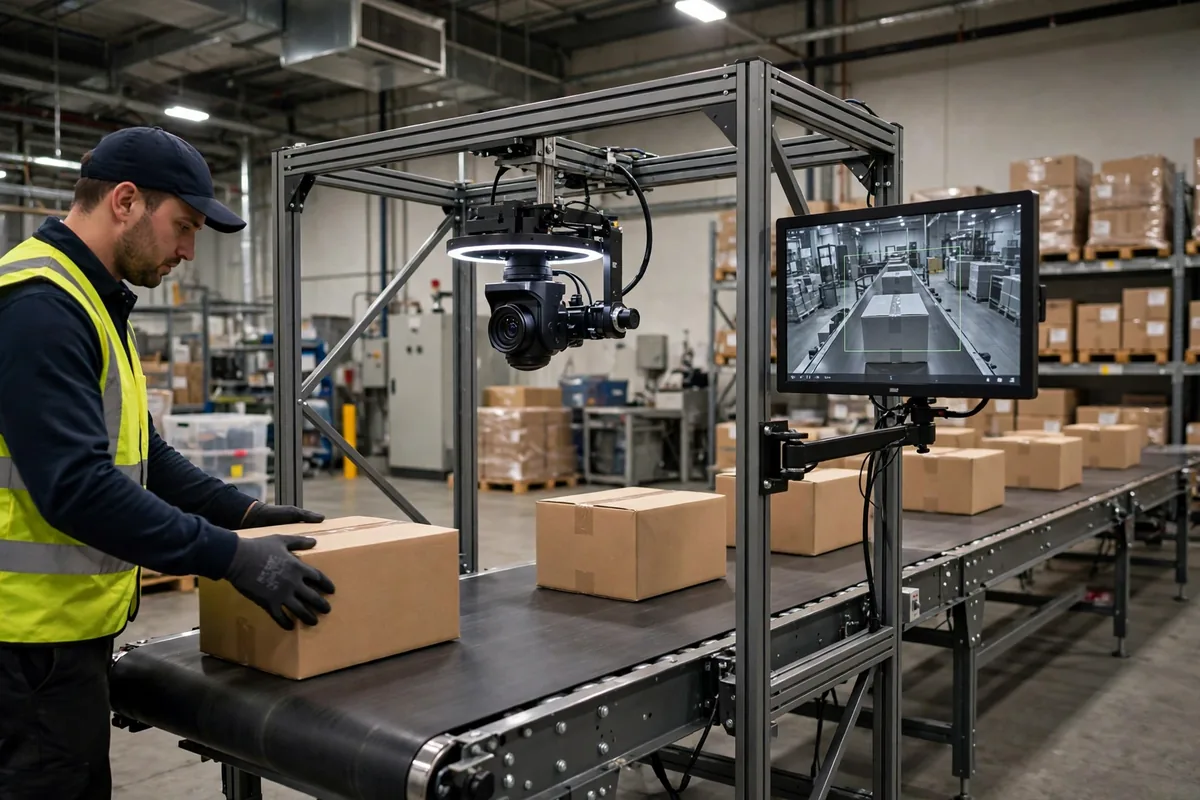
A camera checking parcels does not mean people can walk away. Where review sits decides whether the system is a helper or a decoration. I split it three ways: parcels the camera clears go straight through; parcels it calls suspicious go to a review bench, where a person takes one look and decides; parcels it calls defective get isolated until a shift lead confirms. Reviewers only touch the suspicious ones, never the whole flow. That is the only way the labor saving survives.
Review has a second job, which is teaching the system. Once a week, take an hour and spread out the week's false alarms. Which ones were a lighting problem, which ones an angle problem, which ones a product the system had never met? Fix the floor where the floor can be fixed, add samples where samples are missing, and admit the rest. Some parcels are simply a bad fit for a camera — anything wrapped in full reflective film, anything whose shape changes every batch. Admitting that beats forcing it.
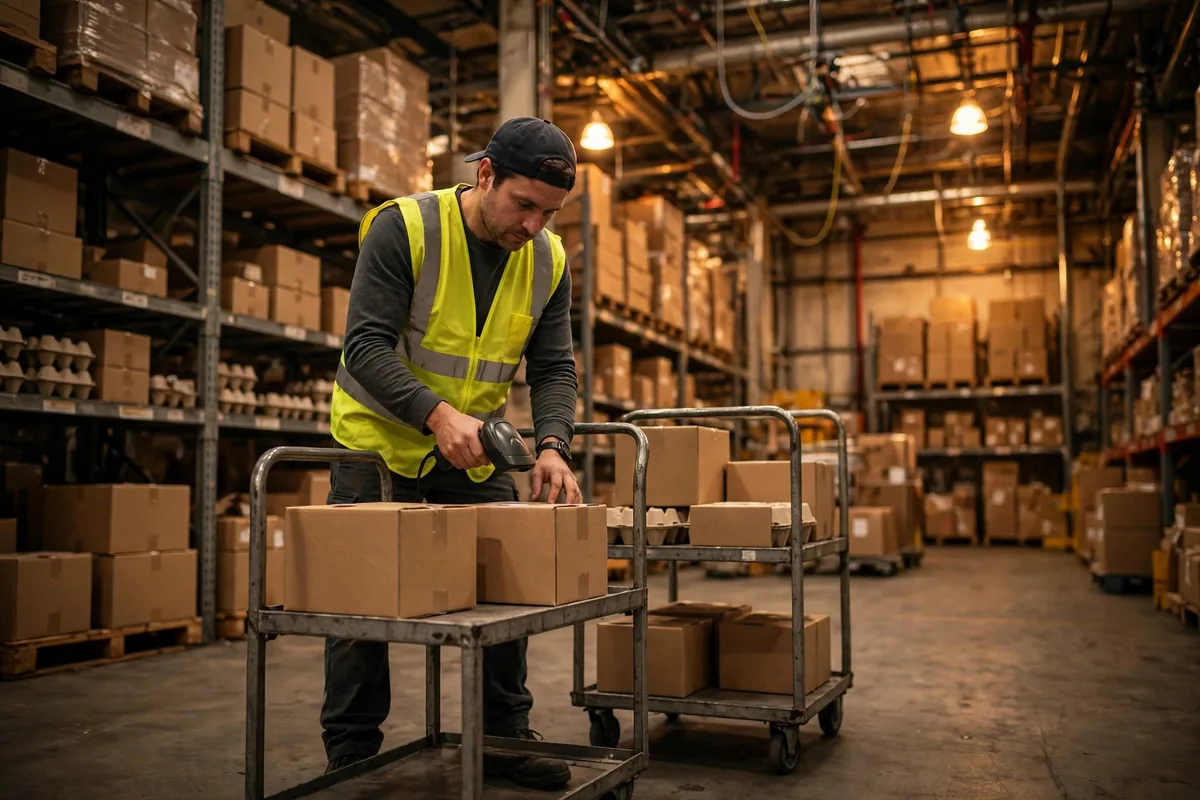
Cleared parcels need a safety net too. Take a small sample of the parcels the camera passed and check them by hand every day. How many depends on how much you can tolerate in complaints. Here is another hypothetical example: 10,000 parcels a day, 100 sampled, one miss found. That suggests misses run somewhere around one in a hundred, and it is time to check whether the threshold drifted loose or a new product went unrecognized. It is the camera's way of catching its own mistakes — the part of AI visual quality inspection warehouse packing most vendors skip in the demo. Without sampling, misses can pile up for months unnoticed, and by the time a customer calls, the bill is already late.
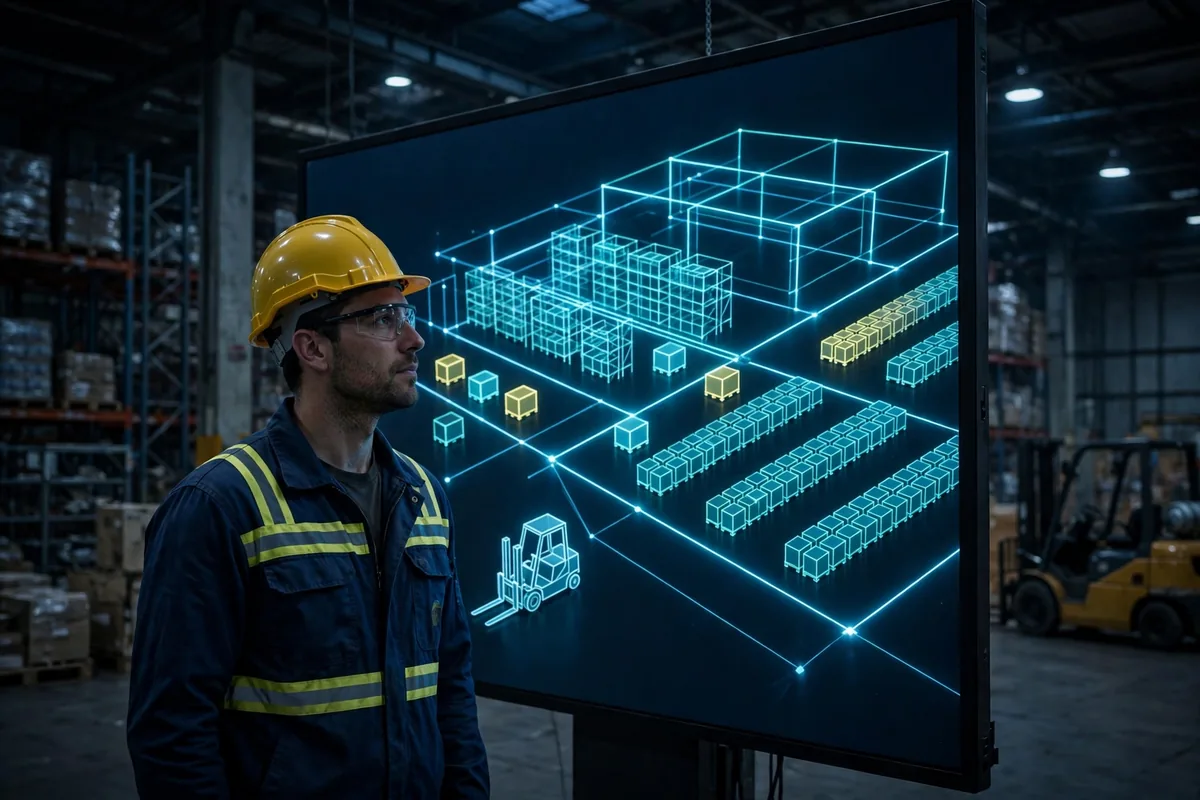
Whether to buy the system at all, I use a simple dividing line. Under two or three thousand parcels a day, or an assortment that changes shape every batch, leave the camera alone and get disciplined manual spot-checks in place first. Over ten thousand parcels a day, with a fairly stable assortment and expensive complaints, the camera has a case. And when you run the numbers, count everything: the reviewers, the hours spent fixing light and angles, the upkeep when new products launch — then set all of it against what missed defects cost you.
A camera can look for you. It cannot decide for you. So ask yourself: is the camera over your packing bench saving you money today, or is it just adding trouble?
By Lao Mi, Supply Chain Veteran (20 yrs)