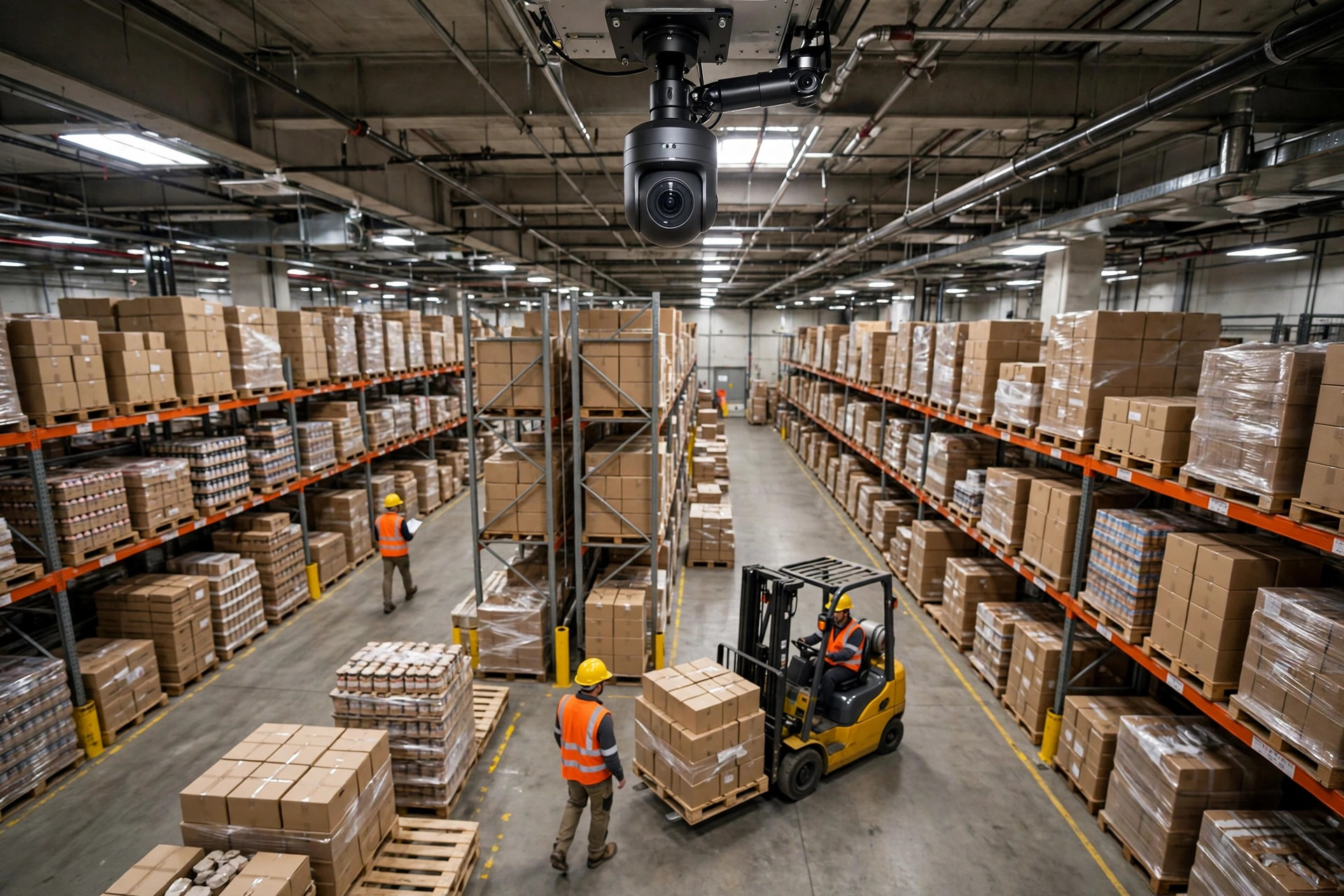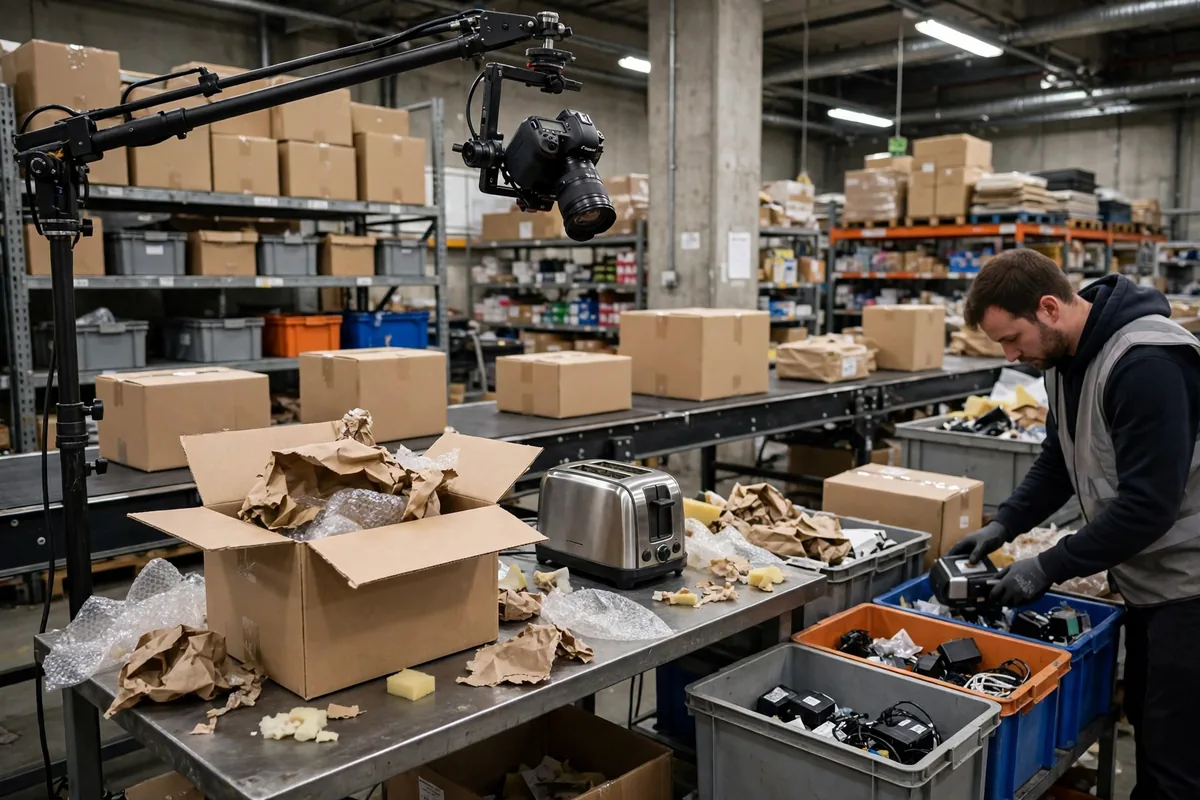
Start with the bill. AI visual inspection for returns promises to shrink it. A warehouse handling 500 returns a day pays like this: unbox, look at the outside, test the function, assign a grade, type it into the system. Four minutes a piece, on average. One grader clears about 15 units an hour, so 500 units a day takes 33 labor hours, about four full-time graders. Over a month, wages, benefits, and supervision add up to real money, before a single mistake. So the question is not whether AI visual inspection for returns grading sounds impressive. The question is whether it makes that bill smaller.
I have watched plenty of warehouses light up at the demo. A camera takes a photo, the model calls it Grade A, resellable, and everyone nods. They nod too early. Grading a return was never really about seeing. It is about who takes responsibility after the seeing is done. The model calls it Grade A, the item ships, the customer finds a scratch, and the complaint, the refund, and the bad review land on someone's desk. The model does not pay for that. A person does. So this piece is not about how clever the technology is. It is about the money: what manual grading costs, what a vision system costs, and how to split the work between the two without losing money.
What manual grading really costs
Picture a returns warehouse in Dongguan, Guangdong, in November 2024, right after the big sale: electric kettles, hair dryers, vacuum cleaners, more than 800 units in a single day. Six graders worked from 8 in the morning to 9 at night. They cleared 600. The other 200 rolled into the next day. One grader told me the hardest part was not the looking. It was the not knowing. A hair dryer with a 3-centimeter scratch: Grade B or Grade C? The supervisor said use your judgment. Two people, two different judgments, and the same batch could come out a full level apart.
Wages are only the visible part. Three hidden parts sit underneath. First, inconsistent standards produce misgrading: a Grade A item sold as Grade B loses money on every unit, and a Grade B item shipped as Grade A comes back as a complaint, with the refund and return freight costing double. Second, peak-season backlog: every day a return sits ungraded is a day its value sits frozen. Third, turnover: a new hire needs at least two weeks to get up to speed, and somebody pays for the misgrades during those two weeks.
The numbers below are a hypothetical worked example, showing the shape of the cost structure, not any real warehouse's books. Assume 500 returns a day and 250 working days a year:
| Cost item | Manual grading (hypothetical example) | AI visual inspection + human review (hypothetical example) |
|---|---|---|
| Grading labor | 4 graders, about 480,000 yuan/year in full labor cost | 1 review operator, about 120,000 yuan/year |
| Equipment and systems | Photo station and scanners, about 20,000 yuan | Cameras, lighting, station build-out, and system fees, about 180,000 yuan |
| Misgrading losses | Inconsistent standards, about 150,000 yuan/year | Model plus human review, about 60,000 yuan/year |
| Backlog and capital tied up | Slow turnaround, about 80,000 yuan/year | Faster processing, about 20,000 yuan/year |
| Total | About 730,000 yuan/year | About 380,000 yuan/year |
The figures are hypothetical; the proportions are the point. In manual grading, the money sits in people and mistakes. In a vision system, it sits in equipment and software. The savings logic is different because the money lives in different places.
The cost of AI visual inspection for returns comes in three blocks
A second scene. In March 2025, an apparel e-commerce warehouse in Zhejiang tried a vision setup on its biggest return headache: a down jacket. Tag still attached? Worn or not? Any stains? Graders had to check the collar, the cuffs, and even smell the fabric. The setup photographed six sides, the model assigned a grade, and the result wrote back to the WMS. In the first month, throughput more than doubled. But when the month closed, the savings were smaller than expected. Why?
Because the cost of AI visual inspection for returns grading comes in three blocks, and most warehouses only budget for the first one.
The first block is the visible purchase and setup: cameras, lighting, the photo station, model deployment, and the connection to the WMS. Pay it once, spread it across every return, and the math gets better the higher the volume. At 100 returns a day it barely spreads at all; at 1,000 a day it spreads thin.
The second block is the ongoing cost nobody puts in the budget: the model needs maintenance. Change the grading standard and it needs retuning. Lights age, a camera shifts a few millimeters, and the grades drift with the photos. A new product launches, the model has never seen that style, and someone has to feed it samples. This money leaks out month after month. Plenty of warehouses budget the first block to the yuan, leave nothing for the second, and by year end the ROI has fallen apart.
The third block is the easiest to overlook: the cost of human review as a backstop. Vision inspection is not fully automatic. Anything the model is unsure about, anything near a grade boundary, any product category with a high complaint rate, a person has to look at again. The review operator is the fuse for the whole system. The review rate decides how much you actually save: review 10 percent and you keep most of it; review 50 percent and most of it goes straight back out the door. Work that number out before the contract is signed, not after.
Here is the counterintuitive part. The biggest saving from AI visual inspection for returns grading is not replacing people. It is grading consistency. The largest cost in manual grading is not wages. It is the misgrades, disputes, and rework caused by inconsistent standards. A vision system that grades at exactly the same speed as a person still pays for itself if its standard is stable and its results are traceable, because the misgrading and complaint costs fall by more than the labor saved. Judge it on headcount alone, though, and it usually fails, because cameras, lighting, maintenance, and review labor together cost about as much as a few graders.
How to split AI visual inspection for returns between people and AI
The rule for the split is simple: let the AI do what it does reliably, and let people do what only a person can answer for.
I would split it into three tiers. Tier one, AI decides alone: the item looks untouched, tags intact, no sign of use, and the model grades it resellable and writes the result back to the system. The higher this tier's share, the faster the payback. Tier two, AI proposes and a person confirms: light scratches, minor stains, damaged packaging, intact product. The model suggests a grade and a person gives it one look. This is where most of the work lives, and the review share has to stay under about 15 percent. Tier three, people decide directly: high-value items, anything that needs a powered function test, product types the model has never seen. Skip the AI entirely; forcing full automation costs more in misgrades than it saves.
So here is a conclusion you can calculate. Using the hypothetical example in the table above, a warehouse handling 500 returns a day saves about 350,000 yuan a year against a system cost of about 180,000 yuan: a payback period of roughly six months. But that conclusion rests on three conditions, and it fails if any one is missing: daily return volume of at least 300 units, below which the equipment and maintenance costs do not spread thin enough; an AI-only decision share of at least 60 percent, below which review labor eats the savings; and misgrading losses cut by at least half, without which the only saving is labor. Meet all three and the money is well spent. Miss one and do not buy yet. Write the manual grading standards handbook first. It is the foundation any vision system will stand on later.
By Lao Zhou, Logistics Cost Analyst