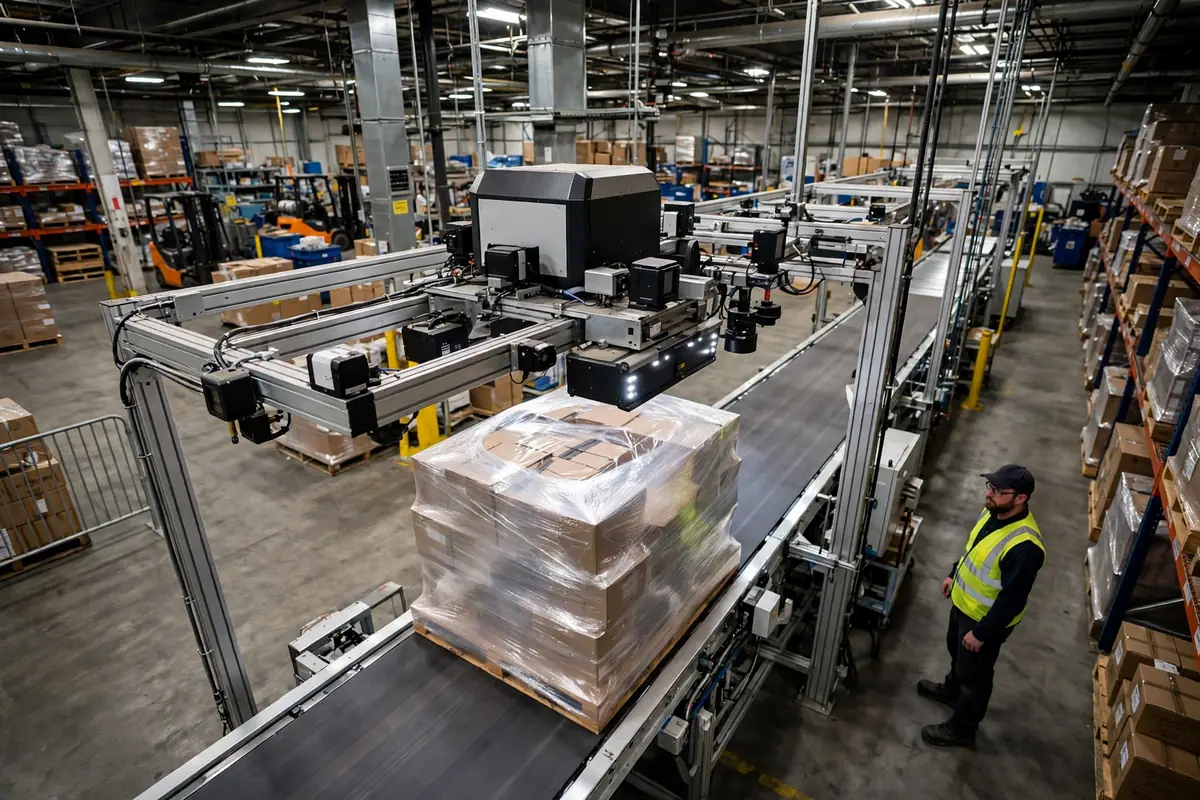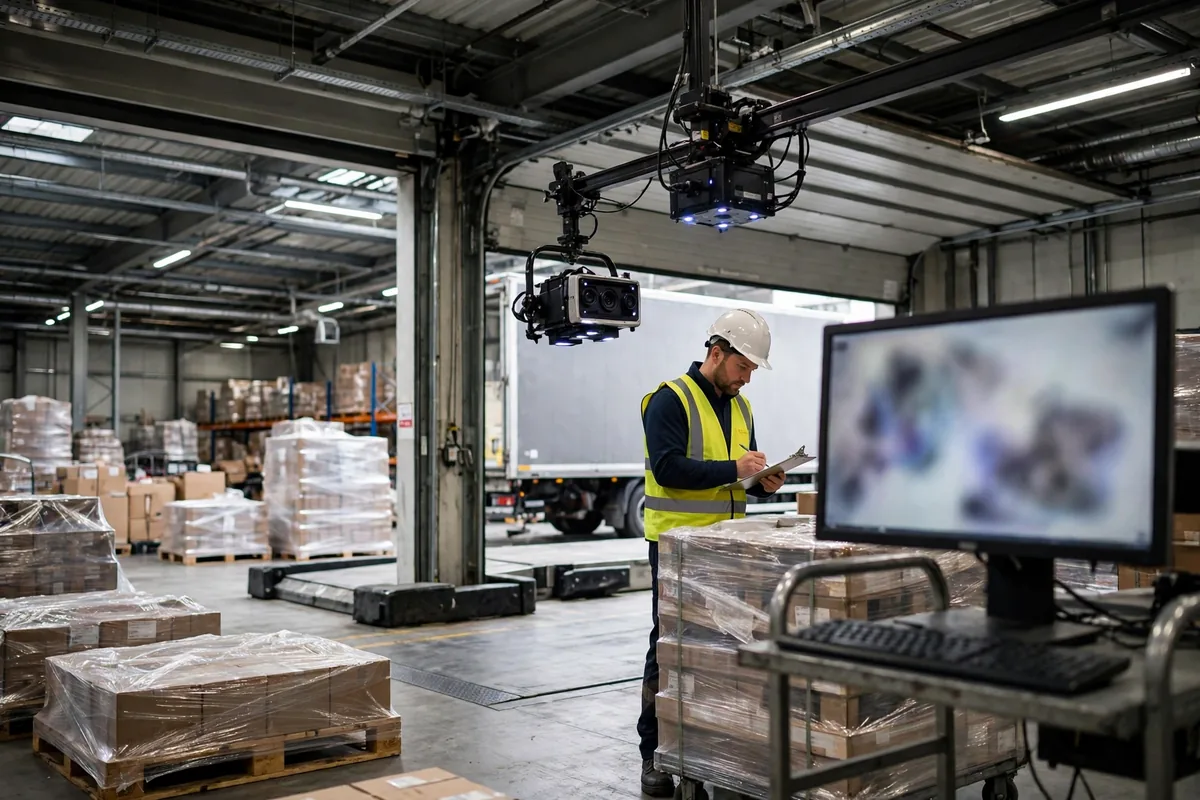
Start with ai vision pallet counting warehouse accuracy, and start with suspicion. That long phrase means something simple: a camera at your receiving dock counts pallets and cases so your people do not have to. In a vendor demo, the pallets are square, the cartons are uniform, and the lighting looks like a photo studio. Of course it counts well there. My warehouse is a small building with a dock door that faces the afternoon sun, suppliers who pack like they are angry at cardboard, and no budget to burn. We small warehouses cannot afford the expensive version of anything, so my question was narrower: where does camera counting stay honest in a messy building, and where does it quietly guess?
Where ai vision pallet counting gets it wrong
First case. This spring, a friend running a consumer goods warehouse not much bigger than mine trialled a vision counting setup at receiving. For his best supplier, the results were genuinely good. Pallets arrived uniform, cartons were one size, layers were even, and the system matched the paperwork load after load while his receiver stood by with a clipboard. He was ready to declare that manual counting was finished. I told him to hold the celebration until his worst supplier showed up.
That happened the same week. The second supplier sent mixed pallets: large cartons on the bottom, small cartons wedged on top, one case leaning out of the side profile. The camera undercounted the hidden cases and merged one layer where similar coloured cartons gave it no visible seam to work from. The system was not stupid. It simply counted what it could see from a fixed position, and a fixed camera cannot walk around a pallet, nudge a case, or look behind the tall box in front. That leads to the counterintuitive judgement in this whole piece: vision counting is most valuable in warehouses with fairly standardised freight and enough volume to tire out human counters. The messier your freight, the less you can remove the human check. Chaos is exactly where the sales story sounds best and where the technology needs the most supervision.
Then there is shrink wrap glare, my personal favourite. In the afternoon, sun comes through our dock door at an angle, hits the wrap, and the image blooms white. Carton edges disappear. The same pallet can count correctly at ten in the morning and wrong at three in the afternoon. The fix that worked was embarrassingly cheap: shift the camera angle slightly off the direct reflection, add a simple shade above the counting position, and stop treating the worst glare window as prime receiving time for counted freight. Big integrators will sell you a lighting redesign. Try the shade and the angle first. Small warehouse rule: spend the small money before you respect the big quote.
| Problem load | How the count goes wrong | Cheap thing to try first |
|---|---|---|
| Shrink wrap in direct sun | Edges wash out, layers merge | Re-angle the camera, add shade |
| Mixed pallet, mixed case sizes | Small cases hidden behind large ones | Route mixed pallets to manual count |
| Similar carton colours | Seams vanish, a layer disappears | Ask supplier to use layer sheets |
| Forklift parked in frame | Half the pallet is occluded | Paint a stop line, truck backs out during count |
The small warehouse math on pallet counting accuracy
Now the money, because accuracy talk without money is how small operators get sold oversized systems. Camera counting offers two things: faster receiving and fewer stock arguments later. Count what it actually saves in your building. My friend's site receives roughly twenty pallets on an average day, counted and photographed by a receiver who also does other work. Manual counting and photo records take him a modest slice of the day, not a whole salary. If a system cut that slice in half, the yearly hours saved are easy to calculate, and you set them against the total of hardware, installation, and service fees from a formal vendor quote. I am not printing a price here, because prices vary by vendor and site, and an invented number would help nobody. If the payback period comes out embarrassingly long, stop. But add the hidden line too: how often does a receiving miscount turn into a customer claim, a recount, or an afternoon of hunting one pallet through the building? For some small warehouses that pain, not the counting minutes, is the real case for the system.
My own verdict is unfashionable. If your volume is low and your suppliers ship messy freight, buy a decent camera that simply records receiving first. Video evidence settles disputes surprisingly often, and it costs a fraction of automated counting. Graduate to automatic counting when standardised full pallets become most of your intake and volume makes manual counting a genuine bottleneck. Buying intelligence before you have order is a very small-warehouse way to go broke politely.
Run a two-week pilot before you believe any number
Here is the pilot method I would trust, and it is deliberately low-tech. For two weeks, count every pallet twice: once by the system, once by your receiver the normal manual way. Keep the two results separate until both are recorded, then reconcile them load by load. For every mismatch, save a photo and write down the condition in plain words: glare, mixed pallet, blocked view, unusual carton. At the end, look at only three things. How many pallets were wrong out of the total. Which freight type produced the errors. And what share of your real intake that freight type represents.
Decide your pass mark before the pilot starts, not after you have fallen in love with a dashboard. If nearly all errors sit in mixed pallets and mixed pallets are a small share of intake, you have a workable rule: system counting with spot checks for standard pallets, manual counting for mixed ones, and most of the time saving survives. If standard pallets also fail regularly, the honest answer is that the setup does not fit your light or your freight yet. Hand the pilot data back to the vendor and let them earn the sale by fixing it. Never quietly exclude the hard loads from a pilot to make the result pretty. That produces a beautiful report and a system that fails on your busiest day.
Make sure the pilot covers your worst hours on purpose: the afternoon glare window and your busiest receiving days. A system that is accurate when the dock is calm has proven very little. One that holds up when the dock is loud, crowded, and late has proven the only thing worth paying for. That is the small warehouse way of buying technology: test it in your own mess, keep the human where the camera is blind, and let the arithmetic, not the demo, decide.
By Xiao Ma, Small Warehouse Owner