Let me be blunt: with ai vision forklift pedestrian detection warehouse systems, the number that saves lives is not the detection rate. It is the false alarm rate. In a demo, the system spots a mannequin ten times out of ten and everyone applauds. Bolt it onto a real truck and let it cry wolf dozens of times a shift, and by day three the driver will find a screwdriver and cut the buzzer wire. In my integrator years, the most expensive systems did not die from failure. They died because the people on the floor got annoyed and switched them off.
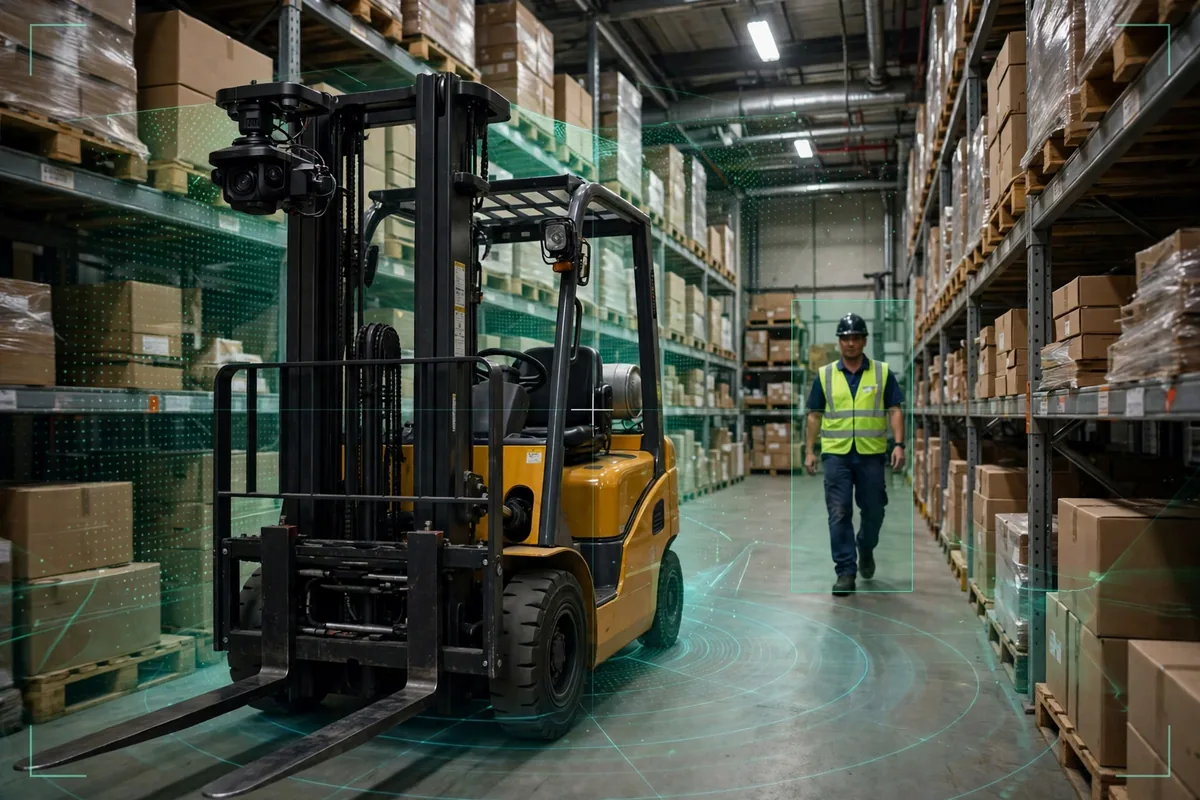
Think of it this way. Vision detection gives the driver an extra pair of eyes, mounted behind his head and on his sides. A forklift is worse than a car for blind spots: the mast blocks the front, a load blocks half of what remains, and when the driver twists around to reverse, nobody is watching the front at all. Cameras cover those seconds. But extra eyes are useless if the brain cannot keep up. An alarm for everything is an alarm for nothing.
ai vision forklift pedestrian detection warehouse systems come in three levels
I split every proposal into three levels, like stairs. Climb them in order.
Level one watches and warns. Blind-spot cameras feed a screen in the cab, a person entering the danger zone gets boxed on the display, and a buzzer sounds. It is cheap, easy to retrofit, and touches none of the truck's controls, which makes it right for a pilot. Its weakness is obvious: a busy driver may simply not look at the screen.
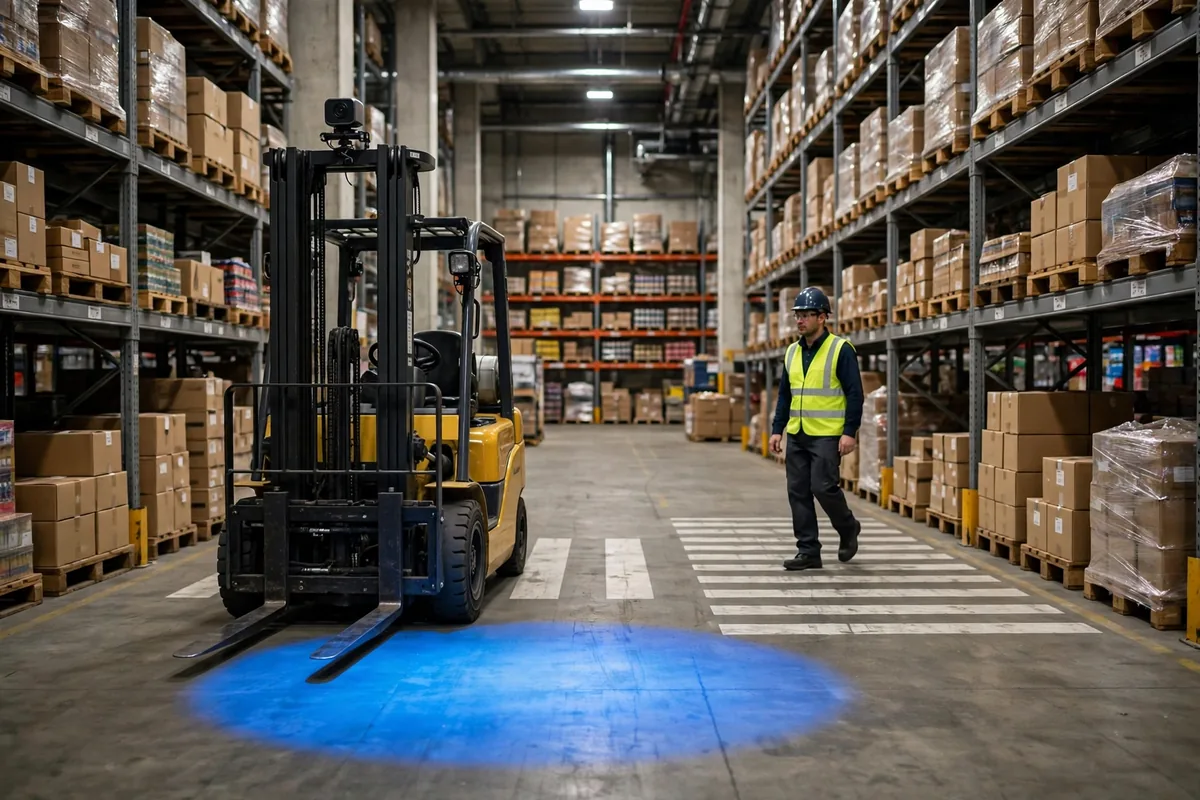
Level two splits the zone. The outer zone only lights a warning lamp. The inner zone sounds a sharper alarm and can buzz a tag or wristband so the pedestrian moves himself. This is where tuning gets serious. Draw the zone too wide and false alarms multiply. Draw it too tight and you lose the reaction time the system exists to buy.
Level three links detection to speed limiting or intervention. A person in the red zone slows the truck whether the driver likes it or not. It sounds safest and is hardest to land. It touches vehicle control, so responsibility, warranty and maintenance boundaries have to be settled with the truck supplier, and a false trigger can jolt a load or stall a truck awkwardly on a ramp. Here is my counterintuitive call: the older your fleet and the messier your mixed traffic, the less you should start at level three. Tame the false alarms at levels one and two first. A truck that overrides the driver from day one teaches the driver one lesson: this thing does not listen.
How false alarms in forklift pedestrian detection talk drivers into disabling it
Two sites I cleaned up after still teach me more than any brochure.
The first was an auto-parts warehouse in eastern China in 2023, roughly twenty thousand square metres with a dozen counterbalance trucks. The vendor demo used a mannequin in an empty yard, detection was instant, and the owner signed for the whole fleet. A week later the night-shift lead called me and asked if the system was taking revenge on them. Reflective posts, pallets wrapped in shiny film, and a hi-vis vest hanging on a hook were all being read as people. The worst truck logged alarms in the hundreds over a single shift, and that is from the site's own records, not a bar story. The drivers invented their own fix: tape over the buzzer. Quieter, calmer, and completely defeated. The hardware stayed. The money was spent. The function was gone.
The second was a food warehouse in southern China in 2024, with heavy traffic through a cold-store door. Its problem was the opposite. The lens fogged as trucks burst out of the cold zone, the image smeared for a few seconds, and by the time it cleared the pedestrian had already crossed. Nobody was hurt, but the review meeting went quiet. One system was too sensitive, the other was blind at the critical moment, and both had the same root cause: acceptance testing happened on a clean floor, not in fog, dust, reflections and rush.
So my pilot rule is plain. Run two full weeks and keep three logs: true alarms, false alarms, and misses found by sampling the video. Break false alarms down by location, time and trigger object. Tuning is not one twist of a sensitivity dial. Move a camera a few degrees or pull a zone line in by a hand's width and half the nuisance alarms at that corner can disappear. It is like a home smoke alarm mounted right over the stove. It is not too sensitive. It is in the wrong place.
This framework table is from my own hypothetical costing exercises. The figures are illustrative, not any vendor's promise:
| Level | Action | Best fit | Acceptance focus |
|---|---|---|---|
| 1 | Screen plus audible warning | Basic separation exists, pilot stage | Blind-spot coverage, image lag |
| 2 | Zoned warning plus pedestrian tag buzz | Many mixed crossings, night shifts | False alarms per shift, by location |
| 3 | Speed-limit link | Disciplined lanes, strong management | False-trigger handling, liability split |
If traffic separation can solve it, do not buy the system
This annoys vendors, but it needs saying. The worst site for ai vision forklift pedestrian detection warehouse spending is a warehouse with no pedestrian separation at all, where people cut diagonally across truck lanes and drivers are used to threading through crowds. There the system becomes a loudspeaker for chaos. It alarms all day because the danger is genuinely constant, not because it is misreading anything.
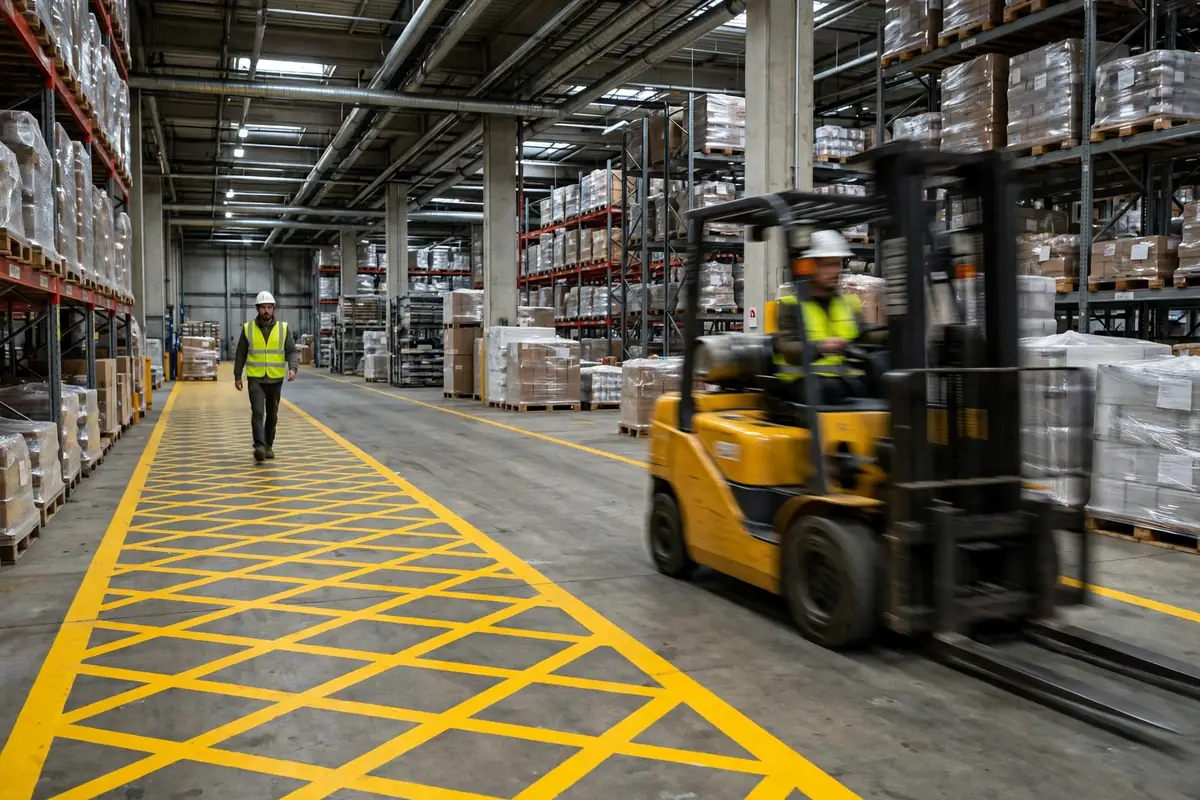
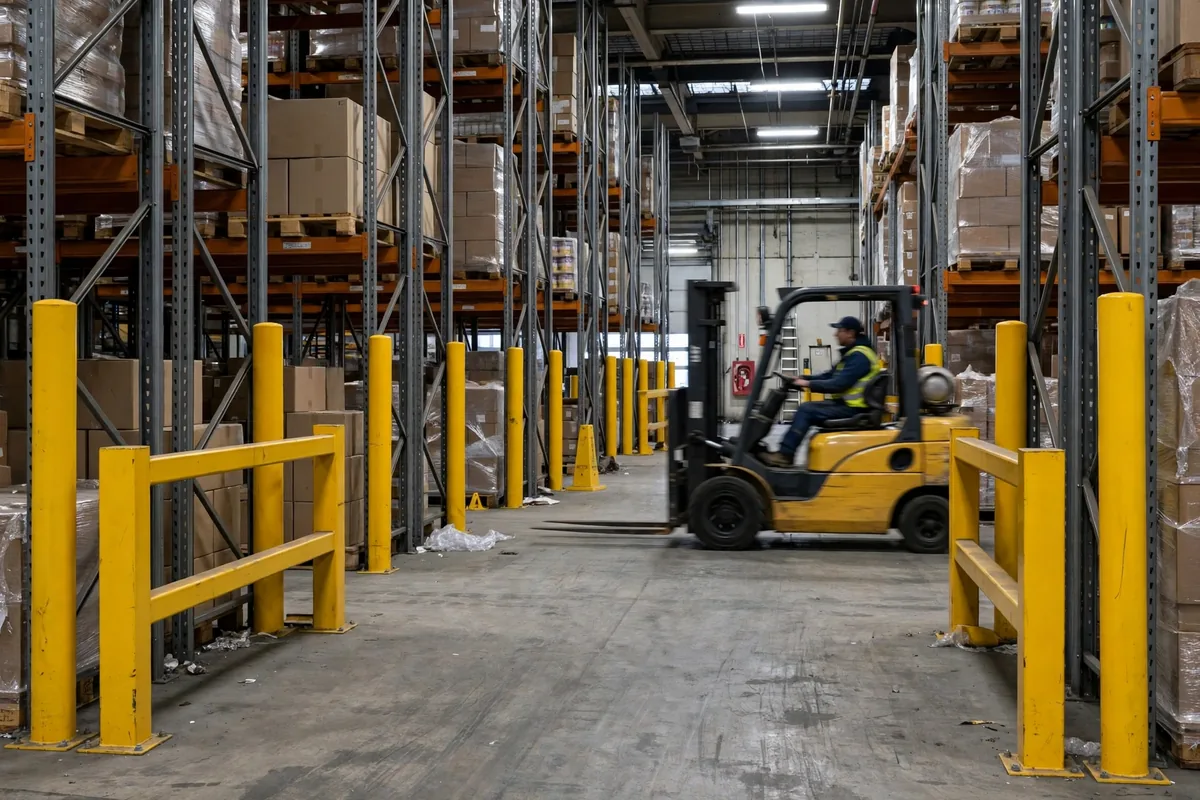
Spend the small money first on three things. Physically separate walkways with barriers and floor marking, with proper crossing points. Make the nastiest corners one-way, or add mirrors and speed bumps so trucks slow down before the blind turn. And clear temporary staging out of corner sightlines, because half of every blind spot is stacked there by people, not built by architects. After that, count what is left: the crossings that physically cannot be separated. Those are the points the cameras should guard. Fewer points means fewer total false alarms, which means drivers actually trust the box.
One more counterintuitive point: pedestrian behaviour matters more than the camera algorithm. In a warehouse where people stop the moment an alarm sounds, the same system looks brilliant. Where people walk with earbuds in, staring at paperwork, the truck can shout itself hoarse for nothing. The algorithm reads pixels. The site has to manage people.
Judge the pilot on one number, and respect the maintenance
Do not accept the demo. Accept the data. I recognise one core metric: false alarms per truck, per shift. Detection rates look great in every lab. The false alarm rate decides whether the system is still switched on in three months. Write that number into the pilot agreement, along with what happens if tuning cannot reach it.
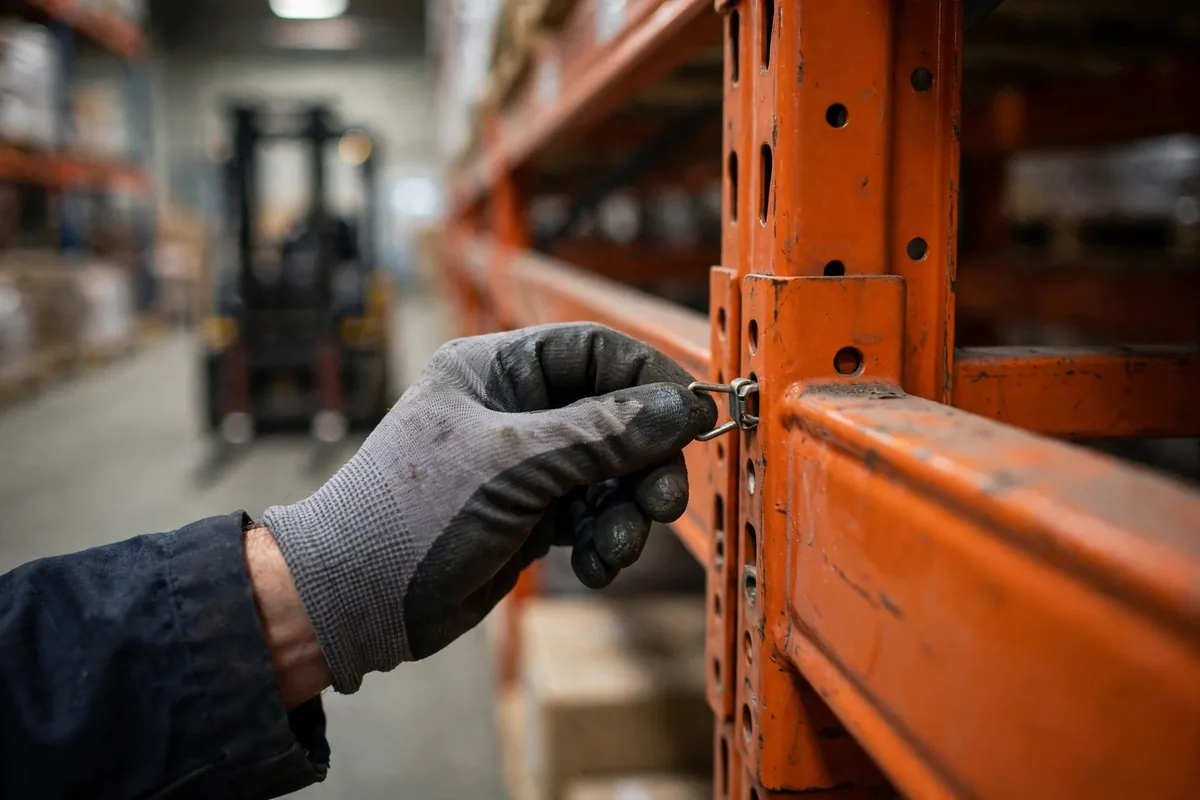
Maintenance is the quiet trap. Lenses live a hard life: dust, grease, condensation, and a pallet clipping the mount out of alignment. Inspect lenses the way you inspect tyres, wipe them weekly, check angles monthly, and keep a spare unit or two on the shelf. Software updates deserve suspicion too. I have seen an update quietly reset tuned zones to factory defaults. After every update, retest the old false-alarm corners before you call it done.
A rough hypothetical costing, for illustration only: levels one and two on a single truck usually land in the low thousands of US dollars for hardware and fitting, subject to actual vendor quotes. The hidden cost is tuning days and driver patience. The cheapest system is not the one with the lowest unit price. It is the one still switched on after three months. A disabled system has a detection rate of zero, and its spec sheet is scrap paper.
Whether the money was well spent comes down to one number: walk up to a random truck in three months and check whether its warning is still on.
By Da Liu, Automation Engineer