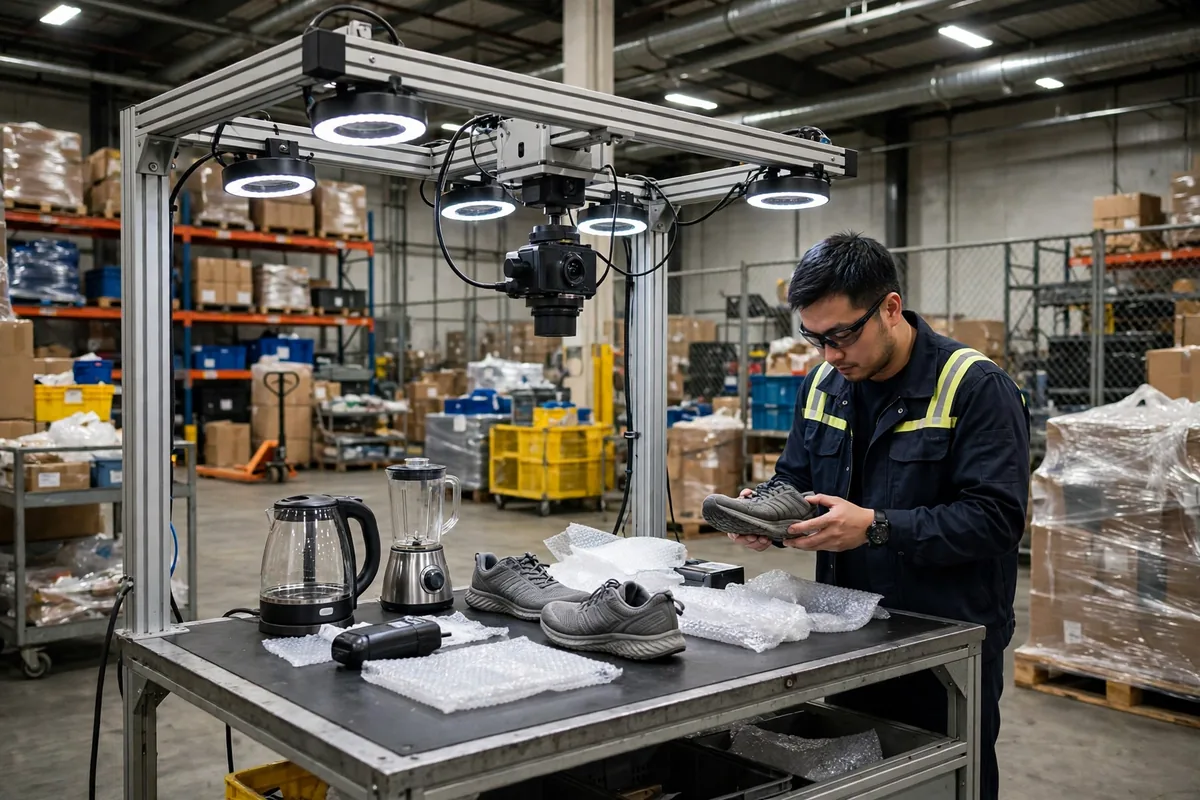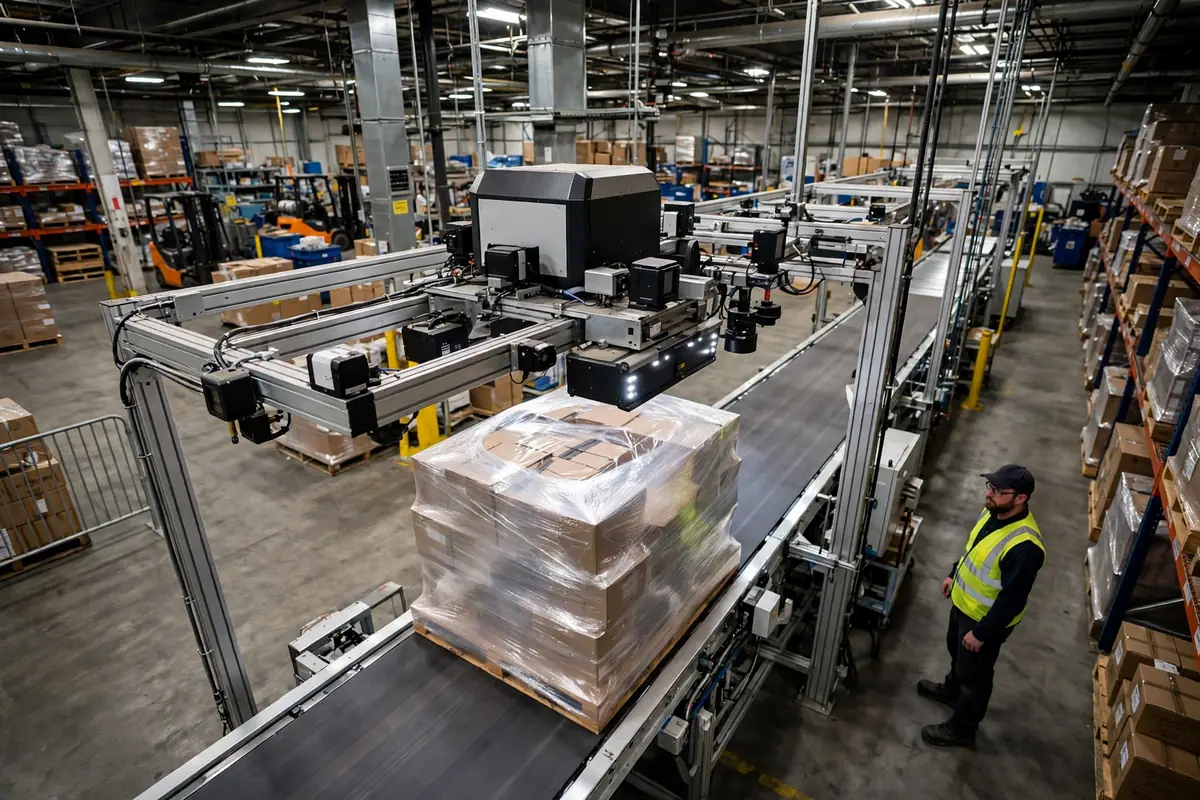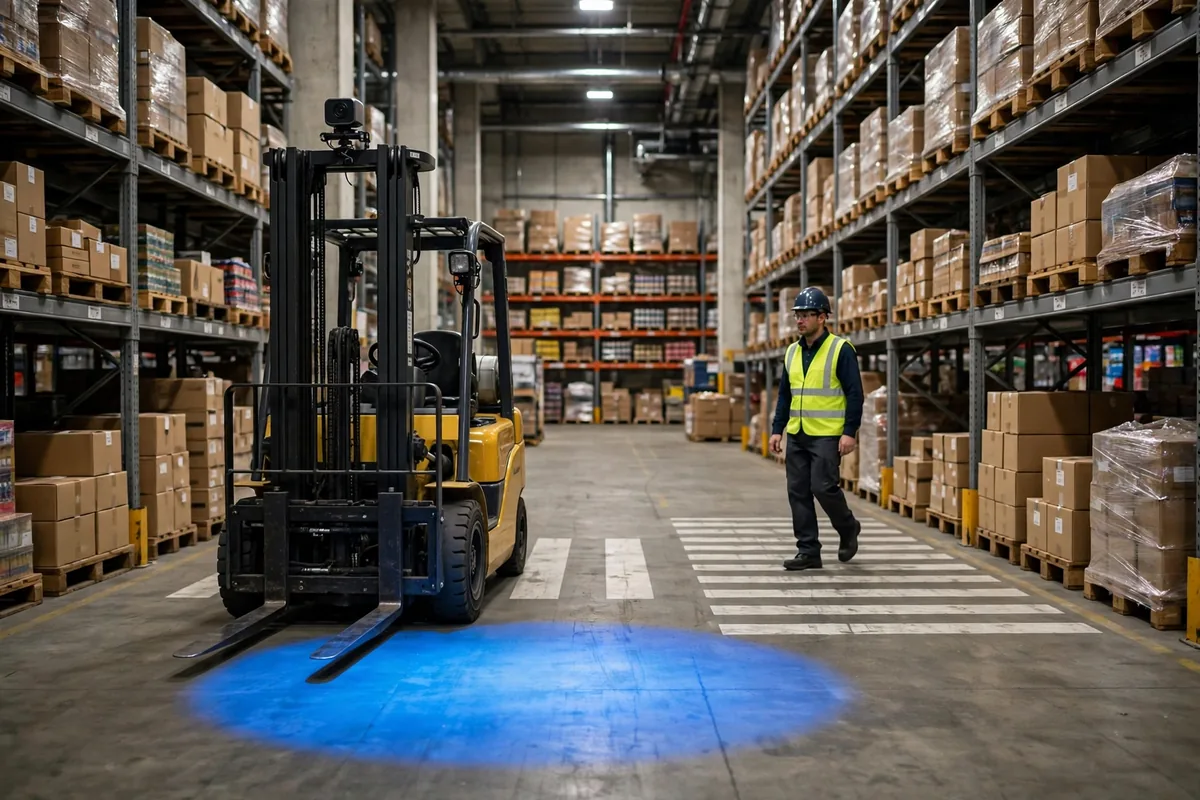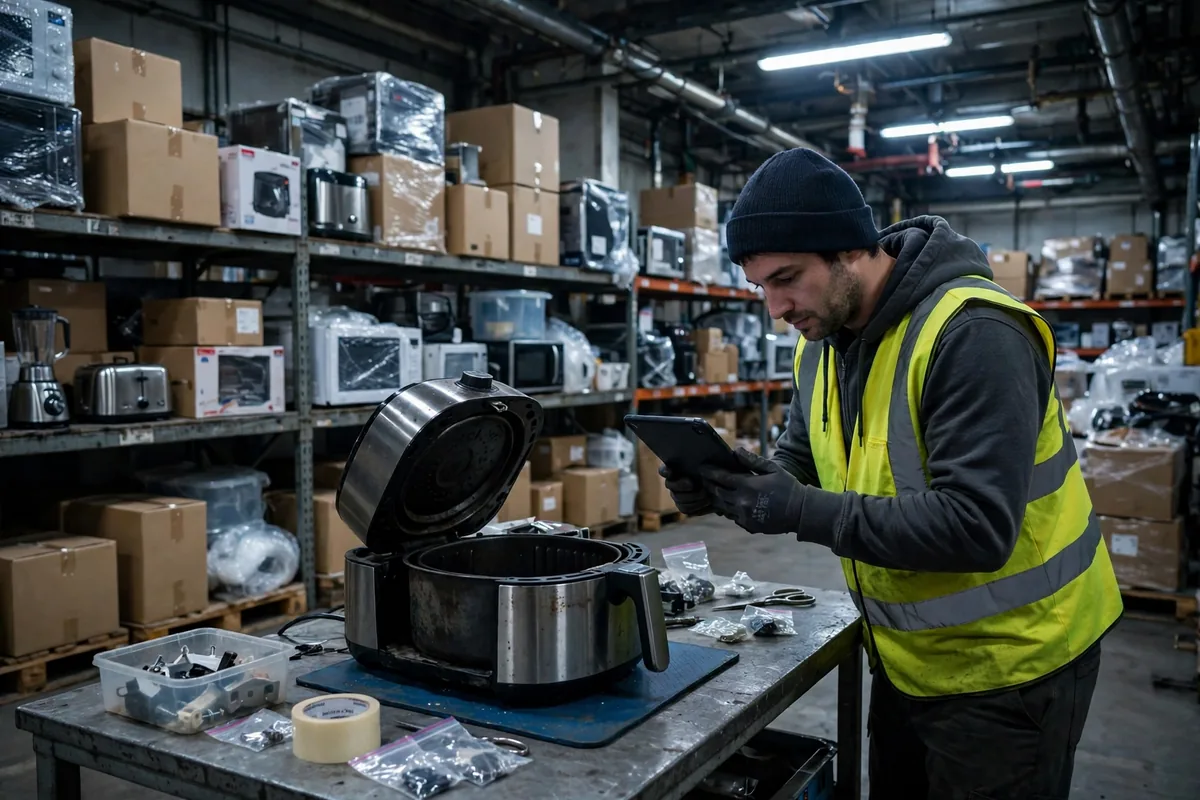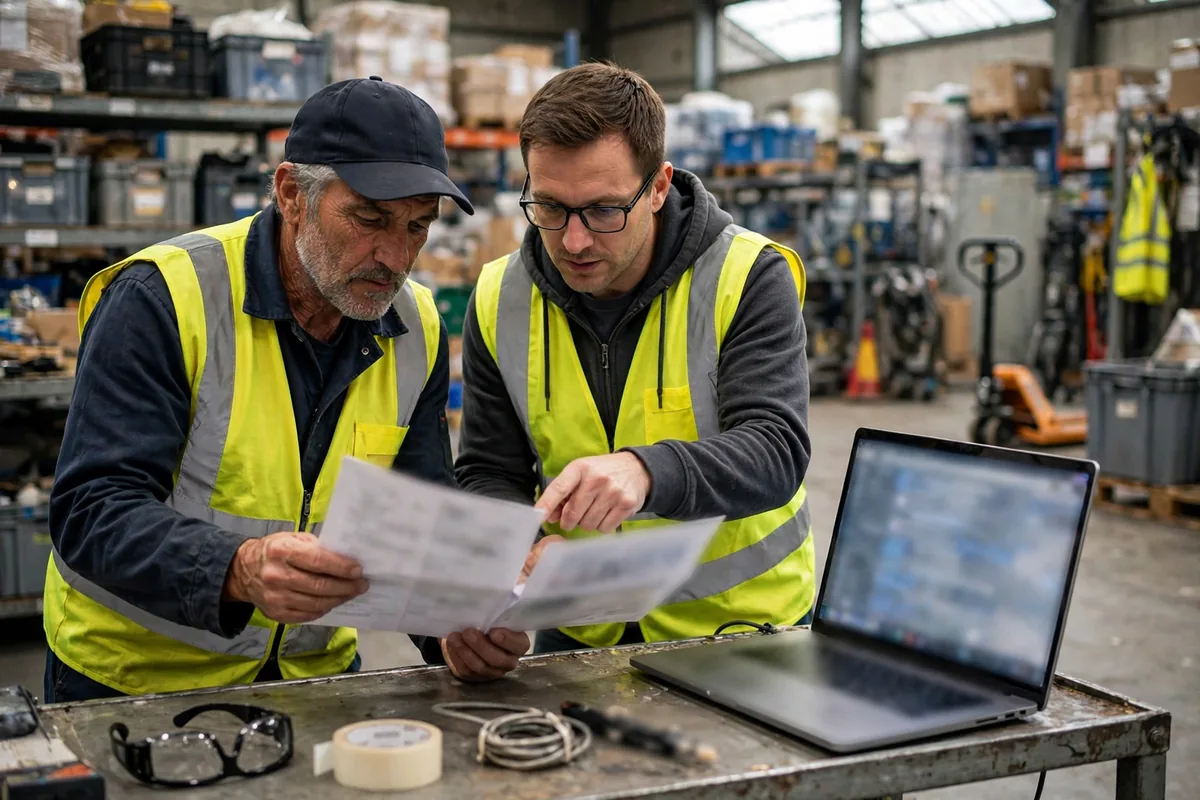
My verdict up front: ai sop writing warehouse managers are excited about does work, but it saves drafting time, not verification time. If you print an AI draft and pin it to the wall as-is, stop the printer. This cuts both ways. The draft comes fast. Give it your spoken process and it will hand back a structured document with numbered steps in under an hour. On the other side, the places where it guesses wrong are exactly the places where warehouses get hurt: exception handling and quantity rules. When it guesses right, you save effort. When it guesses wrong, your team follows the error at full speed.
AI SOP writing warehouse drafts: the pit I watched happen
Last year I helped a home-goods client sort out its receiving process. The site was under 90,000 square feet, taking in six to seven hundred pallets on a typical day. The receiving supervisor had nine years on the floor and knew the job cold, but writing was slow for him, and a receiving SOP had sat unfinished for two weeks. We recorded how the team actually worked, transcribed it, and let AI draft the SOP across receiving, inspection, and put-away. The first version landed in about forty minutes. Clean formatting, tidy numbering. I will admit my first reaction was that we had just saved real money.
The pit opened on day three of the trial. A new receiver followed the SOP on a pallet whose count did not match the delivery note. The document told him to receive against the note first and reconcile the difference later. That warehouse's hard-won rule was the exact opposite: stop, photograph, and get a supervisor confirmation before anything moves, because two years earlier a receive-first habit had turned into a two-month dispute with a supplier over a shortage claim. AI did not know that history. It wrote the generic practice, which sounded reasonable and was wrong for that building. A second error was quieter. The draft stated one tidy sampling rate for inspection, but one fragile product family at that site was on full inspection. A new hire following the sampling line would have let damaged goods through to customers. Neither error was a typo. Both were rule errors, and rule errors cost far more than typos in a warehouse.
I have seen this pattern too many times. When a supervisor writes by hand, the writing is the review; he thinks through each step as he types. When AI writes, that thinking disappears, and if review disappears with it, you have not gained efficiency. You have moved risk from the desk to the racking.
Reviews one and two: can a person do it, and is anyone protected
So my rule for every client is simple: an AI draft goes through three reviews, none of them merged. The first is the floor review, owned by the shift supervisor, and it asks one question: is every action written down to the hands? AI loves phrases like handle appropriately, report promptly, and ensure accuracy. The supervisor's job is to tear each one open. Handle appropriately means photograph it or label it, exactly which one? Report promptly means report to whom, by radio or by system ticket? Ensure accuracy means count it once or twice? In spring 2024, at an auto-parts warehouse in California, I watched a supervisor read a polished AI picking SOP that said to set exception parcels aside separately. He asked one question: aside where, the yellow exception zone or the returns rack? The two spots sat about a hundred feet apart, and the answer changed how much walking every new hire would do each shift. If a step does not name the place, the tool, and the system screen, it is not finished, and without the supervisor's sign-off it does not move forward.
The second review is the safety review, owned by the safety lead or a safety-trained team lead, working against the site's safety checklist, never by whoever polished the text. AI writes put-away steps that say which level a pallet goes to and says nothing about ladders above shoulder height, nothing about refusing a leaking pallet, nothing about never stopping in a forklift aisle to check paperwork. I once read an AI returns SOP that never mentioned retracting box cutters or isolating damaged batteries. The reviewer said it worked fine until the first exception, when it became an accident script. Missing PPE, prohibitions, or escalation paths: any one sends the draft back, no negotiation.
Here is the division of labour I hand out. Every review ends with a name and a date; a verbal review is not a review.
| Review | Owner | What gets checked | Typical failure |
|---|---|---|---|
| 1. Workability | Shift supervisor | Actions down to hands, place, tool, system step | Vague verbs left unopened |
| 2. Safety | Safety lead or team lead | PPE, prohibitions, escalation paths | Heights, leaks, damaged batteries unmentioned |
| 3. Walk-through | Veteran plus a new hire | Can the SOP be followed end to end as written | Quantity rules vague, exceptions missing, steps out of order |
Review three: the walk-through, and the two places AI gets it wrong
The third review costs the most time and saves the most money. Take a veteran and a recent hire, hand them the SOP, and have them do the job end to end. The veteran must not fill gaps from memory, and every place the new hire stalls gets marked. The new hire matters because a veteran will unconsciously patch missing steps and report that the document works. Last autumn, at a small-appliance warehouse in Nevada, a new hire stalled at the label step of an outbound checking SOP. The draft said to verify the label and apply it to the outer carton, but that product shipped in two carton types, one labelled on the side and one on the top. AI had assumed one; veterans chose by feel and had never realised a choice existed. In a cycle-count walk-through, the new hire asked where a shortage should be recorded, and the document had no answer, because the draft had assumed counts always agree. Exception branches are naturally thin in AI drafts.
That leads to the judgement I most want managers to keep. In ai sop writing warehouse work, the two most error-prone areas are exception handling and quantity rules. The happy path is written well because the model has seen thousands of similar texts. Your exceptions are built from your site's history, incidents, and customer requirements, with no public text to learn from, so it invents a plausible version. Quantity rules carry the same danger: receive against the note or the physical count, sample or inspect in full, who owns breakage, how to handle remainders. Each rule is money and liability, and the model does not know your supplier agreements. The more specific its number looks, the more carefully you should check it. Specific is not the same as correct.
Now the trade-off, in rough numbers. A moderately complex SOP written from scratch usually consumes scattered time across two to three working days. An AI draft gets a complete structure in half a day, saving roughly sixty to seventy percent of drafting effort. The three reviews plus the walk-through take the better part of a day, and none of that can be cut. Net it out and you still save perhaps thirty to forty percent overall. That is a real gain. But if a vendor tells you ai sop writing warehouse tools save ninety percent, ask him one question: where did the review time go? He will not have an answer.
One last piece of advice on sequence. Do not draft all forty SOPs at once. Pilot one mid-complexity process, run the three reviews until the checklist becomes routine, then scale up. Once that checklist exists, every later draft is reviewed faster, and that checklist, not the model, is the asset you keep. Models change every year. Your quantity rules, prohibitions, and exception handling are yours alone, and review is the work of nailing them back onto paper. If you will not spend that time, you would honestly be better off letting your supervisor write slowly by hand, because at least while he writes, he is reviewing in his head as he goes, isn't he?
By Lao Mi, Supply Chain Veteran (20 yrs)