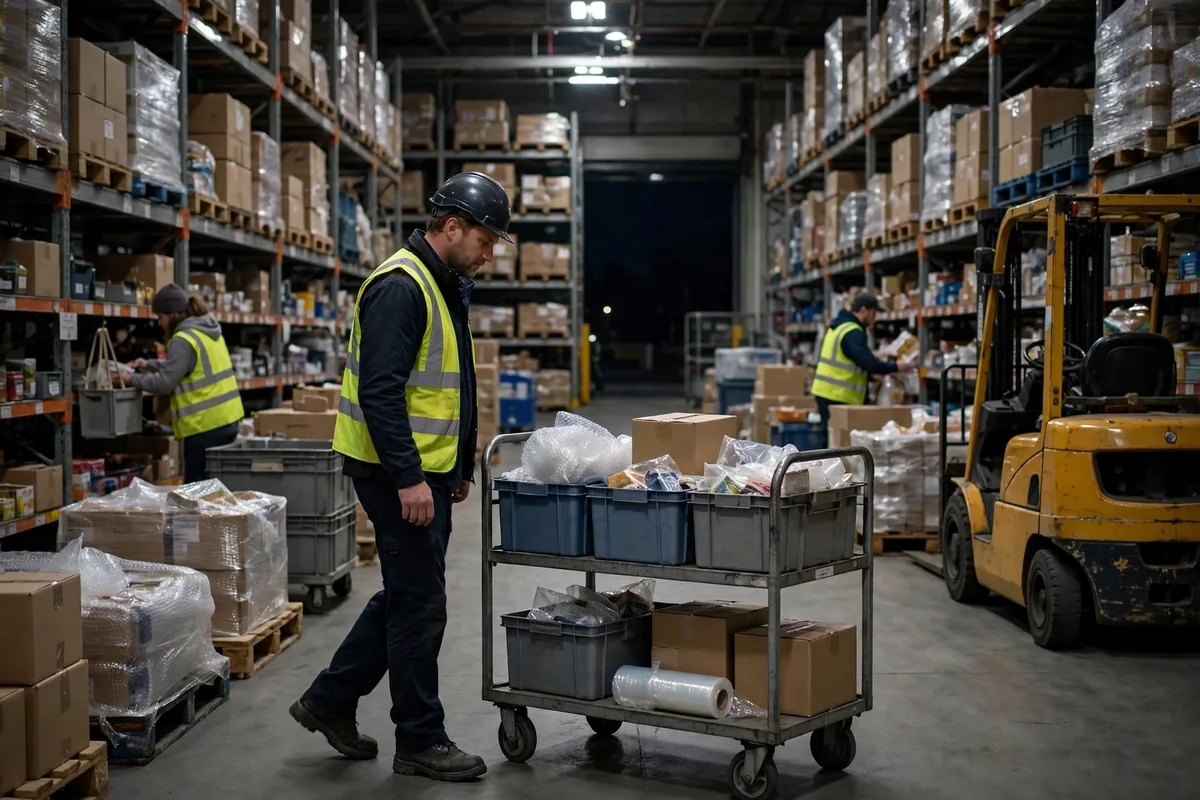
It was 11:40 on a Tuesday night last November when I first stopped dismissing ai returns photo grading warehouse setups as a sales pitch. I was on the returns bench with two of my crew, a belt still running, and opened shoes, hair dryers, and puffer jackets stacked waist-high around us. Peak season does not scare a floor manager because of picking. It scares us because of returns. Everything leaves as an order. It comes back as an argument.
How ai returns photo grading warehouse work actually runs on a night shift
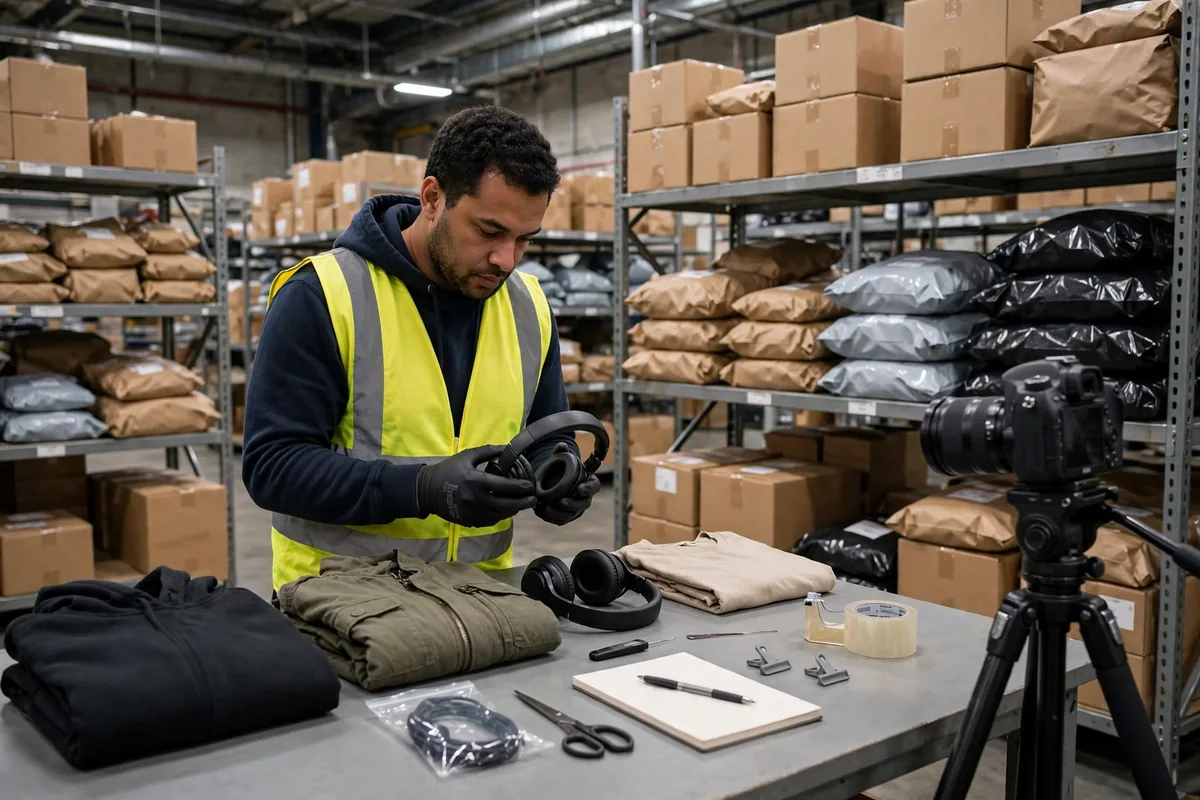
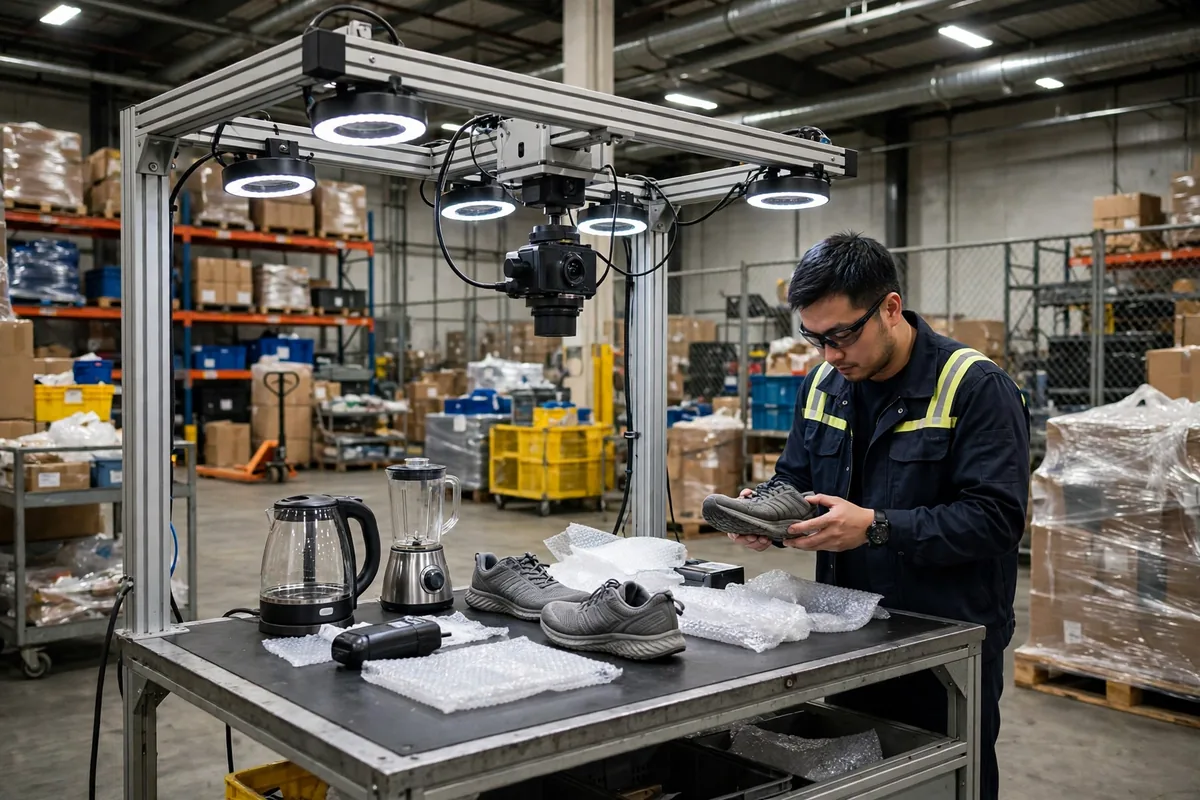
Here is the routine we settled on, with no decoration. Step one, photograph at intake. Before anyone sorts in detail, each return goes into a fixed light box and gets six shots: front, back, tags, a close-up of any stain or damage, all accessories laid out, and the barcode. The light box matters more than the software. Fixed color temperature, a plain grey background. Photograph a white shirt under warm warehouse lighting at 1 a.m. and it looks yellowed, and a yellowed shirt gets graded as used.
Step two, the AI suggests a grade: A, straight back to stock; B, needs cleaning or repacking; C, suspected use or damage; D, missing parts. Step three, people spot-check. We check one in ten A grades, three in ten B grades, and every single C and D. Step four, the photos stay bound to the return number forever, so when customer service or a seller disputes a grade, nobody argues from memory. We pull the pictures.
We trialed this for three weeks in an apparel warehouse in eastern China handling roughly 1,200 returns a day with a four-person night crew. Fully manual grading averaged a little over two minutes an item, and after midnight, tired eyes missed things. With photo pre-grading, clean A items moved much faster because the checker only had to confirm the item matched its photos. But let me be plain about the limit: only A items got faster. C items did not. The system flagged "creasing" on garments that were simply compressed in a shipping box, and every one of those still needed hands on it.
What photo grading saves — and what it does not
I do not trust any vendor percentage that is not tied to a shift roster, so I ran my own numbers. The table below is an illustrative example calculation based on that apparel site's pace. Treat the math as a worked example, not a promise for your building.
| Item | Fully manual (example) | AI pre-grade + spot-check (example) | Note |
|---|---|---|---|
| Daily returns | 1,200 units | 1,200 units | Same volume |
| Average handling time | 2.2 min/unit | 0.6 min for A; about 1.4 min overall | C and D take longer, not shorter |
| Night staffing | 4 staff x 8 hours | 3 fixed + 1 flex | You save one fixed post, not the crew |
| Rework from mis-grades | About 30 units/week | About 18 units/week | Photo records cut dispute time |
The saving is not machines replacing people. It is moving human eyes off the pile of obviously fine goods and concentrating them on the contested pile. Here is the counter-intuitive part: the warehouses that get value from ai returns photo grading warehouse tools do not end up with far fewer graders. They end up with graders standing in different places. Three people work the flow, one person owns disputes, re-checks, and photo reviews. If a manager hears "AI" and cuts two heads from the night shift, the dispute pile has no owner, and by morning customer service is on the phone nonstop.
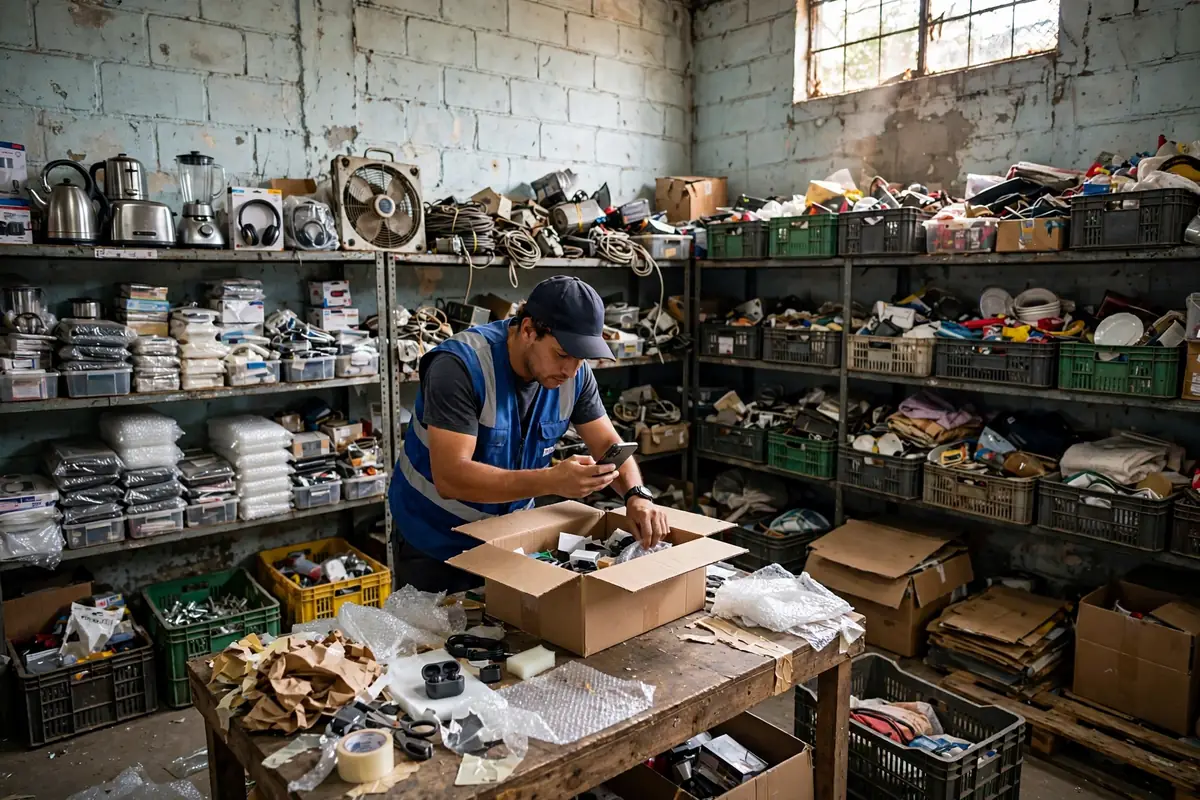
Then there is the cost nobody puts in the brochure: a wrong grade that flows outward. In our second trial week, a black puffer jacket photographed clean. No smell in a photo, no foundation mark visible on the cuff in that light. The system graded it A, the spot-check sample missed it, and it went back to stock and sold again. The complaint, the second return, the double freight — that one unit cost more than a whole evening of saved seconds. After that we wrote a hard rule: high-risk categories for odor and wear — cosmetics-adjacent items, intimate apparel, shoe soles — get human nose and hands no matter how confident the score looks. Cameras settle what can be seen. They settle nothing about smell, feel, or a box that weighs wrong.
One site where it worked, one where it fell over
In March this year I visited a small-appliance warehouse in Suzhou that had got this right by keeping it boring. Their returns were mostly hair dryers and kettles, and the questions were countable: Are all the parts here? Is the shell dented? Is the cord present? Their photo station was a fixed stand, a numbered backdrop, and outlines showing where each accessory should sit. The AI only counted parts, flagged dents, and confirmed the model. Standardized products with visible criteria ran steadily, and the night crew's favorite feature was not the grade at all. It was that photos filed themselves by return number. No more digging through a shared drive at 2 a.m.
The failure was a footwear warehouse near Guangzhou last August. They rushed the launch before peak, put the camera beside a regular packing bench, and never built a light box. White sneakers photographed at night graded as yellowed and used. More than 300 pairs piled into grade C in one shift, full manual checking could not clear them, sellable stock sat stranded the next day, and the e-commerce team came down to the returns bench to argue. Honestly, the model was not the main problem. The floor never gave it conditions it could see in. Returns photography is not like barcode scanning; if light, angle, and background drift, everything downstream drifts. That site paused for five days, rebuilt the station as an enclosed light box with a color calibration card, and only then switched back on.
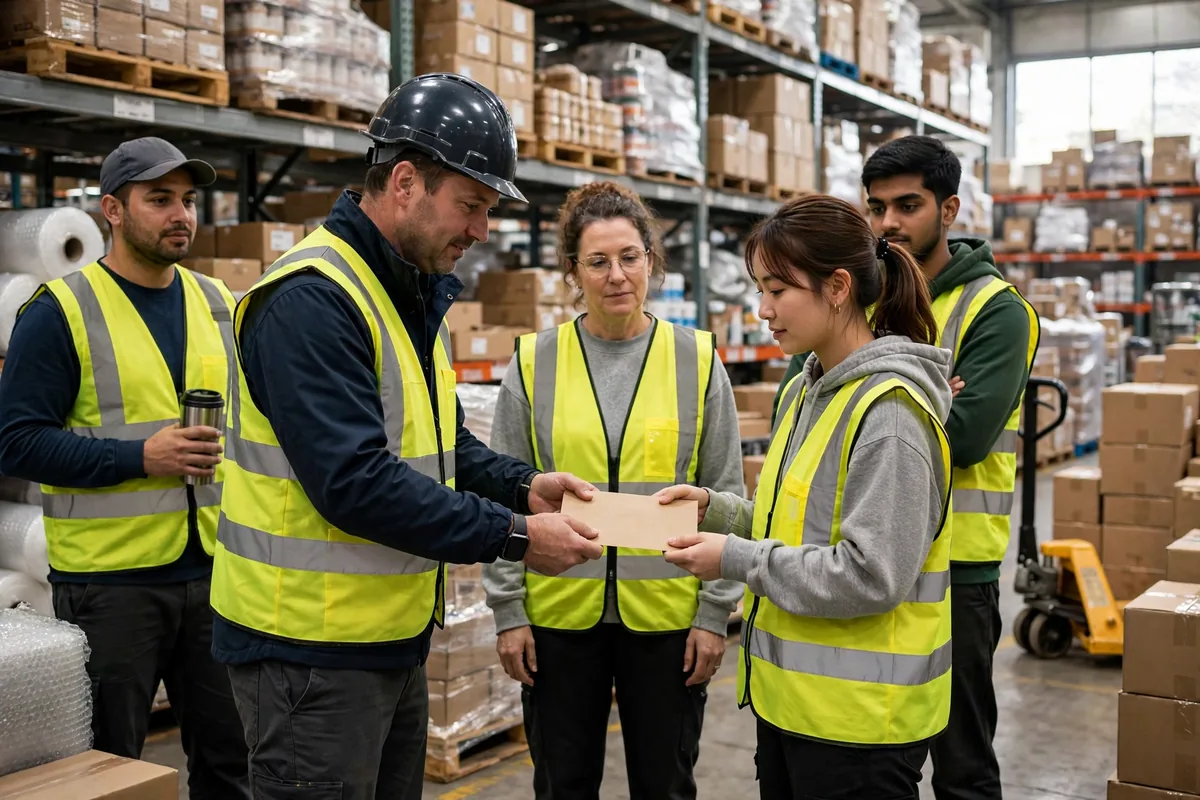
So my fixed advice to other managers is three rules. First, choose categories before you choose software. Hard goods, accessory kits, and visible-damage items go first. Anything graded by smell or feel goes last, or not at all. Second, write spot-check rates into the shift plan and do not let a busy night quietly shrink them. Dropping a ten percent check to a glance is worse than no system, because it creates confidence you have not earned. Third, keep photos about the goods, never about grading the worker. The moment a crew believes the camera exists to dock pay, you will get staged photos and quiet workarounds. Our rule, stated out loud and kept: photos judge the product, reviews judge the process, nobody gets named.
If you are evaluating ai returns photo grading warehouse tools this year, test them on your hardest category on your worst shift, not in a bright demo room at 10 a.m. If the system still helps at 11 p.m., with tired people and messy freight, it is real. If it only works in the demo, it belongs to the demo.
By Chen Feng, Warehouse Operations Manager