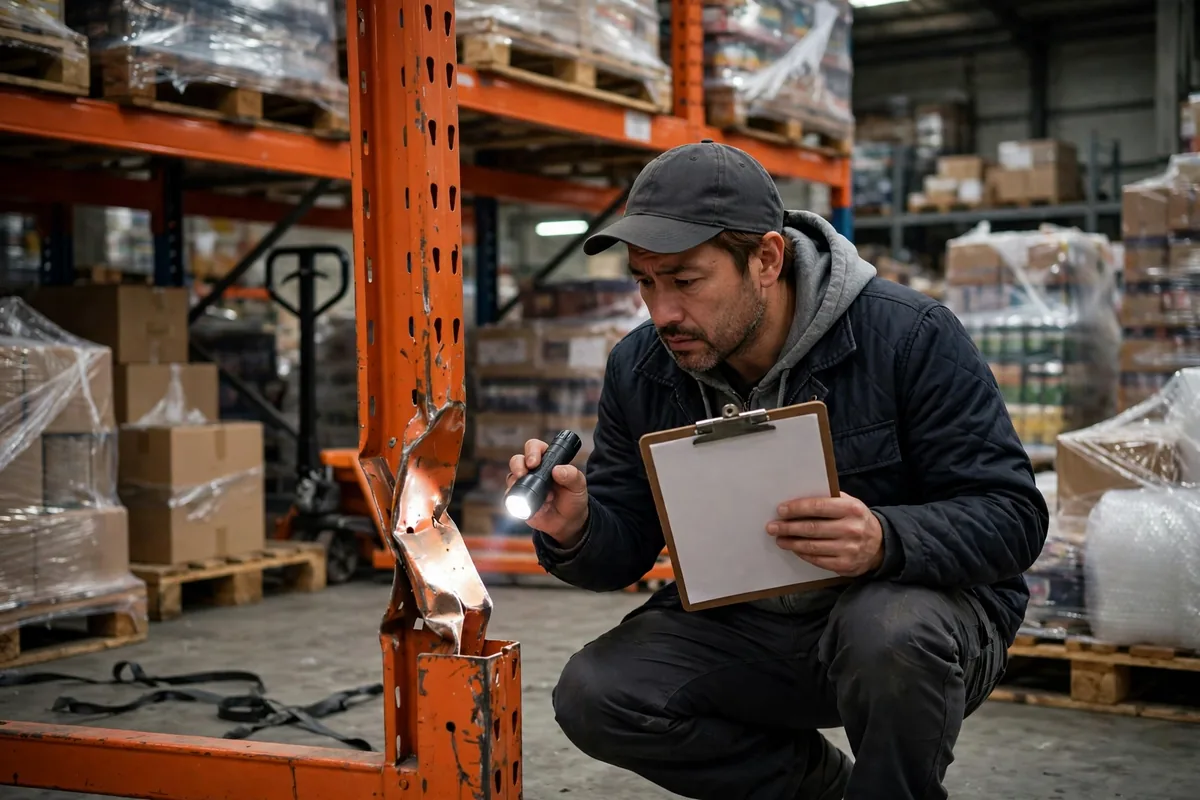
I will tell you how I learned to respect pallet rack beam safety clips, and it was not in a classroom. In the fall of 2018 I was delivering a load of personal care products to a 3PL warehouse in Ohio, waiting on the dock while the forklift worked the next bay over. There was a loud clang, a beam jumped upward, and a pallet tipped out with cases of shampoo rolling across the floor. Nobody got hurt, which was luck. The warehouse lead did not yell at the driver first. He crouched down, looked at the end of the beam, and said the safety clip was gone. A piece of steel smaller than my thumb was supposed to hold that whole level in place.
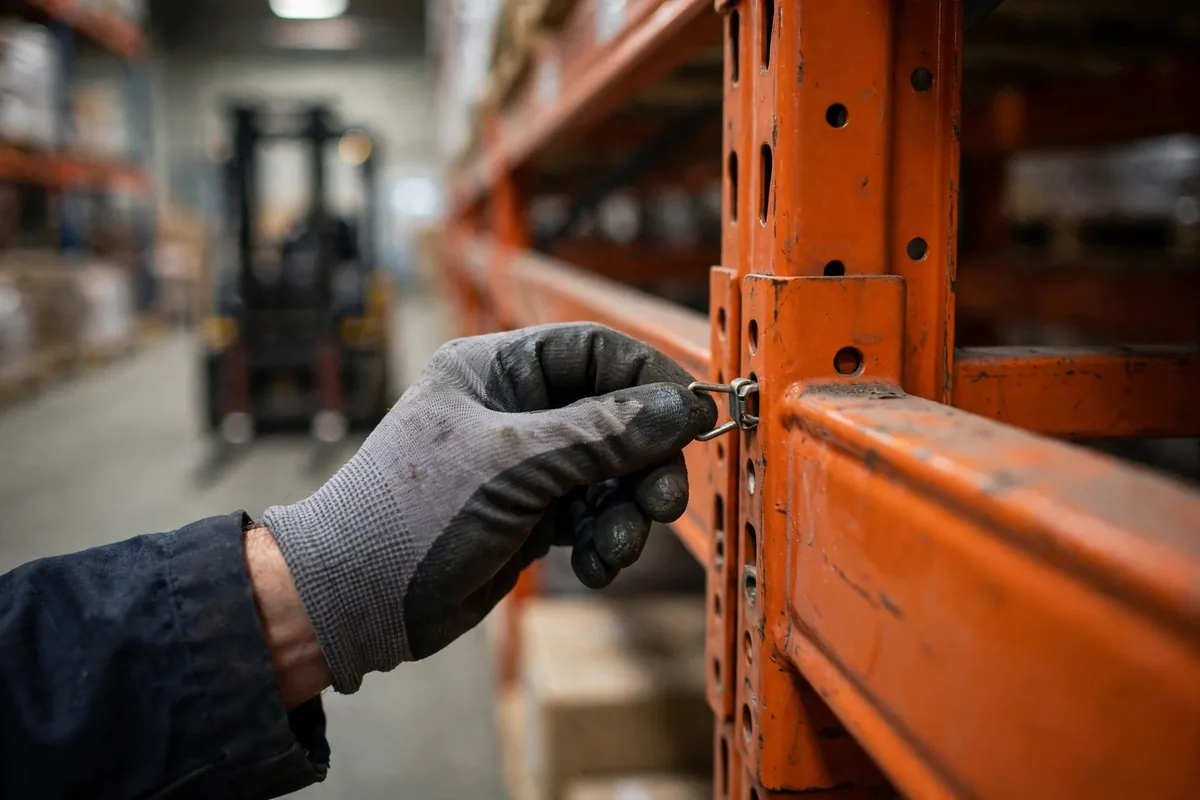
In fifteen years on the road I have backed into more warehouses than I can count. Plenty of them look sharp from the dock door: straight uprights, bright orange beams, clean floors. Walk up close and run your hand along the beam ends and you will find empty holes where pallet rack beam safety clips should be. Sometimes the clip was never installed. Sometimes it is hanging half in. Sometimes it is on the floor by the upright, rusting under a pallet. In U.S. warehouses this is common enough that I stopped being surprised. For formal inspection and compliance requirements, check the rack manufacturer's guidance and the latest official policy — I am not going to invent numbers for you. I will tell you what happens on the floor.
Why pallet rack beam safety clips keep disappearing
The first reason is a rushed install. Clips come in different styles. Some are spring clips you push in until they click. Others need a squeeze to seat properly. When a crew is setting beams on a deadline, a worker on a ladder will扶 the beam with one hand, tap with the other, hear a click, and move on. Half-seated clips work themselves out. Forklift vibration, an uneven floor, daily bumps — give it a few weeks and the clip backs out on its own.
The second reason is re-slotting. Warehouses move beam levels all the time. A worker pulls the clips, drops them in a pocket, moves the beam, and forgets to put them back. In 2021, at an auto parts warehouse in Tennessee, I watched a young guy finish adjusting three levels and walk to lunch with four or five clips in his work pants pocket. He was not careless on purpose. Nobody owned that last step, and nobody checked behind him.
The third reason is contact. Beam ends live in traffic. Pallets brush them on the way in and out. A light hit bends a clip, and the next upward nudge pops it free. Once it falls under a pallet or behind an upright, nobody picks up a tiny piece of steel. Over a season, a single row can quietly lose a handful.
Here is the counterintuitive part most people miss: a missing clip does not matter much when the beam is fully loaded. Gravity helps you. The load presses the beam down and it sits there looking solid. The danger shows up during picking, especially with an empty or half-empty pallet, when the forks lift and catch the beam from below. With no weight holding it down and no clip locking it in, the beam lifts right out of the column slots. That is exactly the moment a person is most likely to be in the aisle.
What happens when the clip is missing
Let me give you a second scene, and treat the figures as the manager's own account, not a standard. In 2022, at a food warehouse in Indiana, the manager told me they had a near miss the year before. A beam holding beverages lifted on one end — about a hand's width, he said — and came out of the column. The pallet jammed at an angle instead of falling clean. They shut down two aisles for half a day, unloaded by hand, and reset the beam. The product loss was minor. The real cost was downtime and nerves. For days afterward his drivers gave that row a wide berth.
Ohio was the light version: light goods, no injuries. Change the variables and the math changes fast. A loaded pallet a few levels up can weigh several hundred pounds or more as an illustrative example. Dropped from height, it does not matter whether it hits a person or a forklift — neither wins. And it rarely falls alone. Tip one beam and the neighboring pallets lose support and start to lean. On the road, the sound I dread most from inside a warehouse is not one crash. It is a series of crashes, one after another.
There is also the paperwork cost nobody budgets for. After an incident, investigators photograph the racking. Missing clips are the easiest deficiency in the world to document. If your inspection log is blank, it is hard to argue you were managing the risk. How liability is decided depends on local rules and your insurance terms, so check the latest official policy — a truck driver is not your lawyer. But I know this much: the cheapest part on the rack is the worst one to be caught missing.
How to inspect pallet rack beam safety clips on a real walk
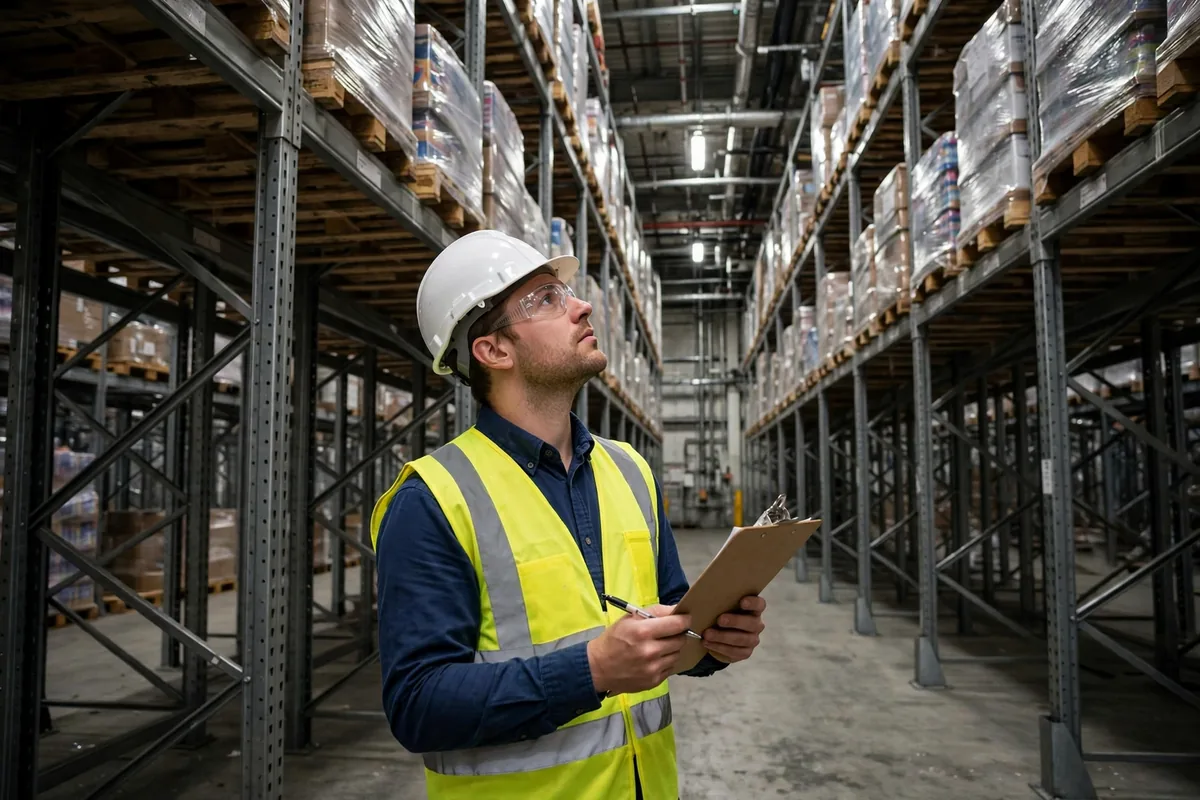
My advice is deliberately low-tech: grab a flashlight and walk the aisle. Three habits make it work.
First, look and touch. Check both ends of every beam. Is the clip present? Is it bent? Looking is not enough — a clip can appear seated and still wiggle when you push it. You cannot check every beam on every pick, but a fixed weekly walk of a row takes minutes, not hours.
Second, mark misses on the spot. Do not trust memory. Tie a bright tag on the upright, take a photo, and note row, bay, and level. If you cannot replace the clip that day, keep heavy loads off that position and pause high work there until it is fixed. A marked, managed gap beats an invisible one.
Third, keep spares where the work happens. The best warehouse I have seen for this had a small steel box at the end of each aisle with spare clips and pliers. Find a missing clip, fix it in a minute, move on. Another warehouse kept spares locked in an office cabinet behind a requisition form. Same clips, same price — completely different outcome, because friction kills follow-through.
How often should you inspect? I will not give you a fake standard. Rack brands, throughput, and traffic differ, so follow the manufacturer's instructions and the latest official guidance. My field rule is simple: the busier the forklifts, the higher the turnover, and the newer the crew, the more often you walk. New drivers lift beams more than veterans do. That is not an insult. It is just hours on the forks.
Clips or bolts: the replacement trade-off
When it is time to replace missing hardware, managers ask whether to stay with clips or switch to bolted locks. Here is the honest comparison, with costs as illustrative ranges only — get a current quote from your supplier.
| Factor | Standard safety clips | Bolted beam locks |
|---|---|---|
| Unit cost | Low, often well under a couple of dollars in bulk | Higher, bolt plus nut and washer, varies by rack type |
| Install speed | Fast, push or light tap, easy level changes | Slow, needs a wrench, slows re-slotting |
| Retention | Moderate, can vibrate out or bend on contact | High, positive lock, unlikely to back out alone |
| Inspection | Easy, missing is obvious at a glance | Good, but present does not mean tight — check for looseness |
| Best fit | Fast-moving, frequently re-slotted, lighter bays | High, heavy, high-traffic and mixed pedestrian aisles |
My recommendation is to mix them. Use standard clips across ordinary low and light positions, and inspect them like you mean it. Spend the extra money on bolted locks for high levels, heavy product, end bays, and anywhere forklifts pass all day. Never substitute wire or zip ties and call it a lock. They will not survive one solid upward hit, and after an incident they look exactly like what they are: a shortcut. One more practical warning — locks are not fully universal. Beam connectors and column hole patterns differ by brand, so match a sample before you order a full box.
After fifteen years, the pattern I keep seeing is that big warehouse accidents often start with embarrassingly small hardware: a pin, a bolt, a guard that never got put back. Walk one more aisle. Bend down one more time. It beats writing reports later. As we say on the road, the careful driver gets to keep driving.
By Shifu Zhao, Trucking Veteran (15 yrs)