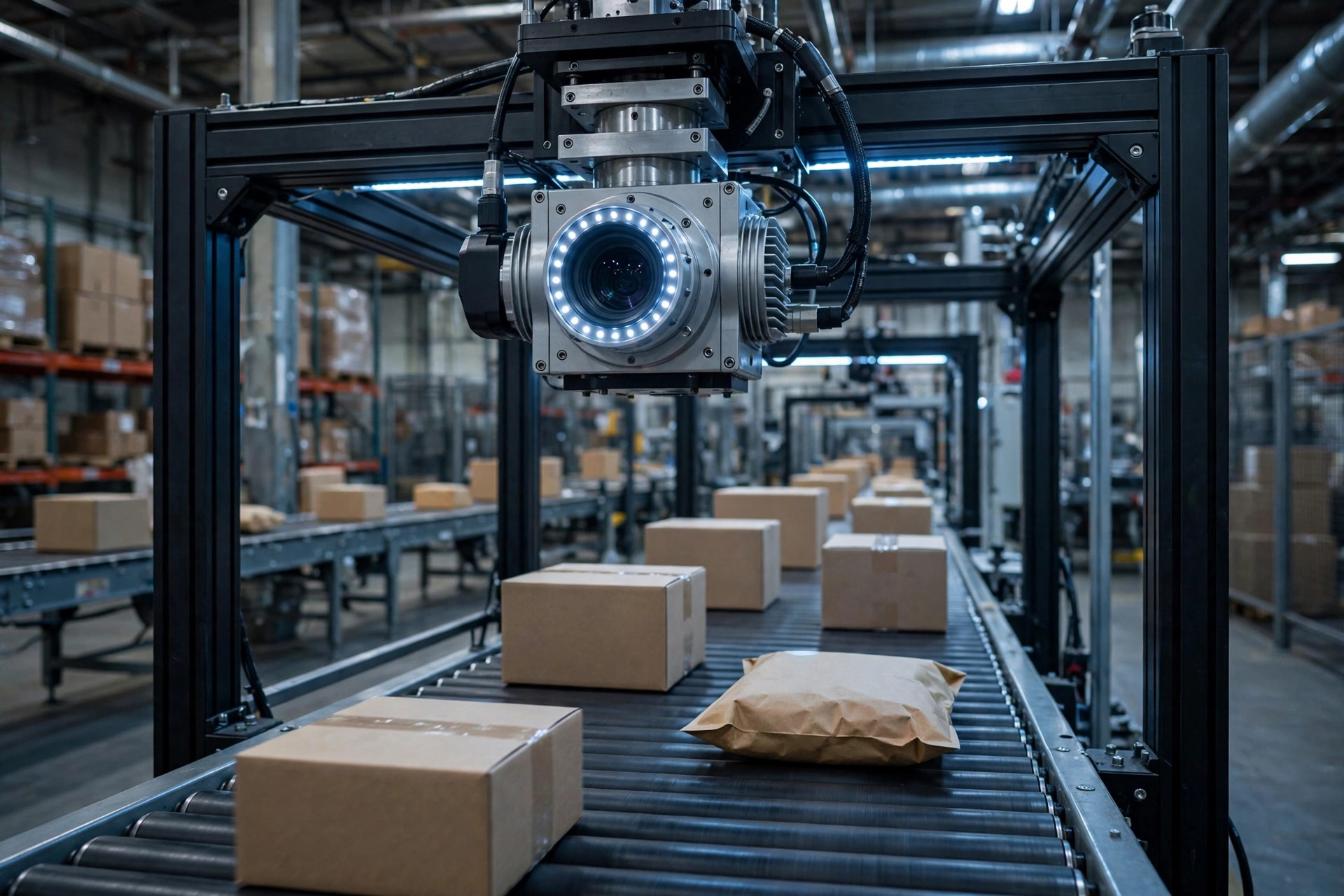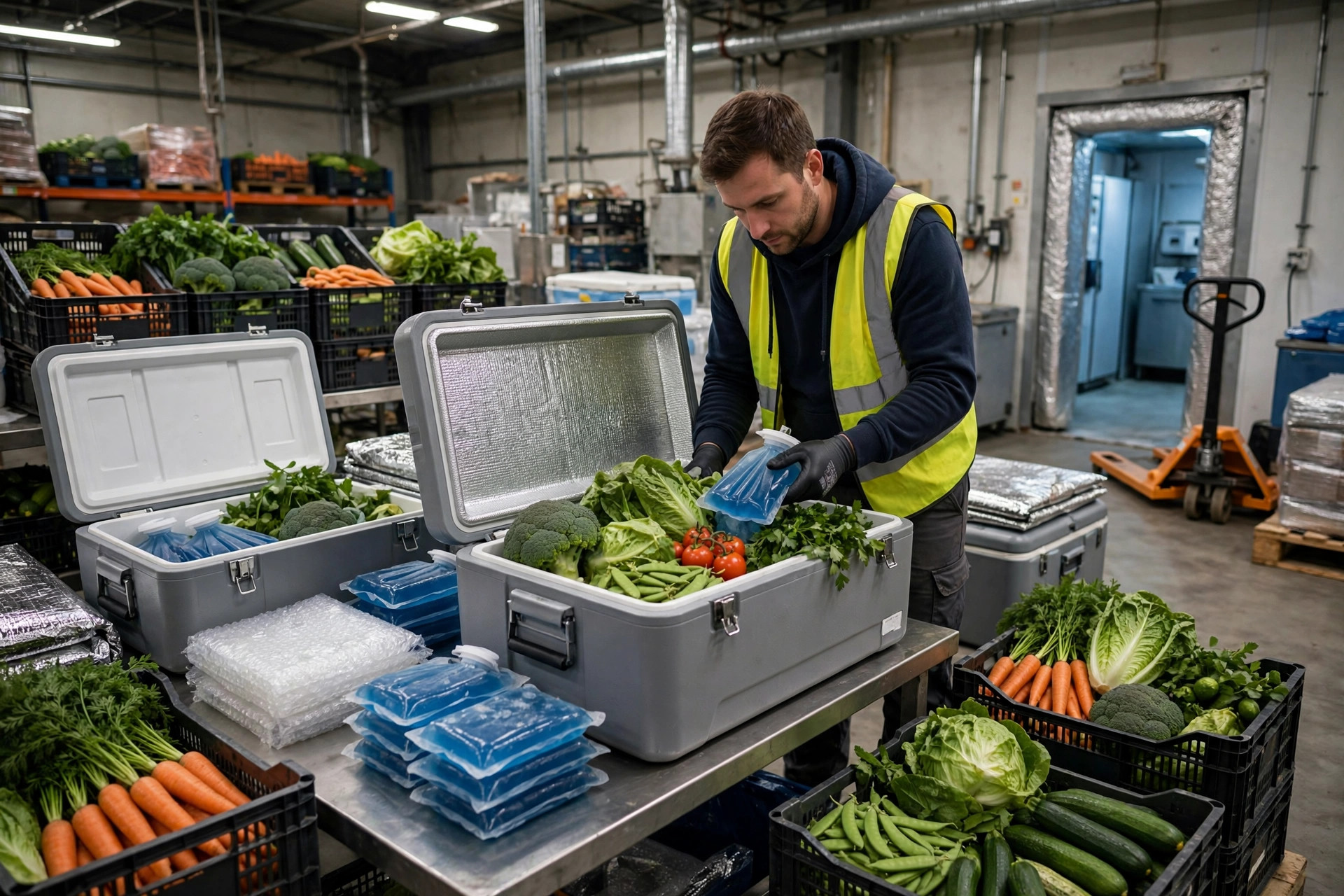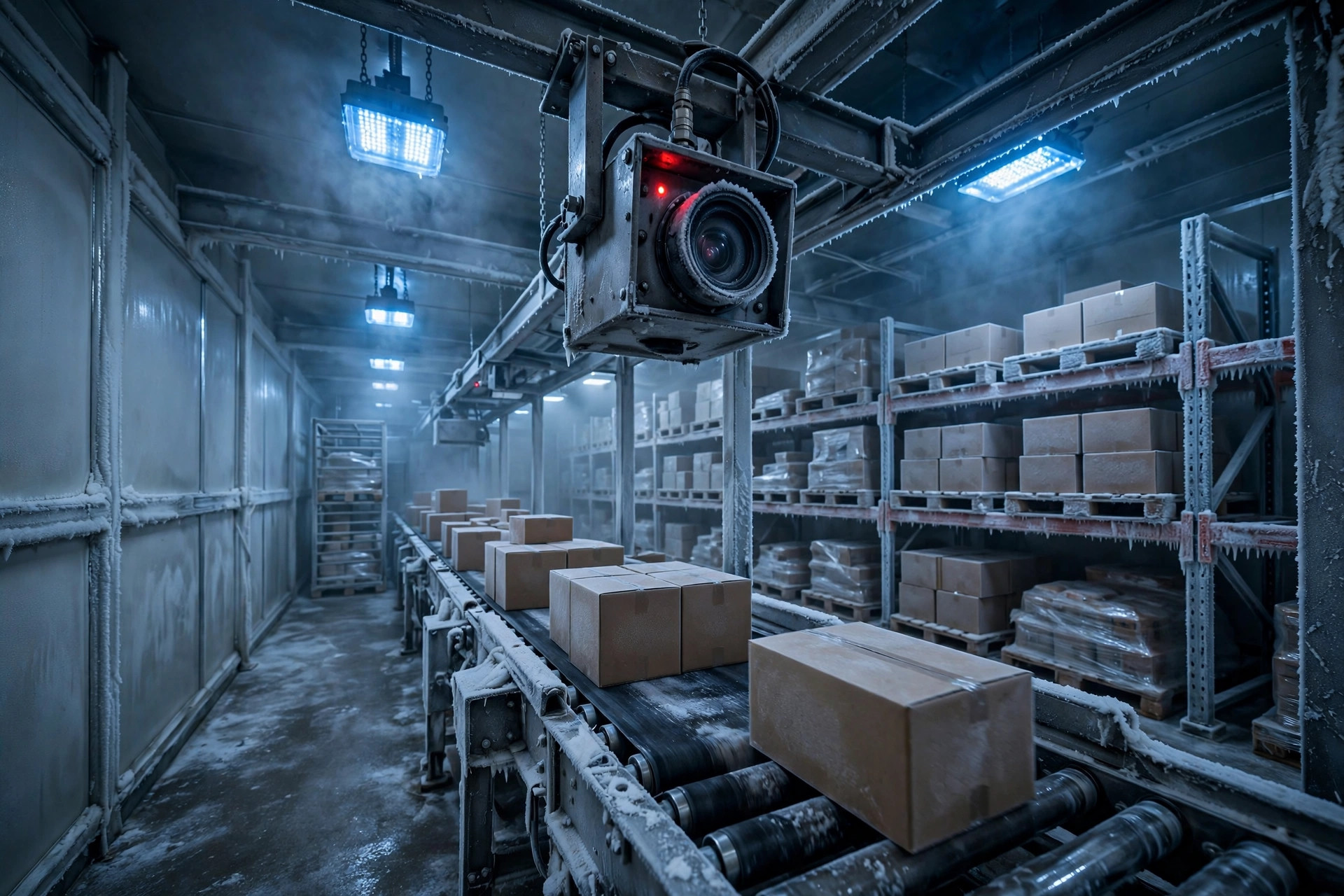
Here's a number for you: the same camera, the same barcode-reading program, scores a 99.8% read rate in a 25°C lab — and drops to barely 96% after three months in a -22°C freezer. The camera wasn't broken. The algorithm hadn't changed. What changed was the film of fog on the lens.
It's like walking indoors on a winter day and watching your glasses go completely white — except the camera lives that moment every single day, and it never gets to take the glasses off and wipe them.
Three Ways a Freezer Kills a Camera
The first killer is condensation. Freezer air doesn't feel humid, but push a 5°C camera into a -22°C room and the moment the metal housing and glass drop below the dew point, water vapor condenses onto them as a film. Worse are the defrost cycles: the room briefly climbs to -10°C and falls back, several times a day — repeated thermal shock on the lens.
The second killer is frost. Every time the dock door opens and a forklift rolls in, a gulp of 30°C humid air hits -22°C steel and racking, and flash-freezes into a white crust. When that frost grows on the enclosure glass, the camera is effectively reading barcodes through frosted bathroom glass, and the read rate falls off a cliff. The worst case I ever saw had 2 mm of frost — the barcodes came out looking like impressionist paintings. No algorithm on earth fixes that.
The third killer is thermal drift. Image sensors and lens mechanics are temperature-sensitive. Below -20°C, thermal contraction shifts the lens stack just enough to throw off a focus calibrated at room temperature. Think of it this way: the camera goes nearsighted in the freezer, and the prescription changes with the temperature — 100 diopters today, 150 tomorrow.
So here's the conclusion up front: freezer vision problems are physics problems at the optical window, not algorithm problems. AI can't see through a layer of frost. That's the laws of physics, not something you tune away. Anyone who tells you "just swap the algorithm" should first go wipe the lens.
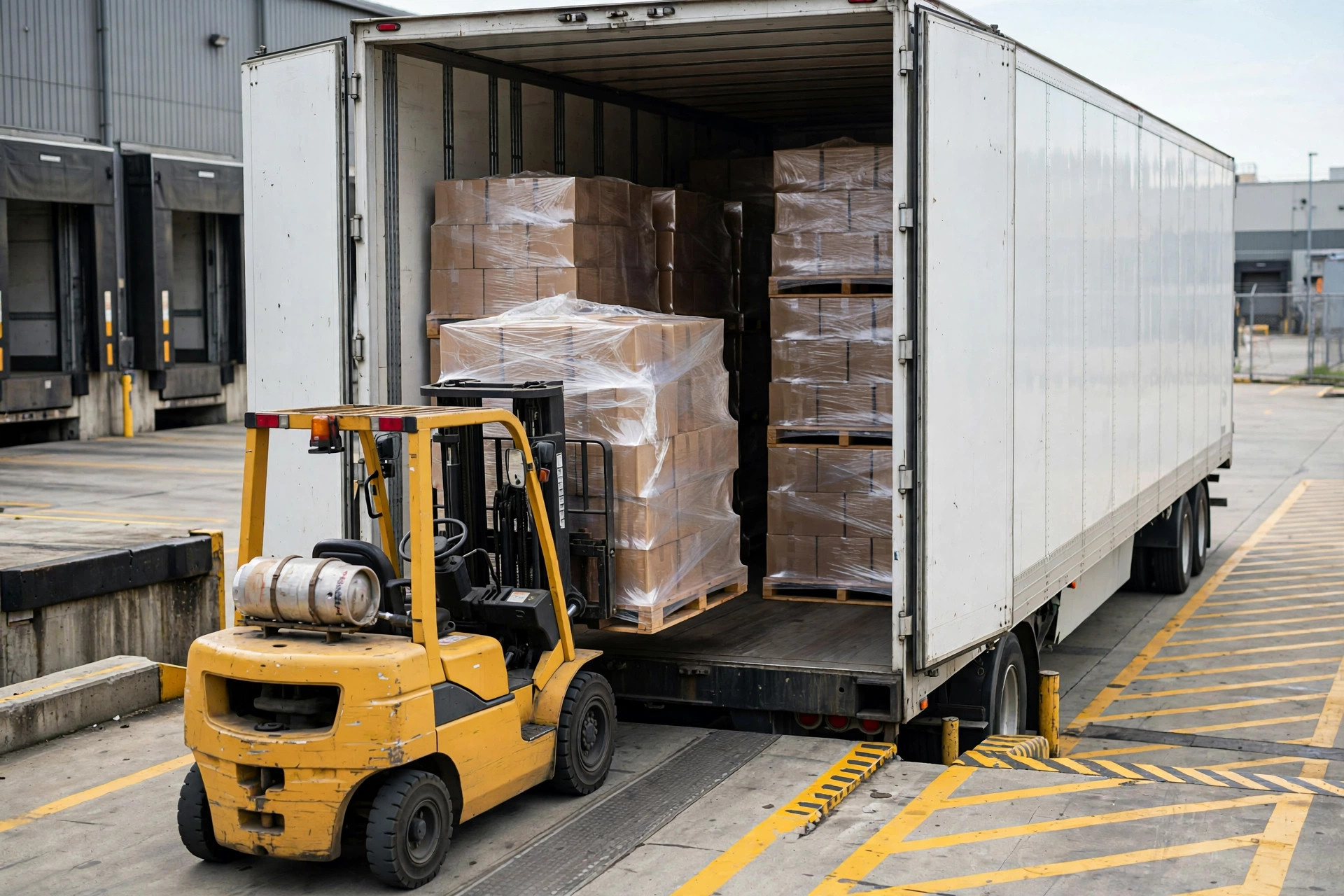
In the fall of 2023, a cold-chain distribution center in Tianjin ran two barcode cameras on the outbound conveyor of its -22°C freezer, verifying carton labels. First month: 99.6% read rate. After winter set in, it slid to 96.3%, and 300-plus cartons a day fell out for manual rechecks. Cameras were IP67, software untouched, lighting fine. The culprit was the inside of the enclosure glass — day-night temperature swings plus defrost cycles were condensing a microscopically thin fog on the inner surface, forming by night, evaporating by day, and the read rate rode the temperature curve up and down. The fix was embarrassingly low-tech: heated enclosures holding the interior around 5°C, with heated film on the glass. The retrofit ran a little over 70,000 yuan for both enclosures, controllers, and wiring. Two weeks later the read rate was back at 99.5%, and manual rechecks dropped by eighty percent.
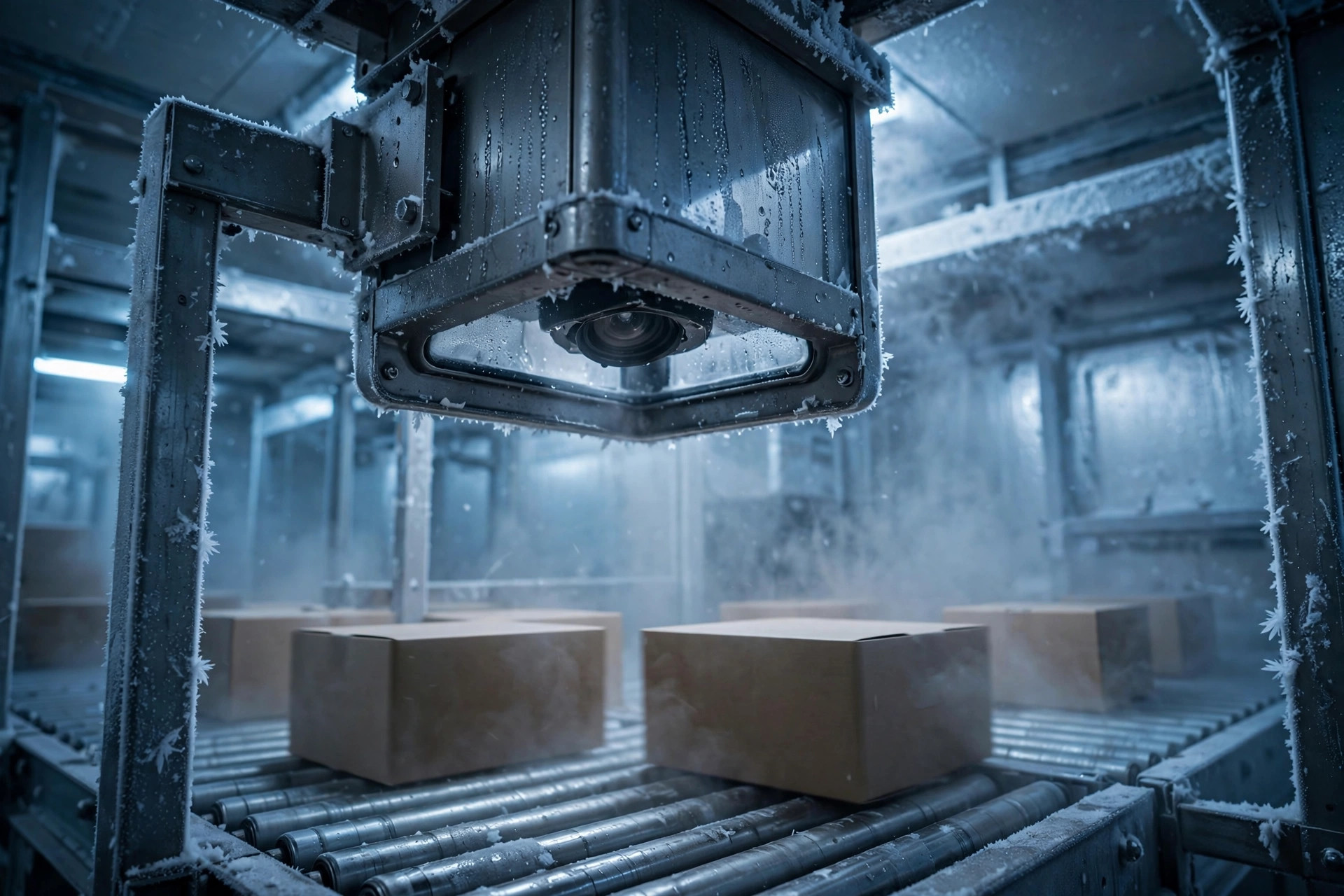
Early in 2025, a frozen-food plant in Jiangsu put vision inspection for damaged packaging in a -25°C freezer. The integrator's shortcut: a "wide-temperature" camera rated to -30°C, no heated enclosure — "the datasheet says it works." One month in, the false-reject rate was 8%, worse than tired human eyes. The electronics were perfectly alive, but thermal drift had walked the focus off and door traffic had frosted the lens edges. They added heated enclosures anyway; false rejects fell under 1%. Rant time: buying on the "operating temperature" line alone is the biggest pseudo-requirement in freezer vision. That number means the board powers on. It says nothing about the optics staying in focus — and even less about the fog in front of the lens.
Three Dividing Lines for Heated-Enclosure Selection
| Room temp | Door/defrost traffic | What to buy | Cost per set |
|---|---|---|---|
| Above 0°C (chiller) | Low | Standard industrial camera + basic moisture cover | A few thousand yuan |
| -25 to 0°C (freezer) | Normal | Heated enclosure (interior about 5°C) + heated-film glass | 10,000–30,000 yuan |
| Below -25°C (blast freezing) | Heavy doors, frequent defrost | Heated enclosure + double glazing + cold-rated cabling + independent controller | 30,000–50,000 yuan |
Memorize these lines:
First, 0°C is the first line. In a chiller (0–4°C) the enemy isn't the cold — it's condensation. The worst moment is when a room-temperature camera first enters the cold room. So even in chillers, pre-cool the camera: let it sit unpowered for a few hours until temperatures equalize.
Second, -25°C is the second line. Below that, an ordinary enclosure heater may not keep up with heat loss — you have to do the thermal math: enclosure surface area × temperature delta × heat-transfer coefficient, then add 50% headroom on the heater. Skimp on the margin and the first bad day (defrost plus a stuck-open door) blows right through your interior temperature.
Third, "4K high resolution" is a pseudo-requirement, and it's rant o'clock. Reading barcodes and spotting torn packaging, 2 megapixels at a 1-meter working distance is plenty. Jump to 12 megapixels and each frame carries six times the data; processing time stretches from 80 ms to 300 ms, and your line rate of 60 cartons a minute gets strangled by the camera. Remember: pixels are for showing off, cycle time is what the line lives on.
One more thing about IP67, because it confuses people: it protects against liquid water and dust, not fog. The 6 means dust-tight; the 7 means 30 minutes under a meter of water — both about liquid water and solids. Fog is water in gas phase; it waltzes in through breather valves and cable-gland gaps and condenses inside. Don't see IP67 on a datasheet and assume freezer-proof. Different problem entirely.
The Maintenance Traps: Heaters and Cables
Installing the enclosure is the easy part. The traps are in maintenance.
Trap one: heater element life. Heating film and PTC elements run 24/7, rated for 20,000–30,000 hours. Sounds long — that's about three years. And they don't die suddenly; they fade. Heating output weakens year by year, interior temperature silently slips 1–2°C, and you notice nothing until the read rate starts sliding again. My rule: measure the actual interior temperature every year before winter; if it's 3°C under the setpoint, replace the heater. Don't wait.
Trap two: cable embrittlement. Standard PVC cable goes stiff and brittle below -20°C; flexed back and forth in a cable chain, it cracks within half a year. I learned this the hard way: one warehouse chased ghost dropouts for two months before finding a frost-cracked cable jacket, damp shielding, intermittent signal. Freezer cabling must be cold-rated stock (good to -40°C), with metal waterproof glands — not plastic quick-twist connectors, which work loose after two freeze cycles.
Trap three: probe drift. The little temperature probe holding your interior at 5°C ages and drifts too — it can read 5°C while the real temperature is 1°C. Calibrate against a reference thermometer once a year; if it's off by more than 2°C, replace it. The probe costs pocket change; the failure it prevents doesn't.
Trap four: condensate backflow. If condensation on the enclosure's inner walls can't drain, it runs down the bracket onto the camera and lens. Mount the enclosure with a slight tilt and put a drain hole at the bottom. Nine out of ten integrators miss this detail the first time.
Is It Worth the Money? One Number Decides
House rule: no slogans at the end, just numbers.
A heated-enclosure setup runs 20,000–30,000 yuan and lasts about three years. A manual recheck takes about a minute a carton — one operator clears 480 a shift. At 300 misreads a day you're burning 0.6 of a person; squeeze that to 60 and you free up half a headcount. Against a fully loaded freezer operator at 80,000–100,000 yuan a year, payback lands inside seven months.
Flip it: if your line misreads only a few dozen cartons a day and the operator handles them between tasks, 30,000 yuan of enclosures won't pay back in three years — skip it. Scheduled lens-wiping beats any hardware.
So the decision line is exactly one number: daily misreads × cost per manual recheck — can six months of that cover the enclosure investment? If yes, buy it. If no, stay manual. No technology is expensive or cheap in the abstract; there's only math that works and math that doesn't.
By Da Liu, Automation Engineer