AI vision carton damage detection warehouse systems have become a fixture of trade-show demonstrations, yet the distance between a demonstration cell and a working warehouse deserves more scrutiny than it usually receives. Based on field observations across several distribution sites, one pattern recurs: damaged cartons are not rare, but damaged cartons caught reliably before outbound handoff are. Most facilities still depend on the packer's eye, and human visual inspection degrades predictably under peak-season pace and fatigue.
This article deliberately avoids asking whether the technology is advanced. It asks three narrower questions: under what conditions does it produce a return, how should false positives be handled as an operational design problem, and in which situations does it fail?
Where the return comes from in ai vision carton damage detection warehouse deployments
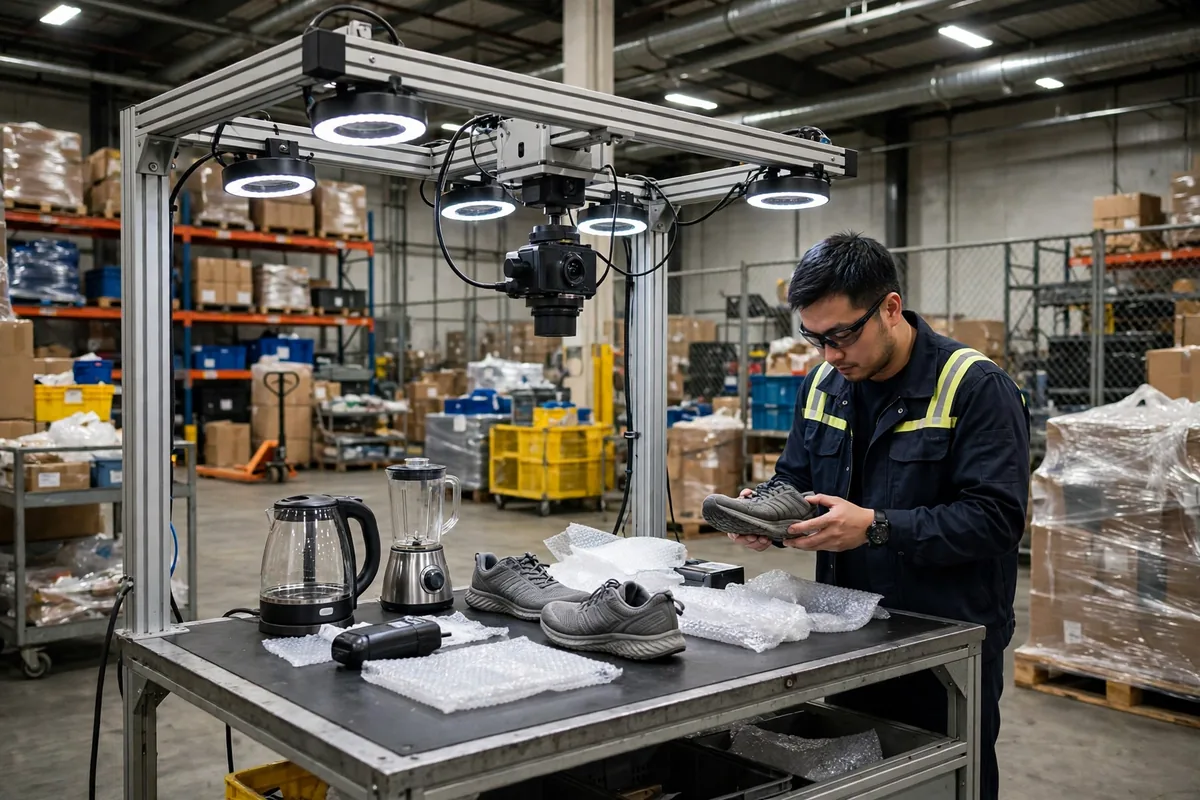
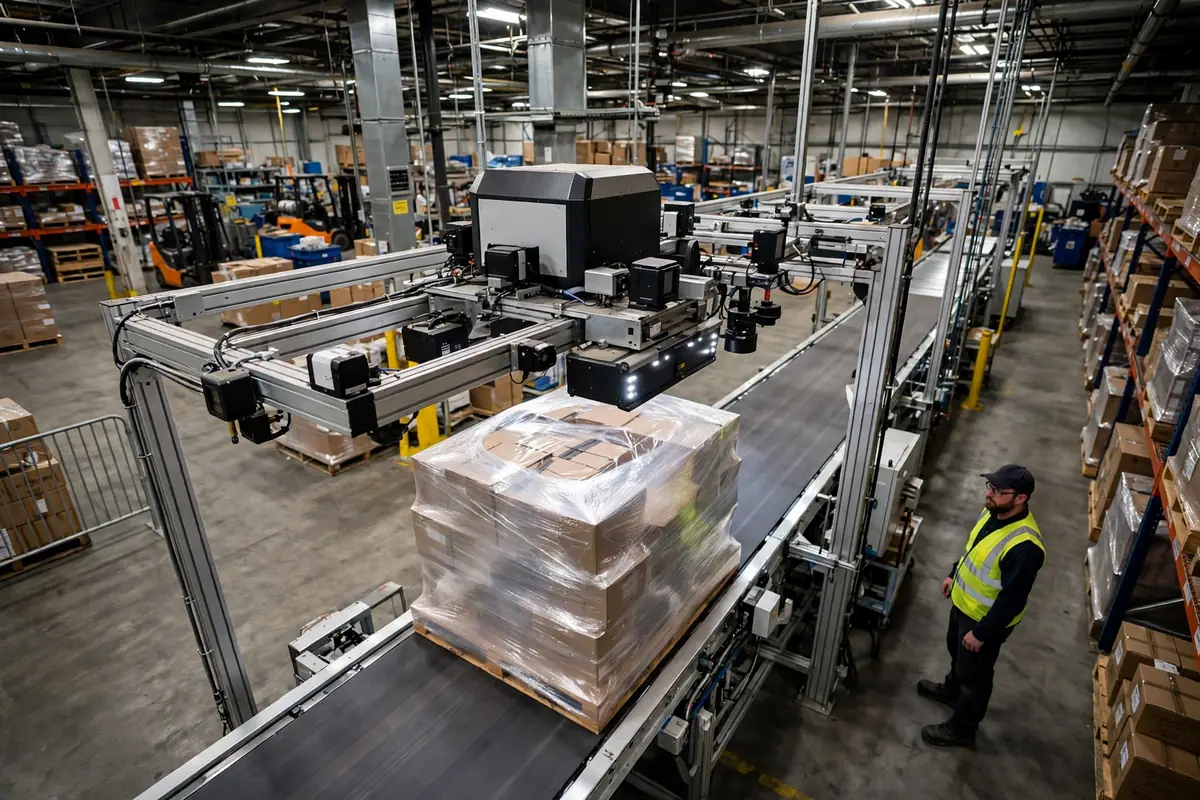
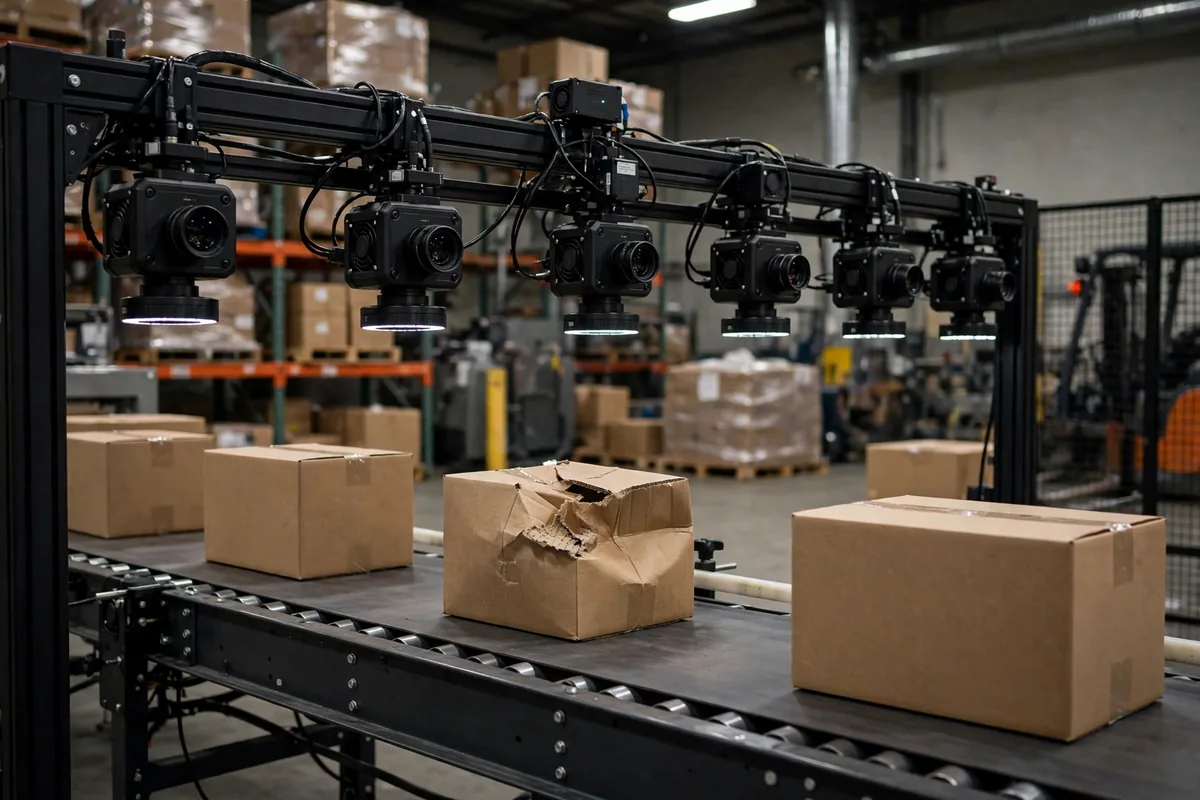
Consider two contrasting cases. In the second half of 2024, a consumer-goods warehouse in eastern China with a large daily outbound volume piloted a two-camera setup, top and side, at its packing verification station, targeting obvious carton damage and severe deformation. The figures discussed in its internal review were participant-reported experience estimates, not independently audited data, and should be read as orders of magnitude rather than industry benchmarks. Before the pilot, manual sampling caught only a fraction of damaged cartons, and many problems surfaced at carrier hubs or at customer delivery. After roughly two months, the site reported a noticeable rise in damaged cartons intercepted before dispatch, and its internal accounting attributed most of the pilot's justification to avoided reshipments and complaint handling.
The second case points the other way. In the first half of 2025, an e-commerce warehouse in southern China handling mostly small parcels installed a single camera at the end of a high-speed sortation line. According to the project team's own account, small cartons moving at line speed generated frequent alarms for minor dents and print color variation. During peak hours, reviewers gradually learned to ignore the alarms, and within about three months the station had effectively reverted to manual sampling. The detection capability had not disappeared; the credibility of its alarms had.
Placing the two cases side by side suggests where the return actually originates. First, fewer damaged cartons leaving the building means fewer reshipments and fewer complaint-handling hours. Second, timestamped outbound images reduce the cost of responsibility disputes with carriers and customers, because evidence replaces recollection. Third, interception moves a quality problem from after delivery to during packing, where correction is cheapest. The table below is a worked example using explicitly assumed values to show the calculation structure; every input should be replaced with a site's own volumes, labor costs and vendor quotations before any decision is made.
| Calculation item | Illustrative assumption | Note |
|---|---|---|
| Cartons inspected per day | 8,000 (assumed) | Use actual outbound volume |
| Reduction in escaped damage | Assumed, in per-thousand terms | Must be measured before and after, same definition |
| Cost per escaped damaged carton | Site's own reship and service cost | Freight, product loss and labor; avoid rumored figures |
| False-positive review labor | Alarm rate multiplied by seconds per review | The most commonly underestimated line |
| Decision rule | Proceed only if annual net benefit exceeds annual total cost | Total cost includes equipment, integration, maintenance and review labor |
False positives in ai vision carton damage detection warehouse work are an operating cost, not a footnote
Field evidence suggests that false positives should be managed by severity grading rather than by a single alarm threshold. High-confidence severe damage stops the carton. Medium-confidence findings are photographed, logged and released subject to sampling. Low-confidence findings are recorded silently for later analysis. The reasoning is economic: different damage grades carry very different downstream costs, and treating every alarm as equally urgent forces the most expensive resource, human attention at peak pace, onto the cheapest errors.
A feedback loop is equally important. Alarms overturned by human reviewers should be archived weekly and classified by cause: lighting change, an unfamiliar carton type, or a threshold problem. Without that loop, alarm quality drifts as carton mix and seasons change, and no one can explain why. A system whose errors are classified improves; a system whose errors are merely endured does not.
This leads to a counterintuitive judgment. A system with a slightly higher false-positive rate but clear severity grading is usually worth more, over time, than a system with a very low false-positive rate that stops the line on every alarm. Line stoppage costs are paid by the whole building, while graded review costs are paid only by the flagged cartons. Optimizing for an impressive demonstration metric often trades away detection of real damage, and financially that exchange is rarely favorable.
Where ai vision carton damage detection warehouse systems fail
The first failure zone is glossy film. Cartons wrapped in stretch film or finished with a reflective coating produce large areas of specular highlight under overhead lighting. The camera sees an overexposed white region, and dents and tears hide precisely inside that glare. The remedy is usually not a more expensive camera but lighting geometry, polarization, or a different imaging position, all of which must be validated with the site's real carton mix during a pilot rather than accepted from a demonstration.
The second failure zone is the boundary of the crushed corner. A slightly collapsed corner may count as damage for one customer and as acceptable transit wear for another. The system can only enforce a standard that humans have defined, and if the warehouse has not first separated acceptable from unacceptable samples, every borderline judgment becomes an argument. What appears to be a recognition failure is, on inspection, a standards failure.
The third failure zone is the confusion between print defects and structural damage. Print stains, color shifts and skewed labels can look remarkably similar to scuffs and surface tears in a two-dimensional image. If the detection target is not explicitly limited to structural damage, the system reports large volumes of print problems as damage, reviewers lose trust in the alarms, and the southern China case above shows exactly where that path ends.
A prudent adoption sequence follows from this analysis. Pilot with the site's real cartons on one station, measure escapes, false positives and review labor under a single consistent definition, insert those measurements into the framework above, and only then decide on expansion. Equipment specifications, prices and delivery terms vary widely between vendors and should be taken from formal quotations and contracts; this article offers no specific figures on those points.
The trajectory, on current evidence, is reasonably clear. The technology establishes itself first where damage is expensive, carton types are relatively standardized, and outbound volume is large enough to absorb review labor, then expands as carton libraries and lighting playbooks accumulate. For warehouses with highly varied cartons, modest volume and few damage disputes, manual sampling combined with outbound photo records may remain the more economical combination. Whether that judgment holds for any given building is a question its own pilot data should answer, not a demonstration video.
By Dr. Chen, Supply Chain Researcher