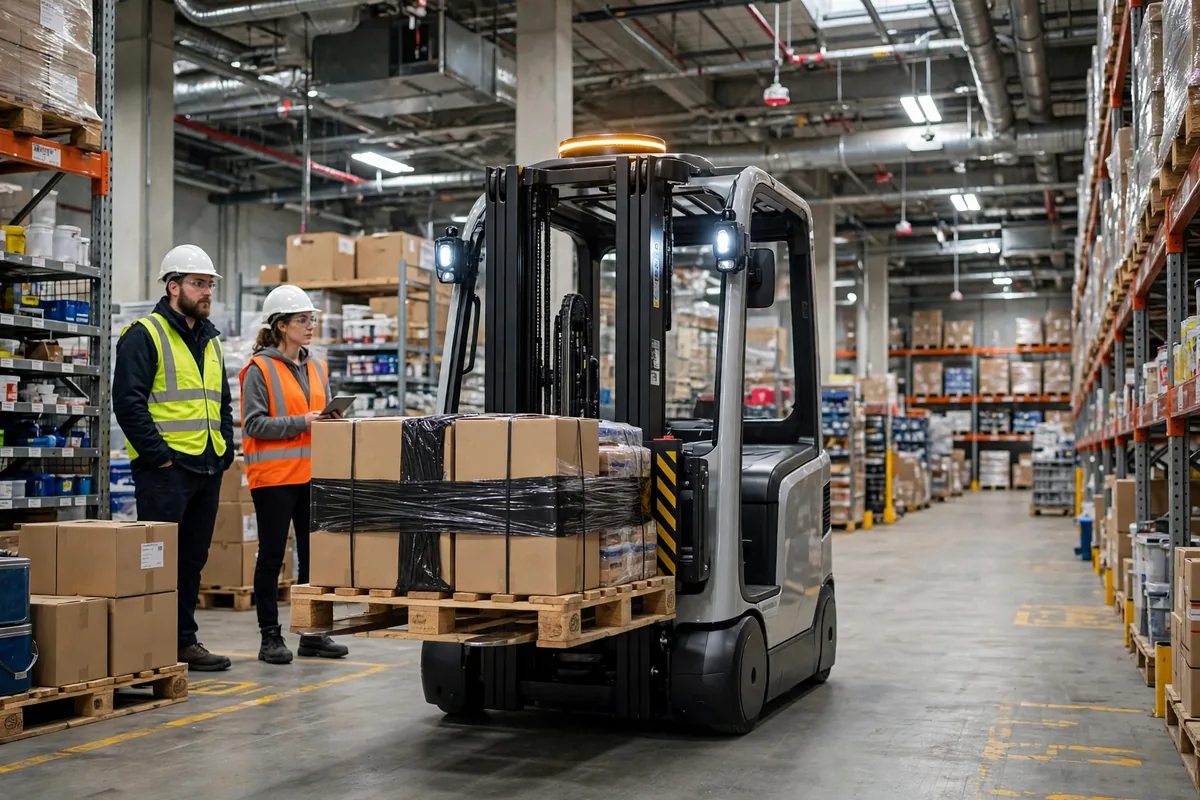
Let me start with the part vendors skip. An autonomous forklift warehouse project does not fail because the truck is dumb. It fails because the work in your building does not fit the truck.
Think of it like hiring a driver who never calls in sick. Sounds great. But this driver is picky. Picky about aisles, picky about pallets, picky about pace. If the floor is rough, it slows down. If a pallet is leaning, it stops and asks for help. If your Wi-Fi drops, it waits. The principle is simple enough — lidar and vision navigation, a mapped building, planned routes for pallet moves. The hard part is everything around that map.
Start With the Work, Not the Quote
Last spring I walked a beverage distribution warehouse in Ontario, California. About 60,000 square feet, two shifts, standard beam rack, decent aisles. Their work was almost perfect for automation: full pallets from receiving to high-bay storage, then full-pallet replenishment to pick faces. Same routes, all day, every day.
Using their own planning assumptions — and I want to be clear, these were assumptions for a model, not a promise — one truck could cover most of a hard-to-staff night shift. They ended up running two trucks and kept one person on patrol at night instead of a full driving crew they could never hire anyway. That project paid because it solved a staffing problem that was already costing them money. The truck was not the point. The empty night shift was.
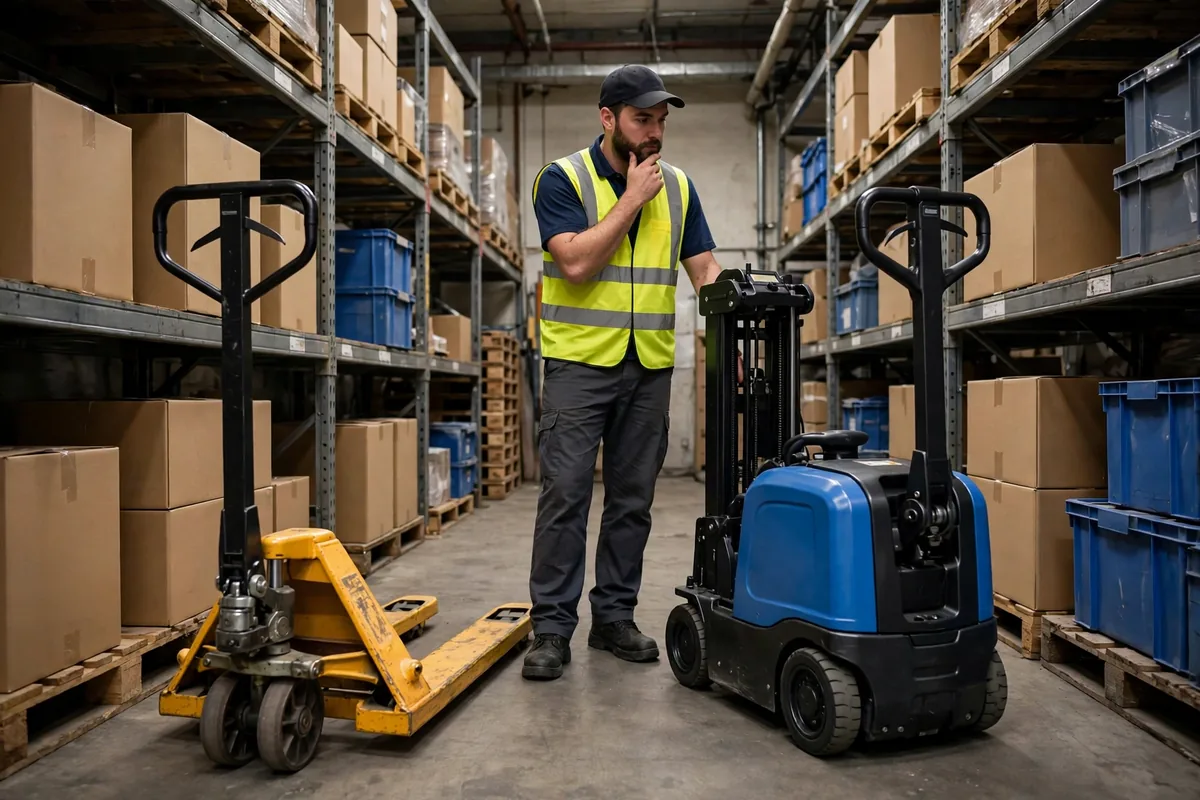
Now the opposite case. Early this year, a small 3PL in New Jersey asked me to spec a truck. Under 20,000 square feet, one shift, messy freight. Five or six pallet types — wood, plastic, and whatever a customer built in their garage. Their total full-pallet moves per day were low. I ran the cycle math and told them not to buy. The truck would sit idle most of the shift. High uptime means nothing if there is no work to be up for. That is buying a race car to deliver food down an alley. The car is fine. The job is wrong.
If you want the breakdown of what these trucks can actually handle day to day, I covered that in what autonomous forklifts actually do in a warehouse. This piece is narrower. This piece is only about the money.
The Autonomous Forklift Warehouse ROI Checklist
Most buyers calculate ROI one way: how many drivers do I save? That is a sales calculation, not an engineering one. Here is the framework I actually use. Every number below is an example assumption. Drop in your own building's numbers before you believe any payback period.
| Cost or benefit | How to model it (example assumptions) | What usually gets missed |
|---|---|---|
| Truck and software | Truck, navigation, fleet manager as one package price | Charging station and network work often quoted separately |
| Building retrofit | Aisle markings, floor repair, rack protection, Wi-Fi coverage | Old floors are uneven; retrofit can grow fast |
| Integration | WMS task handoff and completion reporting | Unclear scope turns into billable change orders later |
| Maintenance | Annual service, sensor cleaning and replacement, tires, battery wear | MTBF looks good on paper; small stops are the real killer |
| Downtime cost | Pallets not moved per hour the system is down | No manual fallback plan means peak season gridlock |
| Labor saved | Only shifts you can truly remove or redeploy | Counting headcount you never actually cut |
| Efficiency gain | Extra usable night hours, less product damage | Damage claims need to be written into acceptance testing |
The payback formula is not complicated: total investment divided by true annual net saving. Net saving means labor and operating gains, minus service, minus integration amortized over time, minus the cost of downtime. Fill in that table honestly and a lot of projects kill themselves. I do not even have to argue.
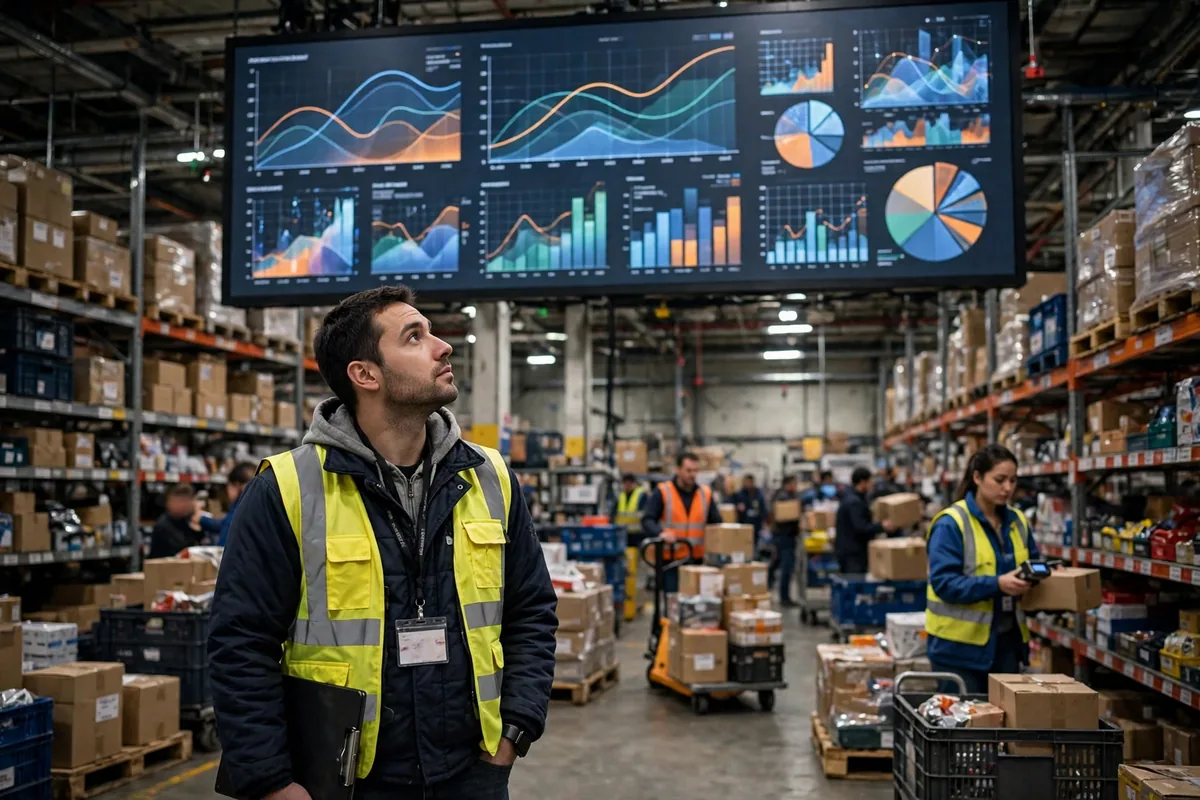
Then run three dividing lines I use on every site survey. First, move density. How many full-pallet moves per day, really, counted from your WMS and not from memory? Sparse moves mean an expensive parked truck. Second, standardization. How consistent are your pallets, loads, and rack positions? The less standard the freight, the more exception stops you get, and your real cycle time can fall well below the brochure number. Third, shift pattern. Are you running two or three shifts, or struggling to staff nights? A one-shift small warehouse simply has fewer labor hours to save, so the payback period stretches out by math, not by opinion.
Here is the counterintuitive part, and some people do not like hearing it: travel speed barely decides ROI. Exception rate decides ROI. A fast truck that stops dozens of times a day for a blocked path, a bad pallet, or a lost position is not autonomous. It is a truck with a full-time babysitter. The first number I ask for on any pilot is the task completion rate without human intervention. How many jobs finish start to finish with nobody touching anything? If that number is weak, every other spec on the sheet is decoration.
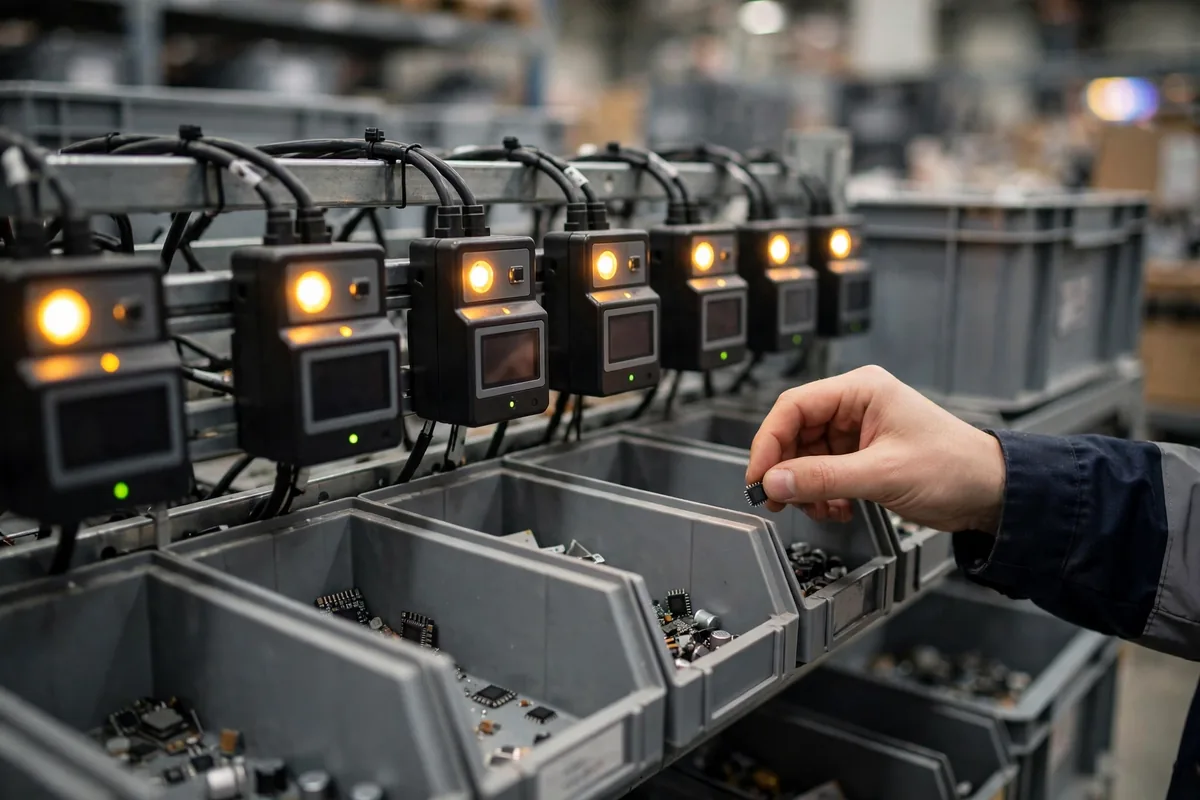
A word on maintenance, because this is where owners get surprised in year two. Lidar heads hate dust. Drive wheels hate floor joints and dock plates. Batteries hate being run flat every day because nobody planned the charging window. None of these are dramatic failures. They are small stops, ten minutes here, twenty minutes there, and they eat the exact labor saving you put in the spreadsheet. So in the contract, pin down response time, spare parts lead time, and exactly what the service agreement includes. That matters more than squeezing the purchase price. And always keep a manual fallback path. On the day every truck is down — and that day will come — your warehouse cannot go down with them.
If you are evaluating this week, do not start by booking a demo. Start by pulling last month's pallet moves, shift pattern, and pallet types, and fill in the table above yourself. If the math still holds with your numbers, then talk models and vendors. Whether this money is well spent comes down to one number: how many jobs it finishes alone, without your people rescuing it.
By Da Liu, Automation Engineer