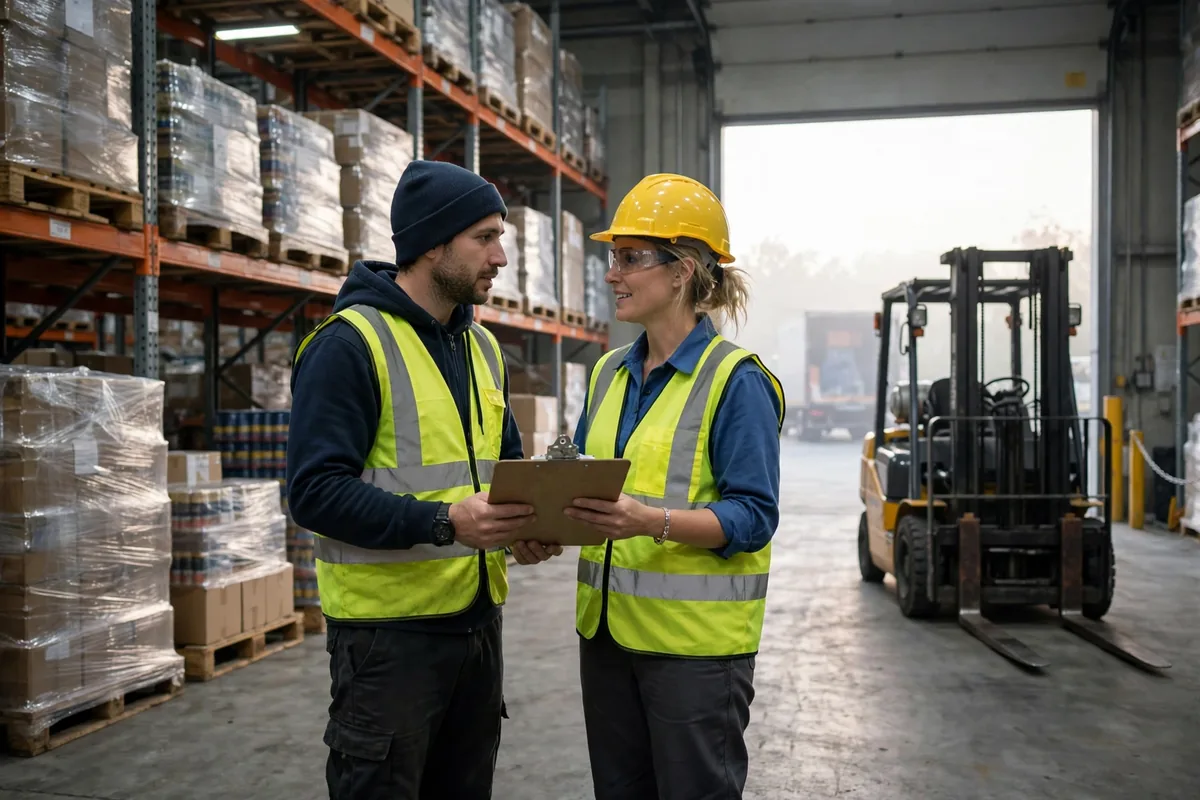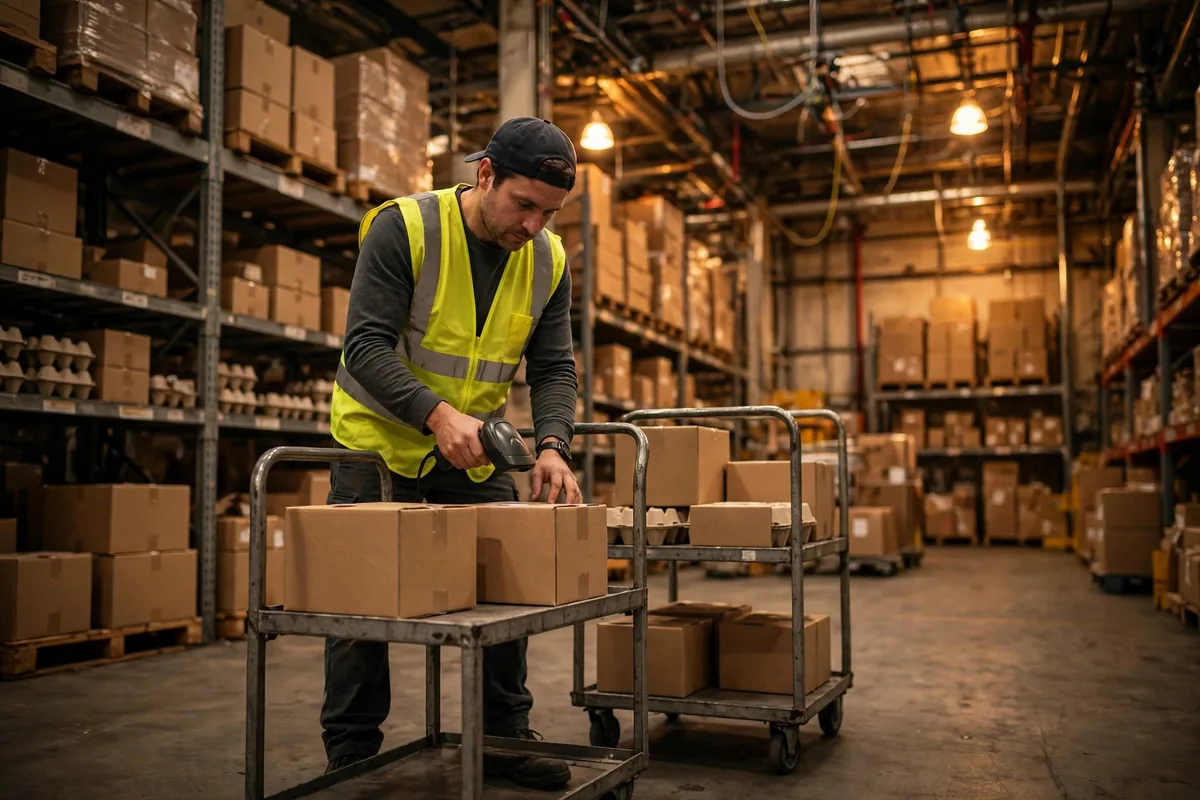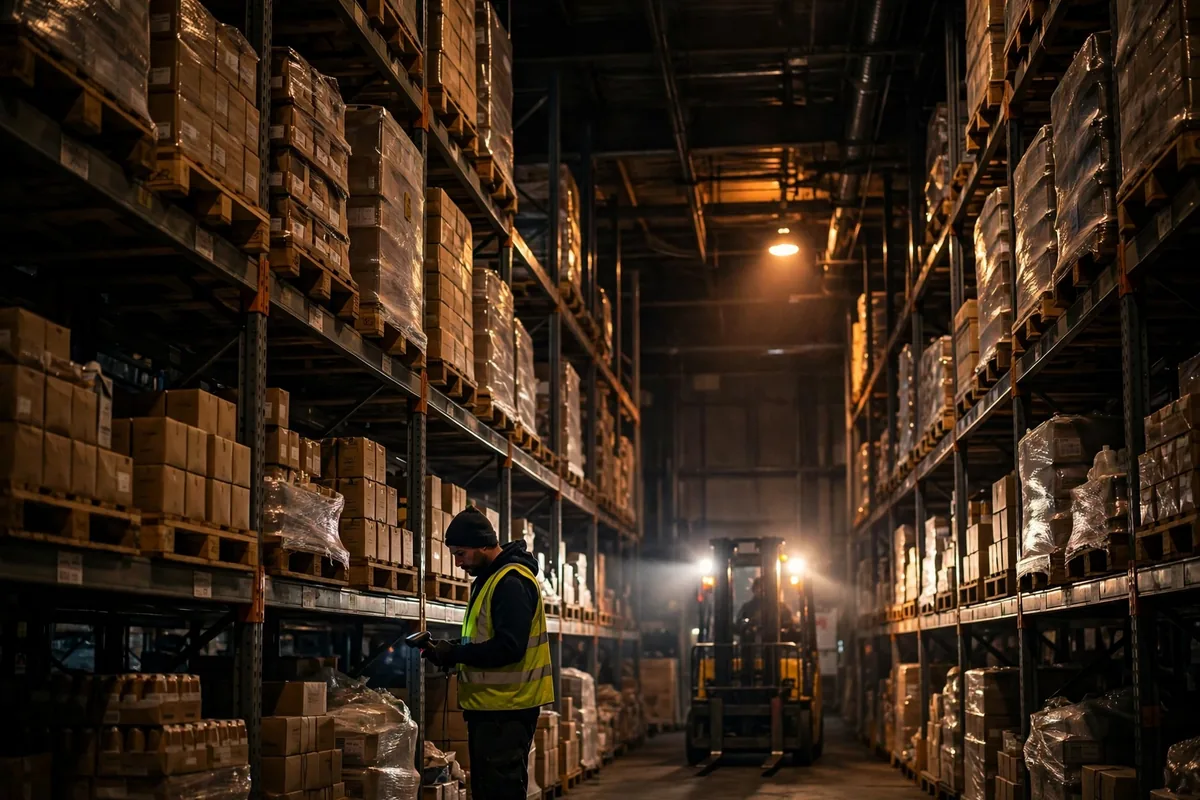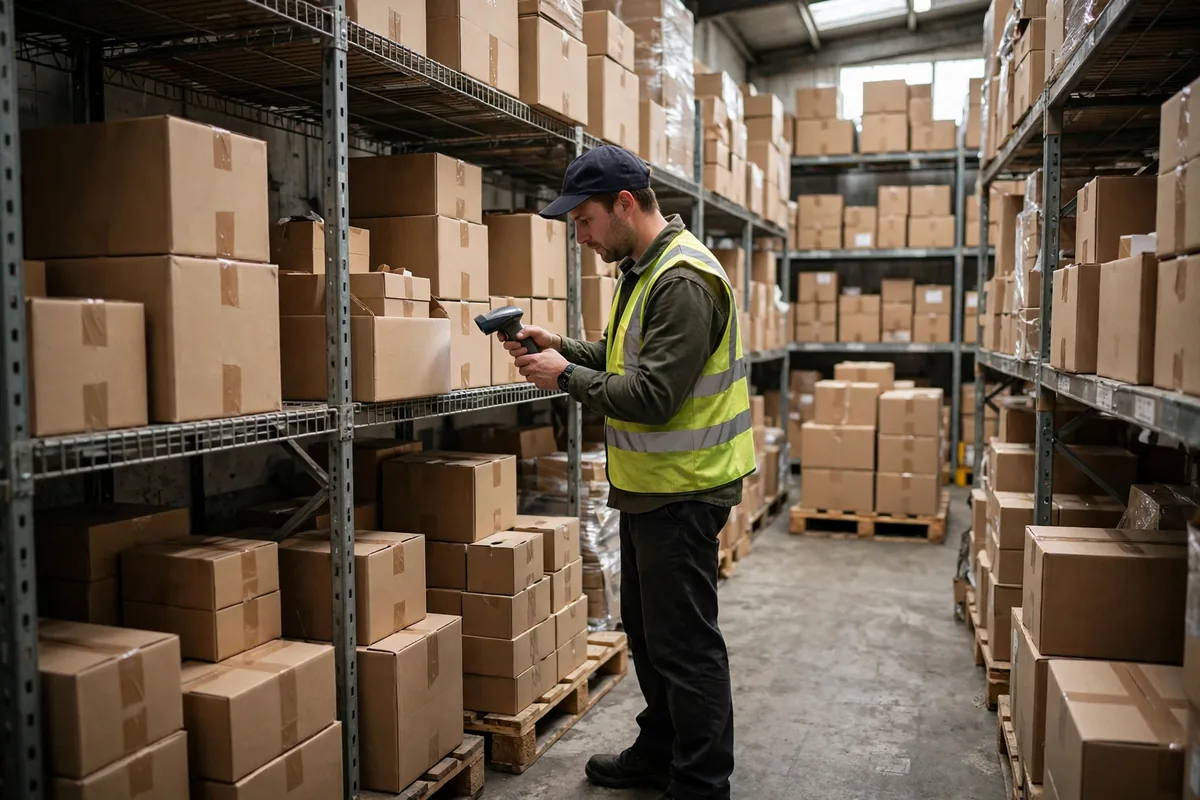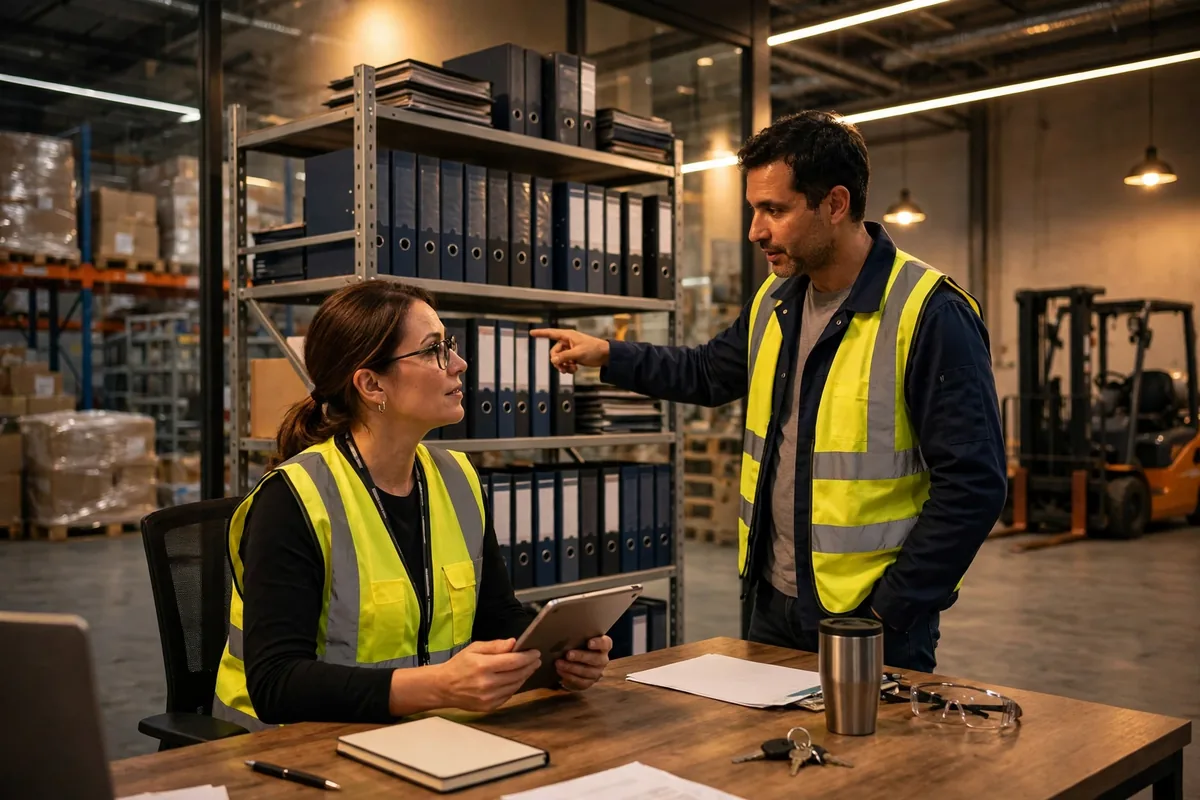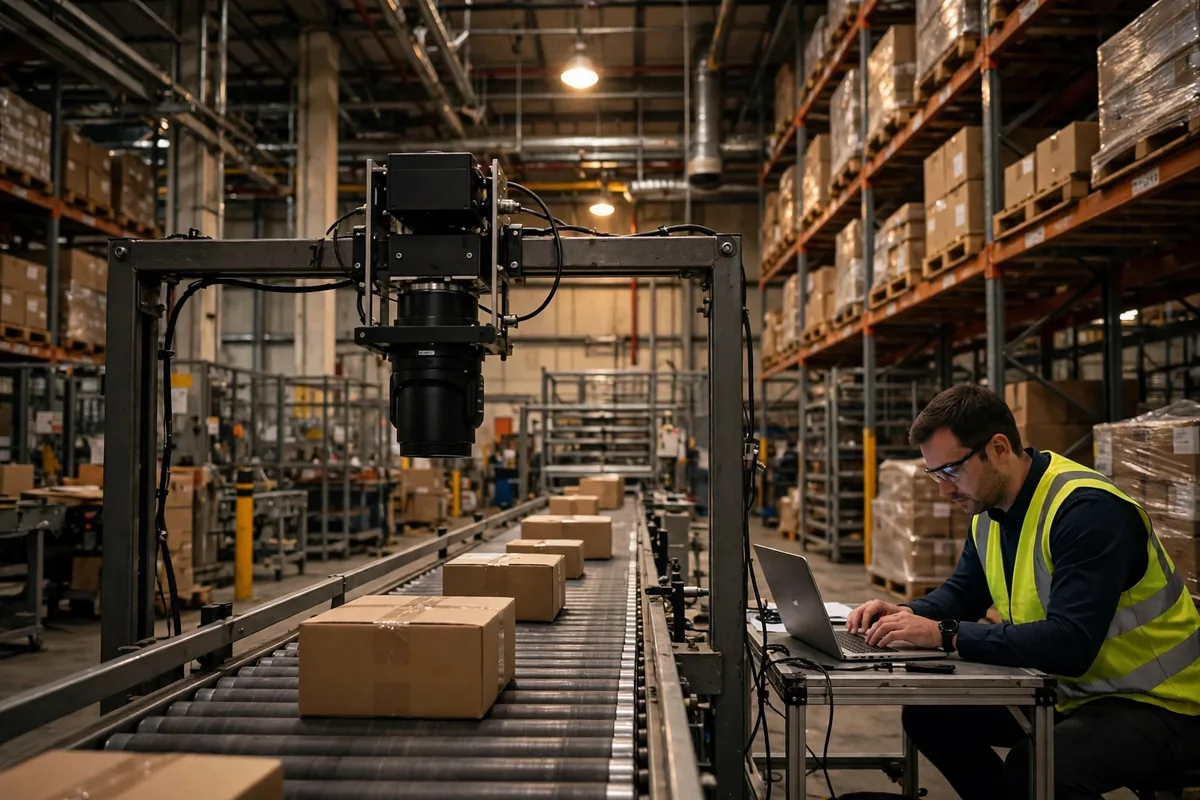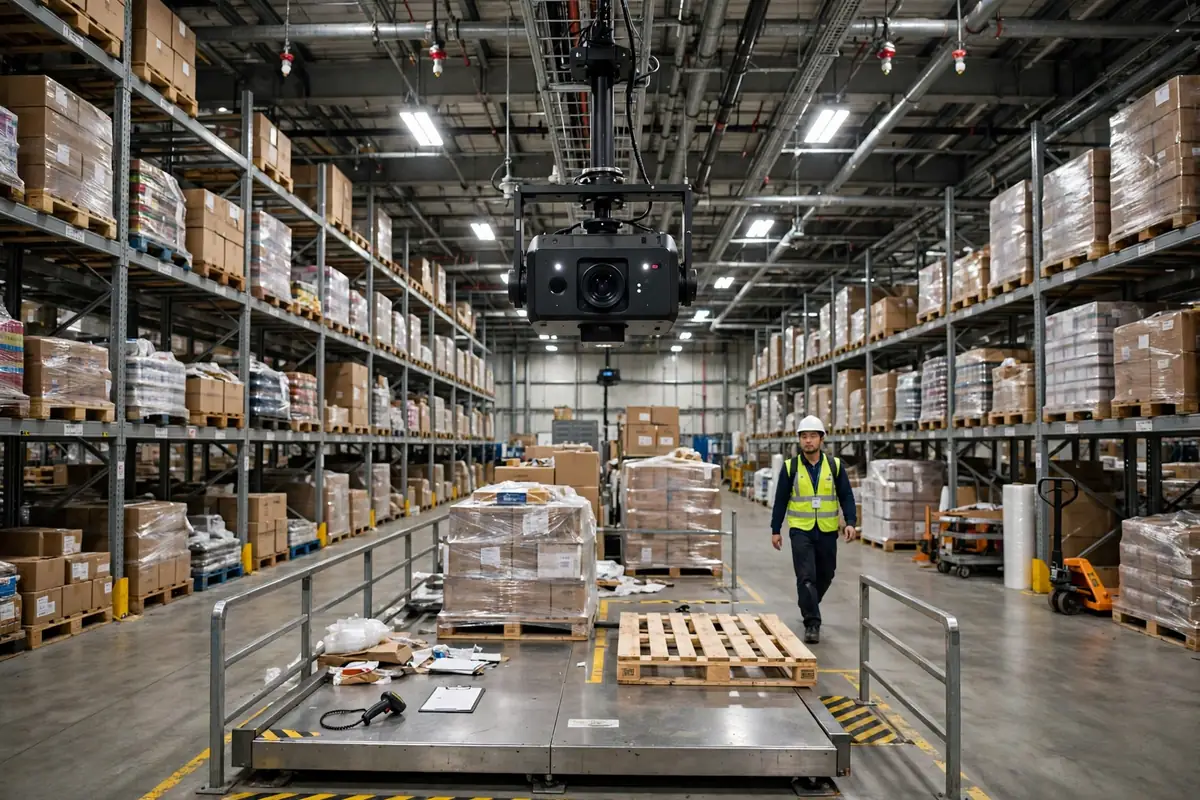
Last year, during a visit to a warehouse in inland Southern California, the manager showed me a newly installed AI camera system with a mixture of pride and unease. It was a warehouse AI camera employee privacy problem, not a camera problem. The building was a little over 30,000 square metres, with more than 180 frontline workers. Pallet counts had become more accurate in the first week, he said, but the mood in the break room had changed. Workers were not opposed to the technology itself. They did not know what the cameras were watching, or what would happen after the system flagged something. That visit convinced me that warehouse AI camera employee privacy is not primarily a technical problem. It is a conversation problem, and it has to happen before the cameras are switched on. That is why warehouse AI camera employee privacy has to be settled before the first camera counts a single pallet.
This article is not a review of any particular product. It is a checklist of three questions a warehouse leader should work through with worker representatives, managers, and the system vendor before go-live. Get these three questions right and the technology can help. Skip them and even an accurate system can be undone by distrust.
What the warehouse AI camera actually counts
Start with the boundary: does the system count pallets, cartons, empty locations, and blocked aisles, or does it also track individual movements, dwell time, and walking paths? Those two kinds of data are fundamentally different. The first describes the state of goods. The second describes the behaviour of people, and once the two are mixed together, an employee privacy dispute is almost inevitable.
The warehouse I visited had not drawn this line clearly at first. The vendor demonstration focused on pallet recognition, but the delivered dashboard had people-movement statistics switched on by default. The manager discovered a dwell-time column he had never asked for only after go-live. The warehouse later switched that feature off and kept goods-level counting only, and resistance eased gradually. The lesson is practical: list every data field in the purchase contract, and for anything switched off by default, write down who may switch it on and on what grounds.
A workable approach is to discuss cameras in two separate uses. The first is operational counting: has the pallet arrived, is the location empty, is the aisle blocked. That data supports scheduling and replenishment. The second is individual behaviour analysis: who slowed down, who stopped, who wandered off. Just because the second is technically possible does not mean it should be adopted as a management tool. My view is that the first use can go ahead first, while the second deserves its own proposal, its own discussion, and its own agreement. Putting both under a single switch is the fastest way to create trouble.
Employee privacy is three lines, not a slogan
Employee privacy is often written as a single principle, but in a warehouse it has to become three concrete lines. The first is the collection line: what is recorded and what is not. Break areas, changing corridors, and anywhere near restrooms must be off limits, without exception. Even inside work areas, camera angles should avoid close-ups of faces unless there is a clear safety reason that has already been explained.
The second is the viewing line: who may watch raw footage and who may only see aggregated results. In my view, most management needs can be met with aggregated results alone, with no need to replay raw video. Access to raw footage should be limited to a very small number of roles, and every viewing should leave a record: who, when, for what reason, and which segment was viewed. Viewing rights without an audit trail tend, over time, to become rights that nobody owns.
The third is the retention line: how long data is kept, where it is stored, and how it is deleted. Aggregated pallet counts may be kept for a business period, but raw footage deserves a much shorter retention period and automatic deletion when it expires, rather than accumulating indefinitely on a drive. Many disputes do not erupt on launch day. They erupt months later, when someone asks whether footage from three months ago still exists and the warehouse cannot answer. Trust starts leaking at exactly that moment.
Once these three lines are agreed, employee privacy stops being an abstraction and becomes a list that can be posted on a wall. Workers may still not love being counted, but at least they know where the boundary is and whom to raise a concern with when it is crossed.
What happens after the system flags someone
The third question is the most easily overlooked, and the one that most determines whether a system survives long term: when the AI camera flags an exception, what happens next? Does it go straight into a performance record, or does a supervisor verify it first? Is the worker spoken to on the spot, or does the flag surface weeks later in a monthly summary?
I have seen two very different approaches. In one warehouse, flags were pushed directly to supervisors' phones, and supervisors spoke to workers immediately. The false-positive rate was not low, and after several such conversations workers began to feel that the system was there to catch people rather than help them. In another warehouse, a buffer step was built in: the system only reported the location and type of exception, a team leader checked it on the floor, and only a confirmed case entered the normal management process, while false positives were logged and sent back to the vendor for tuning. Acceptance in the second warehouse was clearly higher, for an understandable reason: people deserve a chance to explain a mistake, and a system deserves a correction loop for its own mistakes.
Here is a counterintuitive judgement worth stating plainly: the more accurate the recognition, the less it should bypass human verification. Higher accuracy makes managers more likely to treat system output as fact, which makes the occasional false positive more damaging, not less. Once that damage is done, rebuilding trust costs far more than the extra verification step would have cost. The more reliable the technology, the more deliberately the institutional brake should be kept in place. That is not conservatism. It is basic respect for people.
The arithmetic is also straightforward. Imagine a warehouse with 120 pickers where the system flags 60 exceptions a day. Even if only one in ten is a false positive, that is six conversations a day that need explaining. Without a verification step, all six become friction. With a verification step, most can be resolved on the floor in two minutes. What is saved is not a few minutes. It is workers' overall judgement of the system. Once that judgement turns negative, the invisible costs of turnover, disengagement, and quiet non-cooperation dwarf the price of the cameras.
Talk first, switch on later
The first warehouse I mentioned ended up doing something unremarkable: the manager printed the collection list, viewing rights, and retention periods, posted them by the break room door, and held a meeting to answer every question workers raised. The system did not change and the parameters did not change. What changed was that workers knew what the cameras watched and what they did not watch. Three months later, the pallet-counting gains remained, and the break-room grumbling had faded.
My judgement on the trend is that debate over warehouse AI cameras and employee privacy will not fade as technology improves. As recognition becomes more powerful, the debate will sharpen. Warehouses that settle the boundaries early will turn the technology into productivity. Warehouses that negotiate only on price and never on use will likely spend far more time putting out fires after launch.
So before switching anything on, settle three things: what is counted and what is not; who can view it and for how long; and what process follows a flag. Once those three are agreed, there is plenty of time to discuss recognition rates and quotations. Technology can wait a month. Trust, once lost, takes much longer to rebuild.
By Dr. Chen, Supply Chain Researcher