Here is the verdict up front: AI predictive maintenance is a money-saver for a big warehouse, and mostly an expensive toy for a small one. To put it bluntly, whether it pays for itself has little to do with how clever the algorithm is. It comes down to whether your equipment data is good enough to feed it.
This thing has two sides. The vendor will tell you the system flags failures 72 hours in advance, which sounds like a crystal ball. I have seen too many warehouses spend serious money on a system only to discover they did not even have a proper equipment log. Sensors go on, and the AI reads nothing but noise. So let me lay out the cost first and the benefit second, so you do not spend the money and then blame your luck.
What AI Predictive Maintenance Can Actually Flag
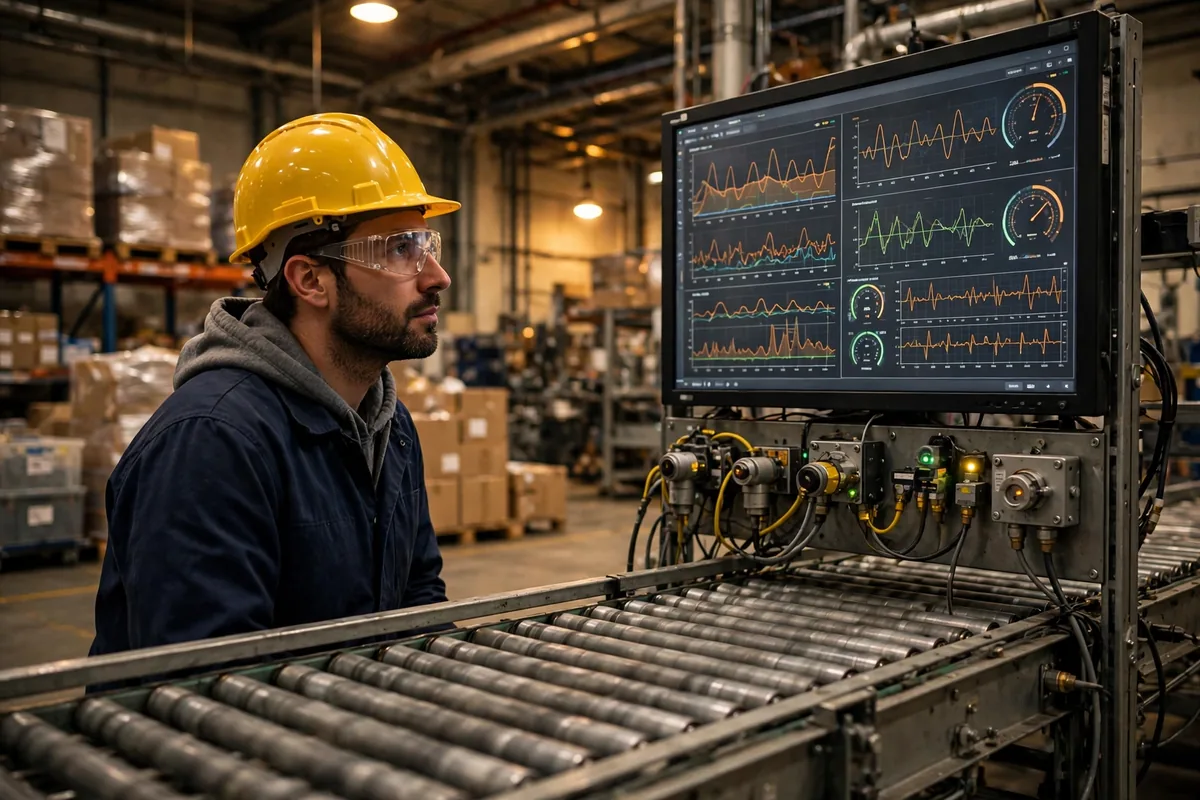
Start with what it really watches. AI predictive maintenance reads three kinds of signals: vibration, temperature, and electrical current. When a conveyor drive motor bearing is wearing out, the vibration level creeps up first. When a gearbox runs low on oil, the temperature climbs quietly. When a stacker crane motor takes on an abnormal load, the current curve starts to jitter. An experienced technician can catch maybe seventy or eighty percent of this by hand and by ear. What the AI adds is turning that feel into continuous numbers that keep watch at 3 a.m. when nobody is on the floor.
But that "72 hours before failure" line needs to be taken apart. The warning window varies by machine and by data quality. There is no fixed number that holds everywhere. One bearing can run a week from the first vibration anomaly to total seizure; another gives out in two days. A fault that heats up fast may leave you only a few hours. Any vendor who sells 72 hours as a promise is selling you a headline. The honest version is this: the length of the warning depends on your data, not on their slide deck.
Alerts need grading too, or even the best system turns into noise. My rule is three levels. Level one: watch only — a reading just crossed the line, so log it and follow the trend. Level two: schedule it — put the fix into the next planned service window. Level three: stop now — temperature or vibration hits the red line, and the machine stops on the spot. Those thresholds and who gets to call a stop have to be written into the operating manual from day one. The worst failure mode is an alert nobody dares to act on: the operator on duty is afraid of stopping the line wrongly, so a warning that arrived three days early becomes a post-mortem.
Let me run some numbers — and to be clear, everything below is a hypothetical example, illustrative figures, not measured data. Picture a sortation center moving 30,000 orders a day. The vibration reading on a conveyor drive motor bearing climbs for three straight days, the system flags it, and the crew swaps the bearing during the overnight lull. Four hours of downtime, parts and labor under ten thousand yuan. Wait for that bearing to seize, and the whole line stops dead in peak season with a day's orders piling up behind it. The loss runs ten times that repair bill, easily. The same math cuts the other way too. If your warehouse runs two conveyors and still keeps equipment records on paper, the price of a full AI predictive maintenance setup would pay for ten bearing replacements with change to spare. This thing has two sides, and the math has to be done on your own numbers.
Do the Predictive Maintenance Math Before You Buy AI: Who It Fits, Who Should Wait
I have seen too many warehouses buy the system before doing the basic homework. Use this table to score your own operation:
| The old way: walkarounds plus scheduled service | AI predictive maintenance | |
|---|---|---|
| What it costs | A technician's hours plus parts | Sensors, platform, annual service — the full stack is not cheap |
| What it catches | Visible problems: odd noise, overheating, leaks | Gradual wear: bearing degradation, motor overload trends |
| What it needs | People with experience | Continuous historical data, and someone who can read the alerts |
| Who it fits | Small warehouses, few machines, single shift | Big warehouses, many machines, running around the clock |
Here is the counterintuitive part: the less data you have, the worse a fit AI is. AI grows on data. Feed it three months of patchy, interrupted readings and it hands you back a pile of false alarms. After the tenth false alarm nobody answers them anymore, and you are worse off than before you installed anything. I watched one warehouse install vibration sensors on a stacker crane and get alarms every day for two weeks — until someone found the sensor bolted onto a resonance point. The problem was not the AI. It was the foundation.
And here is a plain truth worth saying out loud: sometimes the best predictive maintenance is a stethoscope and an experienced ear. A small warehouse should nail down three low-tech habits first: listen for odd sounds on the morning walk-around, feel motor temperatures once a week, and write the service log into one table every month. Do those properly, and you will catch eighty percent of sudden failures before they happen. Once that table holds three straight months of clean data, then go talk about AI.
Where the sensors go matters as well. Do not blanket the whole warehouse on day one. Pick the single most critical line: on a conveyor, watch the drive motors and gearboxes; on a stacker crane, watch the hoist motor and the travel wheels. Run one line for three months and see whether the alerts are accurate and how many are false. If the pilot works, expand. If it does not, stop and find out why — the loss is one line's worth of sensors. I have seen too many warehouses roll out hundreds of sensors at once, only to find the platform going grey three months later. The money was spent, the lesson was learned, and nobody wanted to admit it.
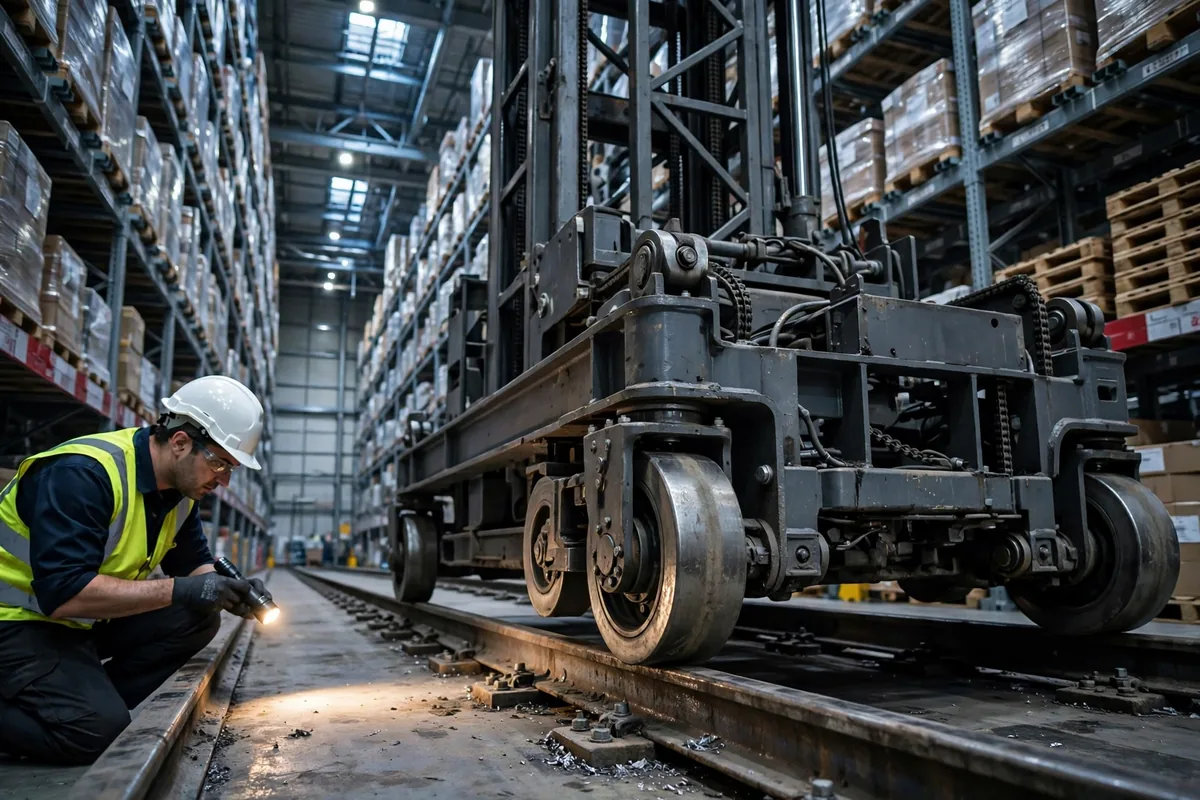
One more word on stacker cranes. Rail wear, chain stretch, hoist motor overload — all of them give advance warning, but only if someone is recording. With no records, AI cannot help you. With records, AI is a tireless assistant. Do not get the order backwards.
So here is the question to take back to your warehouse: can your equipment log produce three continuous months of data right now? If it cannot, park the AI conversation and start writing the data down. If it can, then go figure out what a 72-hour warning is really worth to you in money saved.
By Lao Mi, Supply Chain Veteran (20 yrs)