Let me start with something I saw myself.
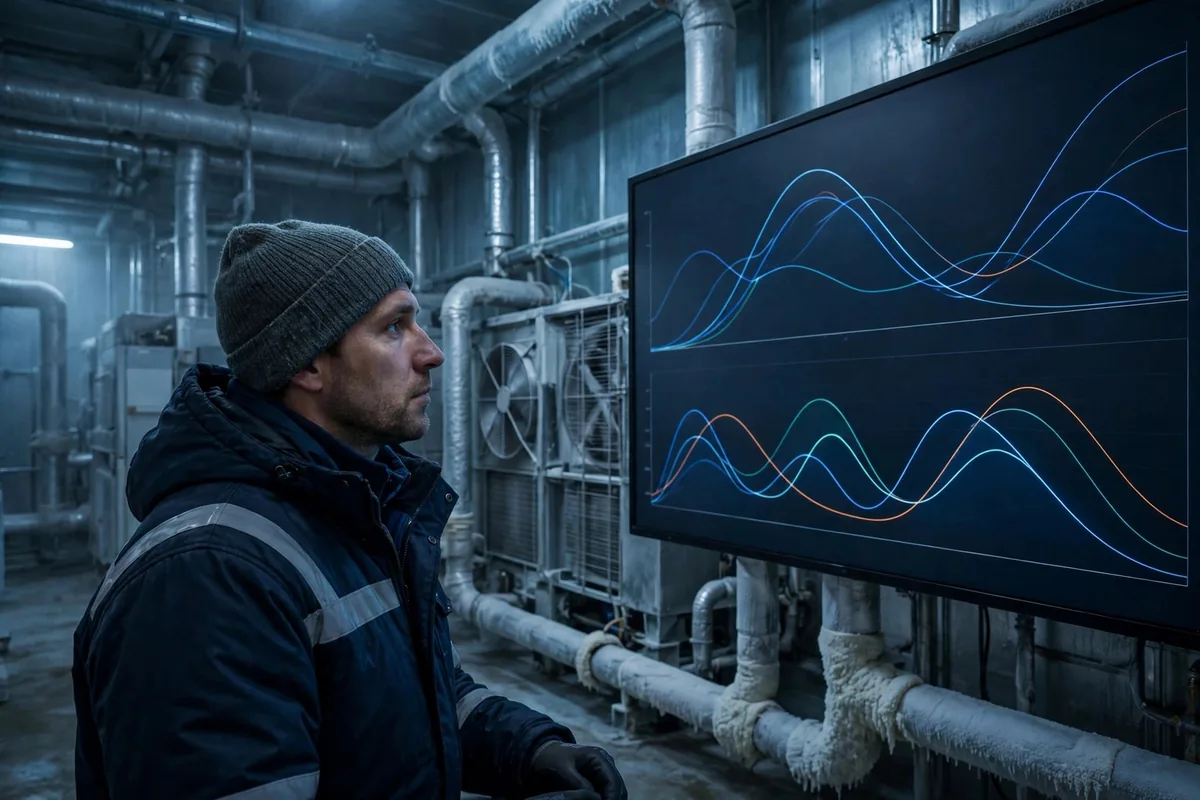
In the summer of 2024 I visited a temperature-controlled warehouse in eastern China. It was not enormous, but it stored temperature-sensitive goods. The manager waved the power bill at me: the cooling never stops, the zones run at full power even when they are half empty, and electricity now hurts more than labor.
Think of it like home air conditioning left blasting at an empty sofa all day. Warehouses waste power the same way. A large share of the bill is not productive work. It is equipment idling at full output.
So when people discuss an ai energy management warehouse, I ask one question first: which machines in your building run at full power when there is no work to do?
Where an ai energy management warehouse actually saves: HVAC and doors
The biggest load in most warehouses is heating, ventilation, and air conditioning, especially refrigeration in cold and temperature-controlled zones. Once compressors and fans spin up, the meter climbs like a taxi fare.
You can think of traditional control as fixed cruise control. It chases one setpoint regardless of occupancy, door activity, or how much stock is actually in the zone. Dynamic control is adaptive cruise: reduce load when a zone is empty, pre-cool slightly when doors are cycling fast, and stop freezing an empty zone at night as if it were fully loaded.
Three levers matter most.
First, occupancy-based adjustment. If an aisle sees no activity for hours, local airflow and lighting can step down. When a picking wave approaches, the system ramps back up in advance. That word "advance" matters. Waiting until temperature drifts and then slamming the compressor is less efficient and harder on the equipment.
Second, doors. Every cold-room door opening lets cold air out and warm air in. When the system correlates door openings, open duration, and zone temperature, it can identify which door is an energy black hole. Sometimes the equipment is fine and the real fault is a torn strip curtain, or a forklift driver who leaves the door open while waiting. In those cases the algorithm's biggest value is pointing at the problem, not fixing the door itself.
Third, abnormal consumption alerts. A fan drawing odd current, or a zone whose overnight consumption suddenly rises, should trigger an alert for a human to inspect. If you only discover the fault after a batch of goods goes out of temperature range, that is not energy management. That is disaster recovery.
Here is a sequencing lesson. In 2023, a dry warehouse in southern China wanted a full smart-control package on day one. The quote made even the owner hesitate. I told him to stop and install sub-metering first: separate meters for cooling, lighting, charging, and office areas, then read one month of data. The result surprised everyone. The biggest waste was not cooling. It was lighting left fully on overnight in empty areas, and forklift chargers all starting at once during the peak period. Cheap meters taught more than an expensive platform would have.
That is the order I always insist on: sub-metering first, then talk about an ai energy management warehouse. Without sub-metered data, the algorithm is driving blind, and you have no way to test a vendor's savings claim.
Lighting, charging, and the go-live threshold
The second saving sits in lighting.
High-bay lights draw serious power. The old pattern is all on at shift start, all off at shift end, with empty aisles lit in between. Zoned control with occupancy sensing keeps working faces properly lit and drops empty zones to a safe level. There is a trade-off here: never save lighting power at the cost of scanning accuracy or safety. One mispick caused by an unreadable label can cost more than a month of lighting savings. Set levels by task type, not with one blunt dimming rule.
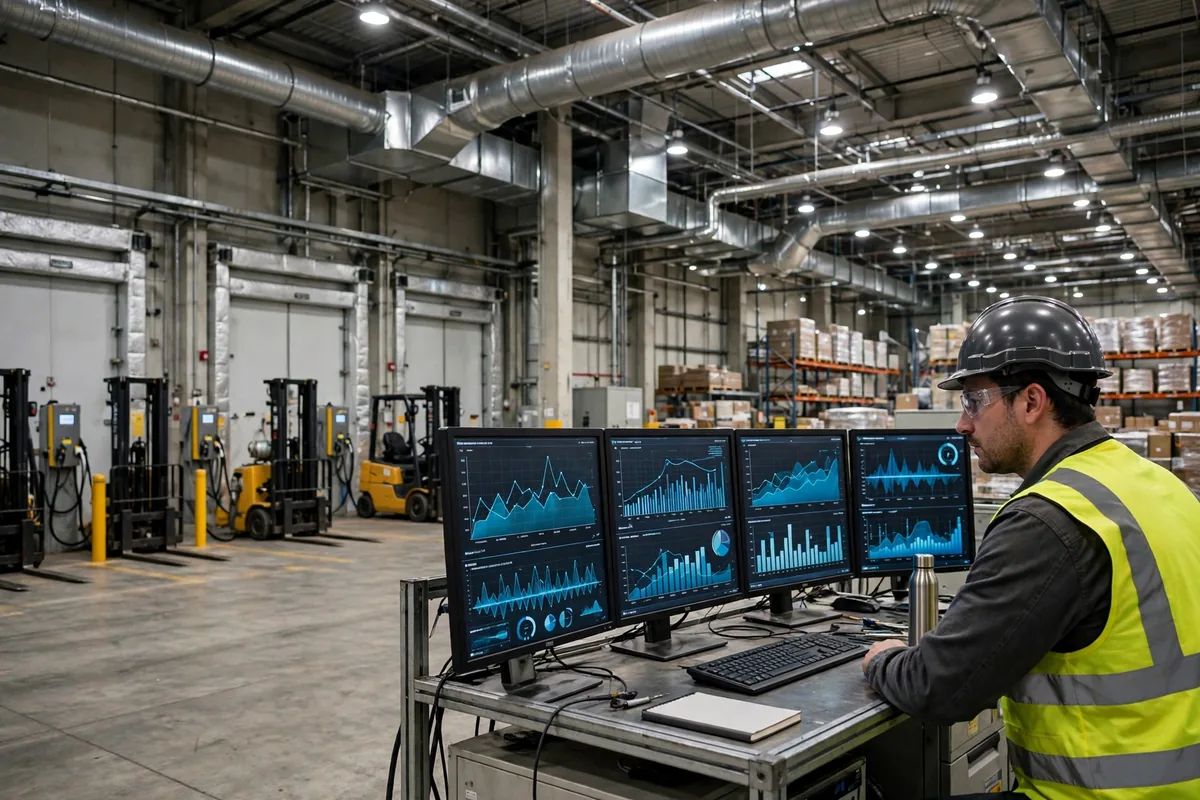
The third saving is charging. Electric forklifts and handling equipment keep multiplying, and chargers that all start after the shift can collide with the site's peak demand and strain transformer capacity. Peak shaving is simple logic: vehicles not needed urgently charge later in the low-price overnight window, while vehicles needed immediately charge first. It is like charging a row of phones: fast-charge everything at once and the power strip suffers first. Queue them, and most vehicles still start the morning full.
Here is a hypothetical example that shows structure only. It is not a real project's return, and electricity prices should be checked against the latest local utility and landlord policy.
| Site type | Assumed condition (hypothetical example) | First move | Metric to watch |
|---|---|---|---|
| Small dry warehouse | Small area, no cold storage, low total bill | Sub-metering plus sensor lighting | Lighting and standby share |
| Mid-size controlled-temperature site | Clear cooling cost, regular operation | Sub-metering plus an HVAC control pilot | Energy per pallet and temperature compliance |
| Large cold store | Heavy refrigeration, frequent door cycles | Door monitoring plus compressor group control | Peak load and abnormal-use events |
The threshold should now be obvious. A small site with a low total bill should not rush into a full system. License, maintenance, and disruption costs are real, and the saved electricity may not cover the annual fee. A large cold store, or a big temperature-controlled site whose bill gets discussed at every monthly meeting, is where dynamic control earns a serious conversation.
One counterintuitive judgment: abnormal-use alerting often pays back before automatic control does. Control saves slow money, a little at a time. One alert that catches a leaking door, a failing fan, or a zone left open can save a large amount at once. Alerts also go live faster and carry less risk, because you are not handing control authority to an algorithm on day one. My usual recommendation is a shadow period first: observe and report only, verify the data, let the team build trust, then release automatic adjustment step by step. In equipment work, the worst outcome is not a dumb algorithm. It is a smart system nobody dares to use.
Finally, acceptance. Do not accept a vendor's promise. Track three numbers: total electricity cost, energy per unit of throughput, and temperature compliance rate. If the third number falls, the savings are fake. One product-loss incident hands all of it back.
Whether this money is well spent comes down to one test: after a month of sub-metering, can you point at the data and name your single biggest waste? If not, do not buy the system yet. Finish the metering first.
By Da Liu, Automation Engineer