Let me start with the embarrassment. The hottest month last summer, our electricity bill showed up and I stared at it for a good thirty seconds, convinced the meter was broken. It was not broken. That bill is what pushed me to actually work through the ai energy management warehouse cost question for a small operation like mine — 3,000 square meters, about a dozen people, no second shift except in peak season. And the biggest thing I learned is this: the order vendors pitch these systems in is almost exactly the reverse of the order a small warehouse should buy them in.
Here is what our power was actually feeding. Lighting, first of all — on from the moment we opened until we locked up, including aisles nobody walked down for hours. Heating and cooling, set to whatever temperature the most heat-sensitive person on the floor demanded. And forklift charging, which everyone plugged in at the same time at the end of the day, because that is what humans do. Nothing exotic. Just nobody in charge of it.
Split the Bill First: AI Energy Charges Are Two Different Problems
Your bill is really two bills. The first is energy charges: how many kilowatt-hours you burned, times a rate. Easy to understand. The second is the demand charge: many utilities bill you based on the highest peak your building hit during the month, even if that peak lasted only a short window. One bad afternoon can set the price for the whole month. Rates and structures vary a lot by utility and region, so treat every number here as an order of magnitude and check your local grid's latest tariff before you budget anything.
This is why ai energy management warehouse cost cannot be judged on kilowatt-hours saved alone. Lighting sensors chip away at the energy charge, slowly and steadily. Peak management attacks the demand charge, and one well-timed save there can be worth months of lighting savings. Get the order wrong and you have spent real money on the cheap problem.
A quick hypothetical, clearly labeled as an assumption example, not anyone's real tariff: imagine a small warehouse where demand charges make up roughly a fifth to a third of the monthly bill. One evening, forklifts all charging at once while the AC is still running hard pushes the monthly peak up a notch. The extra demand cost from that single overlap could equal several months of what occupancy lighting saves you. The exact split on your bill will differ — that is the point. Read your own bill before you read any vendor brochure.
Ranking the Warehouse Cost Levers: What to Do First
I sort everything on the market into three buckets, ranked by payback logic for a small site:
| Lever | Upfront scale | Which charge it cuts | Payback logic | My call |
|---|---|---|---|---|
| Zoned lighting sensors | Low: sensors plus install labor | Energy charge | Lights off when nobody is there; small but automatic | Do it first |
| HVAC scheduled by work hours | Low to medium: controls plus scheduling rules | Mostly energy charge | Stop full-blast cooling of empty space | Do it second |
| Demand peak alerts and load shifting | Medium: metering plus alerting | Demand charge | One avoided peak pays back a big chunk | Prioritize if demand is a big share of your bill |
Case one is my own floor. Last fall I started with lighting: occupancy sensors in the picking aisles and staging zones. No platform, no dashboard worth framing — just sensors and timers. It was the cheapest of the three moves and the effect was immediate. Not dramatic in kilowatt-hours, but it never needs my attention again. That is the counterintuitive part: the fastest payback usually comes from the cheapest, dumbest measure, not the biggest saver. I have not thought about those lights in six months. That is what saving money is supposed to feel like.
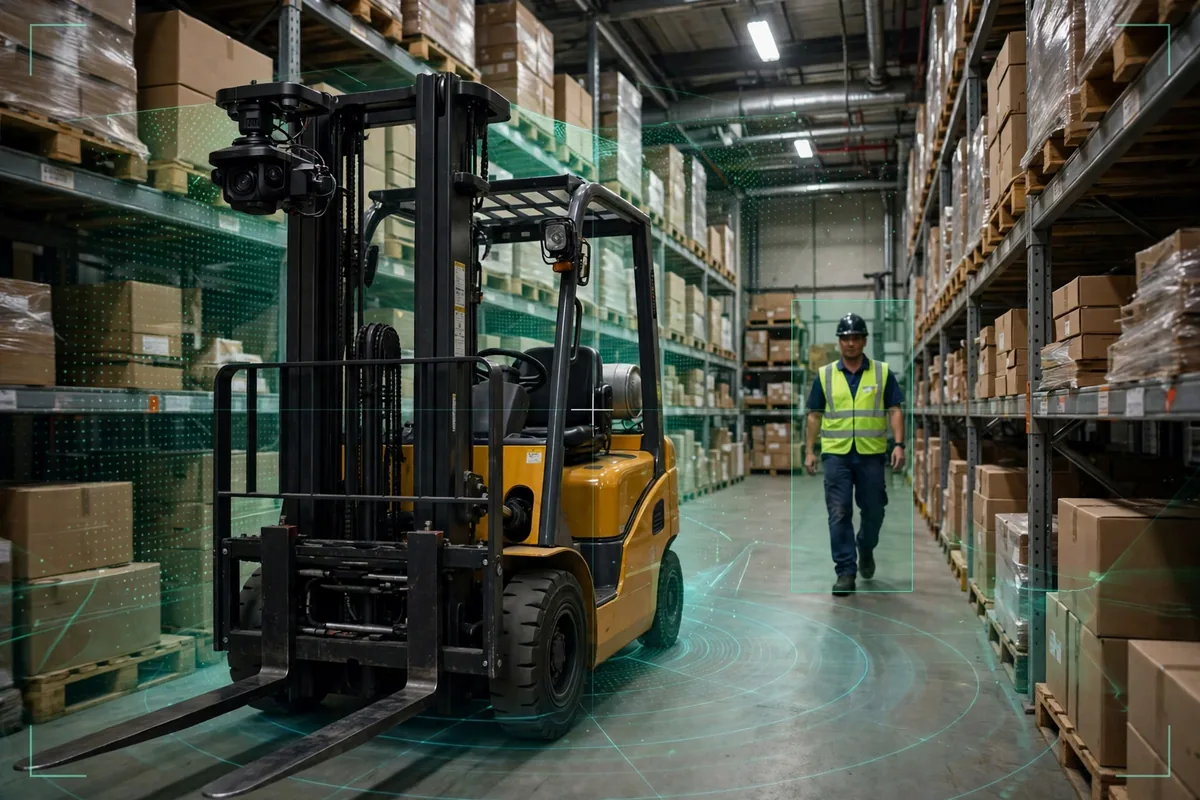
Case two is a fellow operator I know, slightly bigger site, whose problem was forklift charging. Six electric forklifts, and the crew plugged all of them in at shift change, right while the AC and full lighting were still running. His monthly peak lived at that overlap. He did not buy a big system. He did two low-tech things: a staggered charging roster taped to the wall, and a simple peak alert that buzzed when the building approached the month's high mark, so the shift lead could push some charging later. Within a couple of months his demand line came down noticeably. His words: the consulting quote he got the year before would have paid for ten years of wall charts. Of course, scale changes the answer — with more equipment than a roster and a buzzer can coordinate, predictive scheduling earns its price. That is where the "AI" in ai energy management warehouse cost actually pays: learning your building's rhythm and flagging tomorrow afternoon's likely peak before it happens.
HVAC scheduling ranks second because it has a human trap in it. We tried relaxing temperatures during low-activity hours and the crew came back from breaks into a stuffy building; picking errors went up with the temperature. What worked was pre-cooling before busy periods, holding comfort while people are working, and relaxing only when the building is genuinely empty. AI can help by learning your operating rhythm. It should not be making comfort decisions on its own. If a vendor promises fully autonomous control, ask who takes the blame when the crew is miserable.
What a Small Warehouse Should Skip for Now
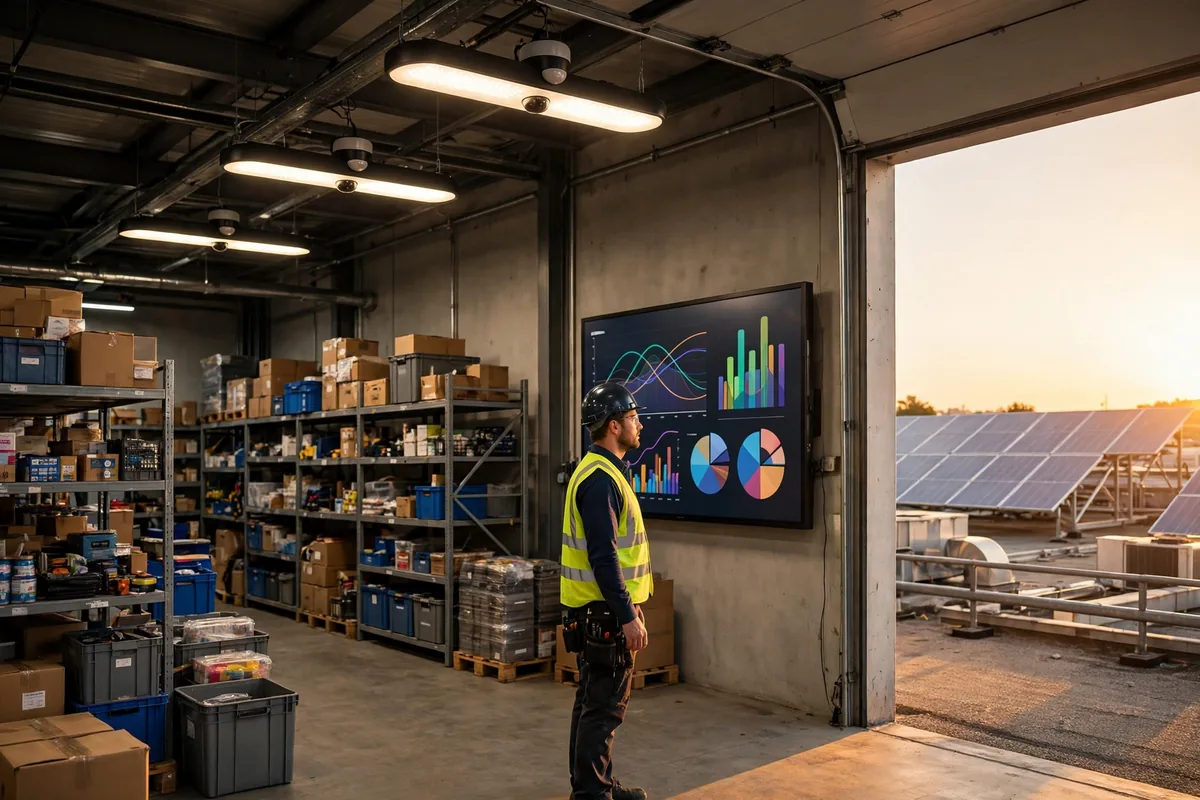
Three things I talk other small owners out of. First, the bundled rooftop-solar-plus-energy-platform package: solar is a separate investment, and if you lease your space — most of us do — it makes little sense until the lease is long and secure. Second, systems sold on autonomous decision-making: a small warehouse has a handful of loads, and sensors plus clear rules plus a bit of forecasting cover the overwhelming majority of cases. Paying several times more for the last sliver of automation is poor math. Third, monitoring dashboards that report energy but not demand: they look great on a wall and tell you nothing about the peak that is actually costing you money.
One more thing that costs nothing: pull three months of bills and study the demand share before you request a single quote. Owners who start shopping before they know their own bill structure are not doing energy management. They are just shopping.
Small warehouses survive by spending in the right order. Mine is: read the bill, do the lighting, schedule the HVAC, then let the demand share decide whether peak alerts and forecasting are worth it. Run the ai energy management warehouse cost math on payback, not on how advanced the demo looks. If your bill hurts too, do not book a sales call tomorrow — find last month's statement, find the demand line, and check it against the table above. Odds are you will know your first move before the coffee cools.
By Xiao Ma, Small Warehouse Owner