Any ai container loading optimization export warehouse pitch starts with the same picture: a beautiful 3D load plan and a cube utilization number that makes the boss reach for his wallet. I have seen too many of those pictures. Let me put the trade-off first, the way I always do: loading more is not the same as earning more.
I am Lao Mi. I have spent twenty years around export warehouses. Software lives on a screen. Containers live on roads, at ports, and inside the receiving warehouse at the other end. When those two worlds disagree, the algorithm does not pay the bill. You do.
ai container loading optimization export warehouse: count unloading before cube
An illustrative case, with assumed figures rather than any vendor's promise: an export warehouse in Shenzhen shipping mixed cartons to an overseas customer. Before software, experienced loaders averaged, in this assumed example, a little over seventy percent cube utilization in a high-cube container. The optimization tool produced plans approaching ninety percent in simulation. The boss approved it on the spot.
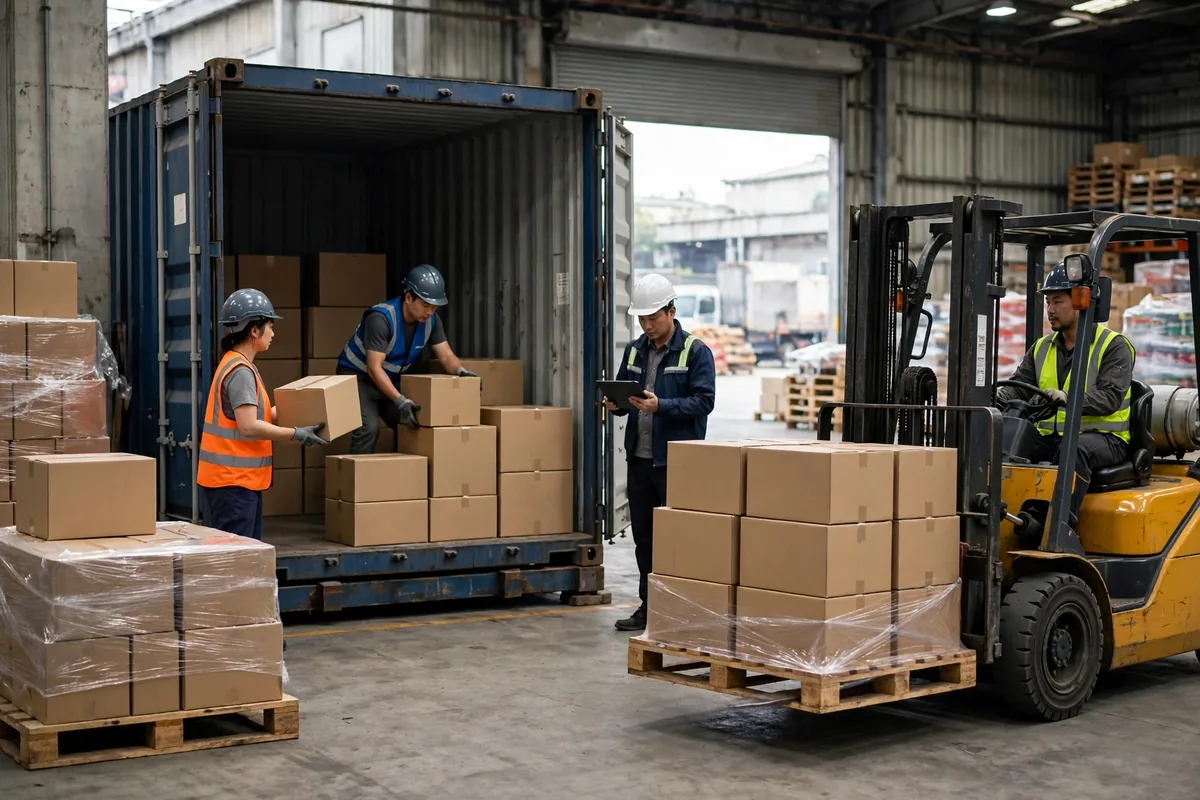
Then the container arrived in North America. The receiver unloaded onto pallets and split the freight by order. To fill every gap, the plan had interleaved heavy and light cartons and buried different orders against each other. The receiving crew had to dig out half the container to reach cartons pressed into the middle. Unloading took most of an extra day in this scenario, and damage rose.
Do the full maths. The saved ocean space was real. So were the extra unloading labour and the damage. Cube utilization is one department's KPI. Unloading is the whole chain's cost. Optimizing only for the first number simply ships your cost downstream and lets your customer pay it.
So my first review question for any load plan is never "how much did you fit?" It is "how will they unload it?" A full container going to the customer's own warehouse, worked slowly with a forklift, is one loading problem. A container that must be split by order and unloaded by hand is a completely different one. The second needs zoning by order, heavy freight low but never burying what unloads first, and a working channel so urgent cartons can come out early.
Weight distribution: where ai container loading optimization export warehouse plans go wrong
A second illustrative scene: an export warehouse in eastern China mixing hardware with household goods. The algorithm produced an elegant plan by volume. But hardware cartons are dense, and the fill-the-gaps logic placed several heavy cartons on one side and high in the stack. The load's weight sat off-centre, cartons crushed each other in transit, and light cartons on top arrived deformed.
This cuts both ways. The algorithm is not ignorant about weight. It is only as good as the data you feed it. Many warehouses hold carton dimensions but no reliable unit weights, or weights recorded before a packaging change and never updated. An algorithm computing perfectly from wrong data is not intelligence. It is error, delivered with confidence.
The unglamorous routine that actually works:
- Before loading, spot-check unit weights. Weigh the heavy categories carton by carton instead of trusting old master data.
- Fix three hard rules no plan may break: never heavy on light, heavy low and light high, and weight broadly balanced left to right. Set your exact thresholds from your own freight and your carrier's current requirements — check their latest documentation rather than taking numbers from an article.
- After the software draws its plan, the senior loader reviews it. He is not judging beauty. He is answering one question: would I seal this door?
| Factor | Experience only | Algorithm only | Human plus algorithm |
|---|---|---|---|
| Cube utilization | Varies with the loader | High in simulation, if data is clean | Near algorithm, with unloading room kept |
| Weight distribution | Loader has a feel for it | Fails when weight data is missing | Hard rules plus human review |
| Unloading friendliness | Usually decent | Often sacrificed to fill space | Zoned around how the receiver unloads |
| Best fit | Fixed range, repeat shipments | Standard cartons, clean data | Most real export warehouses |
When a spreadsheet beats the algorithm
Here is the counter-intuitive part. Some warehouses should not buy this software at all.
Ask three questions. First, how repetitive is your shipping? If the same dozen SKUs in the same cartons go to the same customer every week, your senior loader has solved that puzzle by the third container. A one-page loading sheet pinned to the wall matches the software, without an annual bill. Second, how clean is your carton data? If SKUs change daily and dimensions are estimated by eye, spend three months fixing master data before buying anything — software on dirty data just scales your mistakes. Third, how many containers do you load each month? At very low volume, the space saved may never cover subscription, implementation, data upkeep, and training time. Run that break-even with your own container count, your own quote, and your own cargo values; I will not invent prices for vendors or decide for you.
Which warehouses should buy? Many SKUs, complex mixed loads, several customers sharing containers, uneven loader skill, and freight regularly left behind because it did not fit. There, the value is not the extra few points of cube. It is turning one veteran's judgement into a plan any shift can execute. When he retires, the loading method stays.
One last calculation. The software saves whatever extra cargo per container dilutes your freight cost. It costs fees, data maintenance, and training hours. If the margin on the extra cargo loaded does not cover those, in your own numbers, you have bought entertainment. Test it properly: take one month of real orders, let the software and your loader each plan them, compare against the containers actually sealed, and check which plans drew no complaints from the unloading end. Renew only after that.
A container's journey does not end when you seal the door. It ends when they open it. If your tool optimizes only for sealing and never for opening, ask yourself this: when the customer quietly stops reordering, is the answer already packed inside your container?
By Lao Mi, Supply Chain Veteran (20 yrs)