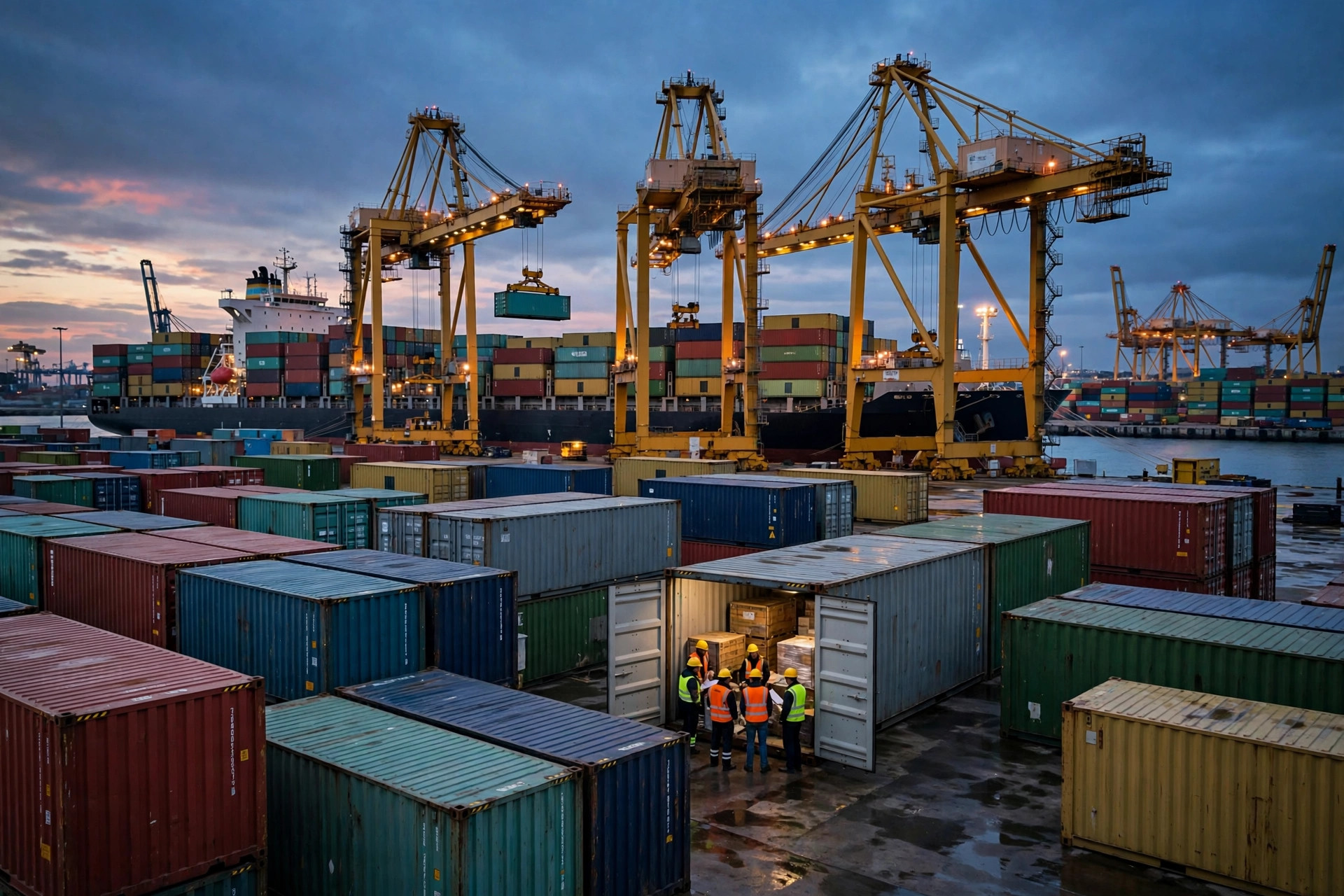
panama colon free zone warehouse logistics is best understood not as a cheaper place to store cartons, but as a deliberate decision to postpone customs clearance, duty payment, and market-specific labelling until the moment when a Latin American order is actually confirmed, and that postponement, which looks like a minor change in process sequence, in fact reshapes who carries inventory risk, how working capital is tied up, and how much freedom a seller retains to redirect goods between countries.
The Phenomenon: Why Colón Re-Export Warehousing Has Not Been Replaced by Direct Shipping
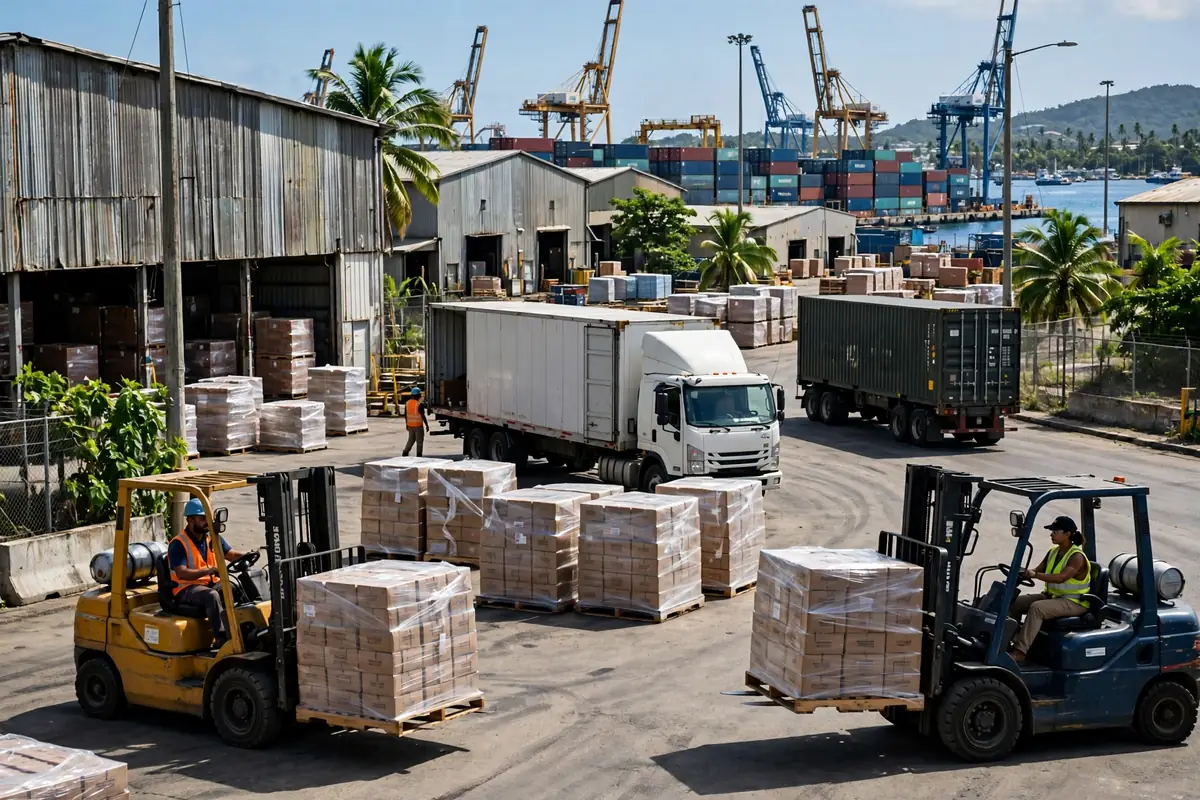
At first glance, the model should be in decline. Direct shipping has improved, platforms have matured, and destination warehouses have become easier to rent, yet many regional distributors, brand agents, and trading companies still route inventory through the Colón Free Zone in Panama. The reason is structural rather than nostalgic. Latin America is not one market but a set of markets that differ sharply in size, demand timing, channel structure, and import practice, so a shipment that has not yet been assigned to Colombia, Peru, Ecuador, or a Central American buyer carries more value when it remains uncommitted than when it is locked early into a single destination.
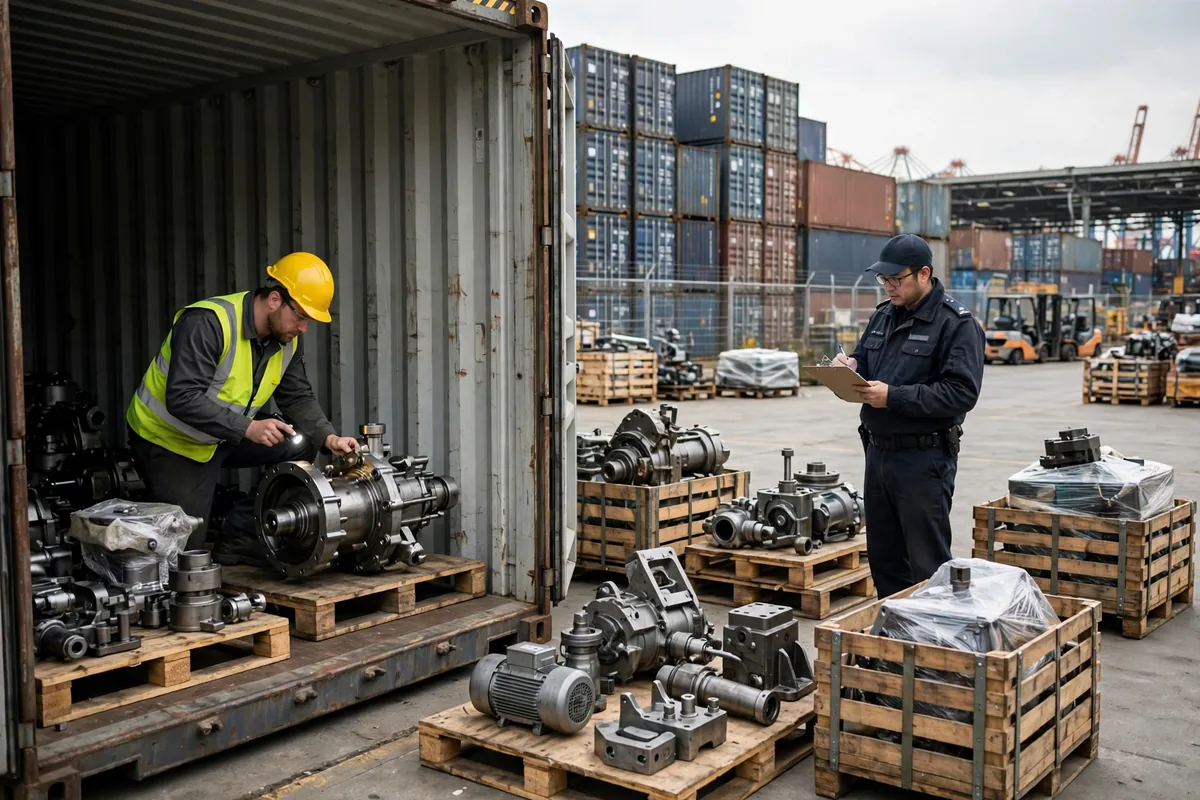
The mechanism needs care. Goods held for re-export are received, sorted, relabelled, repacked, and consolidated for onward shipment, and are not treated like goods formally imported for consumption in Panama or the destination country. Duties, taxes, documentation, and product requirements follow the latest official policy of Panama and the destination, and any analysis relying on an old internal rate table should be treated with caution, because classification, origin, and labelling rules can each change the compliance boundary.
The Data: Inventory and Relabelling Discipline Inside a Colón Warehouse
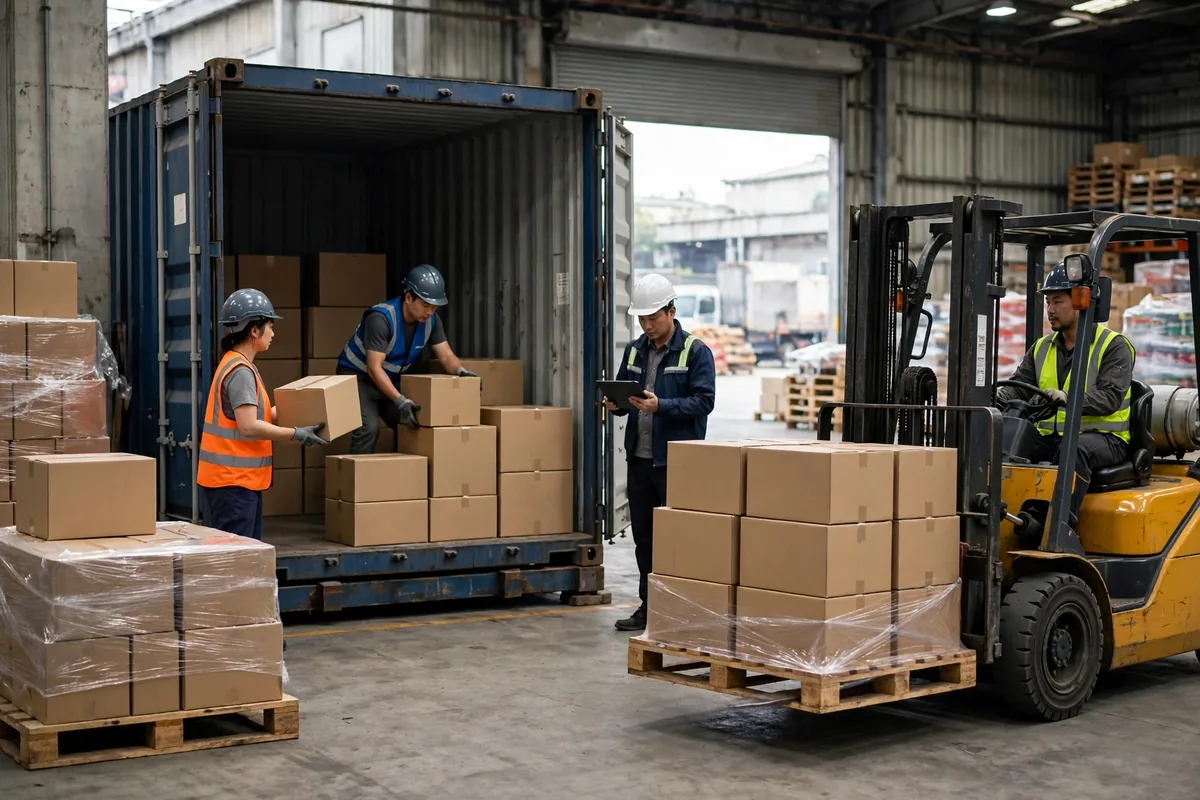
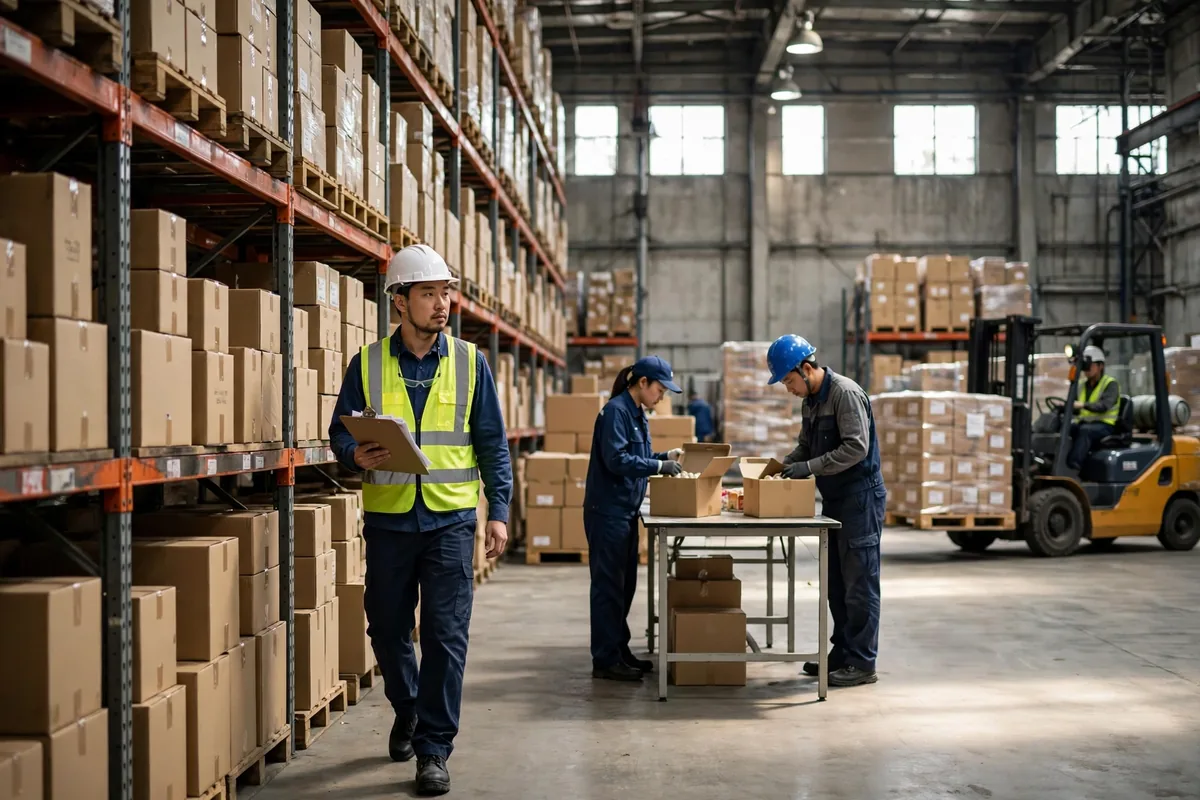
Consider an illustrative scenario, with all figures as planning assumptions, not industry statistics. A Shenzhen trader ships electronics accessories to Colón, assuming 12,000 units across four product lines for distributors in three countries. Instead of forwarding the lot intact, the warehouse releases goods in weekly batches, replaces carton marks, inserts Spanish instructions, separates plug and label versions by country, and records the link between the original shipping documents and every relabelling action. The point is not the volume, but what it reveals: the real work is not storage, it is converting one standardised shipment into several country-ready versions without losing any batch's identity.
A second assumed scenario involves a distributor based in Bogotá, Colombia, serving both its home market and neighbouring countries. Assume it keeps roughly six weeks of rolling buffer stock in Colón and decides the direction of each consolidated shipment only after orders from each country are confirmed. The immediate effect is that slow-moving risk is absorbed by a regional pool rather than by one national warehouse, but the discipline required rises with the size of the pool. If a label version intended for one country is applied to an order bound for another, the subsequent clearance and channel costs will usually exceed whatever was saved on storage, which is why batch traceability, expiry control where relevant, and version accuracy matter more in this model than raw floor space.
This is where panama colon free zone warehouse logistics becomes a question of inventory discipline rather than real estate. Every unit entering the zone should carry a clear identity chain: the correspondence between the original product description and the internal code, whether relabelling is permitted, the before-and-after version mapping, the batch status of remaining stock, and the documentation prepared for the destination of re-export. If that information lives only in the memory of experienced operators, error rates will climb precisely when order complexity increases. Automation therefore addresses identification, routing, and audit trail before it addresses physical handling, because barcode verification, label-version locking, and pre-departure checks against country rules can intercept inexpensive mistakes before they become expensive ones.
The Causes: Three Structural Reasons the Panama Hub Suits Latin American Redistribution
Three structural causes explain the fit. The first is the option value of inventory. When demand has not yet settled between countries, a regional pool preserves the right to allocate at the last responsible moment, and in markets where demand, exchange rates, and channel policies move unevenly, that right is frequently worth more than a modest difference in storage price. The second is consolidation scale. Several small national orders can be handled at one node, whether as full-container re-exports, consolidated less-than-container shipments, or channel-specific pallet builds, which produces a steadier shipping rhythm than asking each country to import separately from origin. The third is postponed localisation. Language labels, pack sizes, channel stickers, and bundle assembly would overload the factory if every version were finished at origin, while destination warehouses may lack the conditions to do the work reliably, so Colón occupies a productive middle position.
The counter-intuitive judgment follows from this. The largest value of the free zone is usually not the duty that appears to be saved, but the avoided cost of locking goods into the wrong country. Tax differences are visible and calculable, whereas wrong-country lock-in is hidden: it appears later as local discounting, stranded stock, or a complicated return arrangement when another market turns out to be short of exactly that product. Companies that evaluate the route on tax alone therefore tend to undervalue it in one direction and overvalue it in another, imagining that entry into the zone somehow dissolves destination compliance. It does not. Re-export postpones formal clearance in the destination; it does not remove it, and the final country will still apply its own duties, certification, labelling, and tax rules under its latest official policy.
The Comparison: Colón, a Destination Bonded Warehouse, or Direct Shipment
| Dimension | Colón Free Zone re-export | Bonded warehouse in destination | Direct shipment from origin |
|---|---|---|---|
| Allocation flexibility | High; country chosen before onward shipment | Low; country largely fixed at entry | Lowest; fixed at order stage |
| Best-fit market structure | Many countries, small batches, uneven demand | One stable country with sufficient volume | One country, large batches, single version |
| Relabelling and localisation | Centralised multi-country versions, strict audit trail needed | Single-country version only | Depends on factory pre-configuration |
| Customs timing | Deferred until re-export and destination entry | Handled under destination bonded rules | Begins on arrival in destination |
| Main risk | Batch and label-version confusion, extra handling leg | Inventory stranded in one country | Least room to correct forecast errors |
| Automation and compliance focus | Scanning, version checks, departure records | Local inventory accuracy and duty-paid release | Factory version control and document consistency |
Read through this framework, the decisive variable is not warehouse rent but the distribution of demand uncertainty. If more than eighty percent of volume consistently enters one country, in stable volumes and a single version, a bonded or local warehouse in that country will often be the more rational choice simply because it removes one handling leg. If, by contrast, volume is spread across four or more countries and no single country justifies its own safety stock, pooling inventory in Colón follows the basic logic of risk aggregation. That difference also explains why panama colon free zone warehouse logistics remains compelling for traders and regional distributors while holding far less attraction for a domestic brand operating in only one national market.
The Trend: Automation and Compliance Are Raising the Bar for This Corridor
Looking forward, competition is likely to shift from warehouse space toward the credibility of inventory data. As destination customs and sales channels demand finer product, origin, and batch information, a warehouse still depending on manual ledgers will face rising error costs, while one with systematic version management, automated verification, and a complete audit trail can convert compliance into a service cargo owners pay for. The regional pool itself should also change shape. When demand in one country grows large and stable enough, that country will naturally separate from the Colón pool and develop local warehousing, which should not be read as failure, but as evidence the model performed a transitional function during a market's growth phase.
The more durable question, then, may not be how long the Colón model survives, but where the optimal boundary between a regional inventory pool and single-country stock will settle as local warehousing and clearance efficiency continue to diverge across Latin America, because that boundary depends on transport and policy as much as on a company's own forecasting ability, and it seems unlikely to resolve itself into one model simply replacing all the others.
By Dr. Chen, Supply Chain Researcher