Let me tell you straight: africa cold chain last mile delivery is not really a driving job. It is a race against temperature, and the truck is only one part of it. I have run roads for fifteen years, and I have watched people spend big money on a reefer van and still lose loads, because they skipped the boring parts: the freight was not properly cold before loading, there was no plan when the power went out, and nobody checked the temperature at the shop door. Get those three things right and a modest setup will serve you well. Get them wrong and the best van on the road will not save you.
Africa cold chain last mile delivery starts with the road, not the truck
Here is a scene, with the numbers clearly labelled as assumptions for working through the logic, not statistics. Suppose a wholesaler in Lagos has to deliver yoghurt and fresh milk to 12 small shops in the morning, two boxes per shop, 24 boxes in total. The driver, trying to save effort, loads the freight from the cold room into an ordinary van before dawn, figuring the distance is short and speed will do the job. Traffic has other ideas. Assume a run that should take 40 minutes stretches to nearly two hours under a hard sun. By the third shop, the boxes no longer feel cold. The shopkeeper refuses the delivery on the spot, and the remaining shops start hesitating too. Fuel spent, freight spoiled, day wasted.
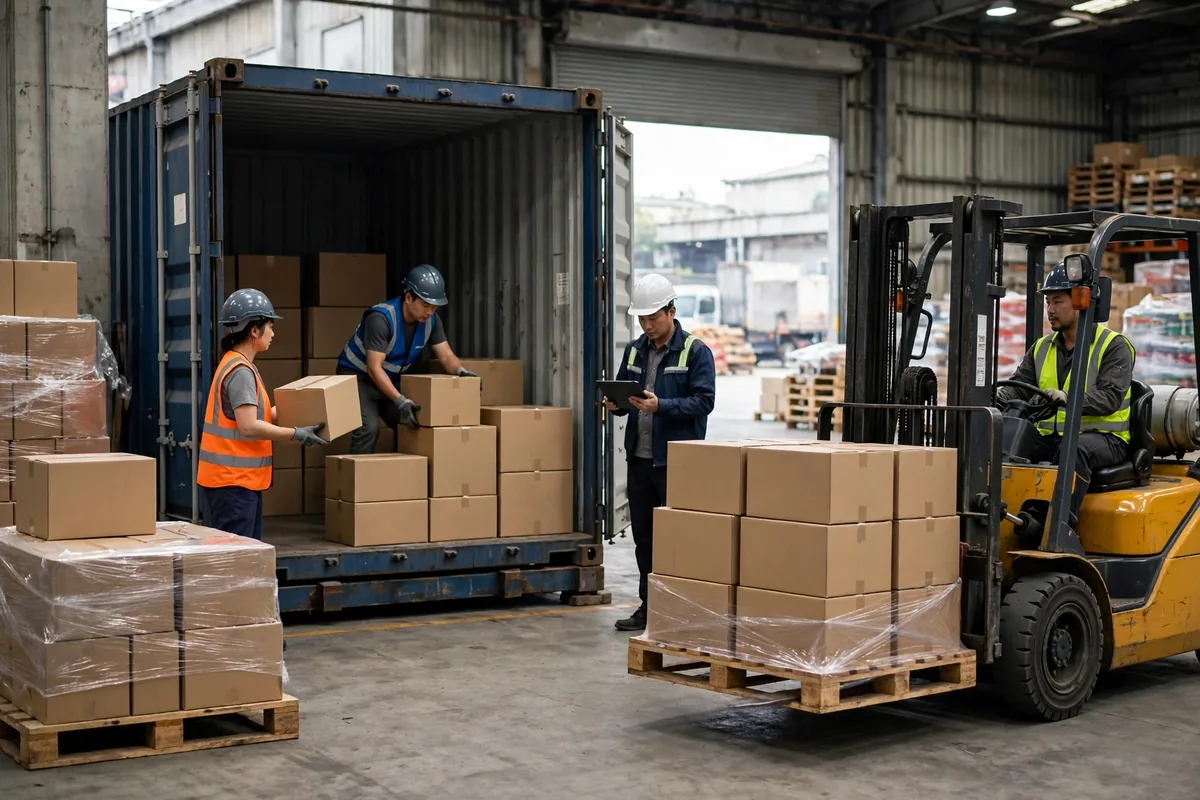
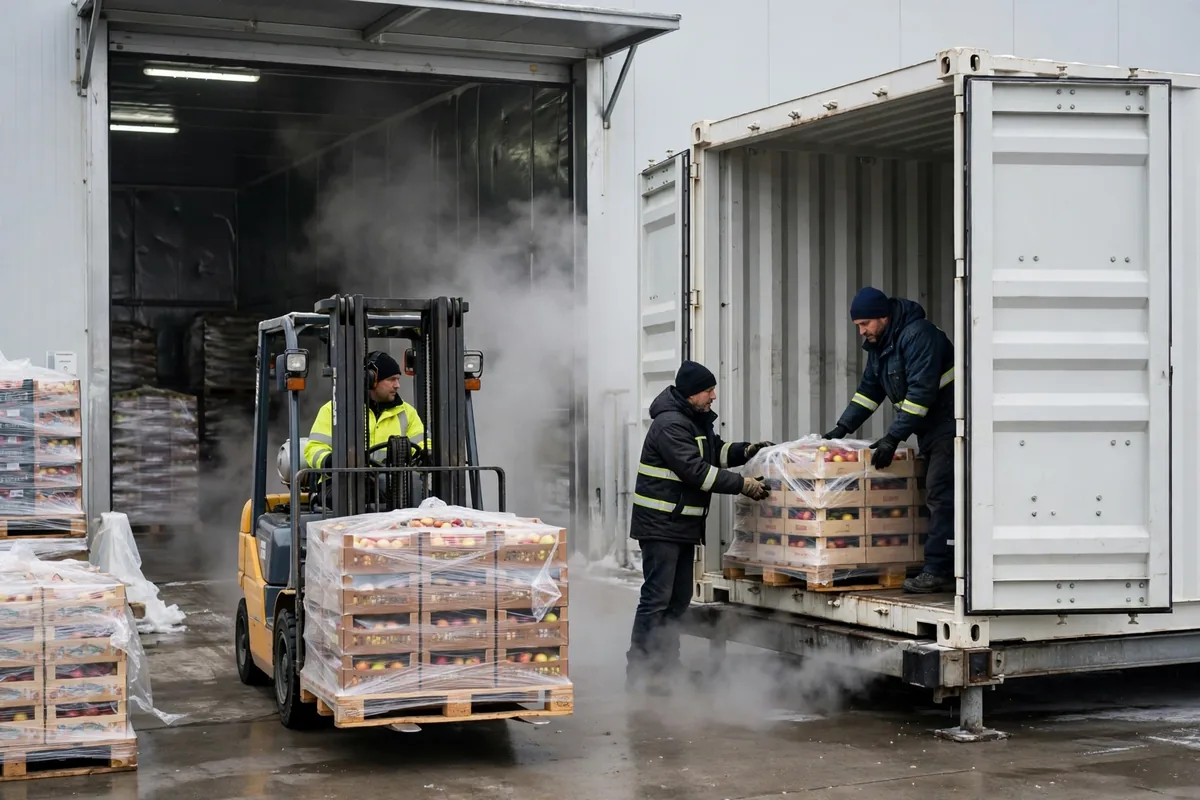
Was that a truck problem? Half of it was. The other half was that the freight was never cold enough to begin with. My rule has never changed: if the freight is not properly cold, it does not go on the truck. Pre-cool the goods in the cold room, and pre-cool the boxes too. Loading cold freight into a warm box is heating it once before the journey even starts. It sounds like a small thing. A surprising amount of freight dies on exactly that small thing.
Now take an assumed scene in Nairobi. Suppose a chilled chicken distributor serves eight market stalls a day, the furthest run taking over an hour with several stops in between. Every stop opens the doors, and every opening lets the cold out. If the driver swings the rear doors wide and sorts freight slowly at each stall, the last two stops will suffer first. The fix this crew adopted cost almost nothing: load in reverse order, so the first delivery sits at the door and the last delivery sits deepest inside; open only the small door at each stop, take only that stop's freight, and close it again at once. In this assumption, refusals fall from several a week to an occasional one. No new truck. Just tidier work.
And here is the counter-intuitive part younger drivers resist: more ice does not mean safer freight. Pack a box solid with ice packs and the cold air stops moving. The cartons touching the ice get too cold, and the cartons in the middle never get cold enough. Cold has to circulate. Stacking is not chilling.
Reefer van or ice box in africa cold chain last mile delivery: run the numbers honestly
So which tool earns its keep? Do not listen to the van salesman or the box salesman. Lay it out and calculate.
| Factor | Small reefer van (assumption basis) | Insulated box with ice packs (assumption basis) |
|---|---|---|
| Best suited to | Longer runs, many stops, larger loads | Shorter runs, few stops, smaller loads |
| Illustrative trip cost index | Fuel, depreciation and maintenance indexed at 100 | Ice-pack refreezing, box wear and labour indexed at 35-50 |
| Biggest fear | Fuel burn in traffic, refrigeration unit failure | Poor pre-cooling, wrong ice-pack count, too many openings |
| Temperature stability | Active cooling holds through the run | Stored cold only; the longer the run, the tighter it gets |
| Flexibility | One vehicle, one route; extra stops are awkward | Boxes split across cars or motorbikes as needed |
The lesson is plain. Big load, many stops, long road: use the reefer and do not gamble freight to save money. Small load, a handful of nearby stops: boxes and ice packs are more flexible and far cheaper to run. The dangerous middle is where people get hurt, stretching a box solution over a route it cannot hold, or running a big reefer nearly empty day after day. Any driver will tell you an empty run is the most expensive run there is.
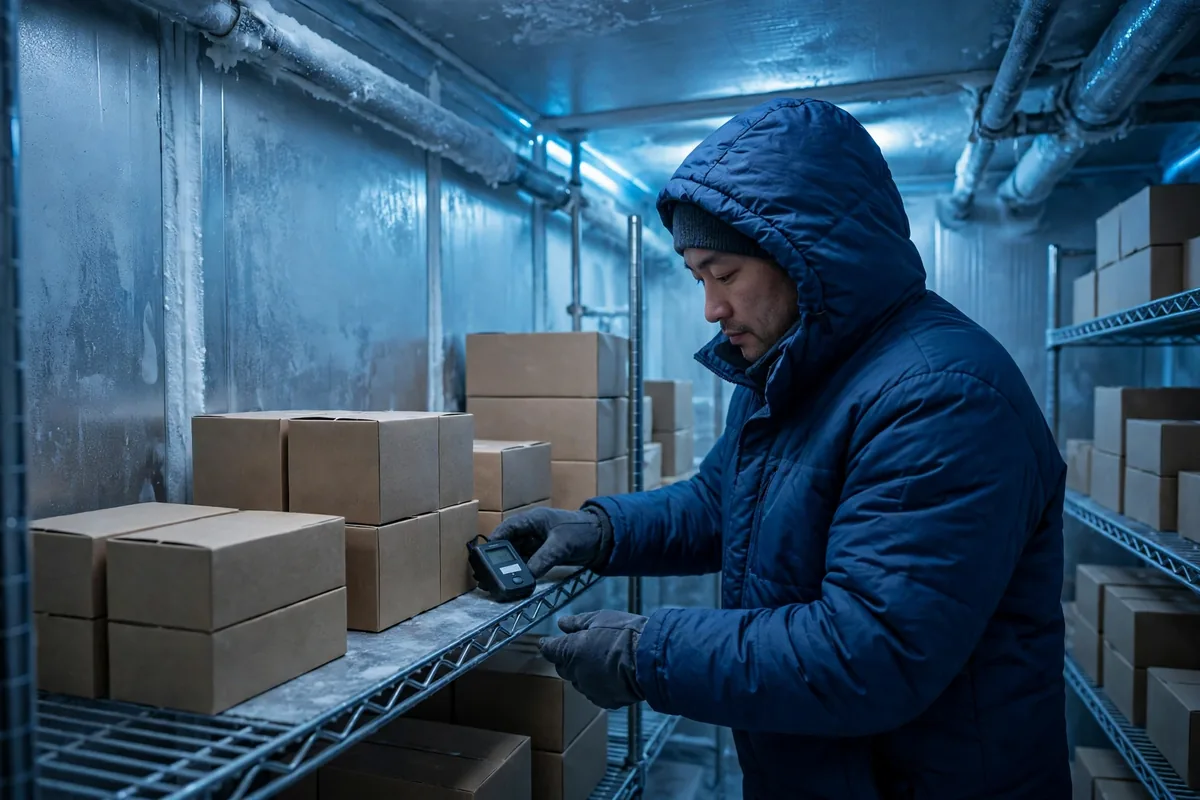
Power cuts have to be planned for, not prayed away. I will not invent figures for how often any particular city loses power; the working assumptions are what matter. Keep a spare rotation of ice packs frozen and ready, never a set that was used today and only refreezing tonight. During an outage, keep the cold room door shut, because every opening dumps more cold than the stopped machine does. And before loading, look at the temperature record: if the power was out in the night, check the freight before it goes on the truck, not after a shopkeeper complains. This is where a small piece of automation genuinely earns its money. A temperature logger that alarms is worth a hundred checks by hand, and it settles the compliance question too, because at handover you can show a record instead of saying the freight felt cold enough.
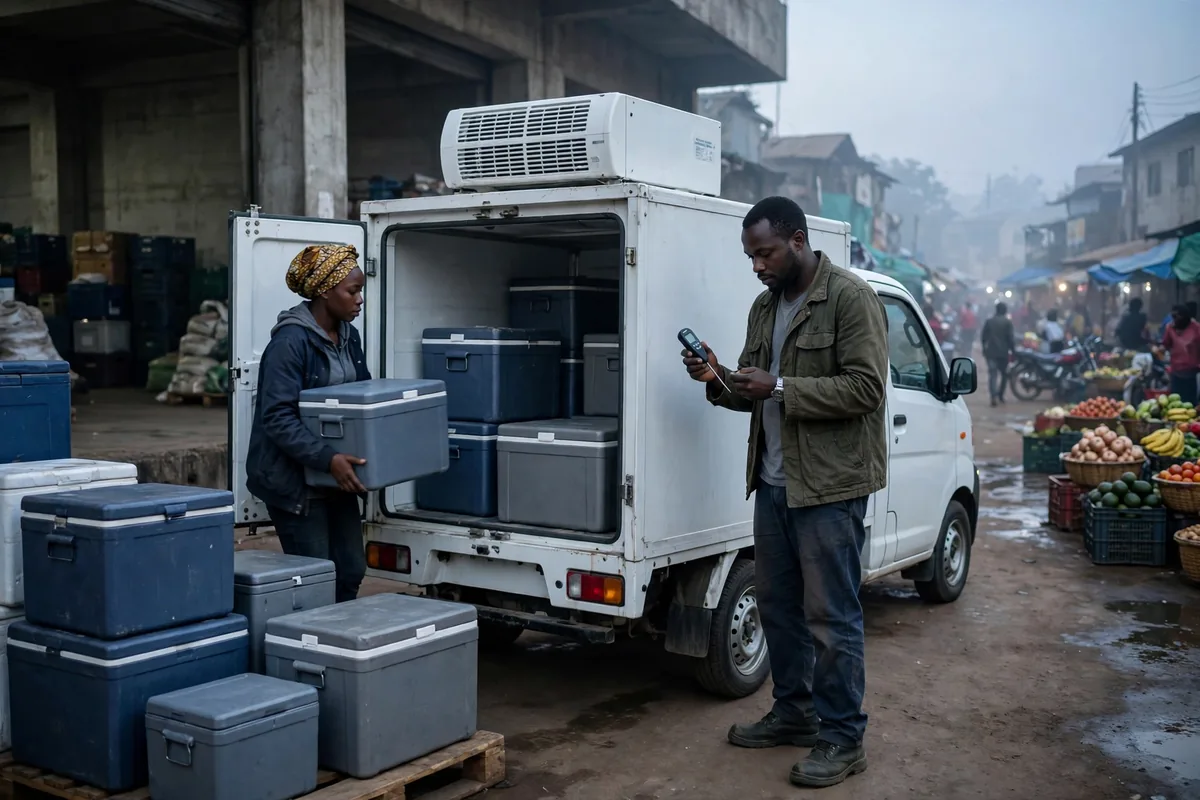
The handover check is the last gate, and the one most often fudged. My rule: at the shop door, in front of the shopkeeper, measure first, then unload. If a load must stay within a set low-temperature range, and the exact standard is whatever the shipper and local rules require, then a reading outside that range gets settled on the spot: refused, or accepted with a note on the delivery paper, signed there and then. Once freight is inside someone else's fridge, the argument has no witness, and the driver always loses it. A probe thermometer costs little. A signature costs nothing. Together they are your way home.
One more thing route planners get wrong. Sequence a route by temperature, not by distance. The freight that tolerates heat least goes first, or rides in the steadiest cold spot; the hardier freight goes last. New hands plan by the map. Old hands plan by which box gives up first. The map will never tell you that. Experience does.
In the end, a cold chain driver does not deliver boxes. He delivers trust. A shopkeeper takes your freight today because the last ten deliveries arrived right. One spoiled load can cancel all ten. Van or box, the tools matter less than the pre-cooling before departure, the doors closed quickly on the road, and the temperature checked at the door. As the old saying goes, steady work beats fast work, and in this trade steady is where the money is.
By Shifu Zhao, Trucking Veteran (15 yrs)