My judgment up front: ai apparel returns grading warehouse is a sound idea being sold the wrong way. Most vendors pitch speed. Speed is not what a returns bench lacks. What it lacks is consistency — the same shirt graded reshelable at nine in the morning and marked for clearance at four in the afternoon, because two tired people apply two slightly different standards. If camera-based grading earns its money anywhere, it is there: one ruler for every item, and a clean set of photos attached to every decision. Expect it to smell a garment, feel the fabric, or catch every faint defect, and you will be disappointed.
This thing has two sides, and I have seen too many warehouses buy one side without hearing the other. On one side, AI grading is genuinely good at evidence, first-pass sorting, and obvious damage. On the other, it is blind to exactly the things experienced graders rely on most. Separate those two sides before you talk price, and the conversation gets much more honest.
Where ai apparel returns grading warehouse actually helps
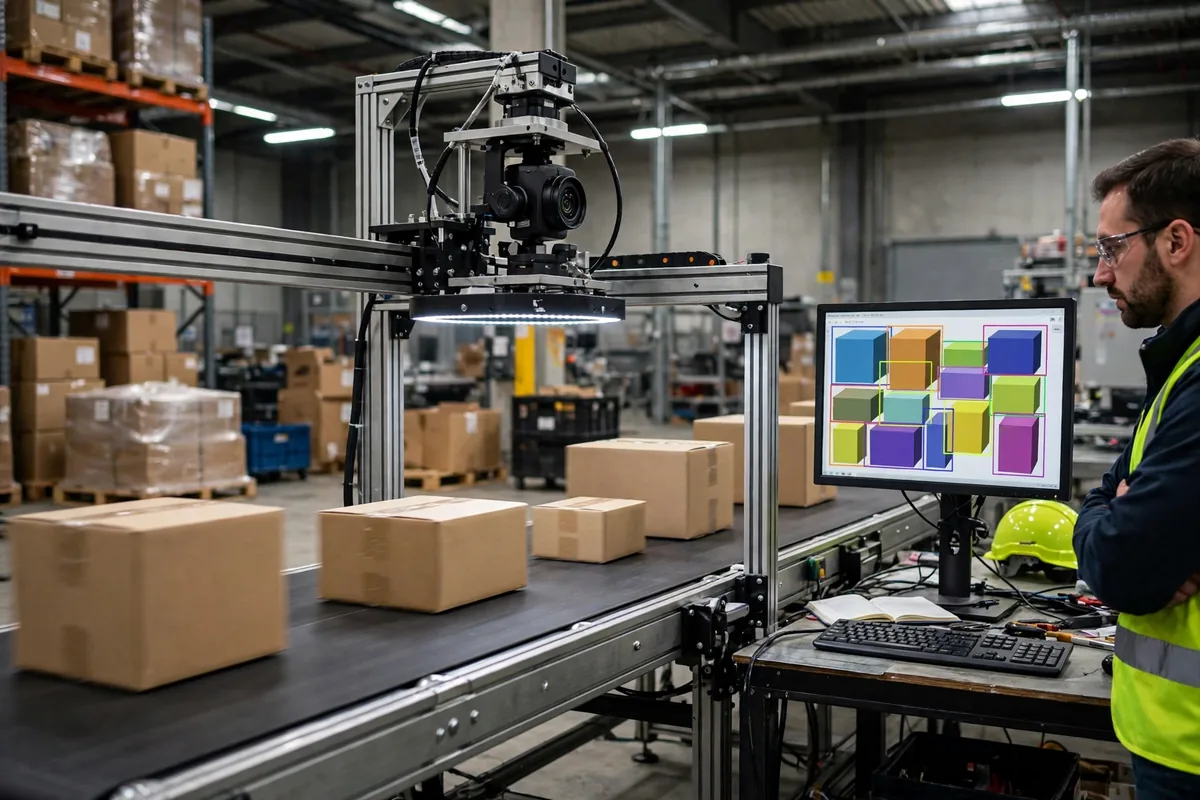
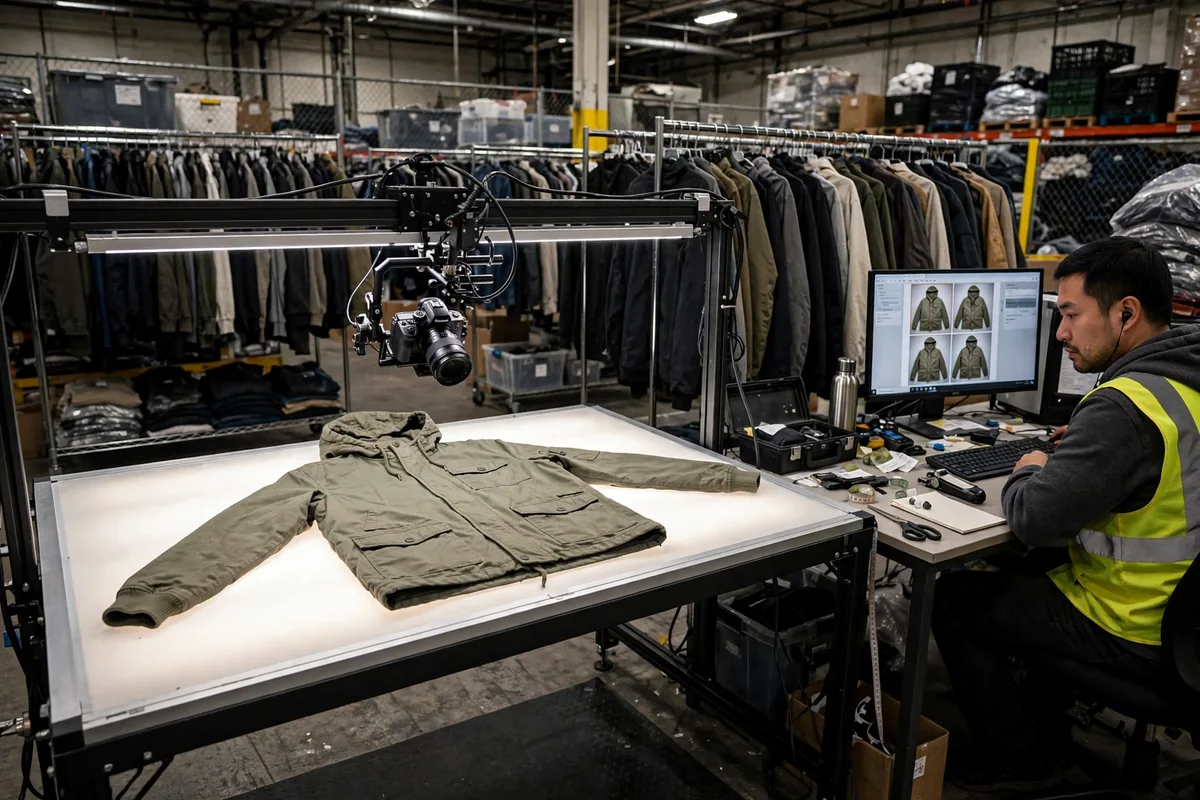
First, evidence. The most expensive part of apparel returns is often not the grading itself but the argument afterward: the customer says the item went back in perfect condition, the warehouse says it arrived stained. A fixed camera over the grading bench — front, back, collar, cuffs, laid flat the same way every time, photos bound automatically to the return order — settles most of that before it starts. The system does not even need to judge anything for this to pay. Complete evidence strengthens every downstream conversation, with customers and with suppliers alike.
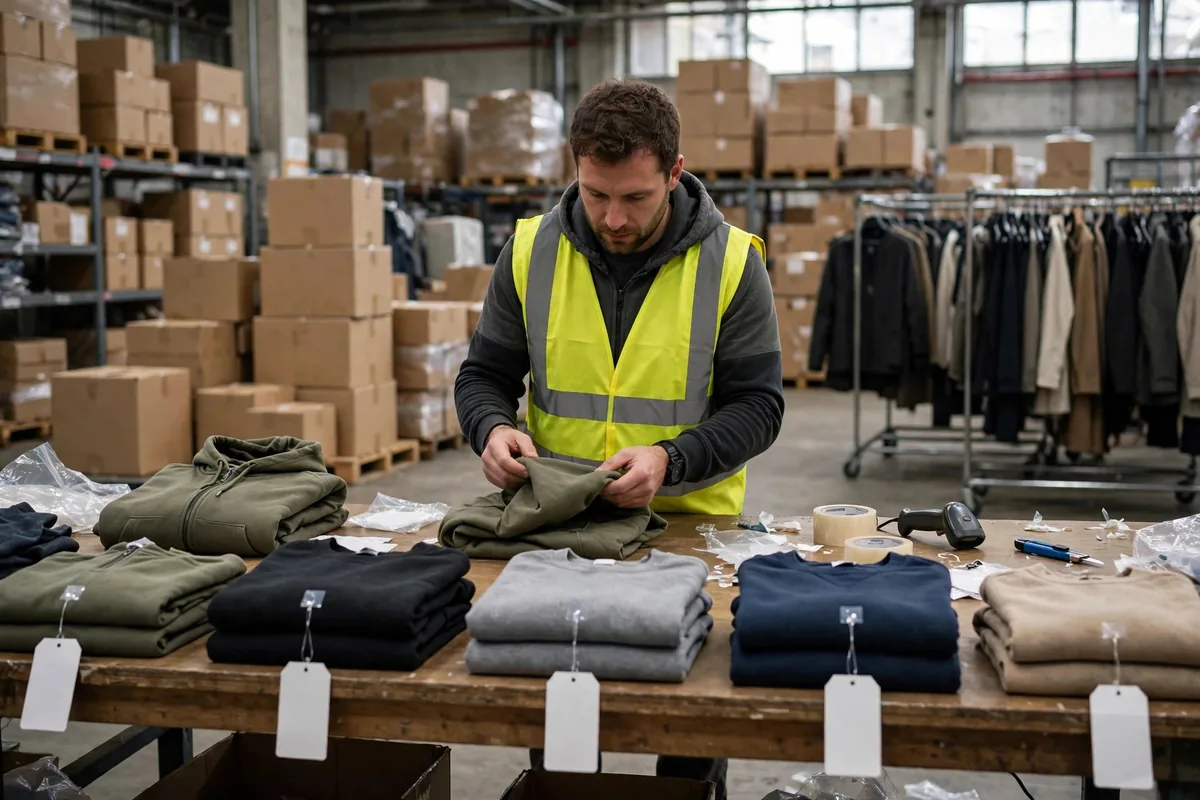
Second, first-pass sorting. A large share of apparel returns fall into two easy groups: clearly clean items with tags intact and no visible use, and clearly damaged items with holes, large stains, or broken zippers. Let the system pull those two ends out of the stream. Clean items move quickly back toward stock, obvious damage goes straight to clearance or write-off, and your people spend their attention on the ambiguous middle, which is where human judgment actually matters.
Third, consistency on visible, rule-based defects. Human eyes drift over a shift. A camera does not get tired at four in the afternoon, and for questions like "is there a stain larger than this threshold in this zone," it applies the same rule to item one and item five hundred. Note the limits of that sentence: I am talking about visible, rule-based checks. Any specific accuracy figure belongs in a pilot on your own goods, under your own lighting — treat vendor demo numbers as marketing, not evidence.
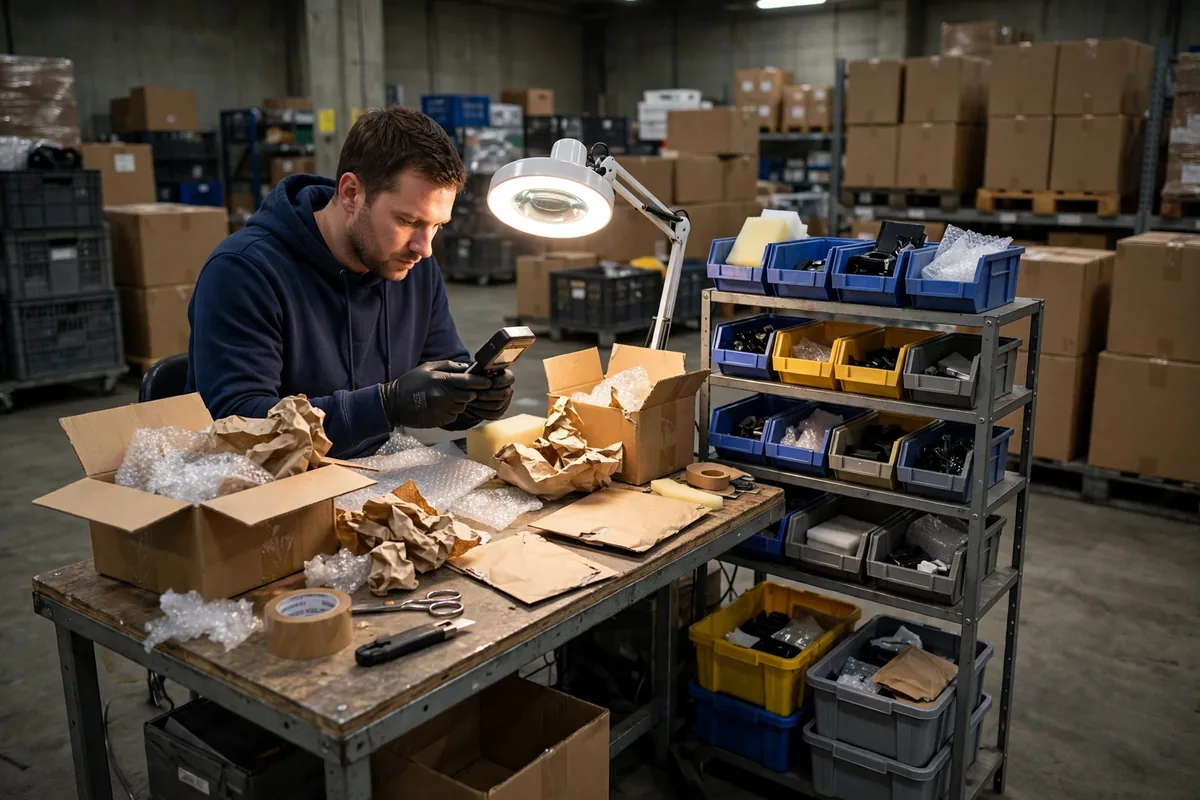
Illustrative example: picture a mid-size women's apparel warehouse I will describe as an illustrative example, not a real client report. Two people staffed the returns bench and still fell behind in peak weeks, with returns spilling into the aisle. Before buying anything large, they added an overhead camera and a simple image pre-sort with two jobs only: photograph and archive every item, and flag obviously damaged pieces into a separate bin. Grading itself stayed human. Even so, the bench calmed down noticeably, because photographing, judging, and logging were no longer three tasks tangled into one motion. The lesson was not that the AI was brilliant. The lesson was sequence: fix evidence and sorting first, intelligence second.
What AI apparel grading cannot do: nose, hands, and the defects that hide
Say it plainly: in apparel, half the quality information is not visual.
Smell is the obvious case. Perfume, smoke, the faint odor of a garment worn once and washed — no camera detects any of it, and any of it can disqualify an item from going back to stock as new. Touch is the second case. How badly a knit has pilled, whether denim has been worn soft, how much loft a down jacket has lost — graders judge these with their hands, and an image is at best a hint. Then there are the hidden defects: loose inner stitching, a wobbly snap, a zipper that drags, a pale stain on a light fabric that only shows at an angle under side light. A single fixed overhead camera will miss these routinely. That is not a flaw in one product; it is the physics of the setup.
Illustrative example: a light-colored knit sweater comes back, and its overhead photos look spotless, so the pre-sort marks it clean. The grader picks it up, gives it a shake, and under side light a faint ring of perspiration staining appears under one arm. A quick smell check confirms it should not go back as new. It is graded to clearance. Run that bench fully automatic and the sweater returns to stock, sells again, comes back again — this time with a review attached. This is precisely the failure mode that never appears in a sales demo.
So the right design is human-in-the-loop, and I distrust any proposal that says otherwise. The system photographs, pre-sorts, and flags obvious damage. People check smell, hand feel, and hidden defects, and people make the final grade. If a vendor tells you the headcount goes to zero, ask one question: how does the machine smell a shirt? If there is no answer, there is no deal yet.
One more unglamorous point: your bench matters more than your model. The same garment photographs differently under warm light and white light; stains literally change visibility. Before any system arrives, fix the bench — a light matte surface, stable white lighting, a locked camera angle. Skip that cheap work and you are asking an expensive model to judge bad photographs.
Do the math first: a trained two-person bench is a real competitor
Now the trade-off, cost first as always. Whether AI grading pays depends on your returns volume and on how chaotic your grading already is. The following is an illustrative example — round, hypothetical figures meant to show the structure, not a quote and not a promise about any product.
Illustrative example: suppose a warehouse receives roughly 300 apparel returns a day. Two graders handle them today, at whatever your local labor cost actually is. Suppose the real pains are two: inconsistent grading causing avoidable second returns and good items misgraded to clearance, together costing a meaningful amount of merchandise value each month, plus peak-season backlog and overtime. Against that, an AI vision setup costs more than its headline price: cameras and bench work, software, integration with your existing systems, and — the cost everyone forgets — a person who keeps tuning the rules as seasons and styles change.
| Comparison (illustrative example) | Trained two-person bench | AI pre-sort + human final grade |
|---|---|---|
| Main investment | Training, physical grade standards, bench lighting | Cameras, software, integration, ongoing tuning |
| Strengths | Smell, touch, hidden defects, flexibility | Complete evidence, fast pre-sort, consistent ruler |
| Weaknesses | Standards drift by person, peak backlog | Cannot smell or feel, humans still catch the subtle cases |
| Best fit (illustrative judgment) | Small-to-mid volume, mixed categories | Higher volume, concentrated categories, frequent evidence disputes |
My call: if your volume is modest and your categories are all over the place, do not rush to buy. Train your two graders properly instead. Build a physical standard — real sample garments pinned at the bench showing exactly what stain level means clearance and what pilling level can still go back to stock — fix the lighting, and add disciplined photo evidence. That low-tech package can outperform a hurried AI installation. But if your volume is high, if missing evidence keeps costing you disputes, or if grading drift is already hurting your resale rate, then the evidence and pre-sort value is real and a pilot is justified. Run the pilot like a pilot: one category, a defined period, and three measures only — did misgrading fall, did second returns fall, and did handling time per item actually improve, all on your own data.
Returns grading was never really about speed. It is about being right, the same way, every time, because every returned garment has to be sold to the next customer. Grade one item wrong and the seconds you saved come back as a full second return. If you are weighing this, stand at your own grading bench for a day first, pull the twenty hardest items you see, and then judge every proposal against that pile: which of these twenty does it handle, and which does it not? With that ledger in your head, no demo can fool you.
By Lao Mi, Supply Chain Veteran (20 yrs)