This AGV charging methods comparison comes down to one bottom line: pick the wrong method and you'll burn enough money in a year to buy two more vehicles. Battery swap, automatic charging, manual charging — there is no "best" option, only the one that matches your fleet size and shift pattern. Get the match wrong and your robots either queue up waiting for a charge, or you've bought a pile of batteries that sit there gathering dust.
I'm Da Liu, automation engineer, formerly tech lead at a systems integrator. I've been through a dozen-plus AGV deployments. Charging is the thing salespeople love to oversell and customers love to get wrong, so let's do the math.
The principles are simple — think phone charging:
- Manual charging = plugging in the cable. Robot runs low, a human walks over and plugs in the charge gun. Cheap, primitive, needs people.
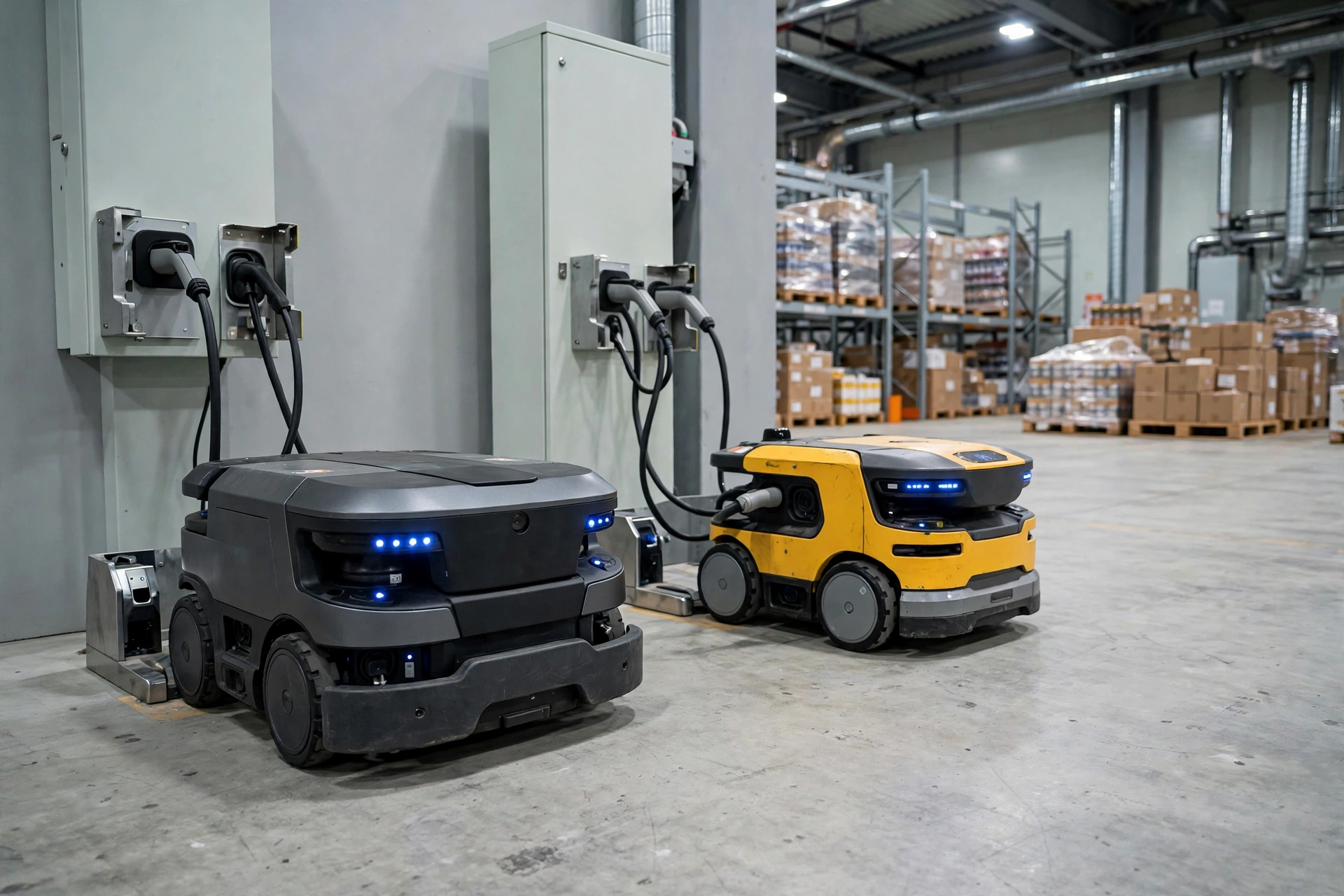
- Automatic (opportunity) charging = a wireless charging pad. The robot drives itself to the station, contact plates meet, charging starts, no human involved.
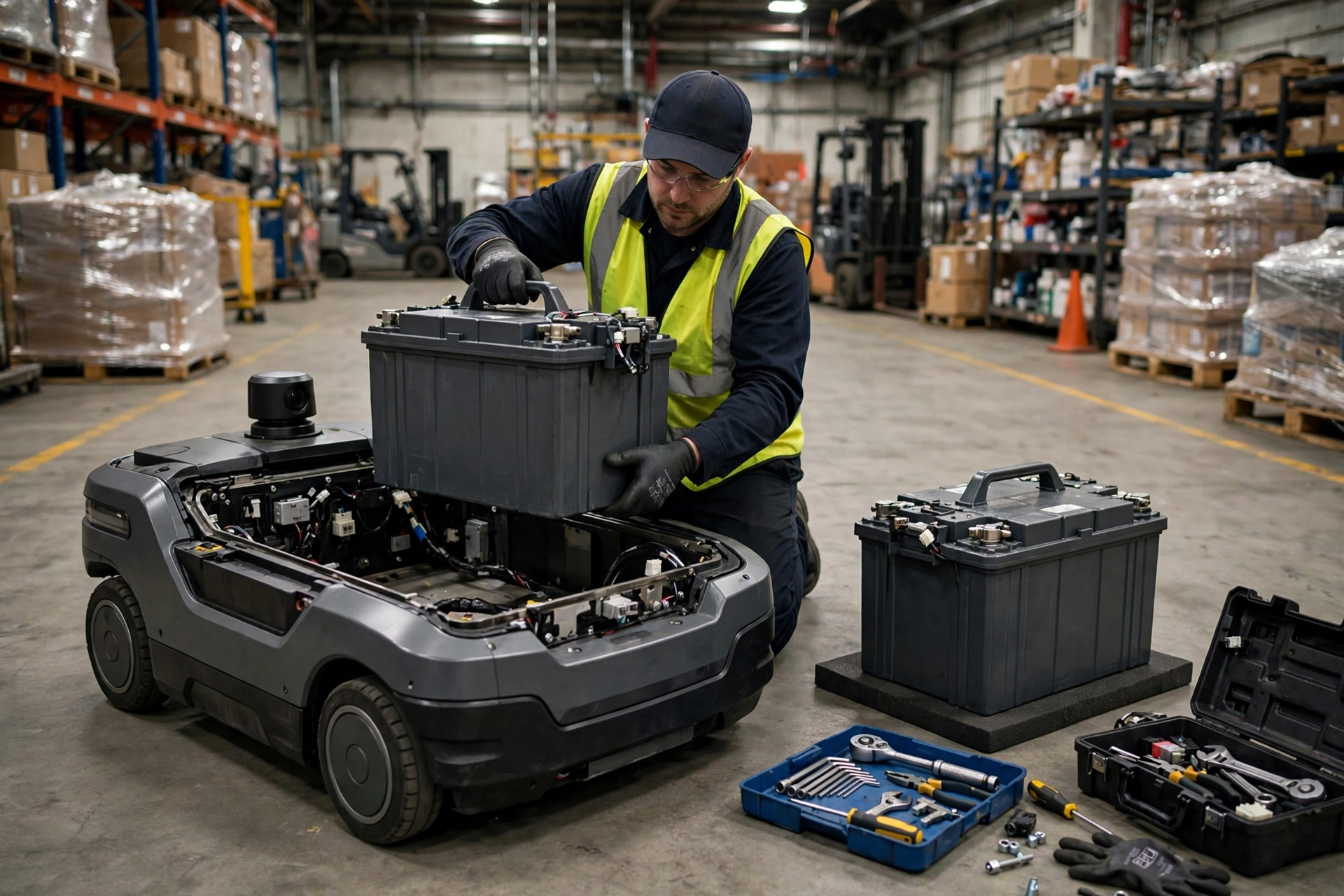
- Battery swap = swapping the battery like an old Nokia. The whole pack comes out, a full one goes in, 3–5 minutes and the robot is back at full strength. Almost zero downtime.
That's the theory. Selection comes down to three dividers: fleet size, shift pattern, and the cost of downtime.
Two Real-World Pits
Pit 1: Too few chargers — 46 robots queuing for "gas."
2024, a 3C electronics plant's logistics warehouse in South China. 46 lift-type AGVs, three shifts, running 24/7. They went with automatic charging, and the proposal included just 6 charging stations — the salesperson had sized it on "average charging demand," which sounded very scientific.
Reality doesn't do averages. AGV charging demand is spiky: around shift changes and lunch breaks, a dozen robots hit low battery at once and swarm the charging area. Six stations. The worst queue I saw with my own eyes: 9 robots waiting, the one at the front had been waiting over 40 minutes. The production line was starving for material and the shift lead was losing it.
They eventually added stations up to 12 and changed the dispatch policy: low-battery threshold raised from 20% to 30%, robots sent to "grab a sip" whenever idle (fragmented top-up charging). Only then did the queues disappear. Lesson: size charging stations for peak, not average — at least 25–30% of fleet size. That's from project experience; every AGV model draws differently, so validate with measured data before you finalize.
Pit 2: 12 robots on battery swap — spare batteries gathering dust.
An apparel e-commerce warehouse in East China, 12 AGVs, two shifts. The integrator sold them battery swap: "3-minute swap, robots never stop, maximum efficiency." Sounds beautiful. Now the bill.
Swap needs spare batteries, 1:2 minimum (12 robots, 24 packs). A battery pack is 20–30% of the vehicle cost — those 12 extra packs alone cost serious money. The swap station itself runs tens of thousands of dollars depending on automation level, plus dedicated floor space, plus a fire-safety review — concentrated lithium charging is something most industrial park landlords want to approve separately.
And the payoff? On two shifts, the warehouse sits idle 6 hours a night — the robots could simply slow-charge overnight. The downtime saved never came close to covering the extra spend. Two years later they expanded to 30 robots, and only then did swap roughly break even. Putting battery swap on a 12-robot fleet is using a cannon to kill a mosquito.
The AGV Charging Methods Comparison, in One Table
This AGV charging methods comparison uses a five-year horizon and a mid-size fleet (20 lift AGVs, two shifts). Order-of-magnitude numbers — exact figures vary by vendor, watch the structure:
| Cost item | Manual charging | Automatic charging | Battery swap |
|---|---|---|---|
| Added equipment | ~$0 (a few charge guns) | 6–8 stations at a few thousand dollars each, plus wiring | Swap station $30k–$100k+, plus floor space and fire-safety retrofit |
| Battery ratio | 1:1 | 1:1 | 1:2 to 1:3 — the extra packs are the big ticket |
| Labor | ~0.5–1 FTE for plug/unplug rounds | ~$0 | ~0.5 FTE for swap labor or swap-equipment maintenance |
| Downtime per charge | 2–3 hours (full charge) | Fragmented top-ups, near-zero impact | 3–5 minutes |
| 5-year total | Lowest | Middle | Highest (unless the fleet is huge) |
See it? Swap saves time and burns money. It only pays when one hour of downtime costs something absurd — like an automotive final assembly line where a minute costs tens of thousands. For a normal e-commerce or 3PL warehouse, downtime isn't that extreme, and swap is overkill.
And here's the counterintuitive one: automatic charging's shallow cycling is actually good for lithium battery life. People think "never fully charged, never fully drained" is wasteful. In reality lithium cells hate deep discharge most. Keeping robots bouncing between 30% and 80% extends pack cycle life roughly 20–30% versus the manual pattern of "drain to 20%, then full charge" (cell makers' cycle-test data; varies by cell, check the manufacturer's spec). That's where the term "opportunity charging" comes from — grab a sip whenever you get the chance.
AGV Charging Methods: The Selection Dividers — Three Lines, Find Yours
- Fleet under 10, one or two shifts → manual charging. Don't let "unmanned" hype talk you out of it. Eight robots, two charge rounds a day, one person spends an hour plugging and unplugging — labor cost barely breaks $10k+ a year. Price out 16 spare battery packs and do your own comparison. Talking automatic charging below 10 robots is paying for the look.
- 10–30 robots, two shifts or more → automatic charging. This is automatic's sweet spot. Size stations at 25–30% of fleet, add fragmented top-up to the dispatch policy, and basically stop thinking about it.
- 30+ robots, three shifts, extreme downtime cost → consider swap. Note "consider." Run the numbers first: swap station plus spare packs plus space plus fire safety runs about 1.5–2x the 5-year total cost of automatic (order-of-magnitude estimate). Only proceed if your downtime losses genuinely cover it.
The question I get asked to death: can you mix methods? Yes, and it's common. In a big fleet, put the 24/7 core-loop robots on swap and the peripheral backup units on automatic. That's not embarrassing — that's arithmetic.
The Maintenance Pits: Picking a Method Is When the Trouble Starts
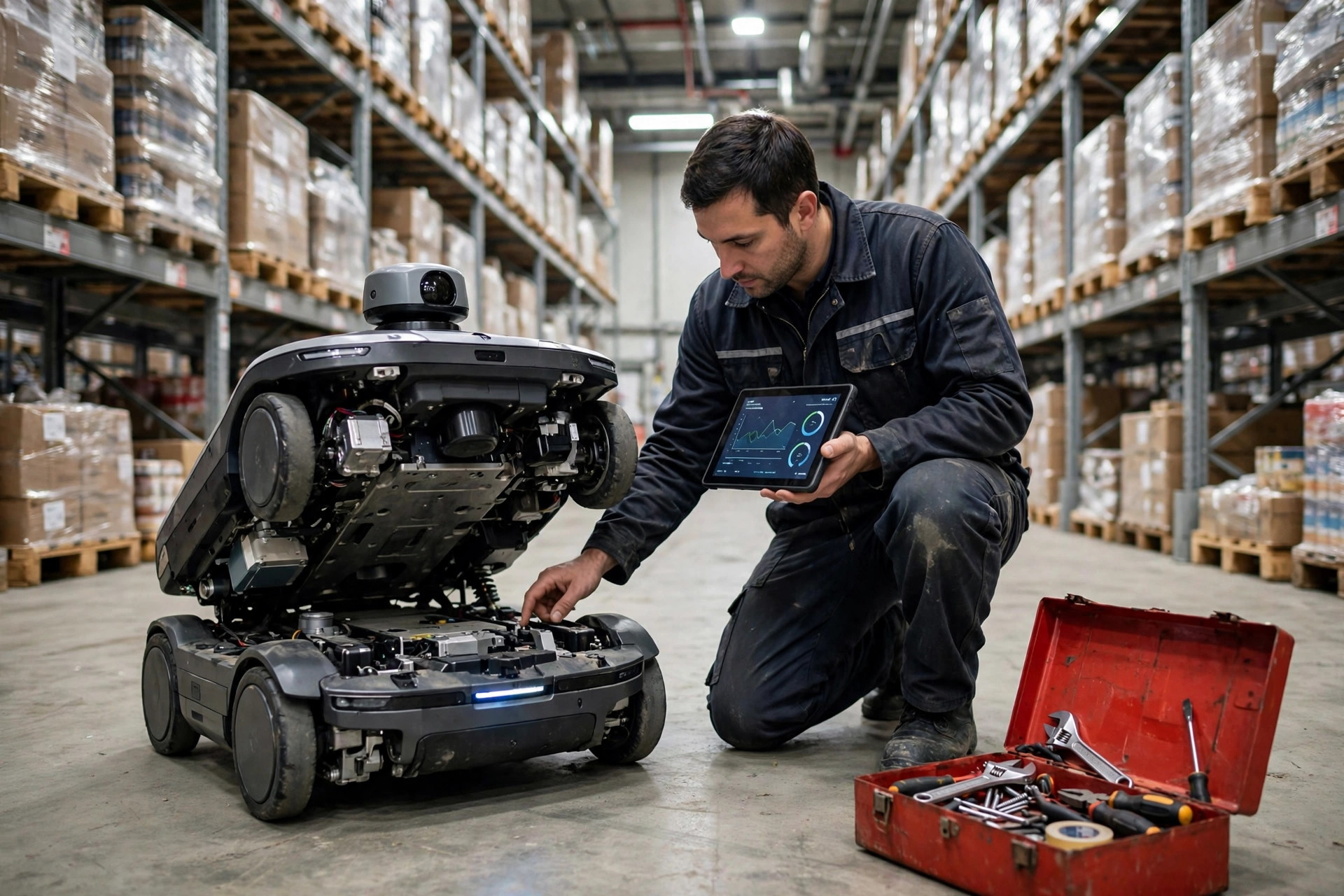
- Charge contacts are consumables. Automatic charging plates wear out after thousands of dockings. Bad contact means no charge, and robots die mysteriously mid-aisle. Put contact plates on the spare-parts list and inspect them every six months.
- Swapped batteries need individual records. With 24 packs rotating, you must track which pack has 800 cycles and which one shows high internal resistance. Skip the records and one day a degraded pack goes on a robot, dies mid-route, and blocks the whole loop.
- Manual charging's enemy is "forgot to unplug." A fully charged robot hogging the charge point while others queue. The fix is gloriously low-tech: a timer plus a board in the charging area — overstay, and your name goes in the shift group chat. Crude. Works.
So: is the money worth it? Watch one number: effective transport hours per AGV per day. Measure it before you change charging methods; measure it again three months after. If it went up, the money was well spent. If it didn't, charging was never your bottleneck — stop throwing money at it.
By Da Liu, Automation Engineer