Every few months some owner asks me for an asrs vs amr cost comparison warehouse buyers can actually use, and every few months I give the same annoying answer: you're comparing the wrong things. These two are not the same species. An ASRS is a skyscraper with high-speed elevators — heavy asset, rails welded in place. An AMR fleet is an army of food-delivery riders — light asset, strength in numbers. Comparing an elevator quote against a rider payroll was never going to work.
Two Different Animals: What ASRS and AMR Actually Are
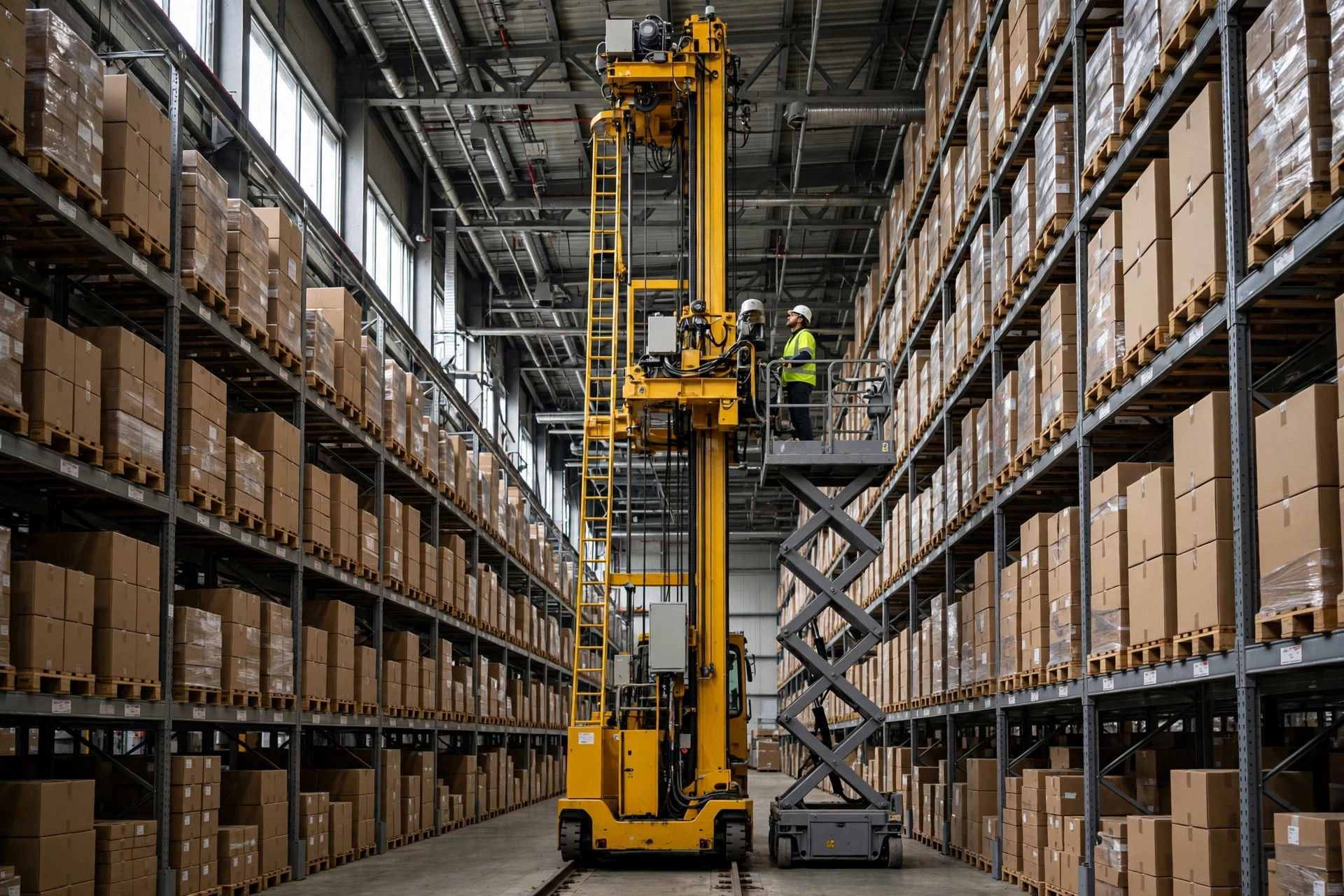
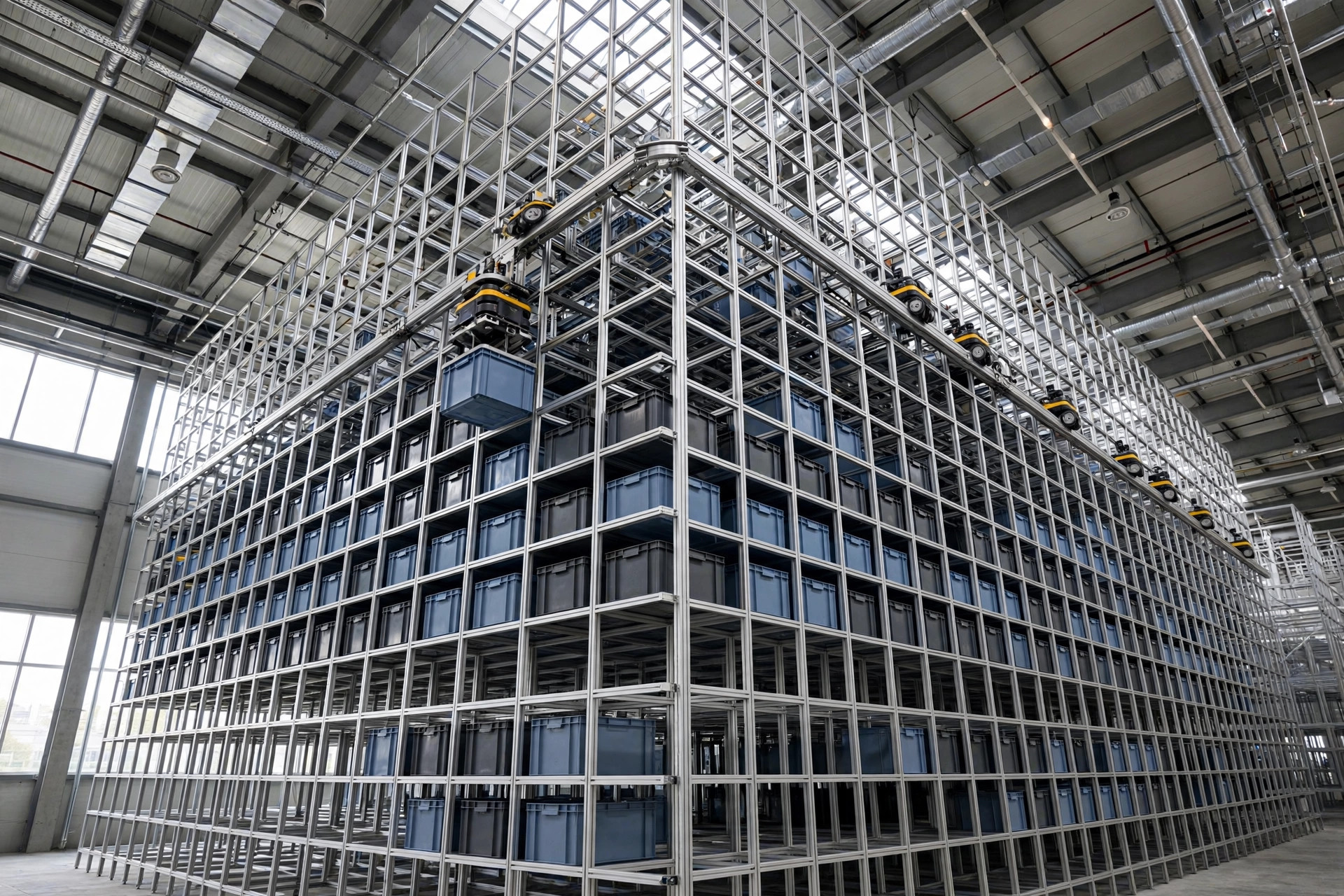
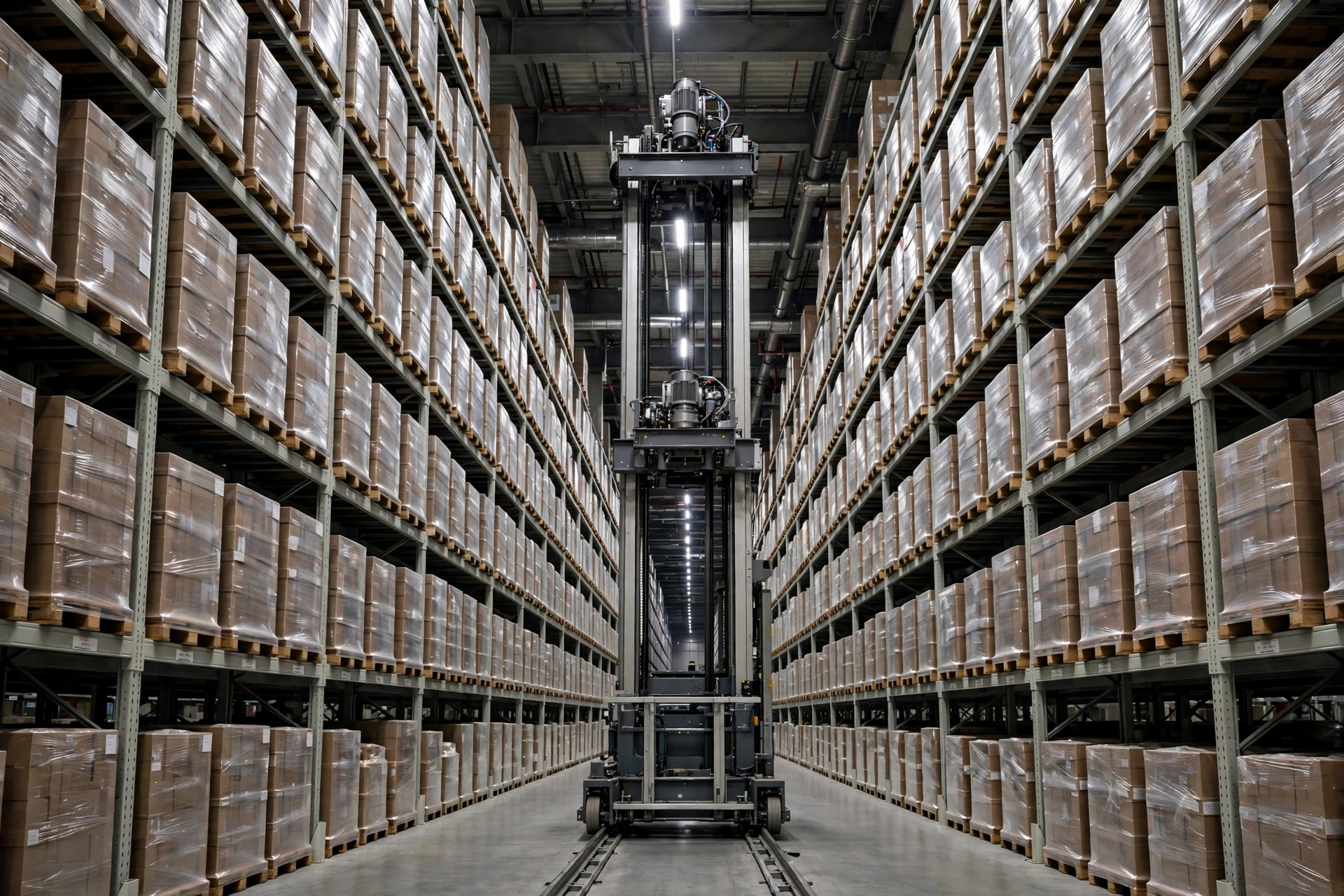
The core logic of an ASRS (automated storage and retrieval system) is "buy density by going up." A stacker crane runs a fixed aisle, racking goes twenty-plus meters high, and slots per square meter run several times what a flat warehouse gives you. It's like building a skyscraper: where land is expensive, building up is the cheapest answer. The price is rigidity — aisle count and crane count are locked in the day the concrete is poured, the throughput ceiling is welded to the machine cycle time, and expanding later means building another tower.
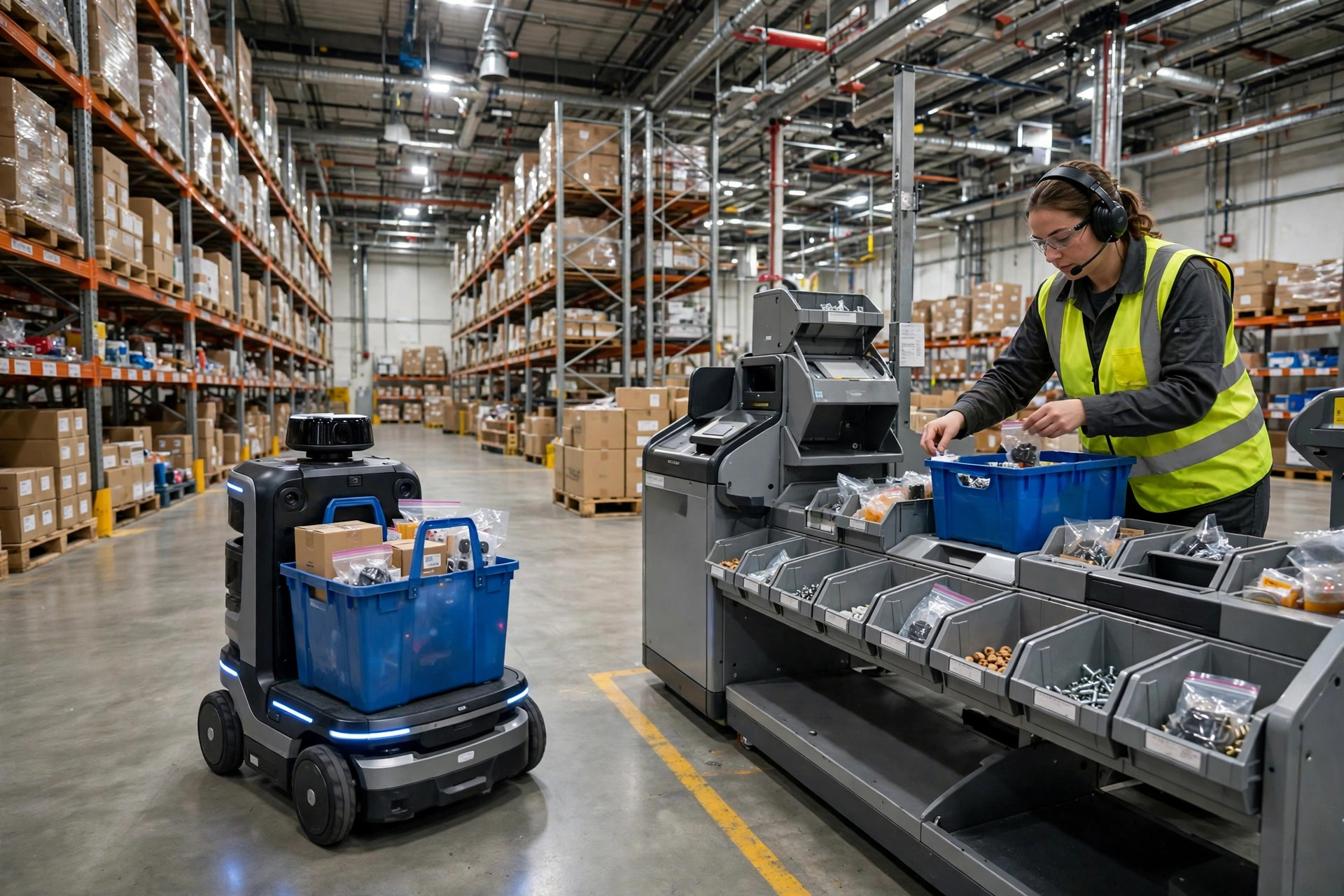
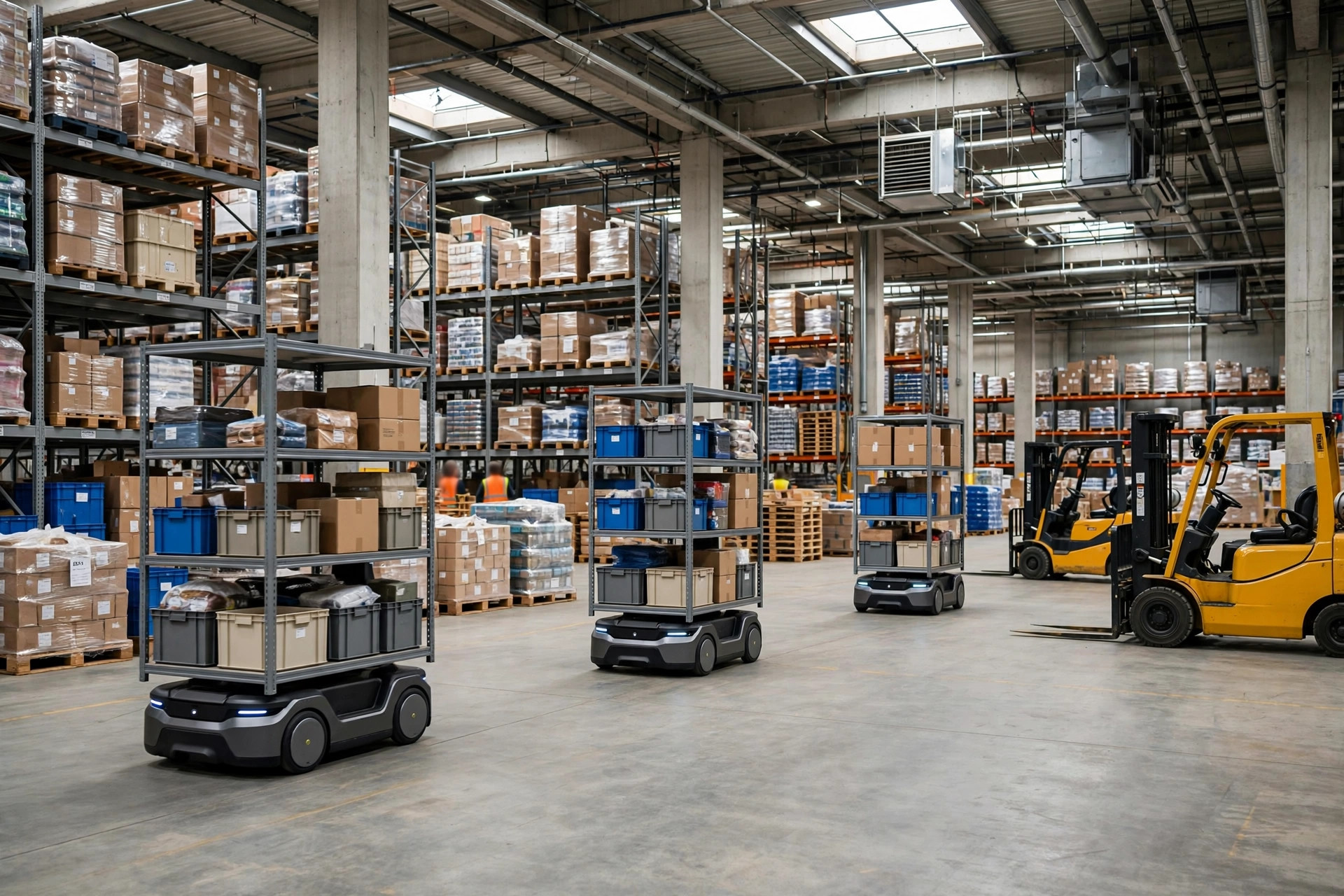
An AMR (autonomous mobile robot) fleet works the opposite way: "buy flexibility with numbers." Goods-to-person — the robot carries the tote to the pick station. Sixty robots today, two hundred tomorrow; scaling up means buying more units and painting more lanes. It's like a delivery platform: order volume rises, you onboard more riders. But don't forget what sits behind the riders — dispatch systems, charging stations, depots. Behind an AMR fleet sit the fleet manager servers, charging queues, floor flatness, and full-site Wi-Fi coverage. None of that is on the robot quote.
The one-line dividing principle: if storage density is your life, pick ASRS; if business change is your constant, pick AMR.
ASRS vs AMR Cost Comparison: Five Hard Numbers, Side by Side
Forget the vendor storytelling. Here are five hard dimensions, with the order-of-magnitude ranges I see across real projects (exact figures vary wildly by project — read the magnitude, not the digits):
| Dimension | ASRS (pallet stacker-crane) | AMR tote fleet |
|---|---|---|
| Fully-loaded cost per slot | Per pallet position all-in (racking + crane + software + civil/ fire-protection share): commonly in the thousands of dollars per slot | Per robot: tens of thousands of dollars each; one robot serves hundreds of tote slots, so cost per tote slot lands an order of magnitude lower |
| Throughput | Tens of pallets per hour per aisle on dual cycles; ceiling is fixed — more throughput means more aisles | Fleet throughput scales linearly with robot count, but beyond a certain size dispatch complexity spikes and marginal returns fade |
| Footprint / density | High — slots per square meter can run several times a flat warehouse | Mostly flat-warehouse retrofits; density gains are limited; it eats floor space |
| Implementation lead time | Long — typically 9–18 months; civil works, fire protection, and commissioning can't be skipped | Short — typically 3–6 months to go live; adding robots before peak season can take two weeks |
| Risk profile | Single-point failure takes down a whole aisle; expansion means building another aisle — heavy-asset risk | One dead robot gets towed and swapped, system degrades gracefully; risk is spread, but the whole thing leans on network and dispatch |
The takeaway: the cost structures are nothing alike. ASRS money goes into "build the tower right, once." AMR money goes into "feed the fleet, forever." Comparing unit prices is meaningless — what matters is total cost of ownership spread across every slot, every day.
The Math: ASRS vs AMR Cost Comparison on Two Real Projects
In 2023, an auto-parts supplier in Suzhou built a pallet ASRS: 4 aisles, roughly 12,000 pallet positions, total investment in the tens of millions of dollars. Beautiful building, genuinely high density. The problem was the business mix — seventy percent of outbound was small-piece broken-case picking; full pallets were only thirty percent. The cranes ran dual cycles all day and the outbound dock still queued up: an ASRS can store it, but that doesn't mean it can ship it. The throughput ceiling was set the day the feasibility study was signed; when the business shifted, there was nothing to do but stare at it.
In 2024, a 3C accessories e-commerce warehouse in Dongguan went the other way: AMR goods-to-person, starting at 60 robots, scaled to 200 before peak season — more robots, more chargers, dispatch tuning, live in two weeks. Genuinely flexible. But at year-end their finance team did the math: three rounds of charger expansion, two rounds of Wi-Fi remediation across the site, one full floor grinding, plus two dedicated maintenance techs on payroll — the "beyond the robots" spending nearly matched the fleet itself.
Put the two together and the conclusion stings: the ASRS trap is set before you buy; the AMR trap is set after. Get ASRS selection wrong and you've sunk tens of millions. AMR looks like cheap experimentation, but the hidden costs drip forever — run the asrs vs amr cost comparison warehouse operators actually need, five-year cash flow instead of the quote, and over three years AMR may not be cheaper at all.
The Maintenance Traps the Brochure Won't Mention
ASRS maintenance is measured in "aisle-down" events. Last year at a pharma logistics center, a worn travel wheel tripped a rail alarm and one aisle went dark for 6 hours — taking several thousand pallet positions with it. Pharma has compliance clock requirements; every minute of those six hours was money. ASRS spares are often factory-order with lead times measured in weeks. You remember every single failure.
AMR maintenance is a chronic condition, not an emergency. One dead robot is nothing — tow it, swap it, the system degrades gracefully. That's AMR's biggest strength. But past a hundred robots, the real costs live in three places: battery fade (range drops visibly after about eighteen months), Wi-Fi roaming drops (add robots and AP handoffs start glitching), and charging queues. I saw a 150-robot site that under-provisioned chargers — at peak, a quarter of the fleet was queued for charging. They paid for 150 robots and got 110 robots' worth of work.
And let me take a swing at a pet peeve while I'm here: warehouses moving a few hundred pallets a day with slow-turning SKUs, where the owner insists on an ASRS because "automation" sounds good in photos. I talk every one of them out of it — people plus forklifts cover that workload fine. Tens of millions spent, zero efficiency gained, finance in tears. Automation is for the spreadsheet, not the photo album.
Three Counterintuitive Conclusions
First, AMR is not "the cheap option." Add up chargers, flooring, network, dispatch, and the maintenance crew, and a 100-plus-robot fleet's five-year total cost of ownership will quite likely overtake an ASRS with equivalent slots. Buying the robots is cheap. Feeding the fleet is not.
Second, in ASRS per-slot cost, the equipment is often not the biggest line. A twenty-meter-tall building's civil works, fire protection, sprinklers, and rack foundations regularly shock people. Anyone haggling only over the crane quote is haggling over the wrong line item.
Third, renting AMRs (RaaS) looks asset-light, but run it a full three years and the rent will quite likely exceed the purchase price. Rent for short business cycles and pilot projects; buy if you're in it for the long haul.
The selection line, one more time, ready to use: few SKUs, big batches, density-is-life — ASRS. Many SKUs, fragmented orders, business changes every year — AMR. Both — go hybrid: ASRS for slow movers, AMR for picking. Don't expect one technology to cover everything.
Whether the Money Was Worth It Comes Down to One Number
Stop asking "which is cheaper." Take five-year total cost of ownership — equipment, civil works, software, energy, maintenance, labor, downtime losses, all of it — divide by slot count, divide by days. That gives you fully-loaded cost per slot per day. Put ASRS and AMR on the same denominator and compare. Whoever is lower wins. Whether the money was worth it comes down to one number.
By Da Liu, Automation Engineer