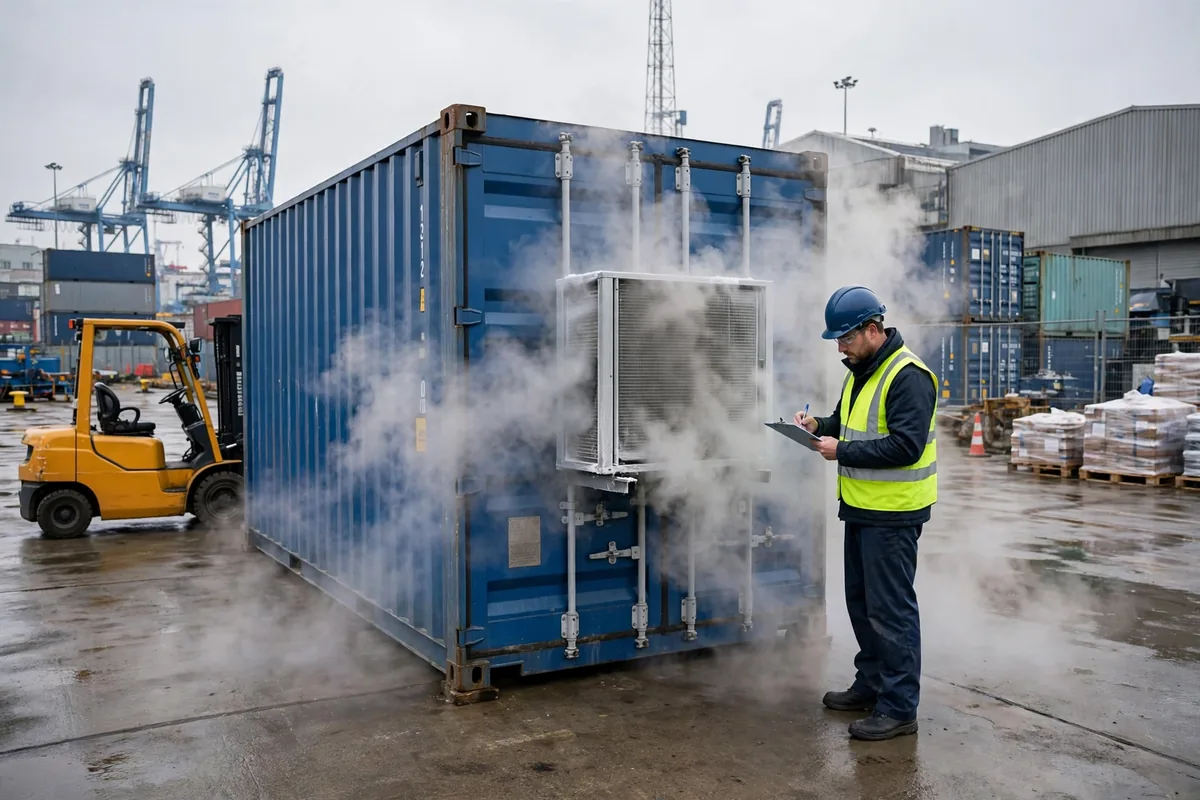
Start with a bill nobody wanted to pay. In July last year, a frozen potato exporter in South China had a container discounted on arrival because core temperatures ran high. Using illustrative figures only, the cargo was worth well into six figures in dollars, and the discount plus claim settlement cost a five-figure sum. The reefer machinery was fine. The data logger never stopped. The cargo simply went into the box warm. That is the most expensive misunderstanding in reefer container pre cooling warehouse loading: treating a reefer box as a refrigerator, when it is really a well-insulated moving cold room.
Reefer container pre cooling warehouse loading starts before the box arrives
A reefer unit is sized to offset heat leaking through the walls, heat entering during loading, and the cargo's own respiration heat. It is designed to hold already-cooled cargo at set point, not to pull warm cargo down to it. Load product at ambient temperature and the unit runs flat out, air temperature drifts down slowly, and core temperature barely moves. With chilled fresh product it is worse: surface condensation, warm cores still generating heat, and a temperature curve at sea that creeps downward without ever quite reaching set point.
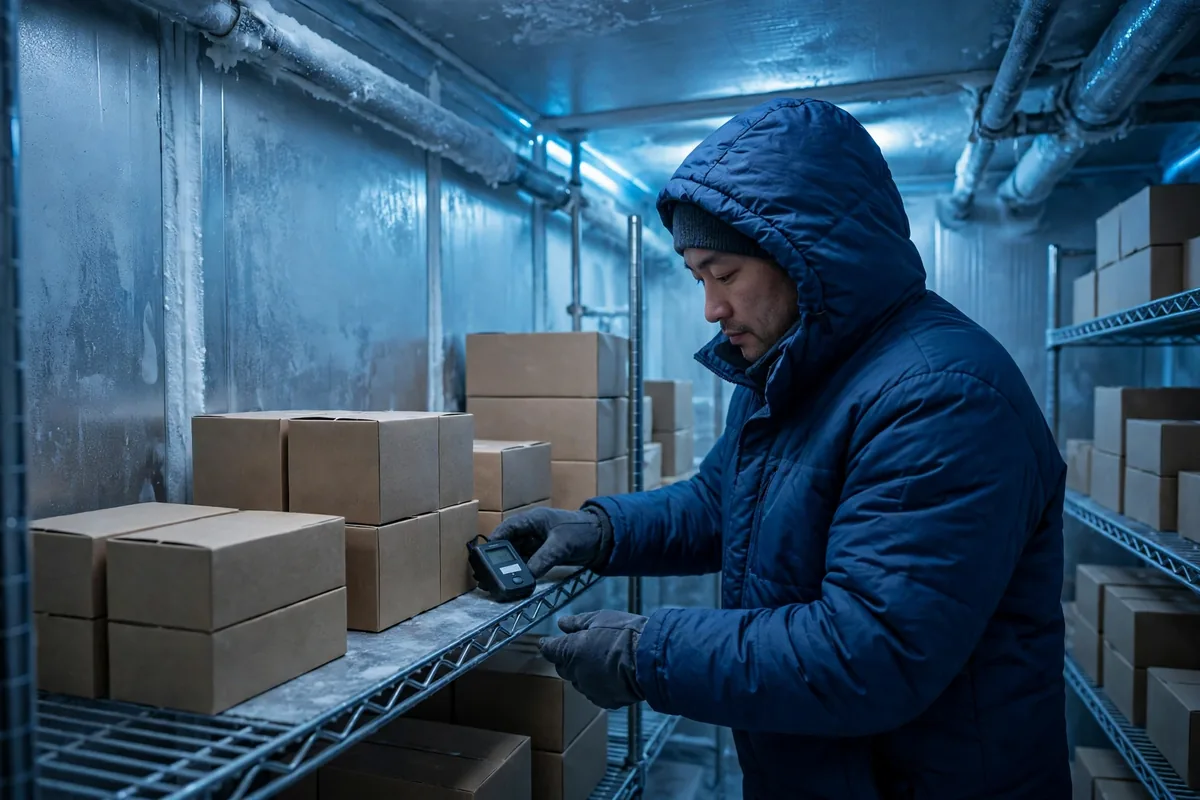
In October 2023 I walked a cold store in Shandong with a chilled poultry exporter. Their paperwork looked perfect: pre-cool, load, seal. I probed three pallets. Two were on temperature. One was almost three degrees high. The supervisor admitted that pallet had come from the processing room that morning and had only spent about four hours in the cold store. I told him to leave it for the next sailing. He was under pressure from the vessel cutoff, and I understood that, but the math was not close: one extra period of cold storage and a rebooking cost versus a claim on the whole container. That pallet stayed behind.
Here is the counterintuitive part. The better your pre-cooling, the faster and more disciplined loading should be. Many warehouses do the opposite twice: they load warm cargo hoping the box will finish the job, then load properly cooled cargo slowly, with the doors open while people hunt for pallets. The time saved in the cold store gets repaid, with interest, at the door.
The cost math behind reefer container pre cooling warehouse loading
Break pre-cooling into its real parts: cold store electricity, the time value of occupied cold space, and labour and handling. Break the other side down too: arrival discounts, claims, customer deductions, and the quieter cost of tougher inspections on the next orders. The table below uses illustrative magnitudes only; check local tariffs and carrier guidance against official and latest published sources before using any figure as a quote.
| Item | Pre-cool fully, then load (illustrative) | Load warm and hope (illustrative) |
|---|---|---|
| Pre-cooling energy and space | Roughly half a day to a day of extra cold storage per container, typically a modest three-figure sum in local currency terms | Near zero, which looks like a saving |
| Loading | Short door-open time, low unit load | Long high-load running, wide temperature swings |
| Arrival risk | Core temperature on spec, flat logger curve, low claim probability | Materially higher chance of a claim that starts in five figures |
| Customer effect | Clean records, stable repeat orders | Stricter inspections, or a lost account |
The break-even is embarrassingly low. If full pre-cooling prevents one claim in dozens of containers, it has already paid for itself many times over. This is the cheapest insurance in the whole cold chain, and skipping it is the false economy.
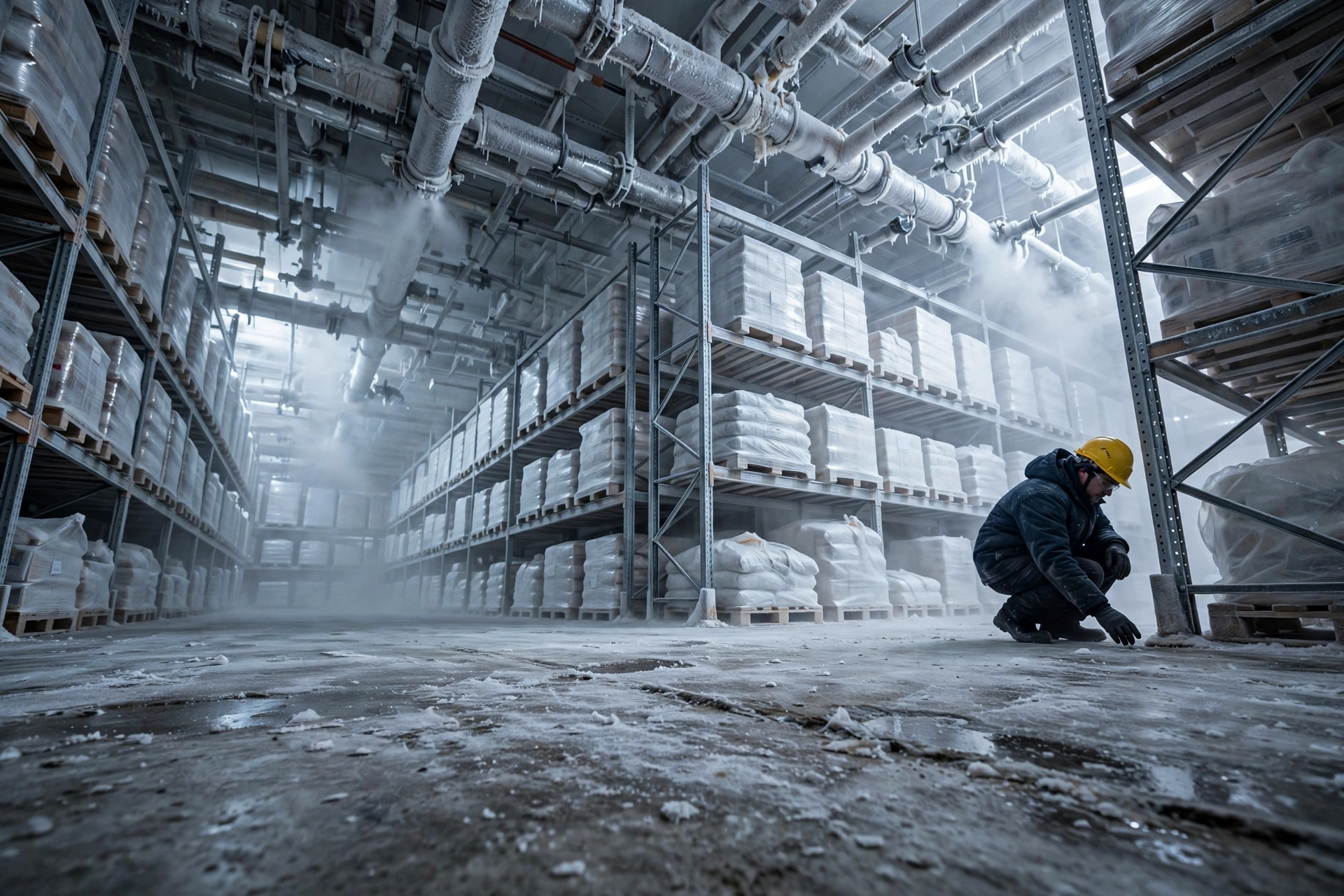
There is also a hidden line item. When cargo is not ready, doors open and close repeatedly while people wait, and an unsealed dock leaks cold air the whole time. In summer, ten minutes of open doors pulls in warm, wet air that condenses on cartons, softens the board, and weakens the stack. Nobody books that loss separately. It just shows up later, labelled as cargo damage.
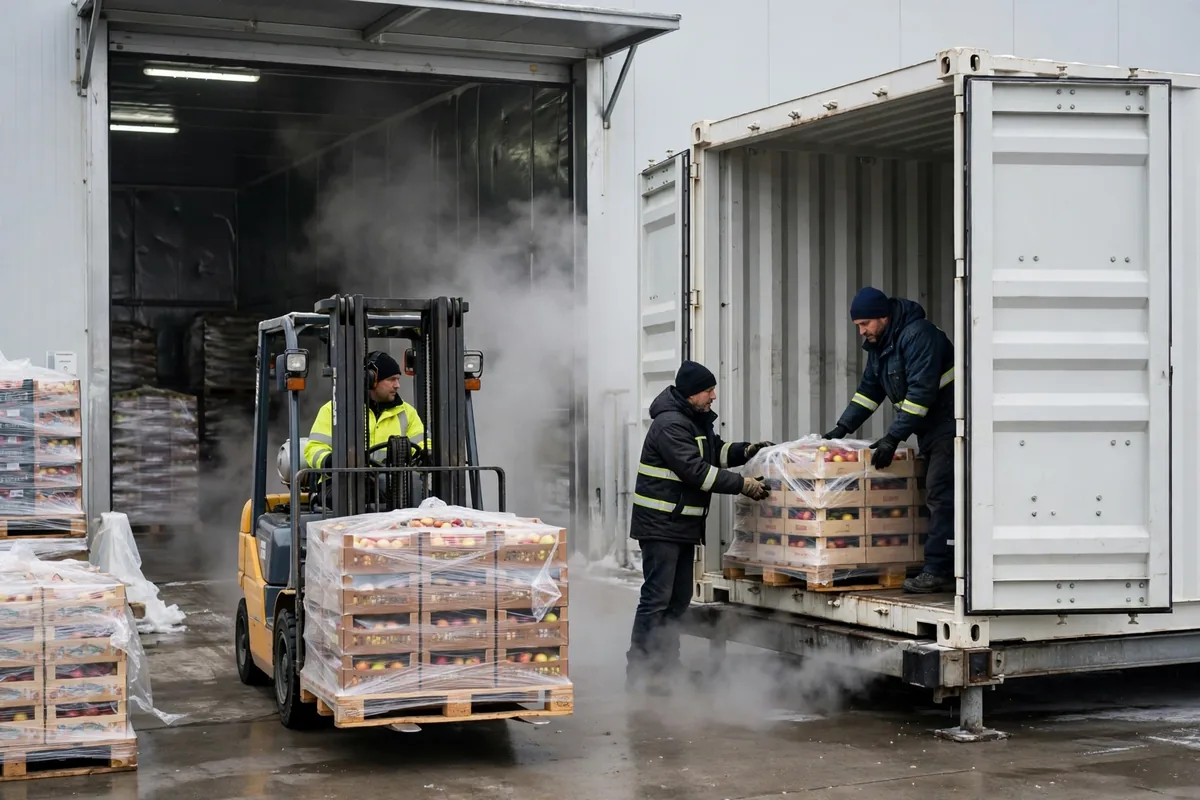
On loading rhythm, treat the job as a timed event. Stage pallets in loading order inside the cold area before the box arrives. Fix the sequence, the airflow gaps, and the paperwork in advance. Reefer airflow depends on the T-bar floor and rear return path; block them and cold air cannot circulate, leaving warm pockets no set point can fix. Keep the clearances the container owner and carrier currently specify, and verify them against their latest guidance rather than habit.
In May 2024, at a Ningbo warehouse loading frozen dumplings for export, the crew finished from doors-open to seal in a little over forty minutes. No heroics, just three things done early: cargo staged in order in the cold dock area, the forklift route cleared, and documents and seal ready before the box was spotted. The temperature curve from that load showed one shallow bump during loading, pulled back down quickly. Compare that with a three-hour load I once watched, doors open through a lunch break. I sent the owner a screenshot of that curve. The process changed the next day. Curves persuade better than meetings.
Set point discipline matters too. Colder is not automatically safer. Chilled goods have chilling-injury thresholds, and an unnecessarily low set point on frozen cargo mostly buys extra energy use and more defrost cycles. Follow the cargo specification and customer agreement, checked against current official requirements, instead of quietly dialling down two degrees for peace of mind.
Finally, records. Cold chain claims are won on documentation, not volume. Keep four things for every container: core temperature checks during pre-cooling, a pre-loading core temperature confirmation by pallet or sample, loading start and finish times with door-open duration, and a photo or system record of the set point and initial box temperature. Note where the independent logger sits, because a logger near the return air and one buried in the stow tell different stories. My standing rule for clients is simple: no seal until the folder has the core temperature sheet, the loading timing, the set point record, and the logger number. After three months of that discipline, claim arguments dropped sharply, mostly because the other side could see the records were complete.
Do the final calculation yourself. Multiply your annual reefer volume by the per-container pre-cooling cost. Then put last year's largest temperature claim next to it. If a claim has ever happened, you will not need to run the numbers twice. In reefer container pre cooling warehouse loading, the saving lever is not negotiating electricity. It is loading cargo that is already cold, keeping the doors open for less time, and keeping records that prove both.
By Lao Zhou, Logistics Cost Analyst