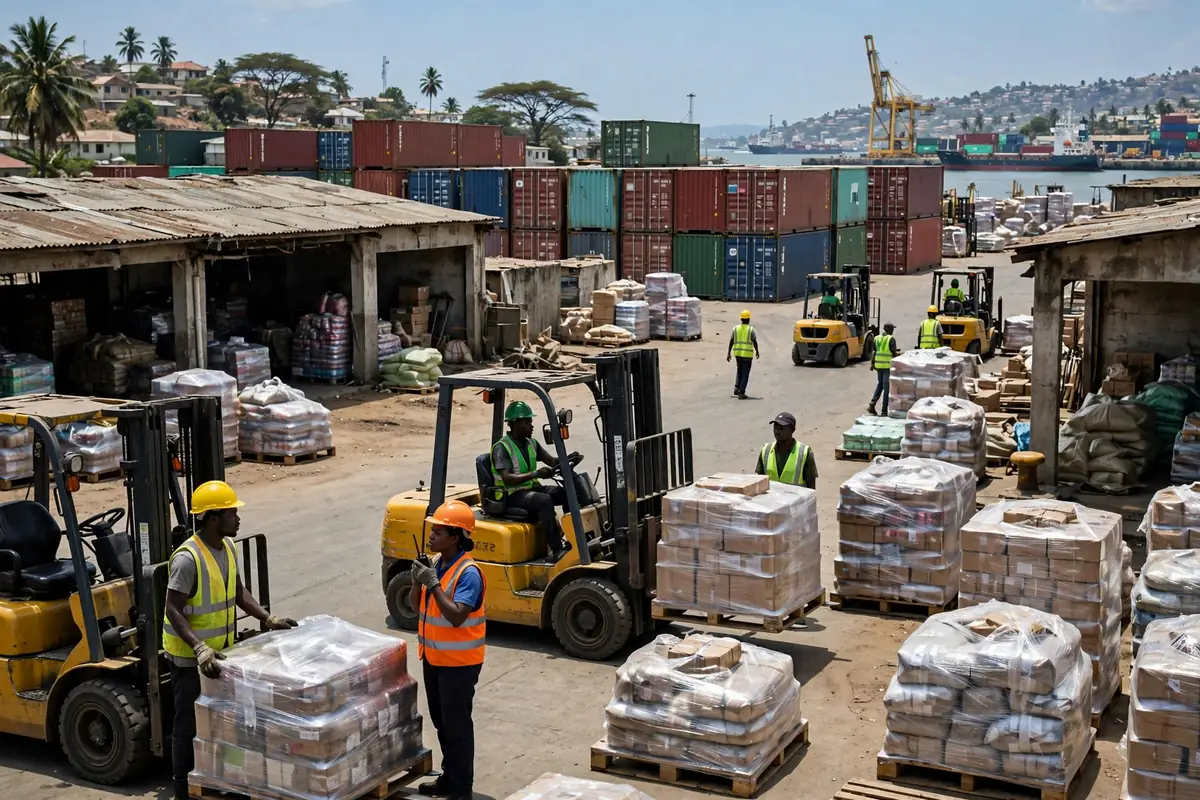
Let me be honest: africa bonded warehouse regional distribution is not hard because of the word "bonded." It is hard because of what happens after the freight lands — how you split it, separate it, and release it batch by batch. At 7:30 in the morning I run the shift huddle and the night team leaves one sentence: a new shipment arrived, three destination countries have a share, and paperwork for two batches is still incomplete. Everyone in that room knows the first job of the day is not shipping. It is putting freight in the right place. Get that wrong and everything after it is rework.
After years running warehouses, I trust one rule: in a distribution warehouse, the location is the ledger. Freight consolidates into one bonded warehouse near a port city, then clears and leaves in batches by destination. The model itself is sound and it can rescue cash flow. But if freight turns into one mixed pile inside the building, no model will save you.
Africa bonded warehouse regional distribution means inbound first, batches later — never backwards
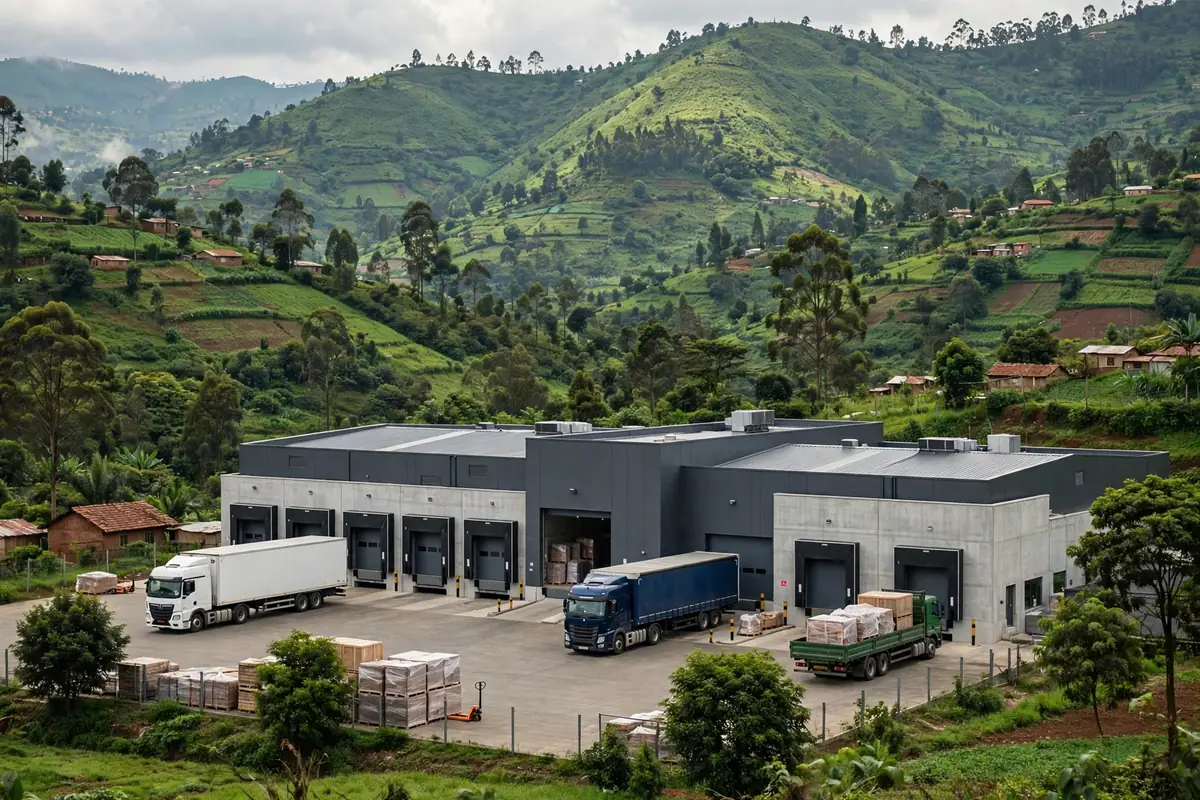
Here is what the model looks like on the floor. A full shipment arrives and is put away in the bonded warehouse before each destination's clearance is finished — for exact procedures and charges, always follow the latest local rules; I am not writing down fixed numbers here, because they change. When one destination's orders and documents are ready, that batch is picked from bonded stock, processed, loaded, and sent onward, often inland. A week or two later, the second destination's batch runs through the same motions.
That is fundamentally different from a normal warehouse. One arrival becomes several departures, and every departure has different documents, a different destination, and a different consignee. A normal site runs receive, put away, pick, gone. A bonded distribution site runs receive, zone it, wait for documents by batch, release by batch. Completely different rhythm.
A real-feeling example: say a load of household goods and a load of small appliances arrive the same week, planned for three neighbouring markets. The owner's paperwork moves at three speeds — market one is ready, market two is missing a document, market three is still changing quantities. If inbound crews stack it all in one zone to save time, the first release becomes a treasure hunt, and pickers will pull market two's goods into market one's load. We learned that the hard way. The standing rule now: split by destination on arrival day, based on the plan. If quantities change later, adjust with a proper adjustment record. Never mix first and split later.
The counterintuitive truth: a distribution warehouse lives or dies at inbound, not at picking. Fast picking is worthless when the wrong batch crosses a border — the return trip costs more than two weeks of picking. Twenty extra minutes zoning freight correctly at inbound saves half a day on every release that follows.
Zoning, batch separation, and staffing: africa bonded warehouse regional distribution on the floor
Our zoning method uses two dimensions: destination country plus document status. Receiving checks counts and outer packaging first. Batches with complete documents go to the ready-to-release zone, incomplete ones to the awaiting-documents zone, and undecided freight to a pending zone. Inside each zone, lanes are split by destination, with a sign at the aisle end showing destination, batch number, and arrival date. Colour helps too — in our setup, three label colours stand for three destinations, so a new night-shift hire can route freight by colour without memorising codes.
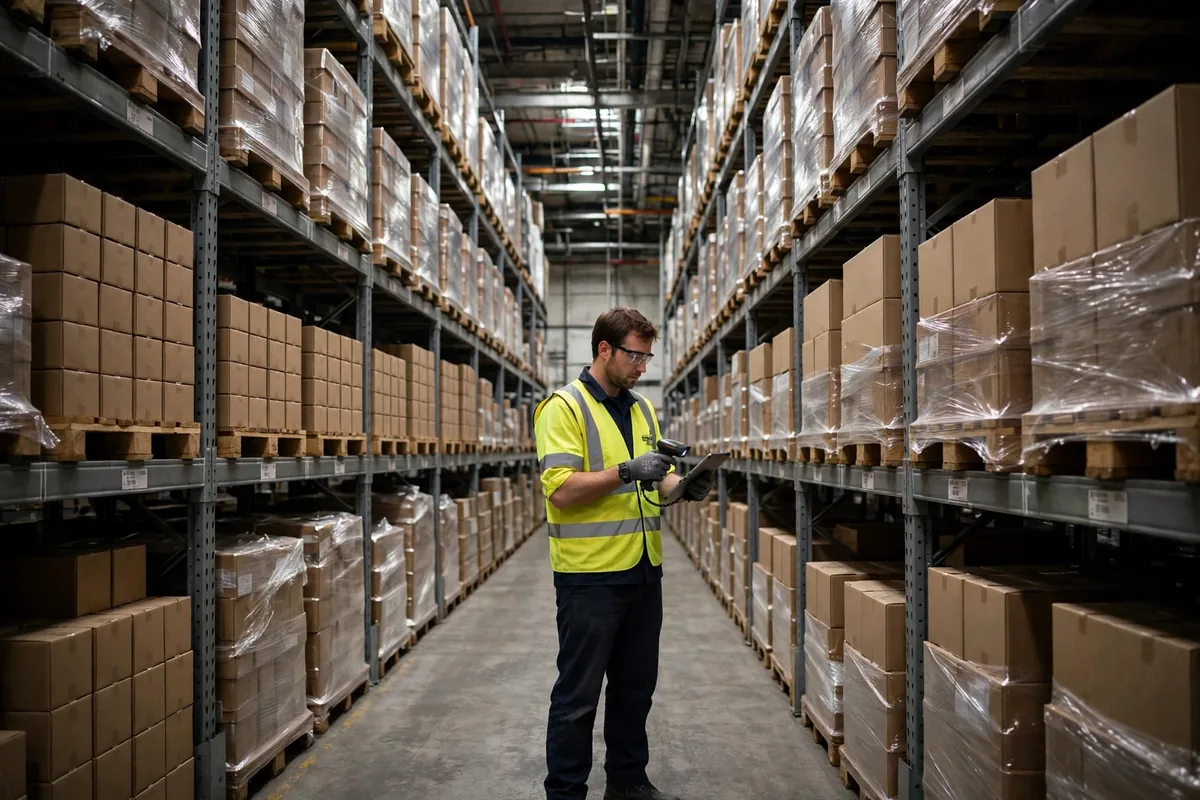
Batch separation is the life of a bonded site. The same product, in different batches for different countries, looks identical. If your system tracks stock by product name only, the wrong batch will ship. The fix is plain: the batch number is the freight's ID card. One batch label per pallet at inbound, scan the batch at put-away, scan it again at release, and hard-link batch to destination in the system so a mismatched batch cannot even generate a release order. Add one human check: count the ready zone at the end of every day, and if the count disagrees with the system, reconcile before any work starts next morning. Nobody works on top of a bad count.
Staffing has to follow the wave. Distribution work is not flat: arrival weeks are inbound-heavy, release weeks are outbound-heavy, and document-waiting weeks are quiet. So we staff in waves — extra hands and all receiving stations open in arrival weeks, extra pickers and loaders in release weeks, and cycle counts, location cleanup, and training in the quiet gaps. One fixed roster every week is the worst option: short-handed when it matters, idle when it does not. One more role matters: a documents liaison who checks progress with the owner and broker at two fixed times daily. Know a day ahead which batch is about to clear, and tomorrow's roster writes itself.
Run the illustrative maths — all numbers are assumptions, only the logic counts. Suppose one shipment will leave for four destinations. Clearing and releasing everything at once concentrates all the cost and paperwork pressure into arrival week. Releasing in four batches, each when its documents are ready, cuts the per-batch capital tied up to roughly a quarter of the all-at-once figure, at the price of repeated picking and loading labour. The owner buys cash flow; the warehouse spends scheduling effort. Usually worth it. But for a small shipment with a single destination, batching buys nothing and the extra control work costs more than it saves.
| Freight type | Fit for bonded distribution | Floor reason |
|---|---|---|
| Standard packaged household goods, small appliances | Good fit | Easy batch control, shelf-stable, steady demand |
| Building materials, tools | Fair fit | Heavy freight suits one arrival, many onward legs |
| Short-life food, fresh goods | Poor fit | Document timing is not yours to control |
| Fast-turning fashion | Caution | Waiting in batches risks missing the season |
| Heavily regulated special goods | Caution | Confirm the process first; follow latest local rules |
Freight you should not force into this model
Three warnings for fellow managers. First, keep short-life goods out — you do not control each destination's document speed, and shelf life burns while freight sits in the awaiting zone. Second, for high-value, small-volume goods, cost out separation and security before you quote; storage rate is the smallest part. Third, for categories where destination rules shift quickly, agree the document path before accepting the freight and write it into the contract, always under the latest local rules. Last year's experience is not this year's procedure.
Africa bonded warehouse regional distribution is, at heart, a discipline problem: zone it right, keep batches separated, tie documents to the shift plan, and release strictly by batch. Turn those four into daily habits and the model runs smoothly. Skip them and a bonded warehouse is just a more expensive ordinary warehouse. My advice: pilot any new distribution account with one small shipment and walk it from inbound zoning to the last batch release. Every flaw lives in the process, and one real run teaches more than ten meetings.
By Chen Feng, Warehouse Operations Manager