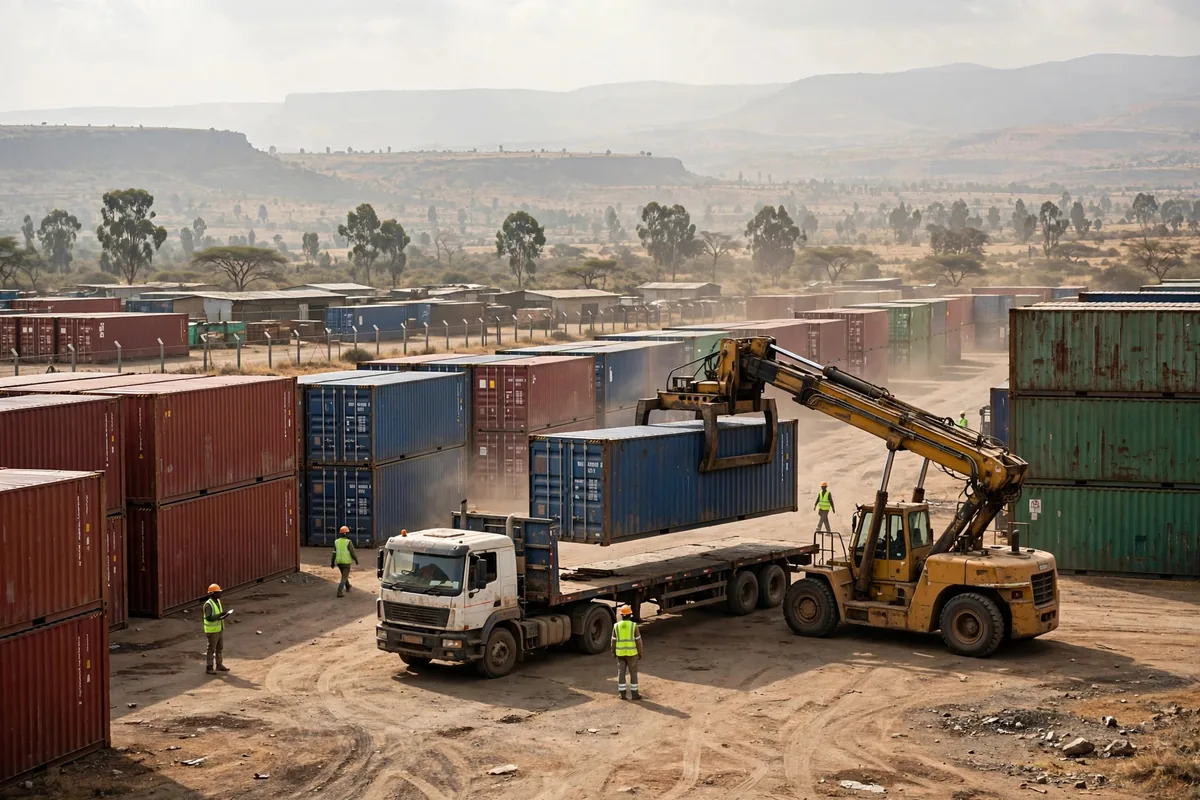
How does a country without a coastline do foreign trade? In Ethiopia, that is not a theoretical question. It is answered every day, container by container. Since Eritrea's independence in 1993, Ethiopia has been landlocked, and according to publicly available sources, more than 90 percent of its international trade passes through a single corridor of just over 700 kilometres to the Port of Djibouti. The whole subject of Addis Ababa Ethiopia inland warehouse distribution can be reduced to one question: how does freight move as smoothly 700 kilometres from the sea as it would in a port city?
One corridor carries more than 90 percent of the trade
In January 2018, the standard-gauge electrified railway between Addis Ababa and Djibouti entered commercial operation. At roughly 752 kilometres, it was Africa's first cross-border electrified railway, running through Adama and Dire Dawa and linking the industrial parks and dry ports along its route. According to project documents, the Port of Djibouti handles more than 90 percent of Ethiopia's international trade, which means this corridor is not one of several gateways to the sea. It is, in practice, the only main one. Before the railway, the corridor ran on road haulage; before the road, on a metre-gauge railway built in 1917. The mode of transport has changed repeatedly over more than a century. The dependence on a single corridor has not.
That dependence defines the first characteristic of inland distribution here: congestion at any single node is amplified into a nationwide delay. If port operations slip by a day, the yard at Modjo holds cargo a day longer; if one more inspection step is added at the border, warehouses in Addis Ababa must carry one more day of safety stock. Coffee exports illustrate the chain. Coffee collected in the southern growing regions is typically consolidated and stuffed into containers near the capital, then railed to Djibouti for loading onto a vessel, so growing region, consolidation, stuffing, train departure and sailing date are linked link by link. A delay at any one of them can mean a missed sailing, and a missed sailing rarely costs only a few extra days. It usually means rebooking space on the next vessel and renegotiating delivery dates with the buyer.
Modjo Dry Port: inland warehousing after dwell time fell from 60 days to single digits
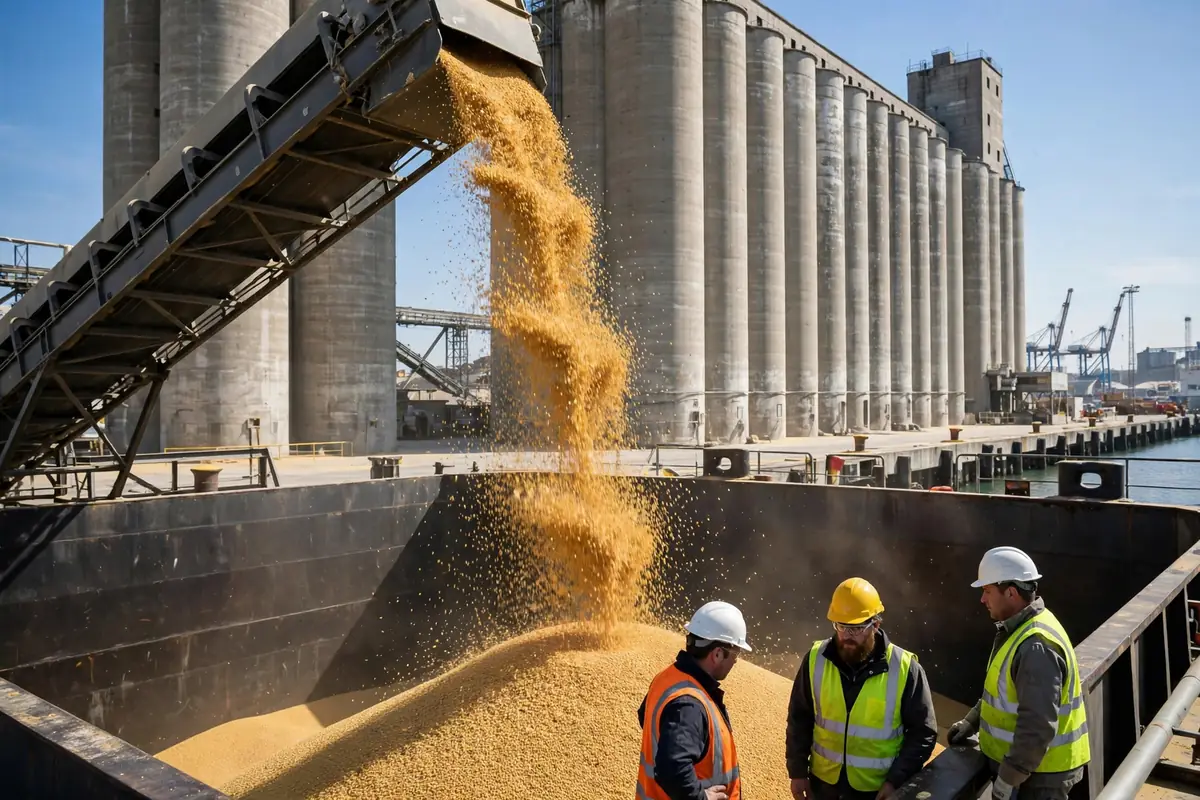
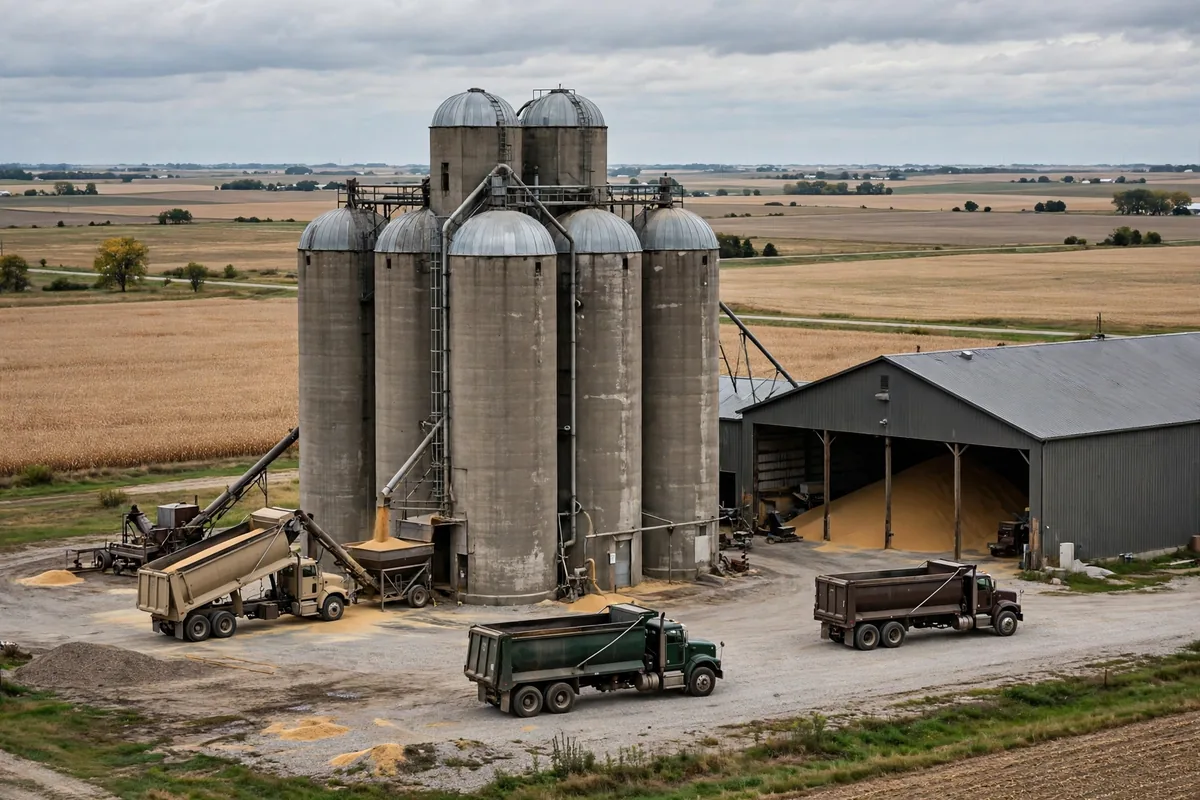
If the railway addressed the corridor's transport capacity, Modjo Dry Port addressed throughput at the corridor's inland end. Established in 2009 about 70 kilometres south of the capital, Modjo is Ethiopia's largest inland port and handles more than 70 percent of the country's imports. According to information published by the World Bank in 2026, expansion of the dry port cut average container dwell time from 60 days to single-digit days and doubled handling capacity, and the first phase of the expansion, opened in September 2026, included Ethiopia's first rail-mounted gantry crane. For a landlocked country long burdened by high logistics costs and slow turnover, the significance of those figures is not that the yard got bigger. It is that cargo finally started moving. That is the setting in which Addis Ababa inland warehouse distribution actually operates: the constraint is no longer the size of the yard, but how fast cargo clears it.
The role of the dry port is changing as well. Maersk and a local partner have opened a consolidation centre at Modjo serving the apparel industry, providing consolidation, stuffing and distribution for garment exports from the industrial parks along the corridor. That points to Modjo evolving from a yard built mainly to receive imports into a two-way hub serving exports too. Ethiopia now has seven dry ports in total, including Qality, Gelan, Semera, Dire Dawa, Kombolcha and Mekelle. Modjo is the largest and the closest to the capital, but it is not the only one.
There is, however, a counterintuitive point worth stating plainly: expanding the hardware does not remove the bottleneck, it moves it. Yard area, gantry cranes and warehouse capacity solve physical throughput. What ultimately determines how low dwell time can go is usually document flow, inspection pace and coordination between the agencies involved. Once warehouses and yards stop being the constraint, the real constraint shows up as process and coordination, and a process problem is harder to solve with a single round of investment than a construction problem.
How to cost inland distribution honestly
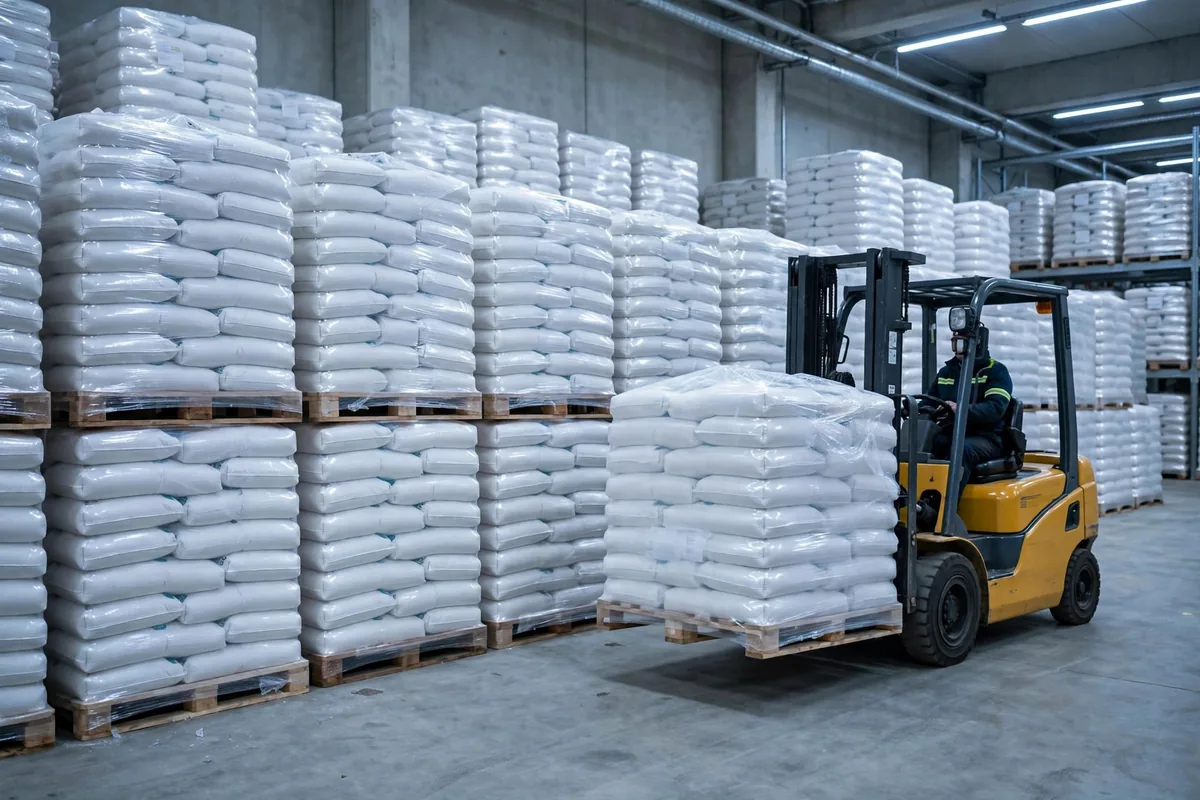
For anyone making Addis Ababa inland warehouse distribution decisions, the real cost was never just the freight rate per kilometre. The bill for inland distribution has at least three lines. The first is the direct cost of dwell and storage: every extra day a container sits in a dry port or a warehouse is a day paid for. The second is the cost of a missed sailing or a missed delivery date, including rebooking fees, the risk of buyer claims, and the premium of switching to road transport at short notice to catch a deadline. The third, and the easiest to underestimate, is the inventory held to cover uncertainty. Two extra weeks of safety stock look like an inventory cost on the surface; in substance, they are an insurance premium paid for the uncertainty of the whole corridor.
| Route to the sea | Best suited for | Relative advantage | Main risk |
|---|---|---|---|
| Rail plus Modjo Dry Port | Large, regular import and export volumes with stable time requirements | High capacity, relatively fixed schedules, well suited to consolidation | Limited by train frequency and the dry port's operating rhythm |
| Road direct to the Port of Djibouti | Small lots, urgent replenishment, cargo beyond the railway's reach | Flexible, door to door, departure time under the shipper's control | Exposed to road conditions, border inspection and capacity swings |
| Diversion through a neighbouring country's port | Specific directions and cargo types as an alternative channel | Spreads the risk of relying on one corridor | Infrastructure and customs arrangements still being developed; check the latest official information |
There is no standard answer in this table. The right choice can differ between two product lines of the same company. Garment exports can be planned in advance and run on the fixed rhythm of rail and dry port, while fresh produce is far more sensitive to cold chain and transit time, so the route has to follow the cargo, not whichever corridor is newest or most talked about.
Three shifts that will decide the next phase
Looking ahead, three shifts are worth watching. First, dry ports are turning from import-oriented facilities into two-way hubs. The consolidation centre and the cold storage facility at Modjo are both signals of that turn, and the ability to consolidate export cargo will become a new measure of a dry port's value. Second, cold chain is closing the gap for fresh produce exports. The cold storage facility at Modjo is aimed squarely at fruit and vegetable exports such as avocados, and once the cold chain runs reliably, the composition of Ethiopia's exports is likely to change with it. Third, as the African continental free trade arrangements advance, a hub like Modjo could grow from one country's gateway to the sea into a regional distribution node. The regional corridor concept mentioned when the expansion opened in September 2026 points in exactly that direction.
Each of these judgements carries conditions: whether train frequency can keep up with the expanded handling capacity, whether document and inspection coordination can match the pace of the hardware upgrade, and whether the regional corridor concept can be turned into concrete customs arrangements. Inland warehousing and distribution in Ethiopia has reached a point where the binding constraint is no longer whether there is a railway or a dry port. It is how much more certainty the whole corridor can gain. And how much inventory, and how much insurance premium, businesses can stop carrying once that certainty improves is a question whose answer will only appear in the next expansion cycle and the next round of trade data.
By Dr. Chen, Supply Chain Researcher