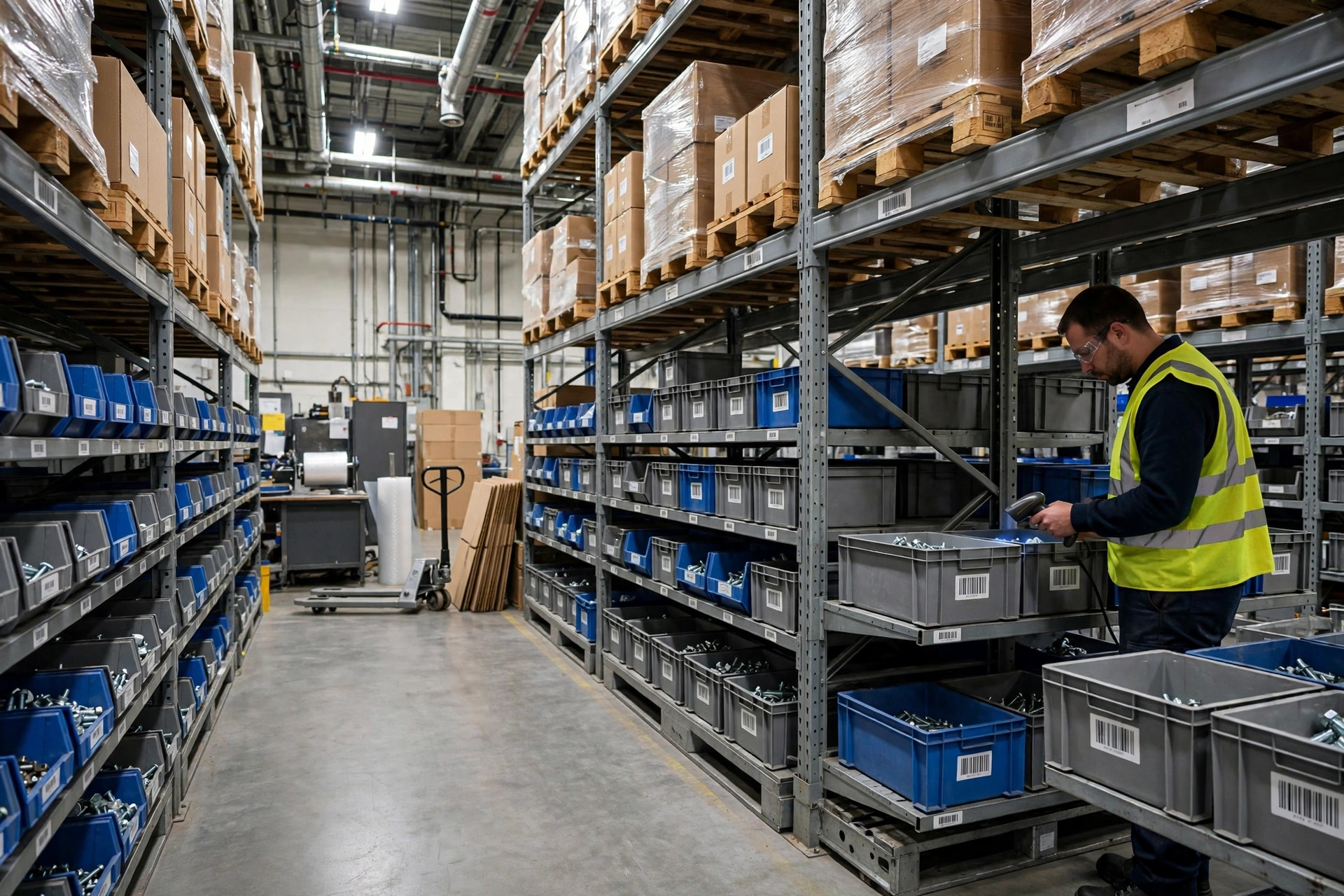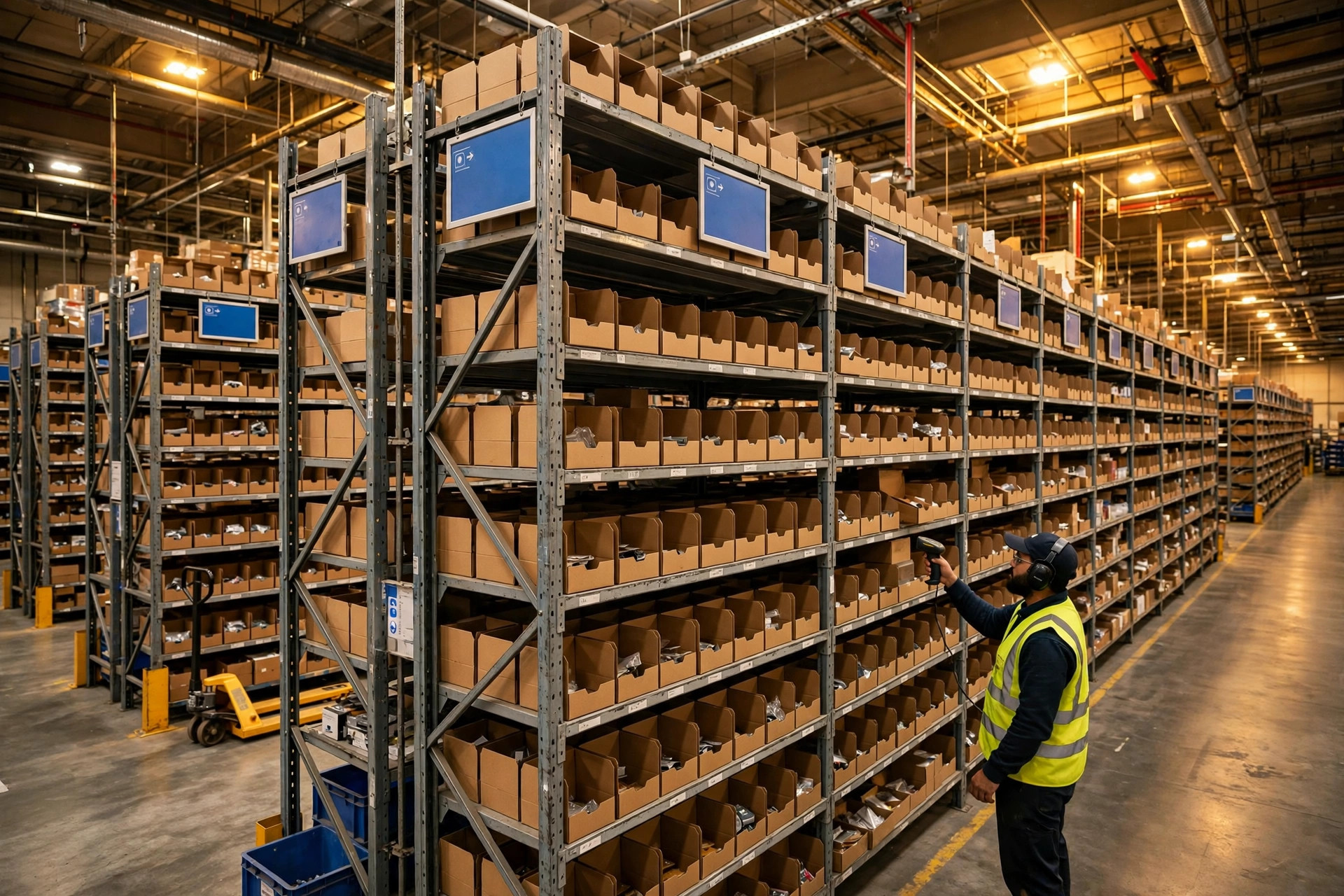
Start with the answer: review your ABC classification every quarter. A-class SKUs get a monthly rank check, B-class follows the quarterly rhythm, and C-class gets swept twice a year for sleepers waking up. New SKUs stay out of the whole system until they've earned a place. If someone asks you "we ran ABC once last year, is it still good?" — no, it isn't. An ABC analysis sitting in a drawer is a souvenir, not a tool.
I'm Lin Xiao, a WMS implementation consultant with 30+ go-lives behind me. I've watched the same movie play out too many times: a warehouse does one heroic slotting optimization at go-live, three months later the demand profile shifts, and bestsellers end up rotting in the cold zone while dead stock squats in the golden pick locations. Reviewing ABC isn't hard. Building the cadence and the trigger mechanism is. Here's the exact playbook I give clients.
The baseline cadence: quarterly reviews, monthly A-class check-ins
There is no universal answer to how often ABC classification should be reviewed — only the answer that fits your building. Start here: quarterly. I've seen this pitfall three times over: a client reviewing once a year discovers after peak season that the entire SKU ranking has flipped and nobody moved a single pallet. On the flip side, another client recalculated monthly and burned so much labor on relocations that the extra moves ate every second of picking time they'd saved.
Find your position in this decision table before you lock in a frequency:
| Dimension | Quarterly review is enough | Consider monthly review |
|---|---|---|
| Active SKU count | A few thousand, stable assortment | Tens of thousands, new SKUs every week |
| Seasonality | Steady year-round demand | Big peak seasons, volume swings several-fold |
| New product rate | Low, slow iteration | New products launched every month |
Most mid-size warehouses are fine on a quarterly cadence. Remember the counterintuitive part: reviewing too often hurts more than not reviewing at all — the labor, the error risk, and the location churn of constant moves will devour whatever picking efficiency you hoped to gain. The goal of ABC review is not permanently optimal slotting. It's slotting that "isn't embarrassingly wrong."
Break it down by class:
- A-class SKUs: check rank drift monthly. A-class is a small share of SKUs driving the bulk of pick lines, so every ranking shift hits efficiency directly. Pull pick-line counts from the WMS each month, re-rank, and flag A-class fallers and borderline climbers.
- B and C-class: follow the quarterly rhythm. B-class is your stabilizer, C-class is the long tail — a quarterly look is plenty.
- New SKUs don't go into ABC at all. Give them a watch zone. Place new products in flexible slots near the pick face for two full selling cycles, then classify. I've seen this mistake three times: a new SKU gets planted in a golden A-slot on day one, flops, and the slot sits wasted for months.
The 4 trigger signals: when to review ABC ahead of schedule
Quarterly is the floor. When any of these four signals fires, don't wait for the quarter — move now:
- Within two weeks after peak season or a major promotion. Promotions shred the SKU ranking: promo SKUs surge into A-class, regular bestsellers get squeezed out. The two weeks after peak are the golden window for a re-review — wait longer and the warehouse just gets used to the new misalignment.
- New SKUs in a single month exceed 5% of total SKUs. New products are the pollutant of ABC analysis. Cross that threshold and the old ranking is fiction — run a full recalculation.
- Replenishment trips to the pick face are climbing. This is the most honest signal a warehouse gives you: if replenishers are running themselves ragged, pick locations no longer match real demand. Too many clients only remember ABC is stale when replenishment work orders double.
- After a dead-stock purge or clearance event. A cleared batch of C-class SKUs frees up slots — the perfect moment to redeploy your best locations. Don't waste it.
And here's the counterintuitive call: the migration signals in C-class deserve the most attention, because nobody watches them. An A-class problem is visible to the whole company; a C-class SKU waking up into a bestseller is invisible. One of my clients had an accessory climb from C-class all the way into the top of A-class while its location sat on the farthest heavy-duty rack — pickers walked hundreds of extra meters a day for it, for three months, and nobody noticed. Each quarterly review, sweep the 50 fastest-rising C-class SKUs. It costs almost nothing, and the payoff is often the highest of the whole exercise.

The 5-step ABC review inside your WMS (a checklist you can copy)
Don't turn reviews into manual spreadsheet work. Any modern WMS has ABC analysis built in. Follow these five steps and two people can finish in an afternoon:
- Lock the data definition and never change it again. Order lines or units shipped as the ABC basis? My recommendation: order lines first (lines drive picks), units as a secondary view. Write it into the SOP and use the same definition every cycle, or this review can't be compared to the last one. I put this in every go-live-night checklist.
- Use a rolling 90-day window. Too short and promotions distort everything; too long and you bury the trend. Quarterly reviews pair with 90 days, monthly A-class tracking with 30.
- Recalculate and output a "migration list," not a full dump. Have the WMS produce three short lists: A-class dropouts, B-class climbers into A, and the 50 fastest-rising C-class SKUs. Read the lists, skip the full detail — full detail is for intimidating people.
- Plan the moves, execute during a freeze window. Schedule relocations for low-activity periods (weekends or night shifts) and freeze picking tasks on the affected locations first, so moves and picks never collide. Run every move through the WMS location-adjustment document with scan confirmation per pallet. No "I remember where it went" moves.
- Cycle-count the moved locations within a week. Relocations create book-to-physical gaps. One targeted cycle count on the moved locations kills the discrepancies before they grow.
Two crash scenes from my own projects
Crash one: a bestseller abandoned in the cold zone for a year. A 3PL warehouse in East China ran its ABC analysis at go-live and never touched it again for a full year. During a health check I found their biggest-volume SKU of the year — hundreds of pick lines a day — still sitting in the deepest bay of the high-bay racking. Every pick needed a counterbalance forklift trip, and each pick took several times longer than from a golden slot. After the re-review and re-slot, that SKU's per-pick time dropped by more than half. The owner's exact words: "If it was this simple, we should have done it last year."
Crash two: promo SKUs squatting in A-class after peak. An e-commerce warehouse selling small appliances stuffed dozens of promo SKUs into A-class pick locations for the big sale, then nobody cleaned up. Three months later those SKUs were doing single-digit lines a day but still holding the best slots, while regular hot sellers got squeezed into secondary zones. The lesson: temporary peak-season slot changes must come with an automatic "expires → re-review" rule, written into the peak SOP with a named owner.
One last word on the trade-off: match your review rhythm to your warehouse's rate of change. A spare-parts warehouse whose SKU mix hasn't changed in three years can review twice a year and call it plenty. An e-commerce warehouse launching new products weekly should treat quarterly as the conservative option. Start quarterly, and after two cycles let the migration list tune the rhythm for you — if two straight cycles show barely any movement, relax the cadence; if every cycle produces a big move list, tighten it to monthly. The data will tell you the answer.
By Lin Xiao, WMS Implementation Consultant