Let me open with a number. Late last year I did a cost review for a 50,000-square-foot distribution center in the Midwest running 4,000 active SKUs. Their annual spend on a single activity — cycle counting — came to about $67,000. Roughly a tenth of their yearly rent. The insult on top of the injury: more than half of it was spent counting the SKUs least worth counting.
They had done an ABC classification. A beautiful spreadsheet — 15% A items, 25% B, 60% C, textbook Pareto. And then the spreadsheet went to die in a shared drive. The count program carried on exactly as before: every SKU counted monthly, no exceptions. Those 2,400 C-class SKUs got their 12 cycle counts a year, every year, without fail.
I asked the warehouse manager: a SKU that ships three times a year — why count it every month? He paused and said, "Peace of mind."
Peace of mind is the most expensive line item in the warehouse.
The real annual bill for cycle counting
Cost a cycle count honestly and you get three layers, not one.
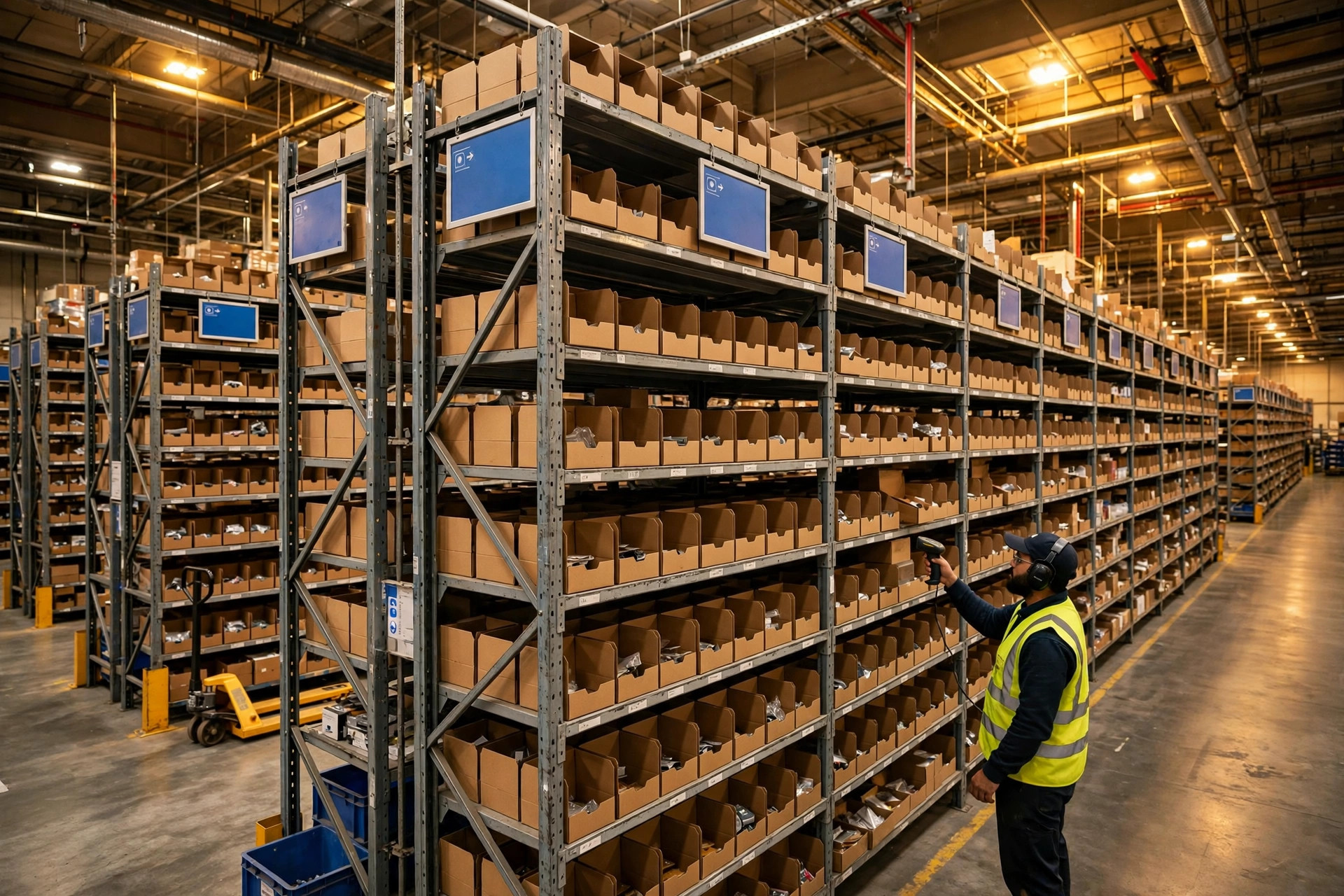
First, direct labor: walk to the slot, scan, count, key it in. Three to five minutes per SKU is the range I keep measuring across facilities — time it in your own building and you'll have your number.
Second, disruption: the slot freezes during the count and picking routes around it. In peak season this layer costs more than the labor.
Third, reconciliation: every variance found triggers a recount, an adjustment, and a root-cause hunt — twenty minutes minimum per variance.
Run their numbers: 4,000 SKUs counted monthly is 48,000 count events a year, of which 28,800 belong to C-class SKUs. At four minutes each and the site's own fully loaded labor rate of $35 an hour:
28,800 × 4 ÷ 60 × 35 ≈ $67,200
Sixty-seven thousand dollars a year, burned on peace of mind. That is the price of managing C SKUs to A-class standards — and note the figure excludes disruption and reconciliation entirely.
The ABC classification bill: why C SKUs don't deserve A-class treatment
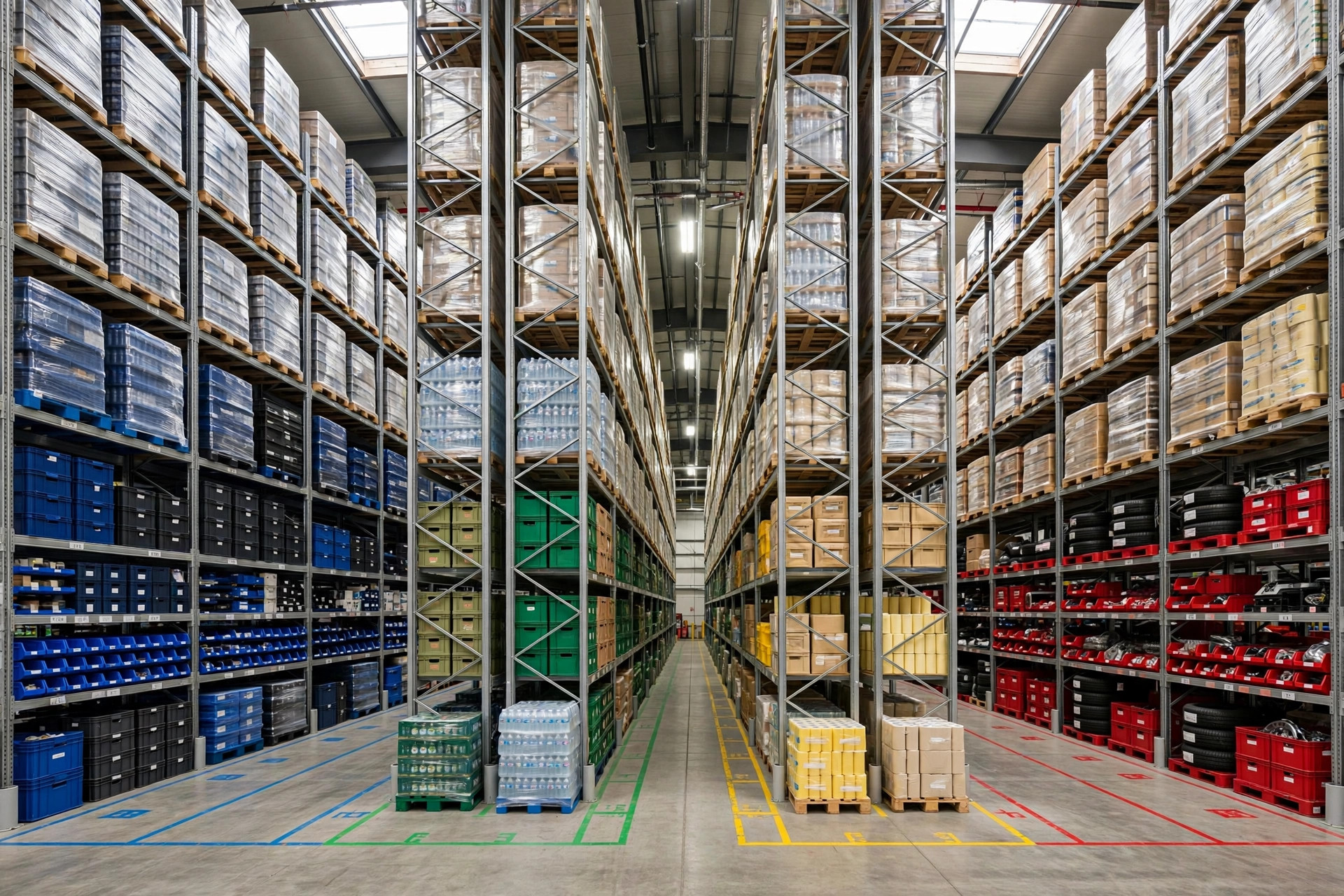
ABC classification exists for one reason: differentiated management. Tight control for A, routine control for B, light control for C. But most warehouses do half the job — they classify, then manage everything identically. The classification spreadsheet and the count schedule are two documents that never meet.
Put the math in one table:
| A items | B items | C items | |
|---|---|---|---|
| Share of SKUs (typical) | 10–20% | 20–30% | 50–70% |
| Share of picks | ~80% | ~15% | ~5% |
| Recommended count frequency | Weekly to monthly | Monthly to quarterly | Quarterly to semiannual |
| Counts per year | 12–52 | 4–12 | 2–4 |
| Slotting rule | Golden zone: ground level, near pack | Mid-level, mid-aisle | High bay, far aisle |
| Variance tolerance | Zero — recount same day | Recount within the week | Batch review |
Same facility, before and after:
Before: 2,400 C SKUs × 12 counts/year = 28,800 events After: 2,400 C SKUs × 3 counts/year = 7,200 events Saved: 21,600 events × 4 minutes ÷ 60 × $35/hr ≈ $50,400/year
Fifty thousand dollars. No equipment purchased, nobody laid off — just a rewritten count schedule. The value of ABC classification is not in the spreadsheet. It is in that fifty thousand.
One trade-off must be stated plainly: cutting C-class count frequency does raise the theoretical risk of inventory inaccuracy. So the answer is not "stop counting C items." It is "count them differently."
Slotting: prime pick slots squatted by slow movers
Counting is the visible bill. Slotting is the hidden one, and the hidden one is bigger.
Second facility: an e-commerce fulfillment center on the East Coast. Before the 2024 peak I walked the floor and found C-class SKUs — slow accessories shipping fewer than 20 times a year — sitting on the two flow-rack rows closest to the pack stations on the ground floor. The A-class bestsellers had been pushed upstairs and to the far ends of the aisles. The pick supervisor complained about peak-season headcount, so I had him run one calculation.
Their pickers averaged 12,000 steps a day — measured on wrist trackers, their own data. A-class SKUs get picked hundreds of times daily, and each pick from a far slot to the pack station added roughly 30 meters of walking. That is 3 extra kilometers a day. With 40 pickers over a four-month peak, the "extra walking" alone burned more than $50,000 a year in labor.
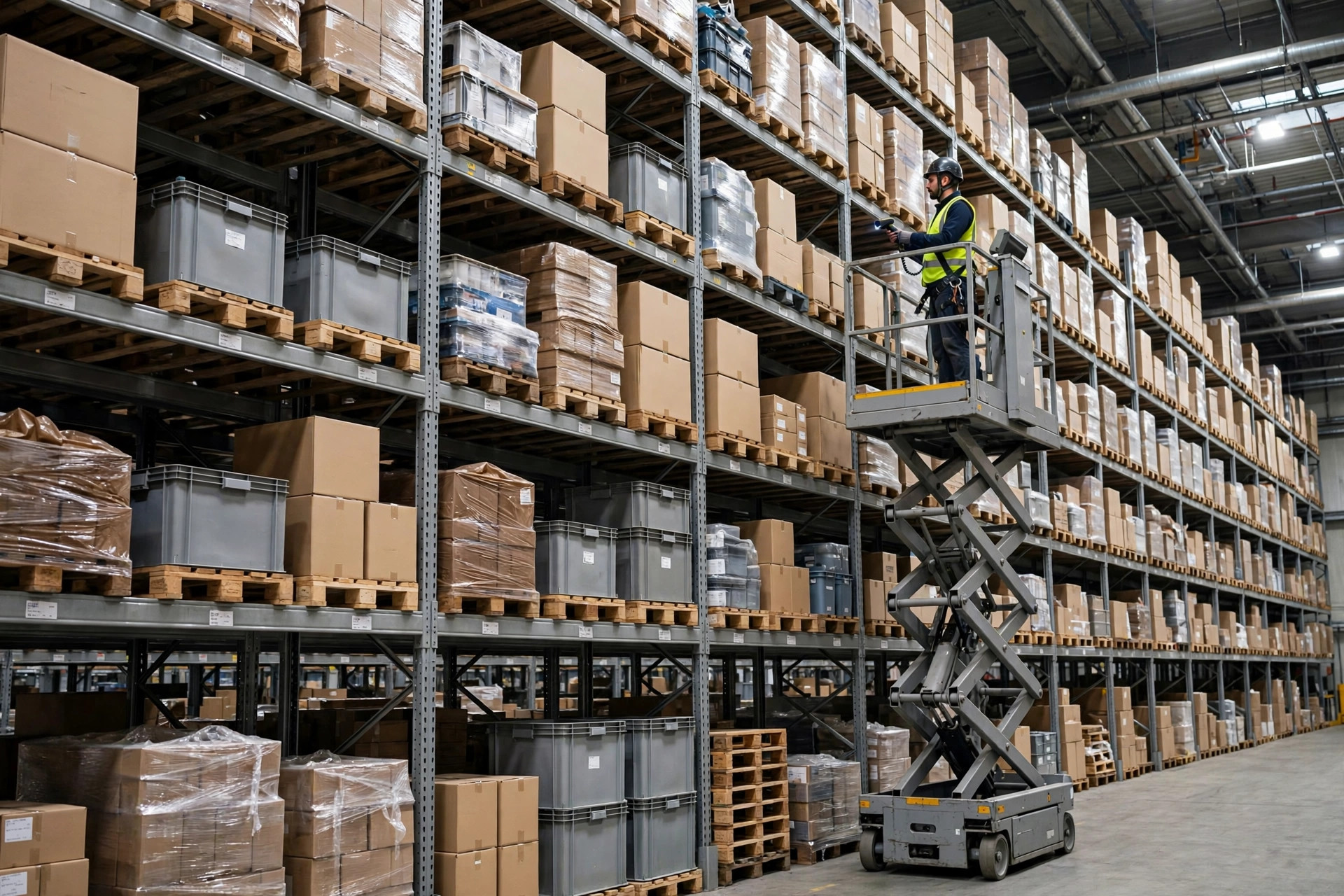
Slotting math comes down to one line: minimize pick lines multiplied by travel distance. Landing ABC on the floor means three rules.
A-class SKUs live on the ground floor, near the pack area, at waist height. They generate eighty percent of pick lines; they have earned the best real estate.
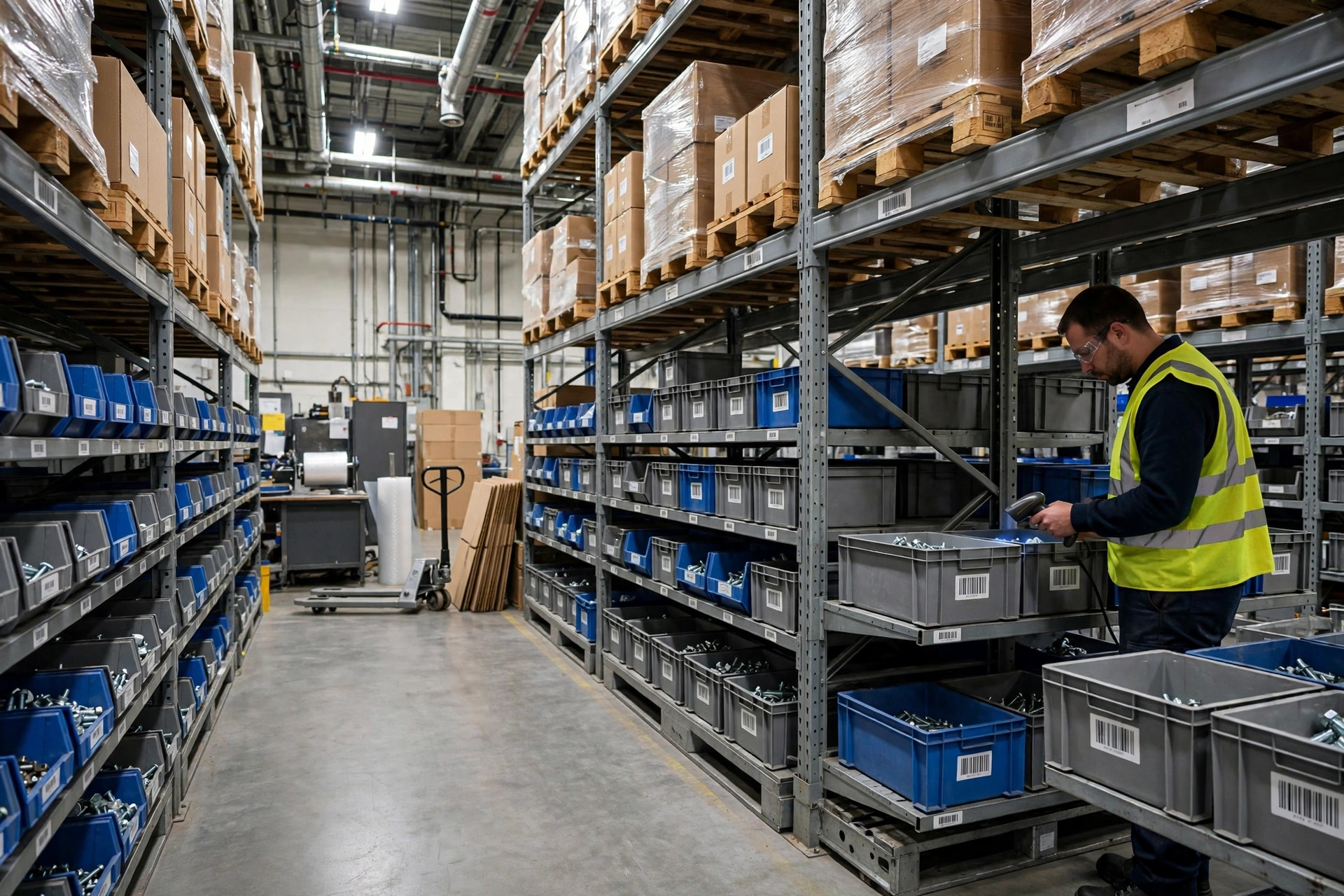
C-class SKUs all go "upstairs": high-bay racking, far aisles, a dedicated slow-move zone, like the photo above — counted in one sweep, otherwise left alone. A C item picked a few times a year walks an extra 50 meters per pick: a few hundred meters a year, a rounding error.
B-class SKUs sit in the middle and move dynamically. ABC is not a one-time exercise; rerun it at least quarterly. Bestsellers fade and long-tail items catch fire.
Counterintuitive: counting C SKUs less can make inventory more accurate
Sounds like contrarian posturing. The math says otherwise.
Most C-class count variances don't come from theft or mispicks. They come from nobody touching the item while the system record keeps changing around it — transfers, returns, and write-offs casually booked against C SKUs. The more often you count, the more often you adjust, and the messier the book gets. I watched one facility count C items monthly and sit at 92% inventory accuracy for years; after switching C to quarterly counts and pouring the freed hours into weekly A-class counts, overall accuracy hit 97% within six months.
The logic is simple: total counting hours are fixed. Spend seventy percent of them on SKUs that drive five percent of shipments, and A-class variances go undiscovered. One A-class variance can mean hundreds of mis-shipped orders; one C-class variance might go unnoticed for half a year. Concentrate firepower on A items and total accuracy goes up.
So the correct C-class posture is three parts: low-frequency counting, rigorous receiving, and dead-stock alerts. Get the quantity right once at receiving — most C-class variances are born at the dock. Sweep them quarterly in the building. Anything with zero movement for two straight quarters goes on the dead-stock list for clearance. The biggest cost of C-class inventory was never the counting. It is capital and slots quietly depreciating.
Three formulas to close. Plug in your own numbers; ten minutes tells you what ABC classification is worth to you:
- Annual counting cost = Σ (SKUs per class × counts per year × minutes per count ÷ 60 × fully loaded hourly rate)
- C-class counting waste = C SKUs × (current frequency − target frequency) × minutes per count ÷ 60 × hourly rate
- Slotting mismatch cost ≈ A-class pick lines per year × extra meters per pick ÷ walking speed (meters/minute) ÷ 60 × hourly rate
If line 2 comes out above $20,000, cut C-class counting to quarterly next week — don't deliberate. If line 3 comes out above $30,000, your A SKUs live in the suburbs, and one slotting project's labor is a rounding error against it.
ABC classification doesn't end in a pretty spreadsheet. It ends in those two lines of savings. Classify without differentiated treatment and you've got a blood test that reads "high cholesterol" followed by another plate of ribs.
By Lao Zhou, Logistics Cost Analyst