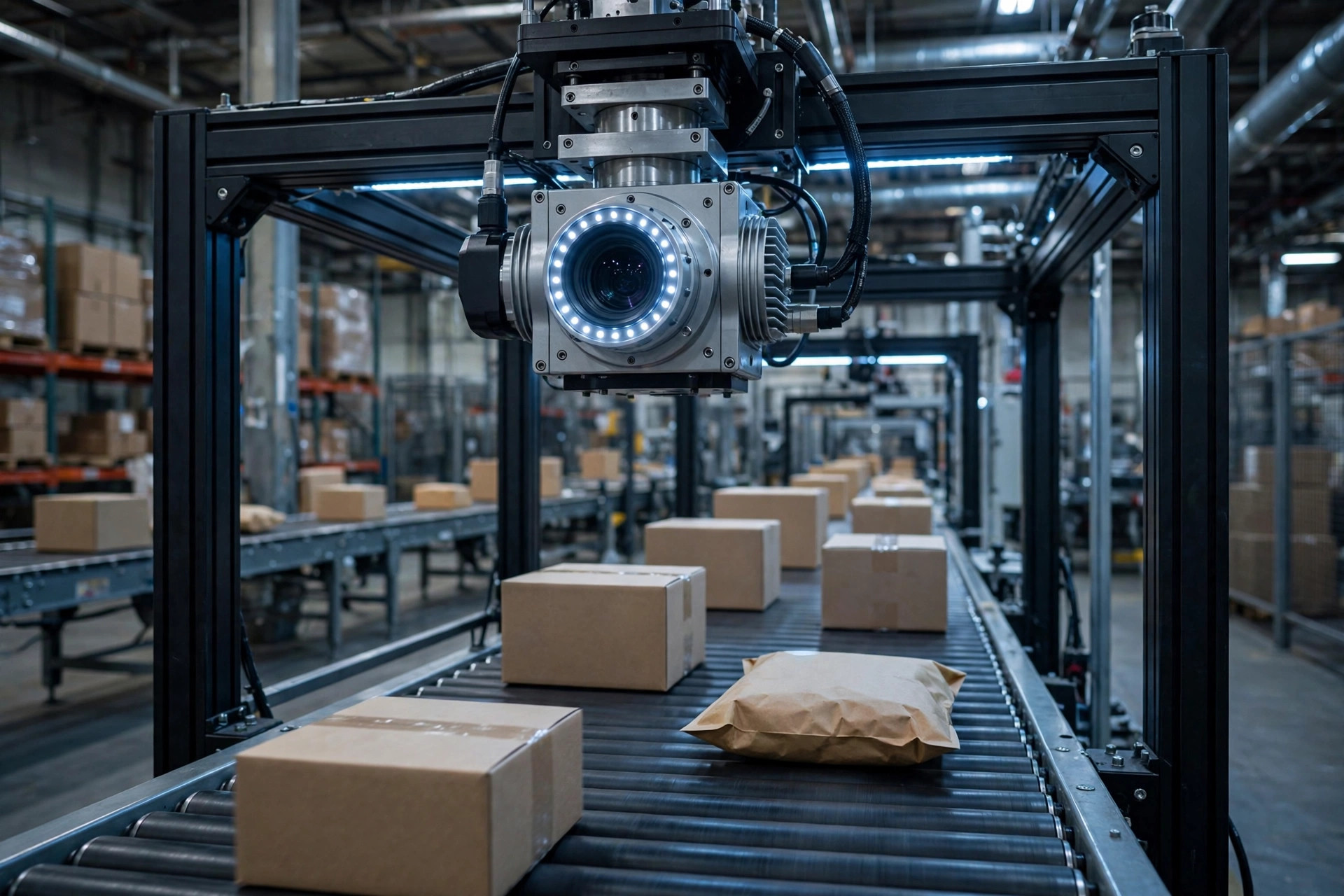
Here's my verdict up front: for more than 90% of warehouse vision jobs, a 2D camera is enough — and it costs an order of magnitude less. 3D cameras are excellent tools, but they solve specific problems; they are not an "upgrade" from 2D. I've watched several operations buy 3D as an upgrade, spend three months on calibration, and end up measuring something a 2D camera plus a pair of calipers could have handled.
What a 2D camera actually sees
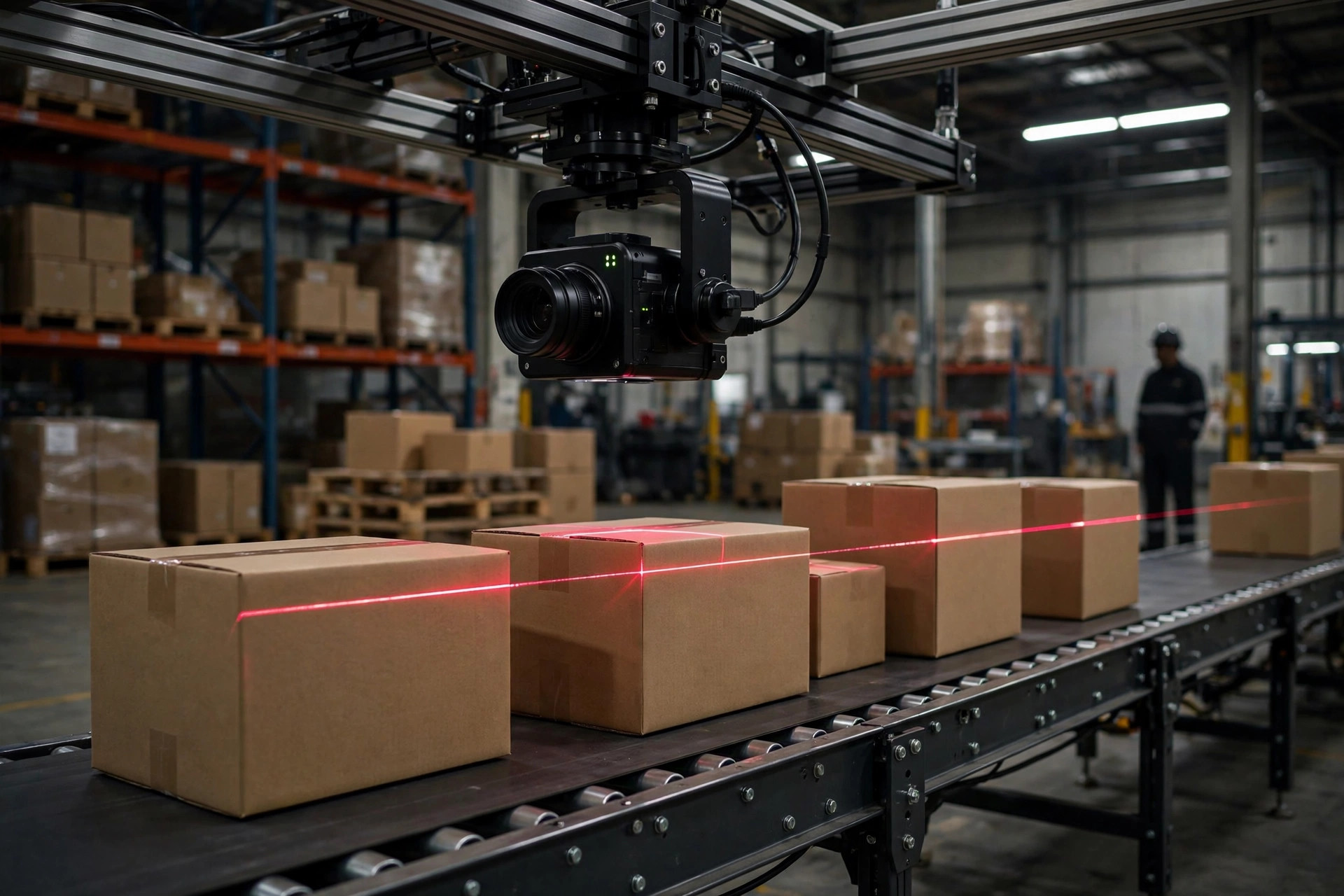
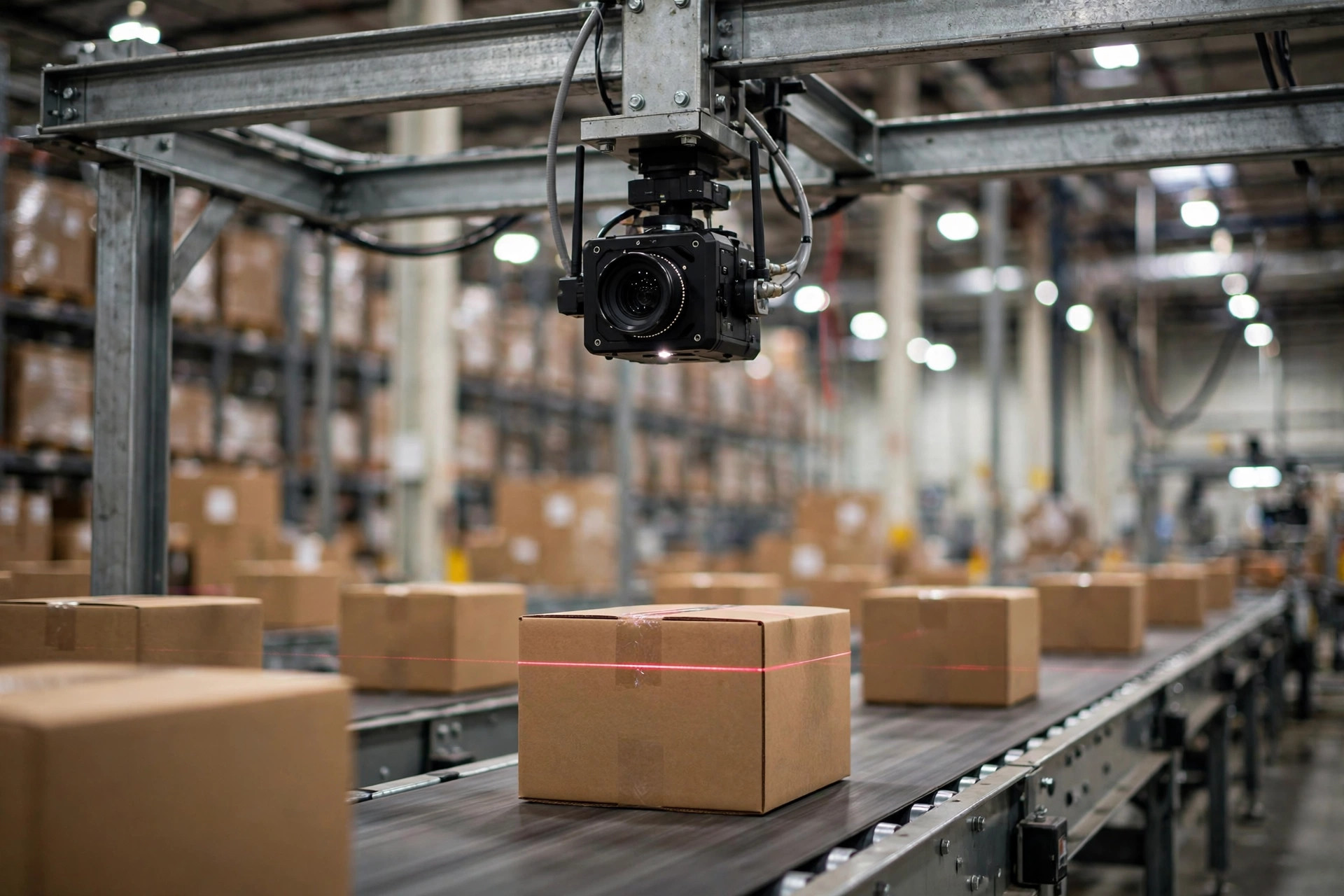
A 2D camera sees contrast on a flat plane. Differences in shade, color, edges, contours — barcode reading, label OCR, presence detection, surface scratches, crooked labels, all of that lives here. The pitch is simple: cheap, fast, easy to tune. A complete 2D barcode station — camera, lighting, mounting — lands for a few thousand dollars, and commissioning is measured in days.
I visited an e-commerce warehouse in Chino back in 2022 running 2D cameras over a conveyor, reading nothing but parcel shipping labels: 30,000 pieces a day, read rates consistently above 99.5%. The whole station cost under $4,000 and paid for itself in the second week — it replaced two shifts of manual scanning. Ask that manager to switch to 3D and he'll ask you: the barcode is printed on a flat surface, what would I do with depth data? He's exactly right.
The boundary is just as clear: 2D can't see height, volume, or "how many layers are stacked here." If your question contains the words "how tall," "how thick," or "how many layers," 2D has hit its limit.
When 3D is genuinely non-negotiable
In my experience, warehouses truly need 3D in exactly four situations:
Dimensional measurement. Dimensional weight billing makes manual L×W×H measurement slow and argument-prone. A 3D camera scans once and all three dimensions come out. A 3D parcel-dimensioning setup in Fontana in 2023 — camera plus software, in the low five figures — cut the operation's dimensional disputes with carriers by more than half within three months. The point wasn't millimeter accuracy; it was that both sides finally agreed on one number.
Palletizing and depalletizing guidance. A robot arm needs to know which layer a box sits on and how many degrees it's rotated. Without depth data, grasping is guesswork.
Fill-level and empty detection. Is the tote empty, is the sort chute full? 2D guesses from color and gets it wrong constantly; 3D reads the height change and gets it right.
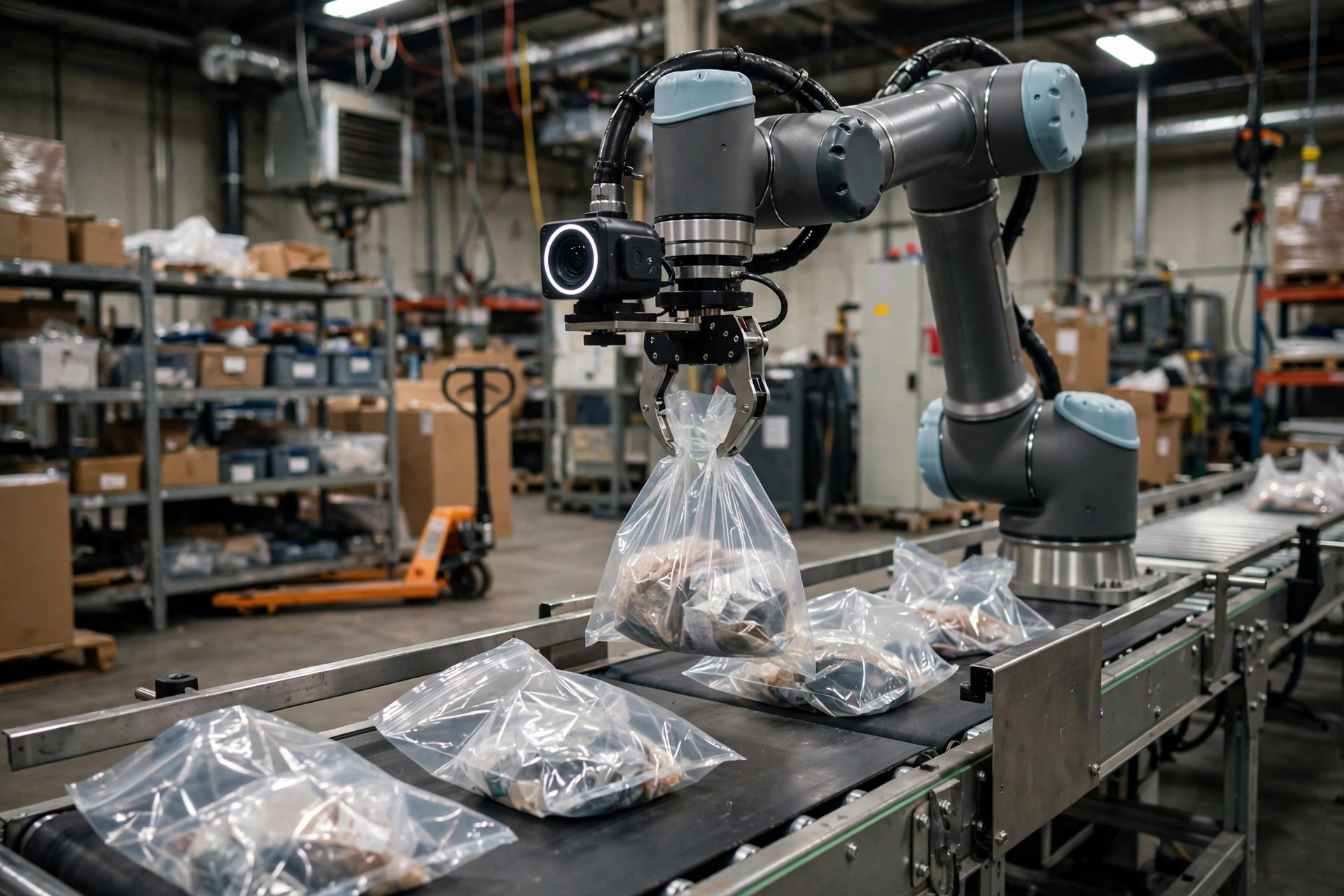
Irregular parcel sorting. Soft packs, polybags, odd shapes — 2D can't even draw the contour reliably.
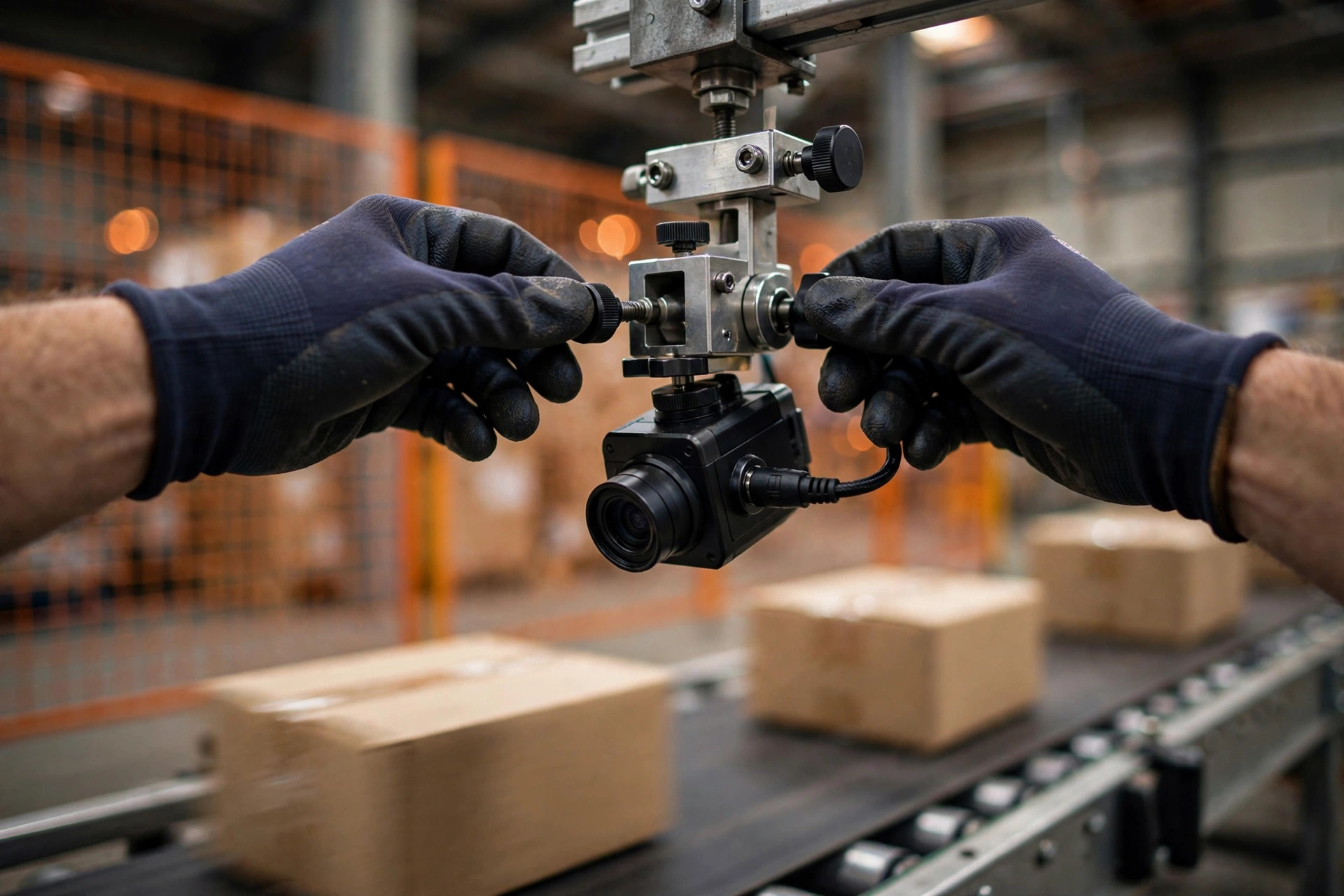
But put the cost of 3D on the table honestly: the hardware premium is only the beginning. Calibration is fiddly, mounting is sensitive, and any change in ambient light means recalibration. I watched one warehouse mount a 3D camera on a beam that vibrated every time a forklift passed — three calibrations a week, until they ripped it out and went back to 2D plus a human check. The technology wasn't the problem; the site conditions were.
There's another 3D trap nobody warns you about: packaging materials. Laser-triangulation 3D systems hate glossy stretch film and clear polybags — the laser scatters or passes straight through, and the point cloud turns into noise. One 3PL I know dimensioned mostly apparel in poly mailers; their expensive 3D station read barely half the parcels until they switched the measurement to time-of-flight, which handles reflective surfaces better but costs more and resolves less detail. The lesson: bring your actual freight to the vendor's demo, not their sample boxes. Your polybag is not their cardboard cube.
And don't forget the compute. A 3D camera is only half the system — the point-cloud processing behind it needs a real machine. I've seen operations pair a five-figure camera with an underpowered controller and then blame the camera for dropped frames at 120 pieces a minute. Budget the compute in the same purchase order, or your "upgrade" will underperform a well-lit 2D station.
Three questions before you sign anything
I've heard every vendor pitch, and they all translate to "buy the future-proof option." Skip the debate and answer three questions:
One: am I measuring flat information or spatial information? Reading codes, reading text, inspecting surfaces — flat, go 2D. Measuring volume, guiding a grasp, reading height — spatial, go 3D. Answer this and most of the decision makes itself.
Two: can I control the lighting? 2D is demanding about light but the playbook is mature — an enclosure and a decent light source and you're stable. Laser-triangulation 3D hates reflective and transparent materials; if your freight is wrapped in glossy stretch film, test with your own samples first and don't trust the brochure.
Three: what throughput do I actually need? Twenty pieces a minute and two hundred a minute are different universes. 3D point-cloud processing eats compute; at high speeds the frame rate falls over, and an expensive camera on a cheap controller still drops frames. Make the vendor test at your takt time and write it into the acceptance criteria.
One more practical note: pilot before you commit. A proper pilot is one camera, one lane, thirty days, with your freight and your lighting — not the vendor's demo kit. Define the pass criteria up front: read rate, false-reject rate, and mean time between recalibrations. If the vendor won't agree to a paid pilot with acceptance criteria, that tells you everything about how the full rollout will go. The cheapest vision project is the one you cancel after a $5,000 pilot instead of after a $50,000 rollout.
On price I'll give orders of magnitude, not quotes: a 2D station typically lands in the low thousands of dollars; 3D starts in the five figures and climbs. Check current vendor pricing for your spec. With that gap, the logic should be "can 2D do the job," not "how impressive is 3D."
Next time a vendor tells you to "go 3D and be done with it," ask one question back: which dimension of my problem is invisible to 2D? If he can't answer, start with 2D — the money you save will buy your commissioning engineer lunch for a year.