Let me be blunt: in Zimbabwe tobacco export warehouse storage, most people who lose money don't lose it in the field. They lose it in the warehouse.
A friend of mine who trades agricultural goods went to Harare for the March 2025 auction season and came back shaking his head. The farmers were working hard in the fields, but the warehouse side was a mess. Grading done by feel, moisture control left to the weather, containers packed by gut instinct. Sound familiar? It's the exact same script as an e-commerce seller blowing up a replenishment order — except here one bad container wipes out a whole year's harvest.
The stakes are real. Zimbabwe produced about 355,000 tonnes of tobacco in 2025, a record harvest, and exported about 243,000 tonnes in 2024 worth roughly 1.4 billion US dollars. China takes about 60 percent of that export value. The opportunity is genuine. So are the traps. I'm not a tobacco insider. I'm a seller. So let me break this down the way a seller would.
Grading Comes First in Zimbabwe Tobacco Export Warehouse Storage
To an outsider, leaf grading looks like a technical skill. To a seller, it's product selection.
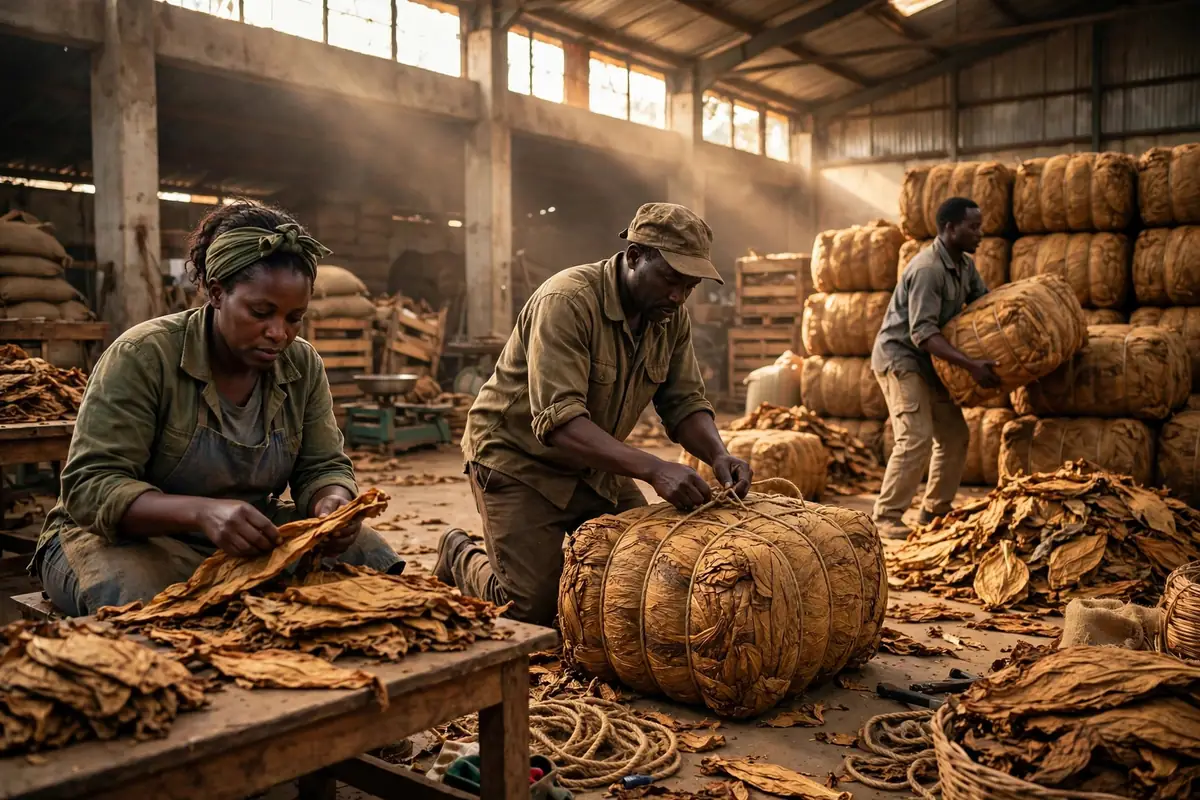
The grading guide from Zimbabwe's Tobacco Industry and Marketing Board is clear about what sets a grade: stalk position, colour, quality, damage, and length. In seller language, that means every lot contains bestsellers and dead stock mixed together. Sell them mixed and the bestsellers get dragged down to the price of the worst leaf, while the dead stock eats your warehouse space.
During the April 2025 auction season, my friend watched a load come in from a contracted grower outside Harare: leaves from the top, middle, and bottom of the plant packed in the same bale. The buyer priced the whole lot at the lowest grade inside it. When the lot was later broken down and re-graded, the same leaves sold for roughly ten percent more. That figure is an illustrative scenario, but the logic is real. Grading isn't an extra step. It's the step that separates your money.
Here's what I'd do. Sort roughly by stalk position as soon as the leaf comes in — don't wait until it's fully dry, because dry leaf shatters when you handle it and your grading losses double. Put a whiteboard in the grading shed and write down each day's numbers: how many bales, how much of each grade. Don't trust memory. And rotate your graders with a daily spot check, because one tired person grading all day starts letting things slide.
Moisture: The Quiet Killer in Zimbabwe Tobacco Export Warehouse Storage
Most people think moisture control means keeping the rain off. Wrong. The real enemy is stale, trapped air.
The same grading guide puts it plainly: mould can't grow below 70 percent relative humidity, but above that line the leaf is in danger. During Harare's rainy season, warehouse humidity sails straight past that number. The cruel part is that mould starts in the middle of the bale. The outside looks fine. You open it up and the smell hits you, and the whole bale gets downgraded.
Here's the counterintuitive part: drier is not better. Leaf that is too dry breaks apart during factory processing, and buyers also read over-dry leaf as harsh. The guide says it outright — over-dry tobacco wastes product and earns a lower price. The goal isn't dry. The goal is stable: humidity held below the mould line, with the leaf still flexible enough to handle.
The Beira corridor learned this the hard way. The port, the depots, the shipping lines, and the fumigators run a joint tobacco beetle task force that meets regularly, because beetles travel with the cargo. Beetles and mould are the same alarm bell: your storage conditions have slipped out of control. By the time you see the insects or smell the mould, the money is already gone.
The seller's fix is cheap. Hang two or three hygrometers in different spots in the warehouse and write the readings down twice a day. If the numbers climb three days in a row, don't wait — ventilate, and raise the bales off the floor first. A few cheap meters protect a whole container of stock.
Consolidation: How to Share a Container to Beira Without Regretting It
Harare to Beira is about 600 kilometres by road, one to two days by truck through the Forbes border post into Machipanda, Mozambique. It's the shortest way for Zimbabwean leaf to reach the sea. Short doesn't mean smooth — border queues can stretch for days, and the port gets congested in peak season. Beira is spending about 290 million US dollars on modernisation, aiming to lift container capacity from around 300,000 to about 700,000 boxes a year, but until that work lands, the congestion is real.
Here's how I'd think about consolidation. The table below is a hypothetical worked example to show the structure, not real quotes:
| Option | What you do | Upside | Risk |
|---|---|---|---|
| Full container, direct | One shipper fills a 40-foot box | Lowest unit cost, no waiting on others | Small lots wait, cash sits in the warehouse |
| Two shippers sharing | Two similar-grade lots share one box | Shared freight, flexible sailing | One shipper's problem delays both |
| Loose consolidated cargo | Small lots shipped loose | No need to wait for a full load | Repeated handling, more breakage and odour risk |
A standard 40-foot container holds about 67.7 cubic metres and carries about 27 tonnes. Tobacco is light cargo, so work out before loading whether you'll run out of space or weight first. My rule is simple: if you have enough for a full box, don't share. If you only have half a box, share with a lot of similar grade heading to the same destination — not just anything that fits. Consolidation isn't about splitting freight. It's about sharing risk, and if your partner's cargo has a problem, yours gets held up too.
And one piece of seller's honesty: don't hold your leaf in the warehouse waiting for a better price next auction season. Leaf sitting in storage doesn't appreciate. It breeds beetles, grows mould, and loses grade. Selling two weeks early for a little less beats selling a month late with the whole lot downgraded. Holding stock for a price rise is a stock-market logic, not a seller's logic.
In the end, Zimbabwe tobacco export warehouse storage comes down to three things: grade carefully, keep humidity steady, and consolidate smartly. None of it is glamorous. None of it needs fancy technology. But those three things decide whether your container makes money or loses it. This trick works — I've tested it myself. Not in a tobacco field, but in an e-commerce warehouse, after making enough of these mistakes to recognise the same maths wearing a different uniform.
By Ah K, E-commerce Seller (5 yrs)