Zimbabwe tobacco export warehouse logistics taught me one expensive lesson in five years selling into the trade: most people do not lose money on sourcing. They lose it in the warehouse. Storage, grading, and the long road to the port decide the margin, not the buying. The leaf gets bought at the auction floor, everyone celebrates, and then it sits in storage getting damp, going mouldy, or getting mixed up with the wrong grade. By the time it reaches the port, the buyer discounts it, and a whole season of margin is gone. Zimbabwe tobacco export warehouse logistics is where this business is actually won or lost, and the numbers show why the stakes are so high. The 2025 marketing season moved 352.7 million kg of leaf worth $1.2 billion, at an average of $3.32 per kg, up 52.7% in volume on 2024. That is a huge pile of leaf, and every kilogram of it passed through somebody's warehouse.
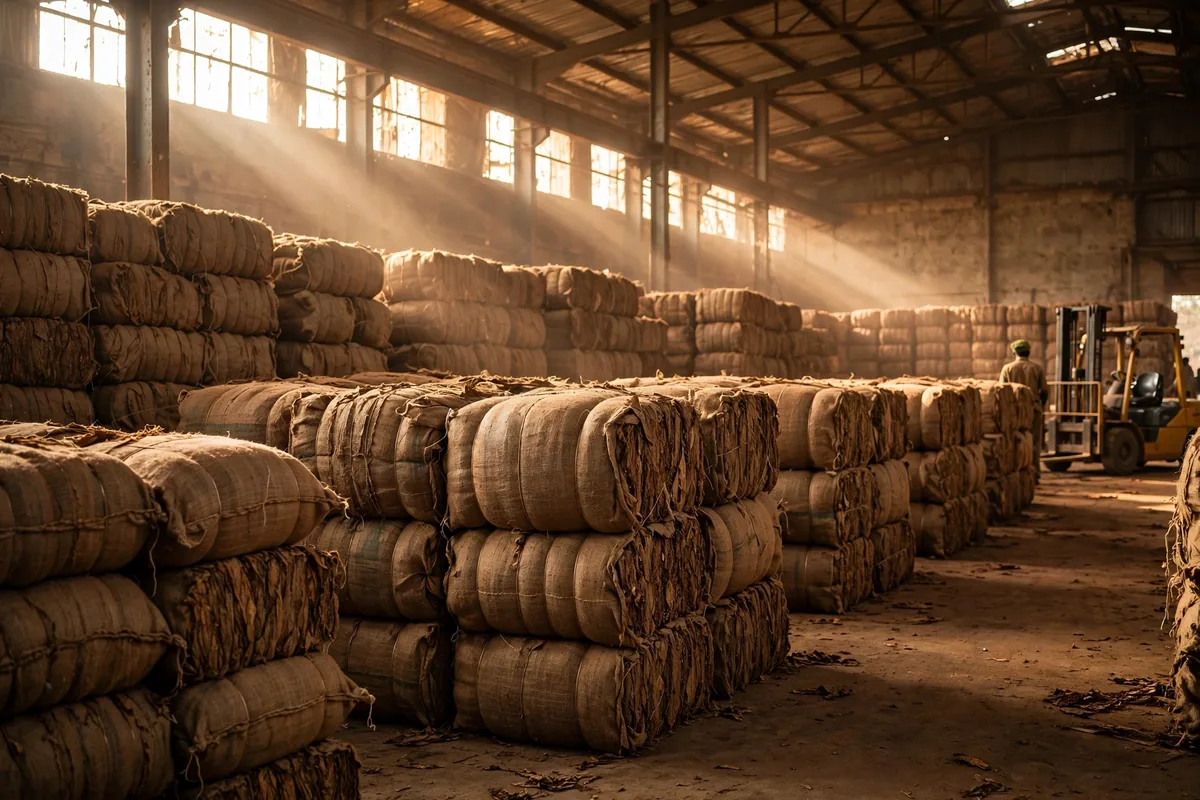
Start at the auction floors. Zimbabwe sells its leaf two ways: contract growing and the auction floors. More than 93% of the crop is grown under contract, with farmers signed up before planting, and the rest goes through the floors. Harare has three big ones, TSF, PTAF, and ESF, and the season opens in March. When it peaks, it is chaos in the best sense of the word. On May 9, 2025, a single day saw 7.2 million kg change hands, a record. Trucks queued outside the gates, bales stacked like small hills inside, and graders flipping through bale after bale. That one day tells you everything about the rhythm of this trade: the leaf does not arrive in a smooth flow. It comes in pulses, hundreds of bales in a few days. If your warehouse and your crew are sized for the average day, the peak days will bury you.
The first job after buying is grading and packing, not celebrating. Leaf is graded by stalk position and quality, and the price spread is brutal. The 2025 average was $3.32 per kg, but prices ranged from $6.30 at the top to $0.10 at the bottom. Mix a few low-grade bales into a shipment and the whole container gets priced down. I watched a fellow trader skip re-grading to save time, ship a container priced as mid-grade, and get settled at the lowest grade after the buyer opened a few bales for inspection. The money he lost on that one container would have paid six months of warehouse rent. Grading is not a cost you can cut. Whatever you save comes back doubled.
Zimbabwe tobacco export warehouse logistics: what the leaf fears most in storage
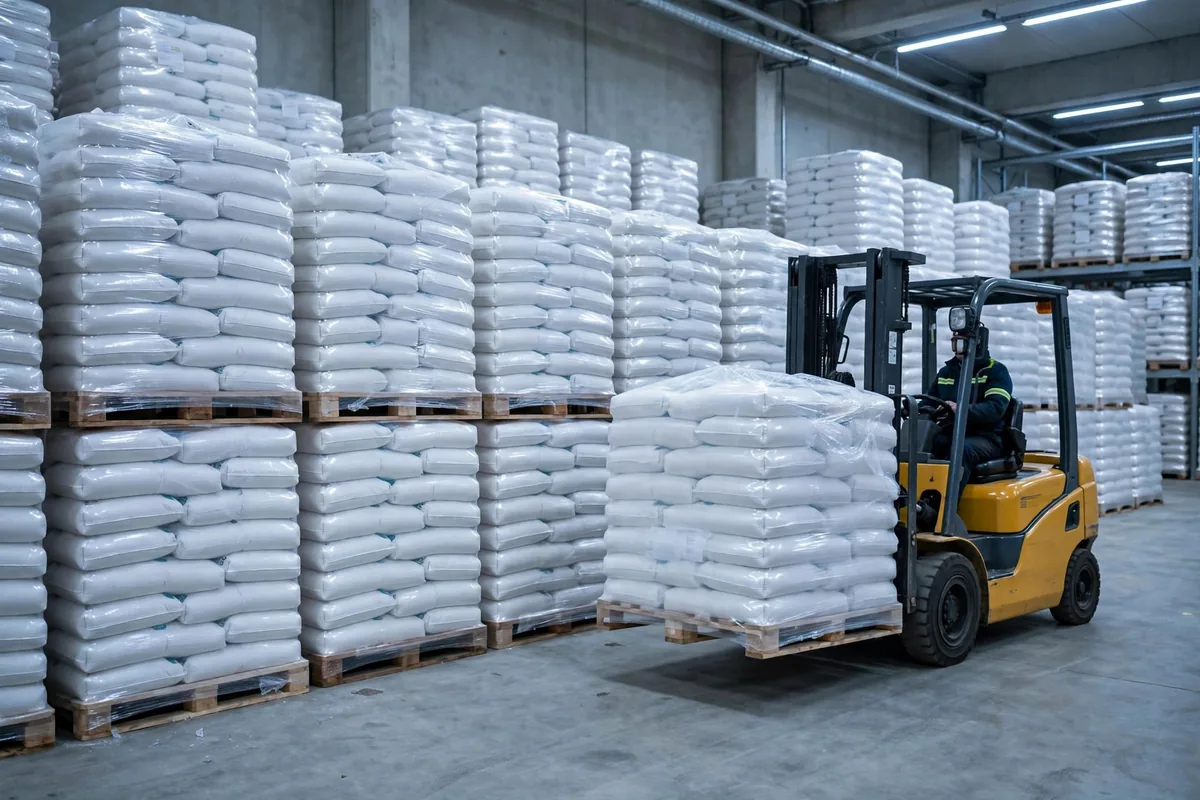
Leaf fears two things: damp and still air. That is the first rule of Zimbabwe tobacco export warehouse logistics, and it is the one that costs newcomers the most money. Zimbabwe's rainy season pushes humidity up, and a poorly ventilated warehouse lets the centre of a bale heat up. Once it heats, it moulds. Mouldy leaf is not a discount problem, it is a write-off. No buyer takes it. So the first rule of choosing a warehouse is not the cheapest rent, it is dry and ventilated, with bales off the ground. Every bale goes on a pallet, at least a hand's width off the floor, with air gaps between stacks and a walkway along the walls. Ground damp is the most common cause of mould I have seen, and I have watched a whole bottom layer of a stack get written off because someone skipped the pallets to save time.
The second fear is mixing. Different grades, different seasons, and different contracts must sit in separate stacks, labels facing out, readable at a glance. During the auction peak, hundreds of bales come in a day, and a tired crew will mix stacks. You only pay for that mistake at dispatch, when finding one bale means tearing half the warehouse apart and the loading runs late. The ship at the port does not wait. My method is embarrassingly simple: a handwritten card on every stack with grade, quantity, and date in, and first in, first out. Five years, zero mix-ups.
The third fear is insects and rats. Leaf is farm produce, and the longer it sits, the sooner tobacco beetles find it. Regular inspection is not optional. A stack showing signs of infestation gets isolated the same day, not after it spreads. Fumigation and pest control cost almost nothing next to writing off a container.
Zimbabwe tobacco export warehouse logistics: where the money actually goes
Here is the part most newcomers get wrong. In 2024, Zimbabwe exported about $1.3 billion of tobacco, and 94% of it was unprocessed leaf. Local processing sits at only around 10%. China is the biggest buyer, and the Far East takes more than half of export volume. That means the chain is long: auction floor, warehouse, grading and packing, inland transport, border crossing, and loading at the port. Zimbabwe is landlocked, so leaf travels by truck or rail across a border before it ever sees a ship, and that inland leg is where schedules fall apart. Border queues, missing paperwork, and bad roads in the rainy season can each cost you a sailing.
Do not budget by freight alone. Here is a sample breakdown for a 20-tonne lot, from floor to port, to show where the money goes in Zimbabwe tobacco export warehouse logistics. These figures are a hypothetical example to demonstrate the costing method, and actual rates should be checked against the latest official policies:
| Step | Assumed cost | Note | | Floor handling and short storage | $800 | Peak-season space costs more | | Grading, packing, and pallets | $1,200 | Grading labour is the big item, and it cannot be skipped | | Warehouse rent, damp and pest control | $600 | Based on two months in storage | | Inland transport to the port | $2,500 | Long road leg, border waiting time extra | | Export documents and inspection | $500 | Missing papers trigger demurrage | | Total | $5,600 | About $0.28 per kg |
The counterintuitive part is that storage and grading look like small money, but they decide whether you capture the export price at all. In 2024, farmers received an average of $3.43 per kg, while the average export price reached $5.71 per kg. That gap of more than $2 per kg has to cover processing, grading, logistics, and losses. Whoever keeps storage losses lowest takes the biggest slice of that gap. Lose 5% of a shipment to mould in the warehouse and you have sliced a big chunk off your margin. In this trade, the warehouse is not a cost centre. It is a profit centre, which sounds wrong until you run the numbers.
One more thing people miss: the target keeps rising. The 2025/26 season target is 400 million kg, well above the 352.7 million kg sold in 2025. More leaf means more pressure on floors, warehouses, and trucks. Book storage early, book transport early, and have pallets and damp-proofing ready before the season opens. By the time the May peak arrives, the good warehouses and the good trucking are already taken.
Three Mistakes That Hurt the Most
The first mistake is budgeting on the average price. An average of $3.32 sounds fine, but if your leaf is mostly lower stalk positions, your real settlement price can be half that. Ask for the grade mix before you buy, and never build a budget on the average alone.
The second mistake is picking a warehouse on price. Cheap warehouses usually sit low, drain badly, and ventilate worse. The rent you save will not cover one stack lost to mould. Check drainage and airflow first, price second. That order is not negotiable.
The third mistake is leaving paperwork to the last night. Tobacco is a regulated product. Export documents, inspection certificates, and certificates of origin all have to be in place, and one missing paper stops the shipment. Run the paperwork alongside the goods, and check the document list on the day the leaf enters the warehouse, not the night before loading.
Zimbabwe tobacco is a real opportunity. A 352.7 million kg season worth $1.2 billion, with Chinese buyers still ordering heavily, is not a small market. But it tests whether you can manage goods, not whether you can find them. From the auction floor to the port, every day the leaf sits in your hands, the warehouse is either making you money or losing it, and that is Zimbabwe tobacco export warehouse logistics in one sentence. The move that works for me, tested over five seasons: run your warehouse like a second auction floor. Grade, humidity, stack position, paperwork, checked every day. When the container reaches the port, you will know the effort paid off.
By Ah K, E-commerce Seller (5 yrs)