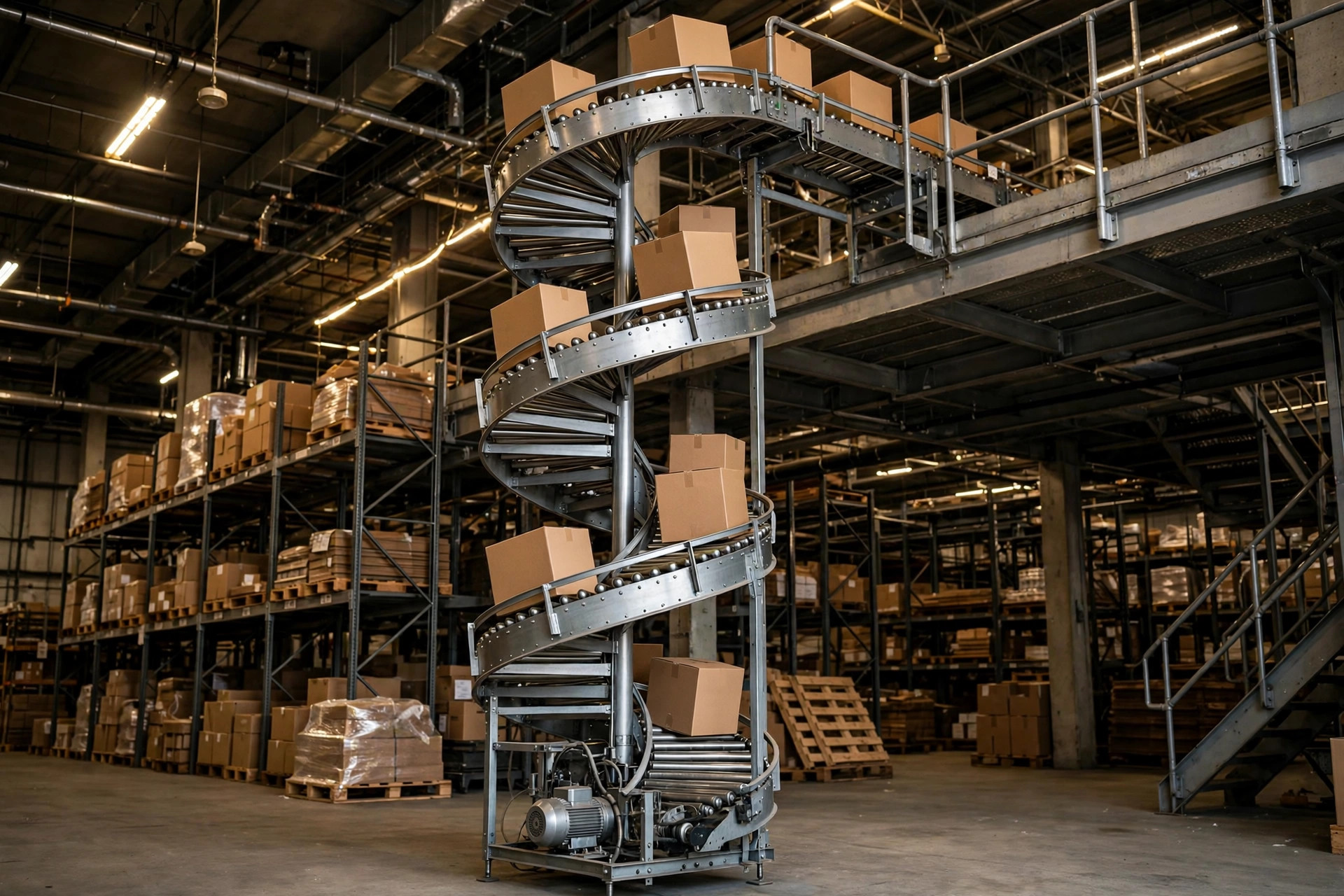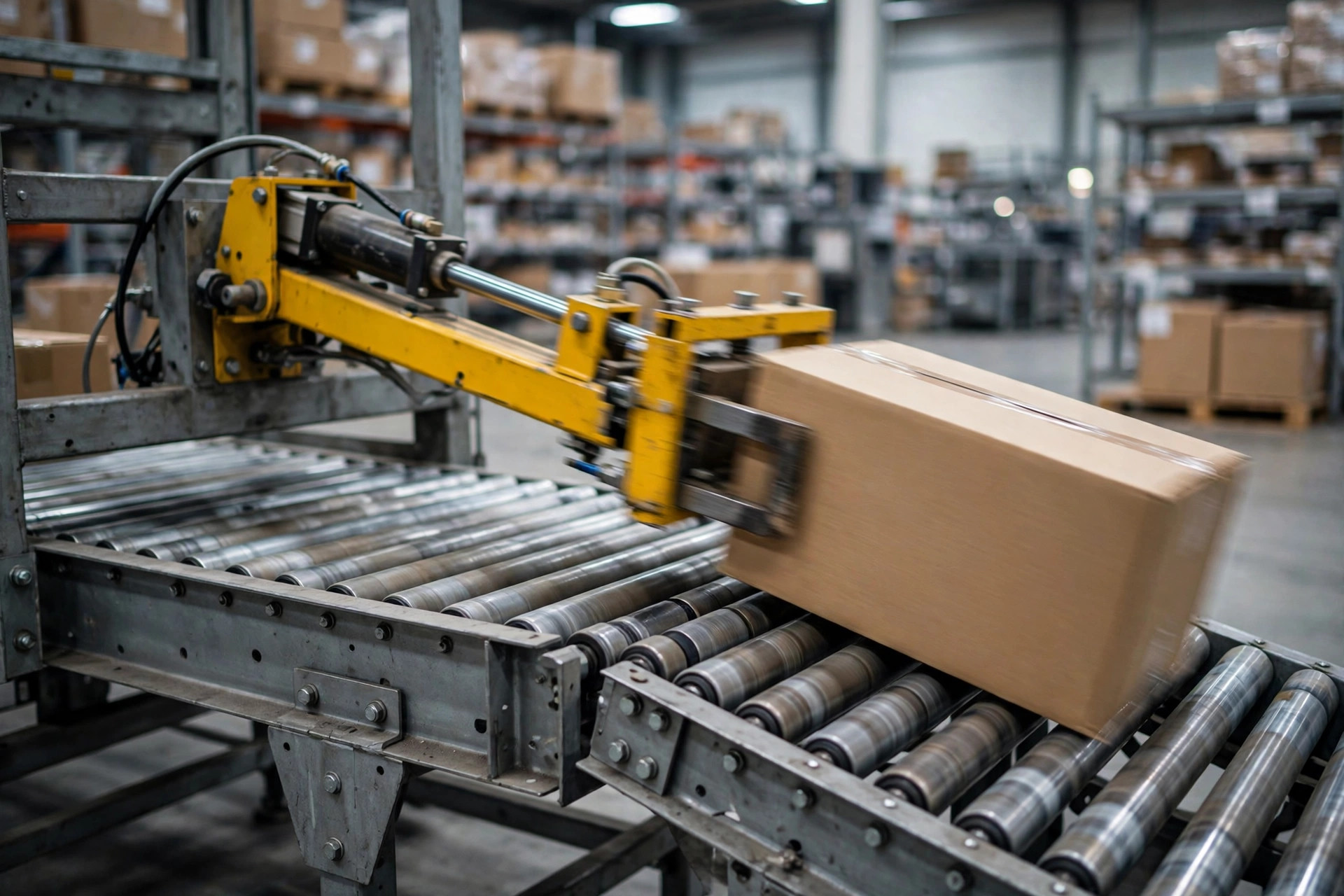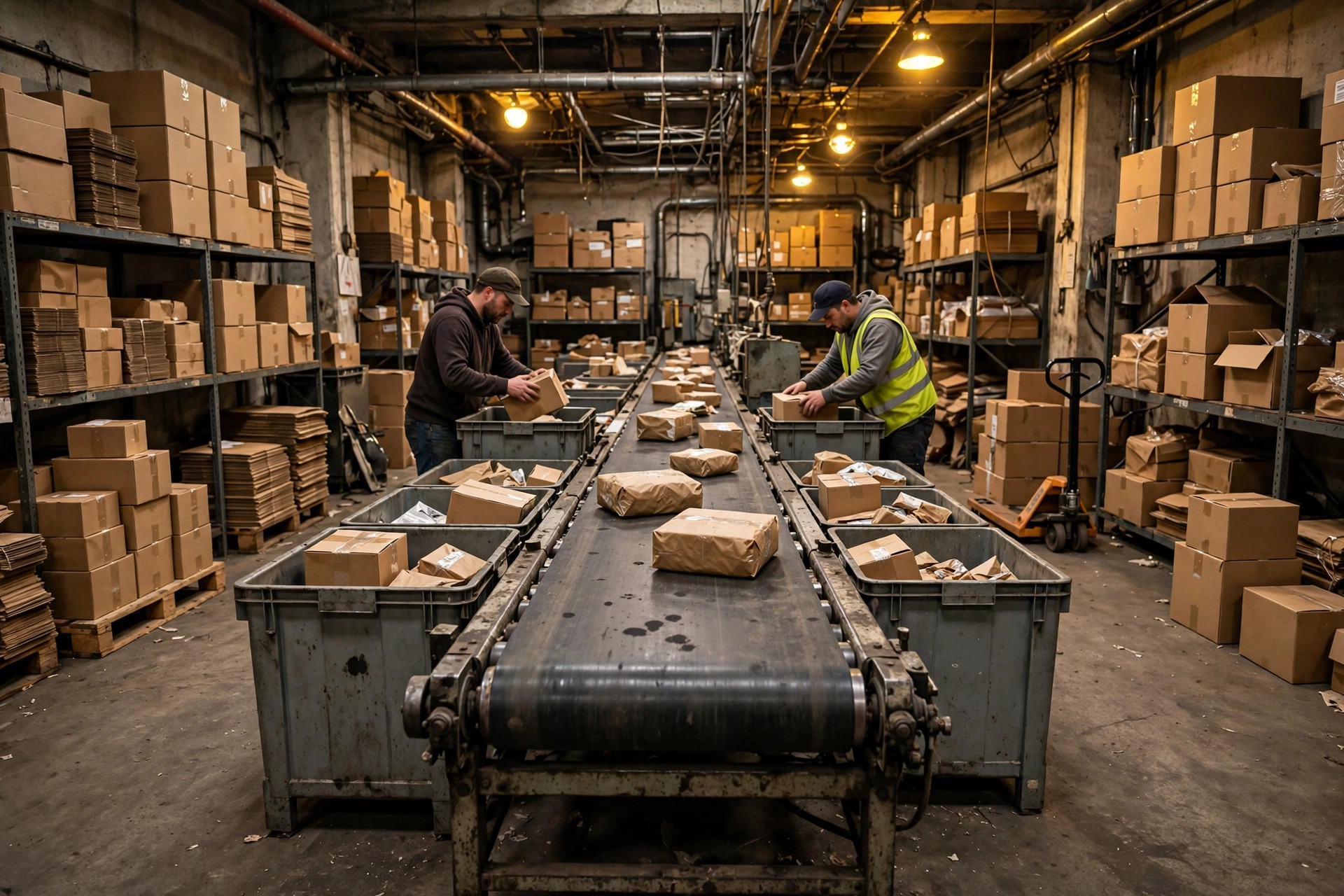
One fall afternoon in 2022, I walked into a 3PL warehouse in Ontario, California — 120,000 square feet, pushing 15,000 orders a day in peak season. A crowd had gathered at the end of the sort line. Cartons had rear-ended on the conveyor: seven or eight boxes jammed into each other, the lead carton crushed out of shape, split open along the side, two mugs inside in pieces. The ops supervisor told me it was the third time that week, and the damage claims were eating him alive.
But broken product wasn't even the worst of it. Squeezed together, every shipping label sat crooked. The scanners misread one after another, mis-sorts piled up at the divert, and hunting down each mis-sorted carton burned three extra labor-hours a day.
That line was plain powered roller conveyor — no accumulation logic at all. Cartons queued up at the sorter while the ones behind kept driving forward, each shoving the next. That's line pressure. And here's my verdict: anywhere your line has to queue — waiting on a sort, a label applicator, a trailer — rear-ending isn't bad luck. It's physics. It won't get better on its own, and peak season only makes it uglier.
Why cartons rear-end: understanding line pressure
Powered roller has one stubborn trait: the rollers never stop turning. A carton hits the blockage and stops, but the carton behind it keeps getting driven forward — one shoving into the next until the whole queue is one compressed snake.
The damage comes in three flavors, ranked by how much they hurt. Worst is crushed product — light, crushable cartons suffer most; the box deforms and whatever's inside pays for it. Next is label damage: squeeze a carton and the shipping label wrinkles or skews, scan rates fall off a cliff, and sortation falls back on human eyes. Least painful but most annoying is a jammed line: a carton tips sideways in the pile-up and the whole line stops until someone walks over and stands it back up.
At that Ontario building, peak-season misreads were so bad they stationed two people at the divert just to re-verify scans. Two people, a whole peak season — wages and overtime that would have bought several sections of accumulation conveyor. I ran the math for the supervisor on the spot. His face said the rest.
What zero-pressure accumulation actually accumulates
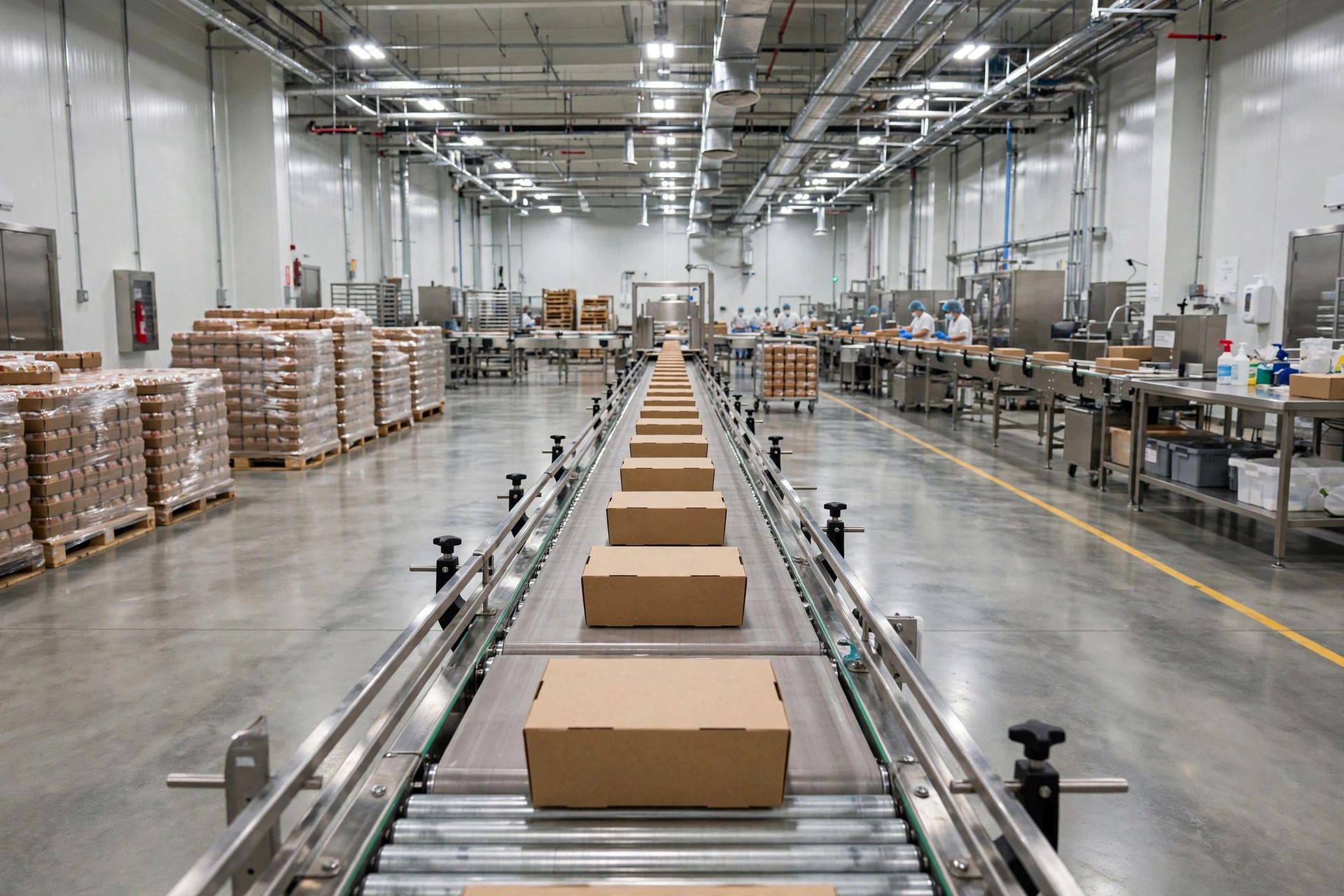
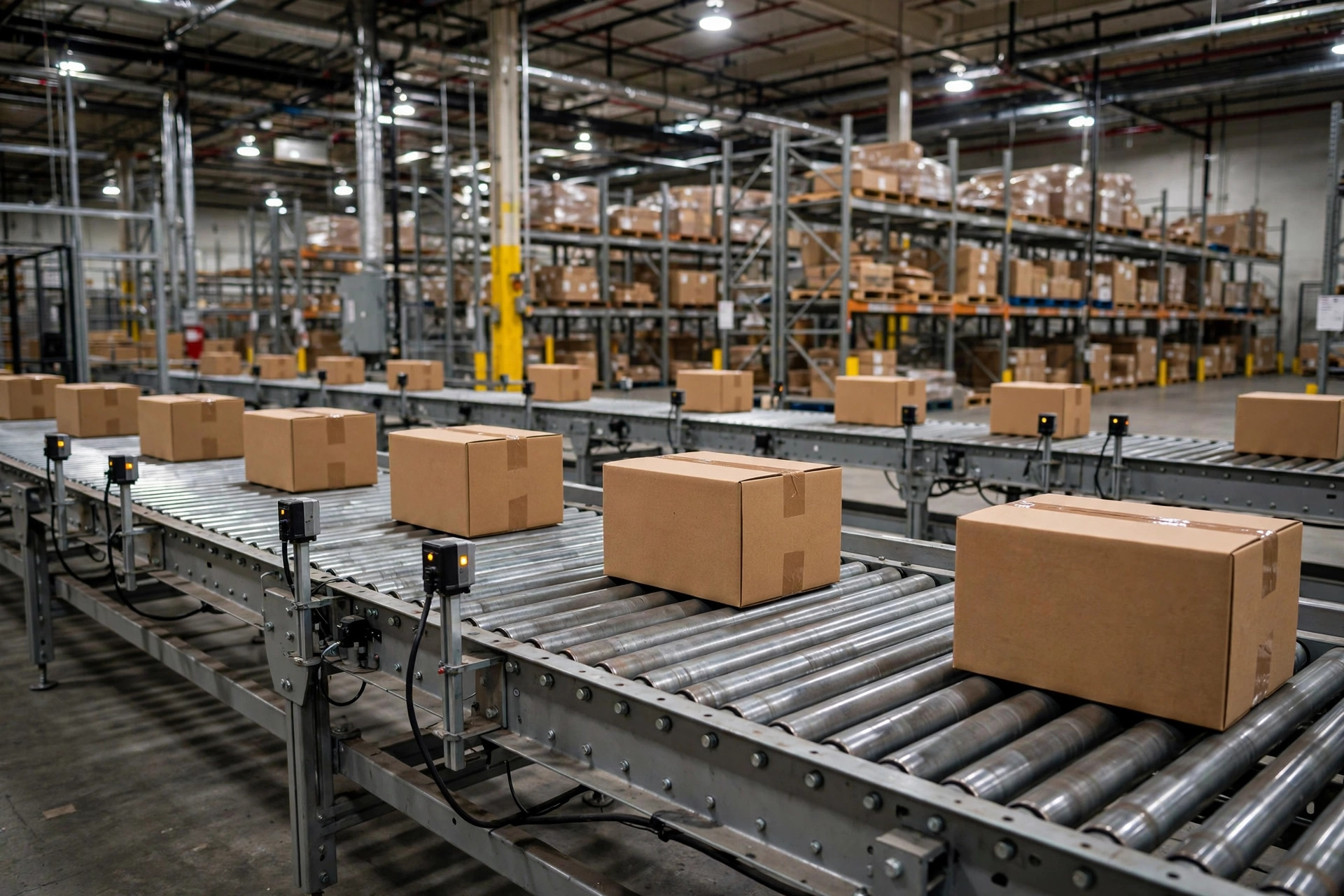
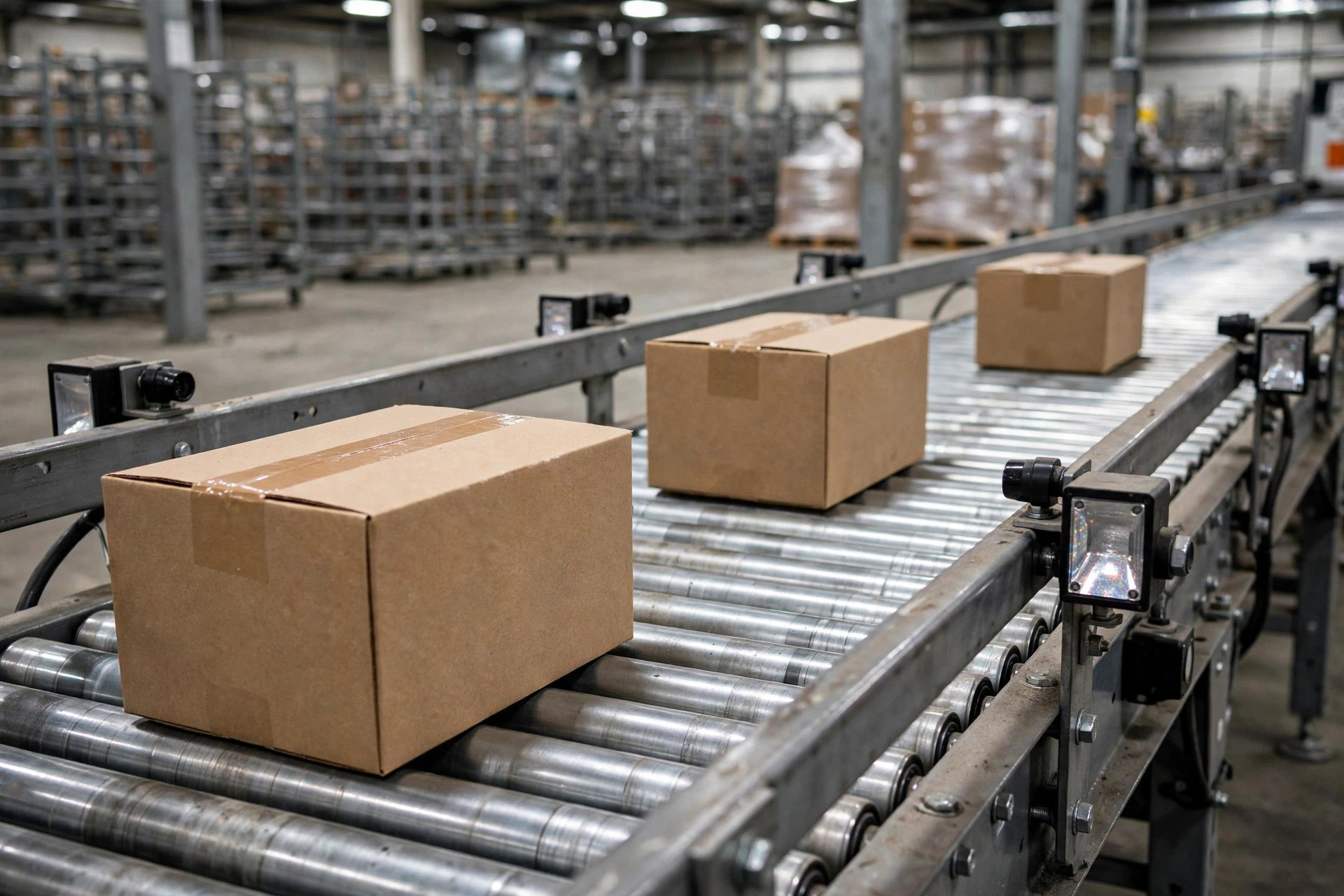
The name sounds fancy; the idea is one sentence: slice the conveyor into independent zones, each with its own drive and its own start/stop. If the downstream zone is occupied, the upstream zone holds. When downstream clears, upstream releases. Every carton gets its own room, never touching its neighbor — hence zero pressure.
Note the wording: zero pressure, not zero gap. Zones need breathing room so the trailing carton only starts after the lead carton has fully cleared the zone. Plenty of people get this backwards, pack zones tight, and end up right back at rear-ending.
Four configuration decisions, in order — and the order matters.
Zone sizing comes first, and it's the single most important call in the whole setup. Each zone must run a bit longer than the longest carton on your line. Oversize the zone and you're wasting money; undersize it and a long carton straddles two zones and the control logic falls apart. Measure your cartons first, then size your zones — never the reverse.
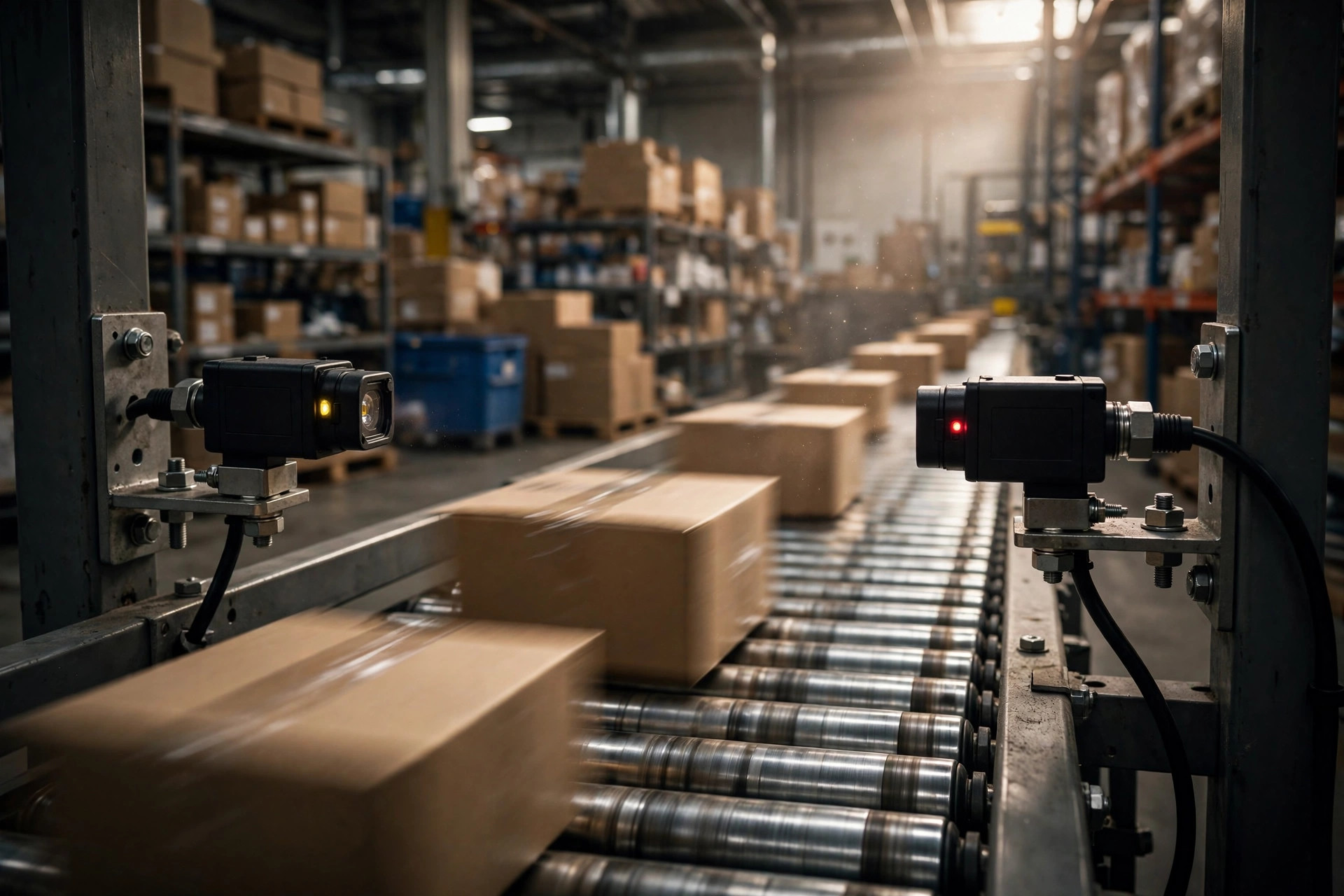
Next, sensor placement. One pair of photo-eyes per zone, answering a single question: is this zone occupied? Two field lessons here. Aim at the middle of the carton body, not at the seams. And if your operation uses a lot of light-colored or clear tape, test on the floor — tape glare makes sensors see ghosts, and you'll chase phantom jams for weeks before you figure it out.
Then the minimum gap. The working rule is one carton per zone, enforced by zone length plus release timing; there's no magic centimeter value to memorize. The principle to hold onto: the lead carton's tail fully exits the zone before the trailing carton's nose enters it.
Finally, the release mode — pick one. Singulation releases cartons one at a time for scanning and sortation: accurate, at some cost to throughput. Slug release sends a whole batch at once for trailer loading or buffering: fast, but only if downstream has room to receive it. Match the mode to whatever sits after the accumulation section — sorter, singulate; dock door, slug. Get it backwards and you'll feel it on day one.
The checklist I run before anything goes live
Short list. Every line paid for in real money.
Measure three cartons: your longest, your shortest, your heaviest. Size zones off the longest, with margin. Run the shortest through commissioning to make sure the sensors actually see it — small cartons disappearing between photo-eyes is a classic. Use the heaviest for the load test; it has to stop and restart cleanly, not creep.
Mind the handoff from plain conveyor. Upstream of the accumulation section, add a transition stretch that steps speed down gradually — don't let cartons slam into the accumulation zone at full tilt. Downstream at the sorter, match the beat: the singulation rhythm and the sorter's rhythm need to be the same rhythm, or the sorter starves between releases.
Don't cheap out on drives. One drive per zone; motor-driven roller is the usual answer. Ganging several zones onto one drive saves a little money that commissioning will charge back with interest — one zone faults, the whole section goes down with it, and good luck isolating the problem at 2 a.m. in peak season.
The controls must survive a power cut. After an outage or an e-stop, the system has to remember which zones are occupied — no blind mass-release on restart. Test this during acceptance. Don't take anyone's word for it; I've seen lines dump their entire queue onto the floor because nobody checked.
Commissioning runs in four passes: twenty minutes empty, watching every zone start and stop crisply; then a full-load stress test, the line packed end to end, listening for rear-ending and odd noises; then dozens of cycles with your biggest and smallest cartons; and finally, lock in a sensor cleaning schedule — carton dust is the natural enemy of photo-eyes, and if it's not on the preventive-maintenance list, it'll find you within three months.
Now the honest trade-off. Zero-pressure accumulation isn't free: independent drives and sensors per zone cost meaningfully more than plain conveyor, and the start-stop logic nibbles at throughput. My call: a small line doing a few thousand orders a day, uniform carton sizes, no scan-to-sort — plain conveyor with a mechanical stop will do fine. But the moment you have scan-based sortation, mixed carton weights, or a peak season to survive, the money is well spent. That Ontario retrofit came in under fifty thousand dollars, and once the mis-sort rate dropped, the saved re-verification labor paid it back in a single peak season.
One question to take back to your floor: go stand at the end of your sort line for ten minutes and count how many cartons sit touching each other while waiting for release. If it's more than half the time, don't shop for equipment yet — measure your longest carton, then measure your zone length. Odds are eight in ten the problem is those two numbers not agreeing with each other.