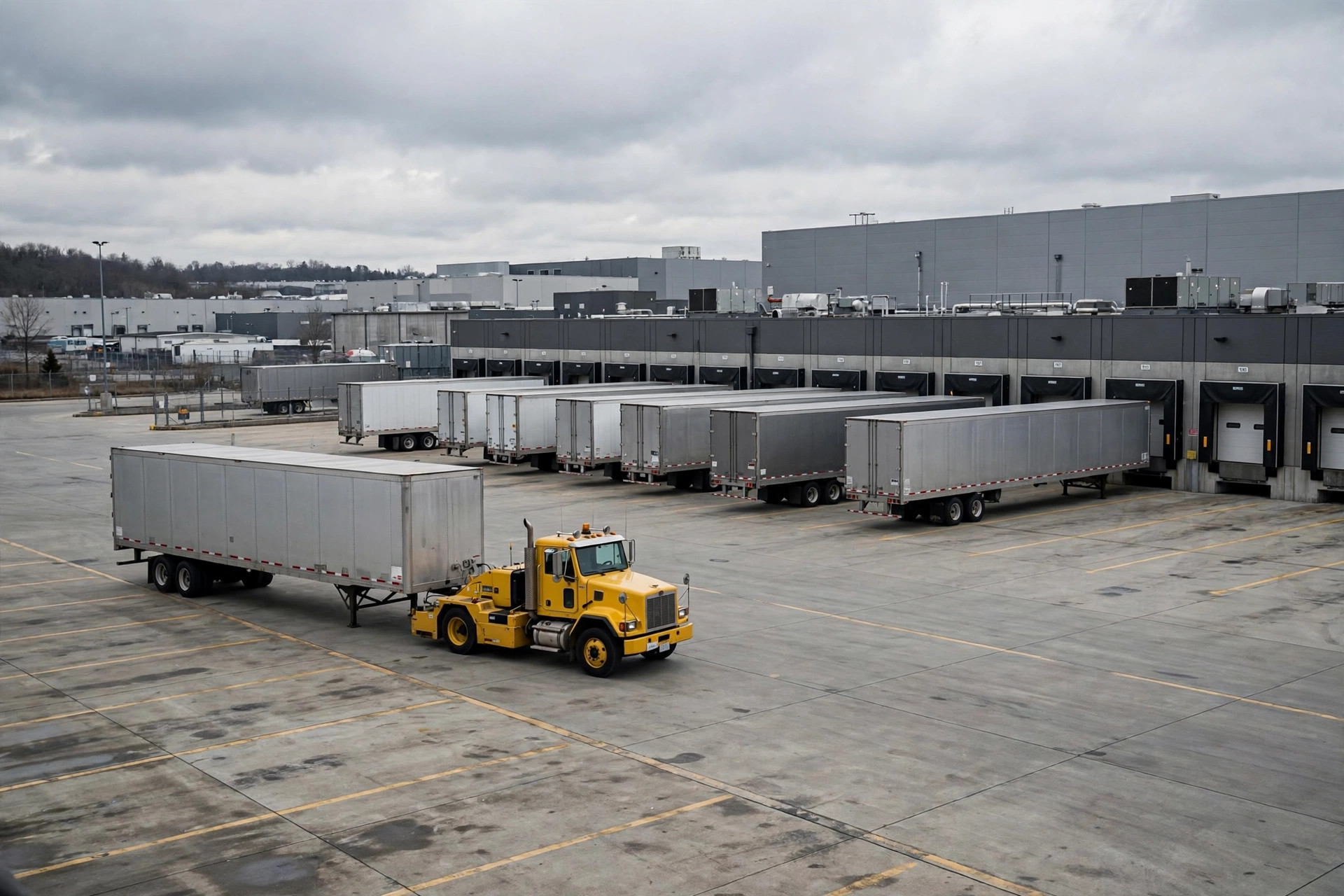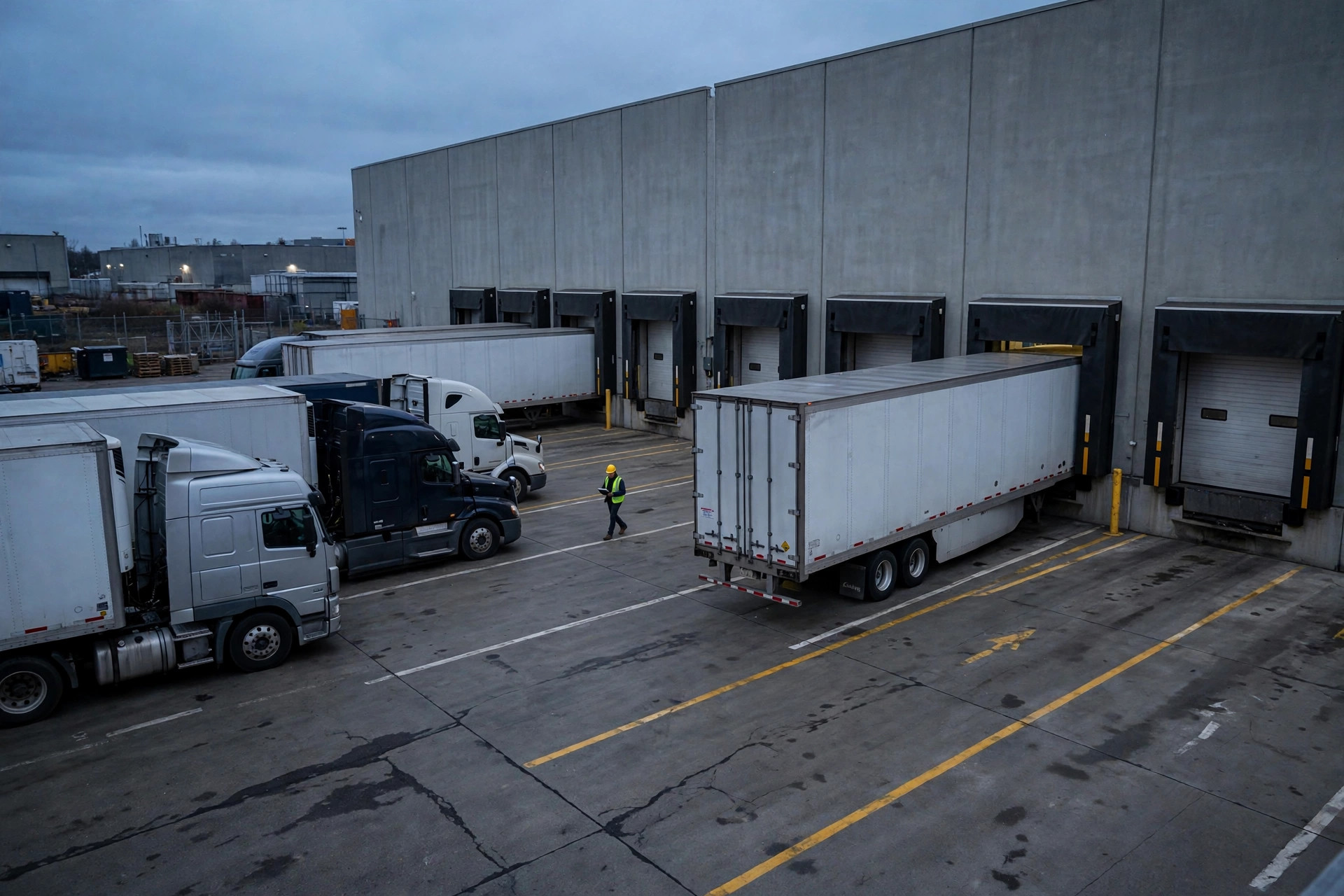
Here is my verdict up front: most warehouse dock schedules are built blind.
Your scheduler builds the plan around when trucks are supposed to arrive. When they actually arrive is nowhere on that schedule. A two-hour delay is not the exception; it is the daily routine. The appointment book gets torn up and rebuilt every single day, the receiving supervisor fights fires by phone and text message, and the YMS still cheerfully reports that all fifty appointments are on track.
You might ask: isn't truck location data already sitting there? GPS positions, ETAs — your TMS has all of it. The problem is that none of it ever makes it into the YMS. The two systems talk past each other, and the break lands exactly where it hurts most: at the dock door.
The schedule says "should arrive." Trucks live in "actually arriving"
Picture a typical morning. At 8 a.m., the scheduler retypes a table exported from the TMS into the YMS — door number, time window, appointment ID, all nice and tidy. The moment the last entry is typed, the plan starts going stale.
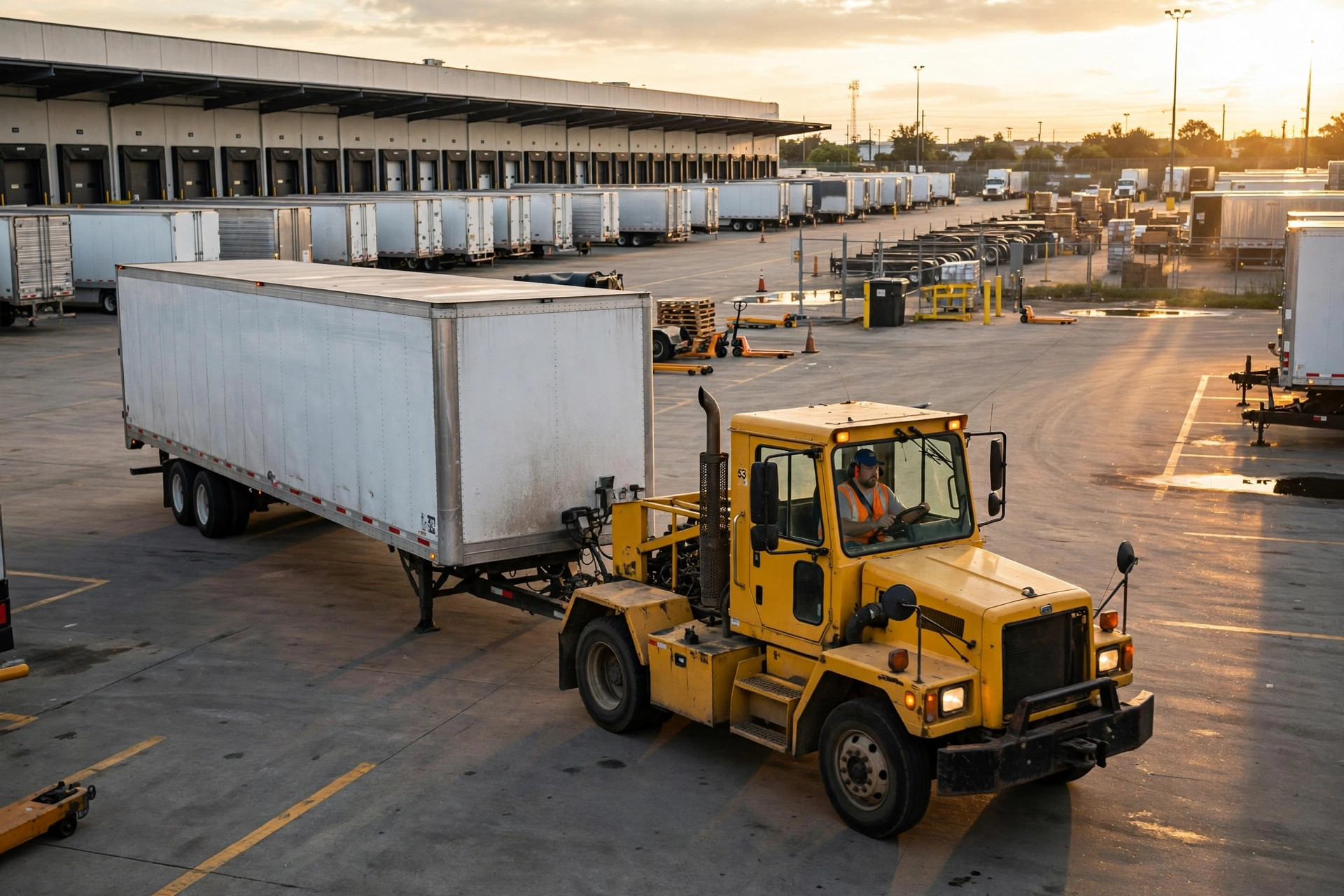
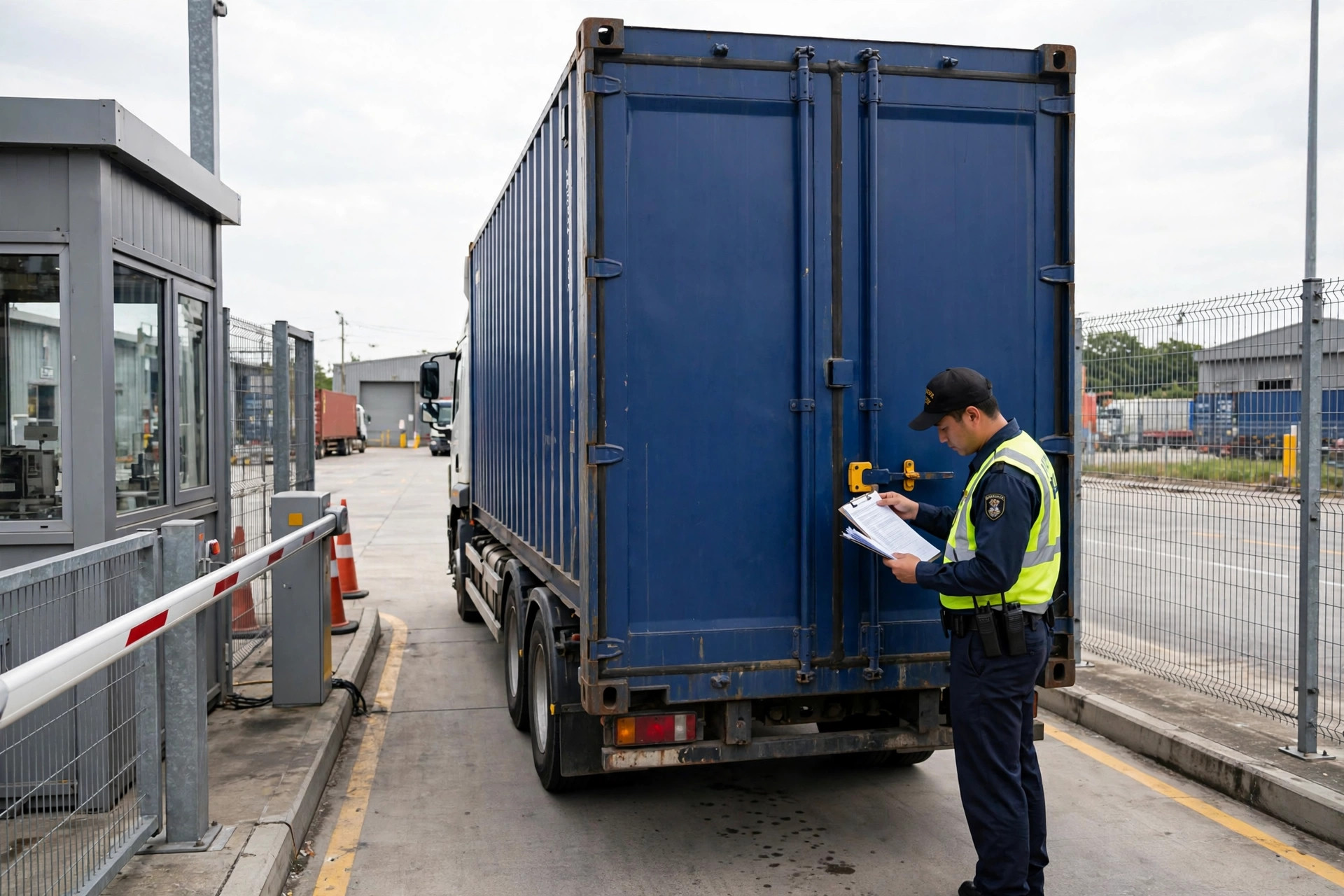
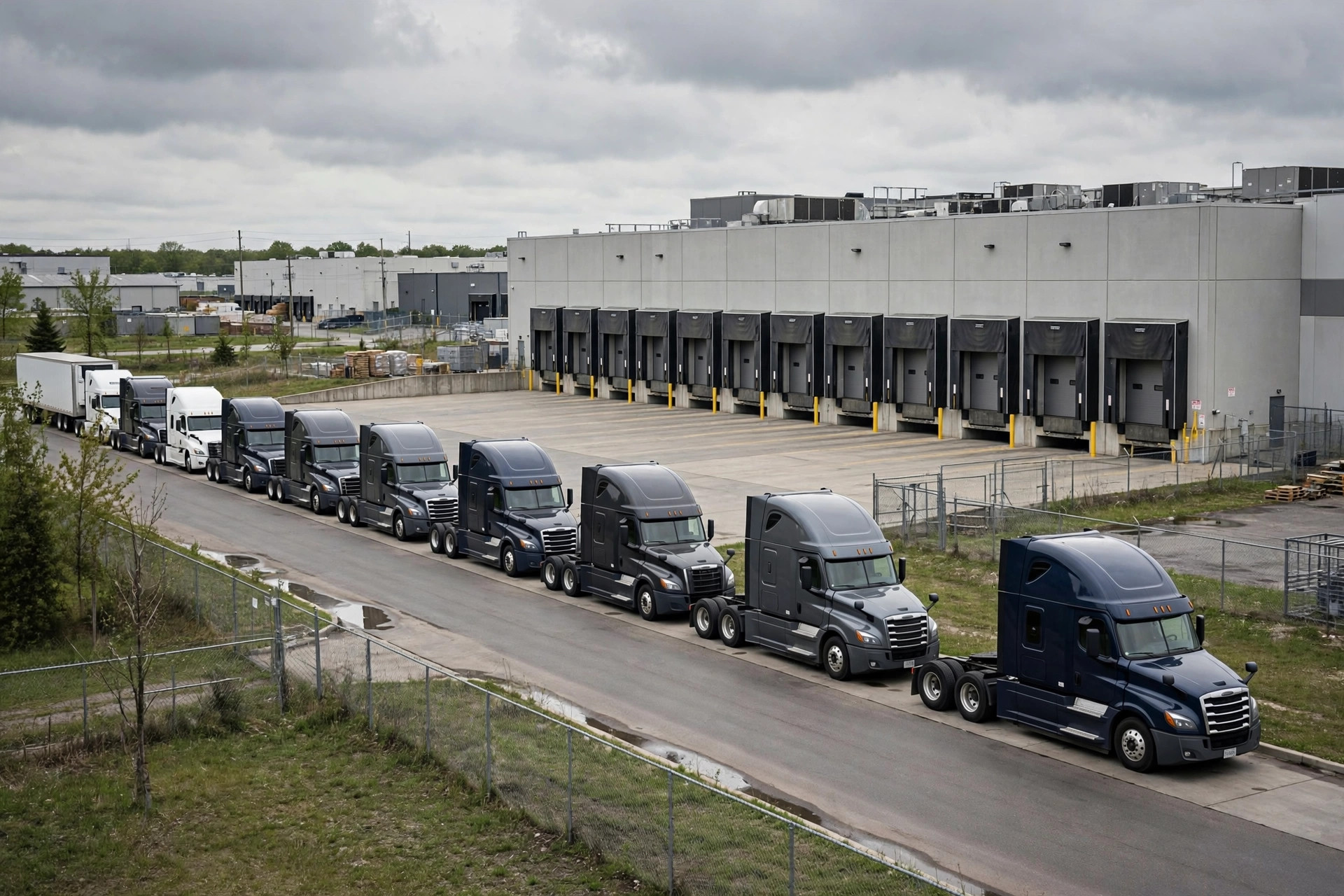
Over in the TMS, a truck is stuck in freeway traffic. GPS pings every few minutes, and the ETA keeps sliding later. Over in the YMS, the appointment is a static record — nothing moves unless a human moves it. Dock workers stage labor, forklifts, and floor space an hour early. The truck does not show. Two hours later it does, the window has expired, the door is taken, the driver is fuming at the gate, and the dispatcher is putting out one fire after another by phone.
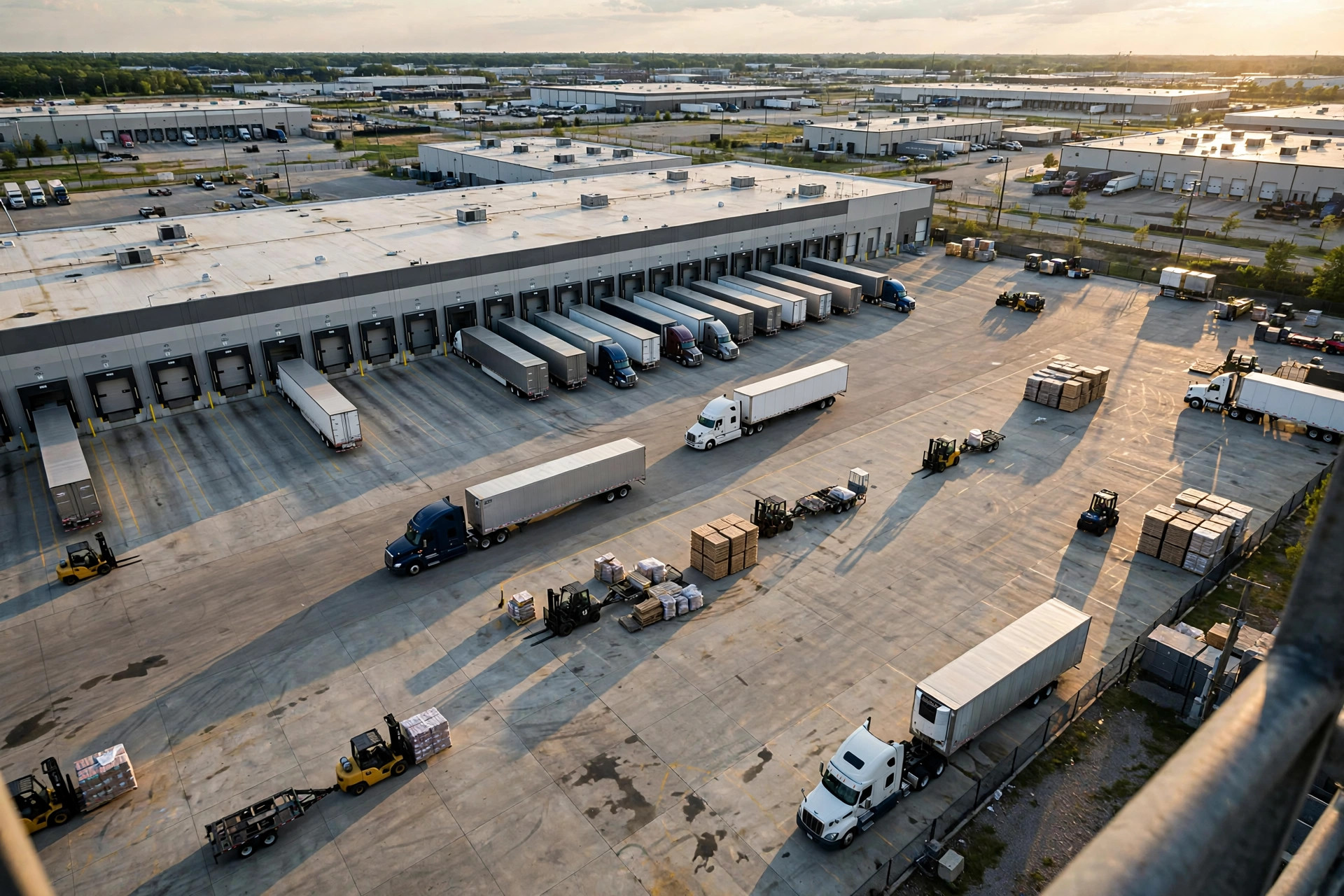
A couple of years ago I visited a 3PL warehouse in Ontario, California. The receiving manager told me they hold a daily 10 a.m. "reconciliation meeting": the scheduler, the receiving lead, and the transportation coordinator sit down with the TMS in-transit list and the YMS appointment book and hunt for discrepancies by hand. Three people, one hour a day, doing the job of a data pipe between two systems. My only thought after hearing that: this is not work humans should be doing.
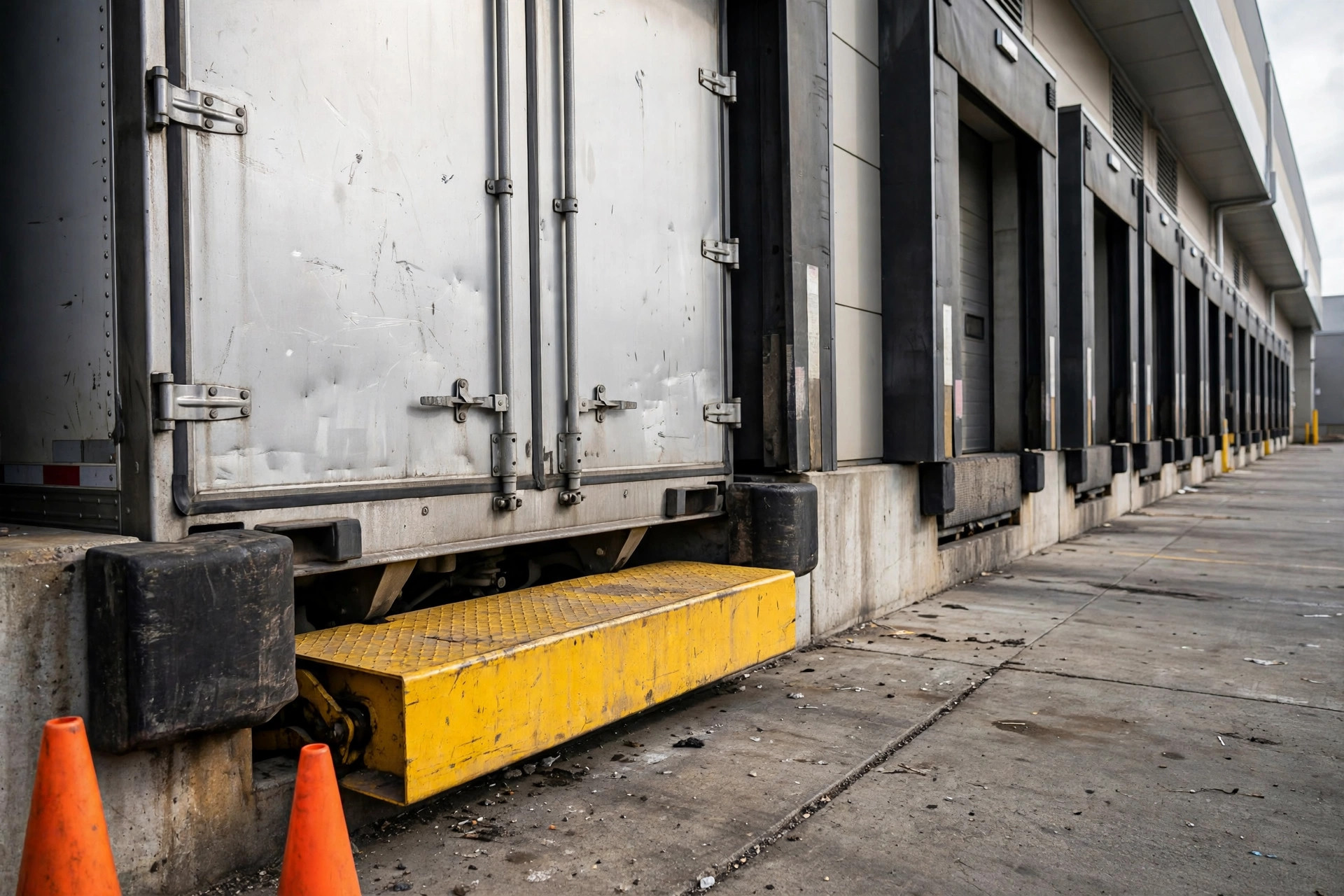
The data exists. The gap sits on an org chart, unclaimed
The first instinct is usually "it's an integration problem." It is not. Mainstream YMS and TMS vendors all ship open APIs with perfectly decent documentation. The real blockers stack up in three layers, each harder than the last.
Layer one is data definitions. The TMS's "estimated arrival" is computed against transportation milestones: departed, in transit, fifty miles out. The YMS appointment is computed against a "dock occupancy window." The two sides do not even mean the same thing by "arrived" — does the truck count as arrived at the front gate, or only when it backs into the door and the wheel chocks go on? The TMS has no idea when the YMS's window starts ticking.
Layer two is event granularity. TMS GPS is a continuous stream; YMS scheduling is discrete events. Turning a position stream into "running 47 minutes late, recommend moving the 10 a.m. appointment to 11" takes a full set of business rules: how many minutes late triggers a reschedule? Automatic, or human-confirmed? When an appointment moves, who gets the door it vacated? No vendor will write those rules for you.
Layer three — the one that actually kills projects — is ownership. The TMS belongs to transportation; the YMS belongs to warehouse operations. Transportation is measured on on-time performance and freight cost; warehousing is measured on receiving throughput and labor efficiency. Getting in-transit visibility into dock scheduling looks like "a warehouse scheduling thing" to transportation and "data that lives in your TMS" to warehousing. The break sits exactly on the boundary between the two departments, and nobody owns it. Of every ten failed YMS-TMS integration projects I have seen, nine died here, not on the technology.
And to be clear, the data itself stopped being a problem long ago. Since the U.S. ELD mandate took effect in December 2017, essentially every over-the-road truck has been reporting its position continuously. The data is there. What is missing is someone responsible for carrying it onto the schedule.
Three ways to close the gap, each pricier than the last
Option one: do it by hand. The scheduler checks ETAs in the TMS or a visibility portal on a cadence and manually reschedules late appointments in the YMS. Cheapest option — zero software spend. The cost is human: your scheduler becomes a full-time screen watcher, and a few dozen appointments a day is already more than one person can track. Shifts change, information drops. Fine for a small warehouse with few daily turns; slow suicide at scale.
Option two: feed a visibility platform's ETA into the YMS. There are dedicated in-transit visibility platforms that aggregate carrier GPS data and produce reasonably reliable ETAs, and some YMS vendors ship prebuilt connectors for them. The cost is the subscription plus one IT integration, plus the data-quality work nobody budgets for: carrier devices drop offline, GPS drifts, ETAs bounce around, and you have to decide up front whether the YMS follows every twitch. Good fit for mid-volume operations with a real IT team.
Option three: unify TMS and YMS under one vendor, or build the bridge in-house. The data model matches by construction, and a late-arrival event can trigger a reschedule workflow directly. Highest cost by far: replacing a system is major surgery, measured in months of implementation, with historical data and operator habits all migrating over. Unless you were already planning a system change, do not burn the house down over this one gap.
Before you greenlight anything, answer these six questions honestly. If you cannot, do not talk about integration yet:
- How many appointments do you run per day, and what share run more than an hour late? If you cannot answer this, get your baseline data in order first.
- How does late-arrival information reach the warehouse today — phone calls, messages, email, or nobody at all?
- Can your YMS appointment windows be modified by an external event, or only by hand?
- How often does your TMS refresh its ETA — by the minute, or only at milestones?
- Who owns "in-transit visibility into dock scheduling" — transportation or warehousing? Which KPI carries it?
- If reschedules go automatic, who writes the rules: how many minutes late triggers one, and does a human confirm?
Answer all six and you will know which of the three options is yours. Skip this step and go straight to the project, and you will most likely die on layer two — the systems get connected, nobody defines the reschedule logic, and you are back to doing it by hand.
Stop talking technology. Start talking about who owns this
My read: the YMS-TMS gap is not fundamentally a technology gap. It is an organizational gap. Any API can be wired up; the hard part is writing the rules and assigning the responsibility. Any of the three technical options works, but only if one person — or one small team — owns "the appointment book matches the trucks that actually show up," with that exact line in their performance review. Without it, even the prettiest integration decays back into a manual reconciliation meeting within six months.
One line for the IT lead: at your next YMS evaluation or renewal, stop asking "do you have an open API" and ask instead, "can you subscribe to the TMS's real-time ETA event stream and auto-trigger a reschedule workflow when lateness crosses a threshold?" A vendor that cannot answer that clearly is selling you a very pretty paperweight.
One line for the operations manager: until the systems are connected, build slack into the schedule — stretch the appointment windows in your two most congested slots of the day (usually the morning opening rush and the afternoon cutoff) by thirty minutes each. Costs nothing. Works immediately.