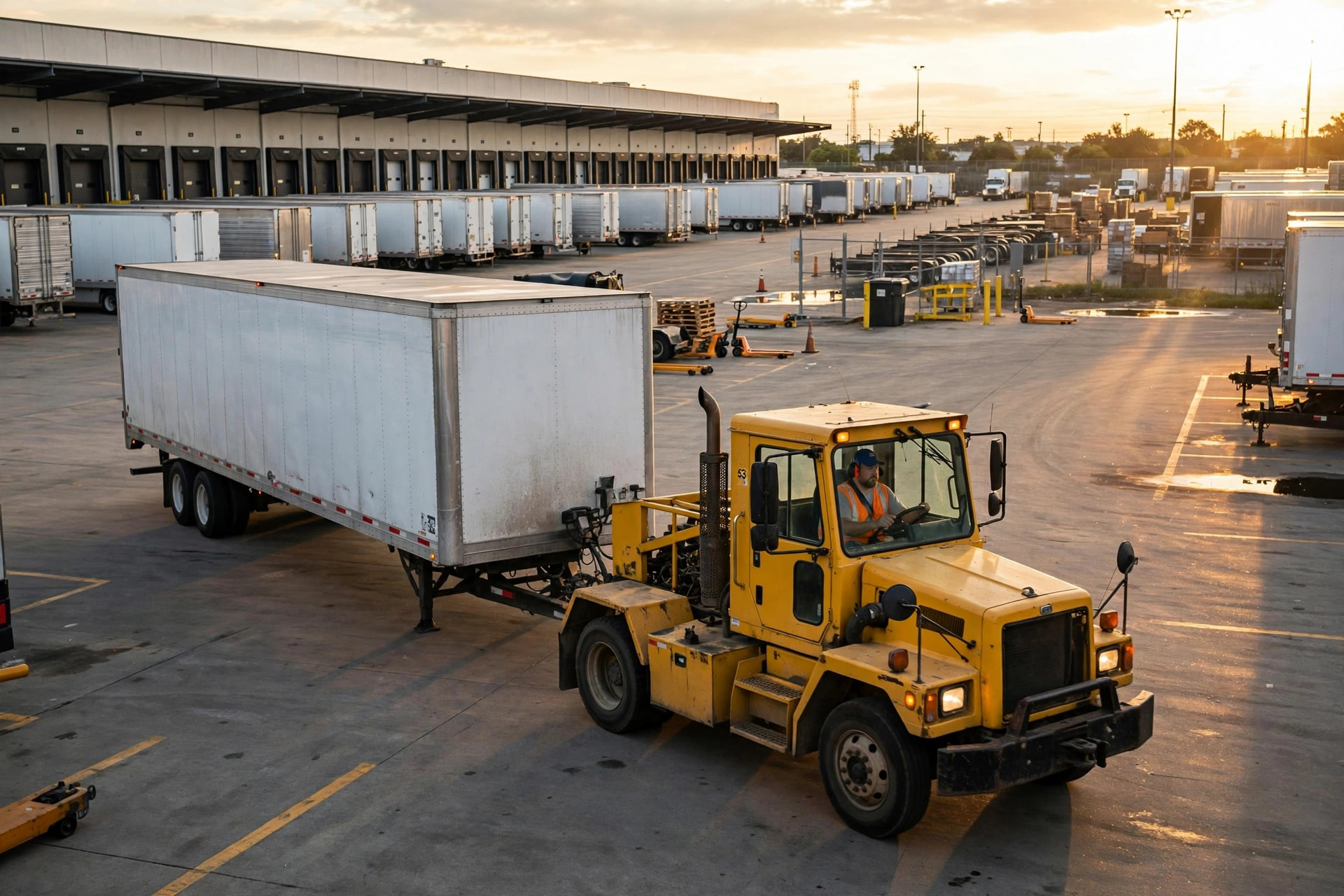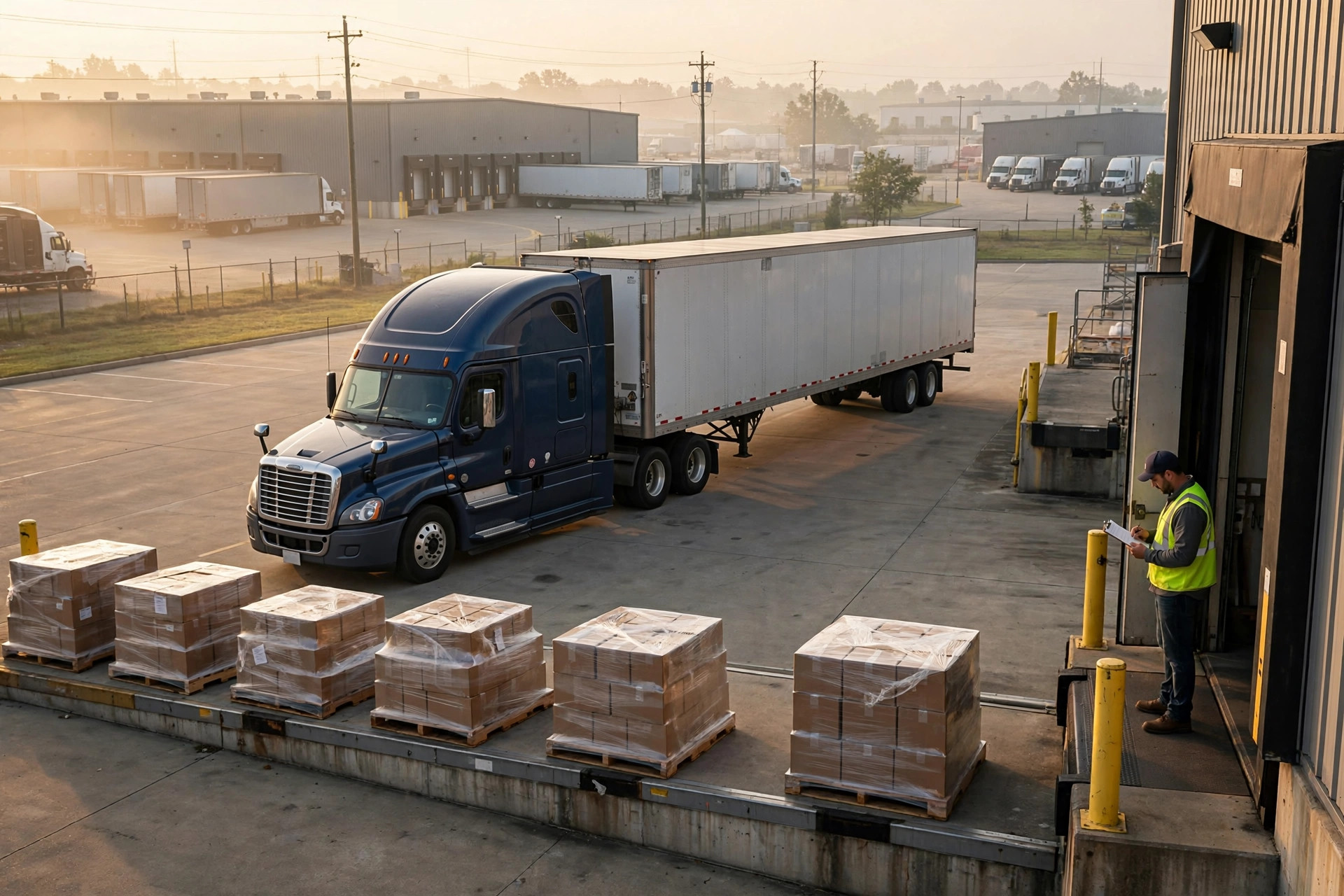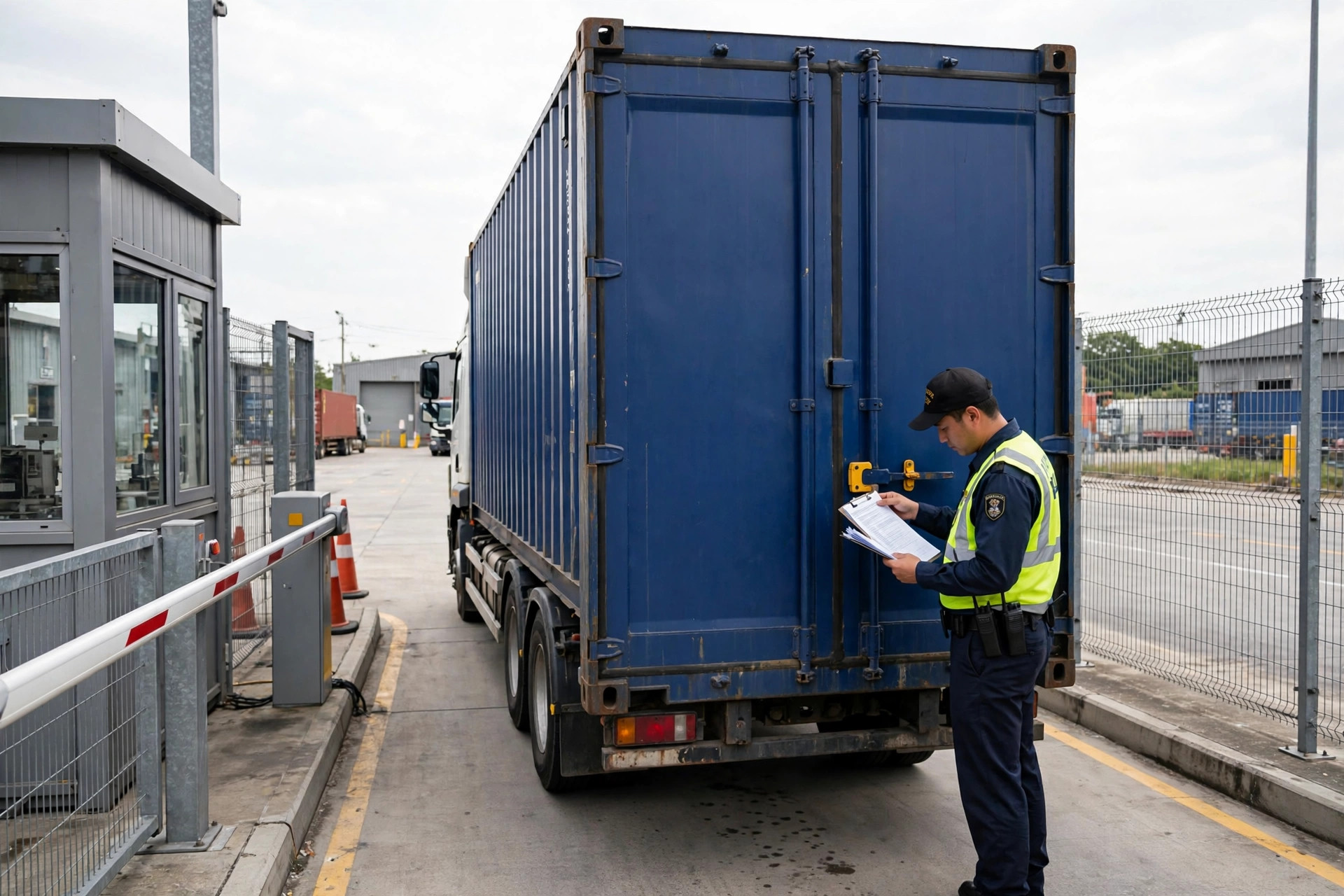
In October 2024, a routine container seal verification at an intermodal yard gate outside Savannah, Georgia, held up a 40-foot container. The delivery paperwork listed an eight-digit seal number; the seal on the door showed eight digits too — but the last one did not match. The document said 7; the seal said 1. The driver shrugged: the seal had been applied at the origin warehouse, he just drove the box. The gate supervisor neither released nor detained the truck. He took four photographs, then made three phone calls. By the time the last call ended, the truck had been sitting outside the gate for two and a half hours.
Container seal verification at the yard gate stops a lot of trucks, and nine times out of ten the alarm turns out to be false. The entire value of the system lives in that remaining tenth — the one case where somebody actually touched the box.
What Container Seal Verification Actually Checks: Three Steps at the Yard Gate
A common misconception is that gate seal checks amount to "glancing at the seal." Under the ISO 17712:2013 framework for mechanical container seals, a complete check has three components, and each one closes a different hole.
First, number matching. The seal number stamped on the seal body must match, digit by digit, the number pre-registered on the shipping documents — the bill of lading, the delivery order, the terminal receipt. Seal numbers are alphanumeric, and hand transcription is where most errors are born: O versus 0, 1 versus I, 7 versus 1.
Second, physical integrity. Has the seal been cut and re-joined? Are there pry marks on the locking rod? ISO 17712 classifies mechanical seals into three tiers — Indicative (I), Security (S), High Security (H) — and only H-tier seals must pass tensile, shear, and impact testing. U.S. C-TPAT criteria require high-security seals meeting or exceeding the ISO 17712 high-security standard on U.S.-bound boxes. The quality of the seal itself determines how much this check is worth.
Third, the document chain: who applied the seal, when, and every handoff since — stuffing, sealing, registration, in-transit handoffs, arrival. If any link is missing, the first two checks prove less than they appear to.
Once these three steps are understood, gate anomalies fall into three natural categories: the number does not match, the seal is damaged, or there is no seal at all.
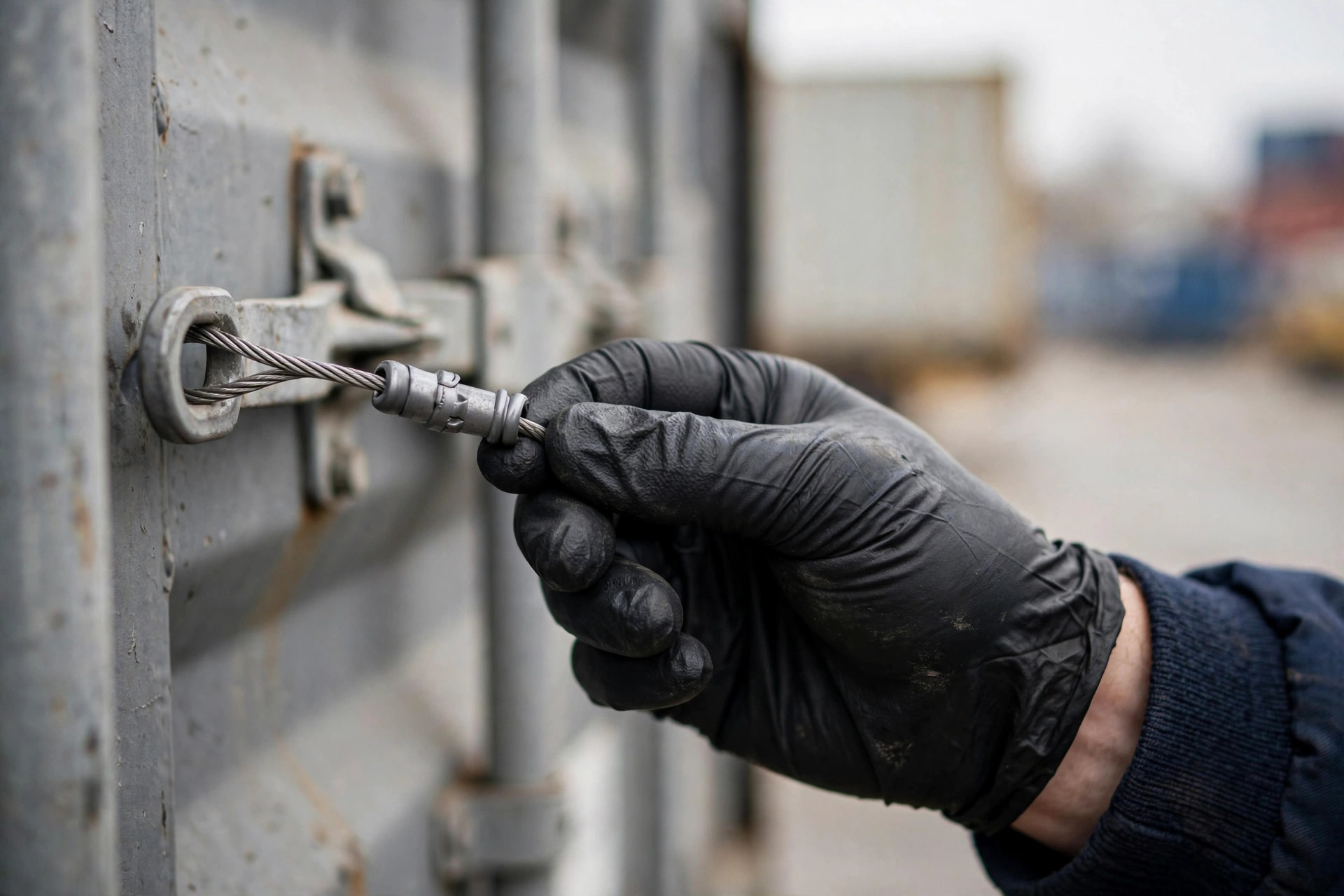
A Mismatched Number Means Two Different Things: Clerical Error, or a Swapped Seal
Back to the Savannah case. The three phone calls went to the origin warehouse, the drayage carrier's dispatcher, and the cargo owner. The origin warehouse pulled that night's stuffing log: the night-shift clerk had hand-written the last digit as 7 when the seal actually read 1. A transcription error, confirmed.
Three details matter here. The seal body was intact — no pry marks, normal engagement. The origin warehouse admitted the error and produced a stuffing photo with the number legible. The owner then authorized a supervised re-seal, with the new number registered across yard, carrier, and owner, and the old seal kept as evidence. Two and a half hours, truck released.
But a mismatch has a second cause: the seal was swapped in transit. In early 2023, the same yard handled an import box whose seal number bore no resemblance to the bill of lading — an entirely different string, on an intact seal body. No clerical error explains that. The yard detained the truck, pulled the GPS track — the driver had parked overnight at a rest area — and a joint inspection found eight cartons of consumer electronics missing. The claim took four months; figures are from the yard's internal records.
The handling logic is therefore a fork: an intact seal body points to the document chain — most likely clerical error — and a "document, verify, re-seal, release" process. A compromised body means the tamper-evident barrier was breached, and only the strictest detention procedure applies. That fork is the single most important judgment line in gate seal verification.
Seal Verification Exceptions: A Handling Matrix
The three exceptions, laid out with their actions, give gate staff a procedure to follow instead of improvising under pressure:
| Exception | What to inspect | Action | Who to notify | Release condition |
|---|---|---|---|---|
| Seal number mismatch | Seal body intact? Pry marks? | Photograph; verify against origin records | Origin, carrier, cargo owner | Written confirmation of clerical error from origin + new seal registered |
| Damaged/tampered seal | Photograph seal, rod, doors | Detain vehicle; nobody opens the box; joint inspection and count | Owner, carrier, yard management, insurer | Joint inspection completed with no discrepancy, all parties sign |
| No seal at all | Door condition, rod state | Treat as tampered; same procedure as above | Same as above | Same as above |
The most overlooked row is the last. Many yards wave through unsealed domestic shuttles — but an unsealed box and a de-sealed box are indistinguishable at the gate. Standard practice: treat "no seal" as "tampered" until the owner or origin confirms in writing the move genuinely shipped unsealed. That confirmation is itself an act of liability allocation.
Photographic Evidence: The Four-Photo Rule
Whatever the exception, the gate's first move is always the camera, never the phone — photographs are the only evidence that cannot be rewritten after the fact. Four shots: a close-up of the seal body with the number legible; the seal engaged with the locking rod; both container doors; and a wide shot of the vehicle with plate, container number, and gate background. All four carry timestamps and go into the shift log.
In the 2024 case, the origin warehouse cleared itself because it had its own stuffing photo — evidence works both ways. The gate documents arrival; the origin documents departure. When the two line up, responsibility is immediately clear.
Release or Detain: The Decision Line Is the Seal's Physical Integrity
The hardest call at any gate is release versus detain: release wrongly and the yard may own a cargo loss; detain wrongly and it eats driver complaints and missed sailings.
The two case types draw a clean line: the decision rests not on whether the number matches, but on whether the seal's physical integrity is compromised. Number problems are human error nine times out of ten, and the chain can be closed. A damaged seal means the physical barrier was breached and only the strictest procedure will do.
The economics support the line. Two hours of detention at typical U.S. drayage rates — 75 to 100 dollars per hour by common market quotation — costs 150 to 200 dollars plus scheduling friction. A cargo dispute operates on another scale: legal involvement starts in the thousands, claims run for months, and lost trust cannot be priced. Two hundred dollars of certain cost to hedge a far larger uncertain loss is a sound expected-value trade — provided detention follows a standard, not the supervisor's mood.
One counterintuitive observation: many yards treat a zero-exception month as a badge of honor. That metric may point the wrong way — a yard moving thousands of boxes monthly with zero recorded anomalies more likely has a process that exists only on paper. The anomaly rate is not the problem; unrecorded anomalies are.
The Trend: When Seals Start Talking
Seal verification is migrating from "human eyes plus paper" toward "sensors plus data," and the timeline is already visible.
Electronic seals build GPS and tamper alarms into the seal body — cut the seal and the platform gets an alert with a location. Pilots at several European ports began around 2022, and some high-value lanes are adopting them. They answer a question the gate could never answer before: was the box touched in transit?
The other front is gate automation. OCR of container numbers is mature; next is automatic seal-number capture and matching — cameras photograph the seal, software reads and compares it against the appointment record. The technical difficulty is modest; the real barrier is data standards across lines and forwarders.
One question stays open. If, five years from now, every seal is electronic and every gate matches automatically, will mismatches disappear? They will shrink — but not vanish. Behind every mismatch is a person: the clerk's handwriting, the driver's unplanned overnight stop, the owner sealing after the truck left to make the sailing. Technology compresses the anomaly rate, not the human part. The end state may not be "unmanned" but "humans handle only the ten percent machines cannot resolve" — and that ten percent is precisely why the system exists.
By Dr. Chen, Supply Chain Researcher