Here's the verdict up front: do not go live with every YMS module at once. There is exactly one correct sequence — appointment scheduling first, yard visibility second, detention billing last. Get the order wrong and you'll drown in carrier complaints at best, and sit on uncollectable detention invoices at worst. I've watched this exact failure happen three times.
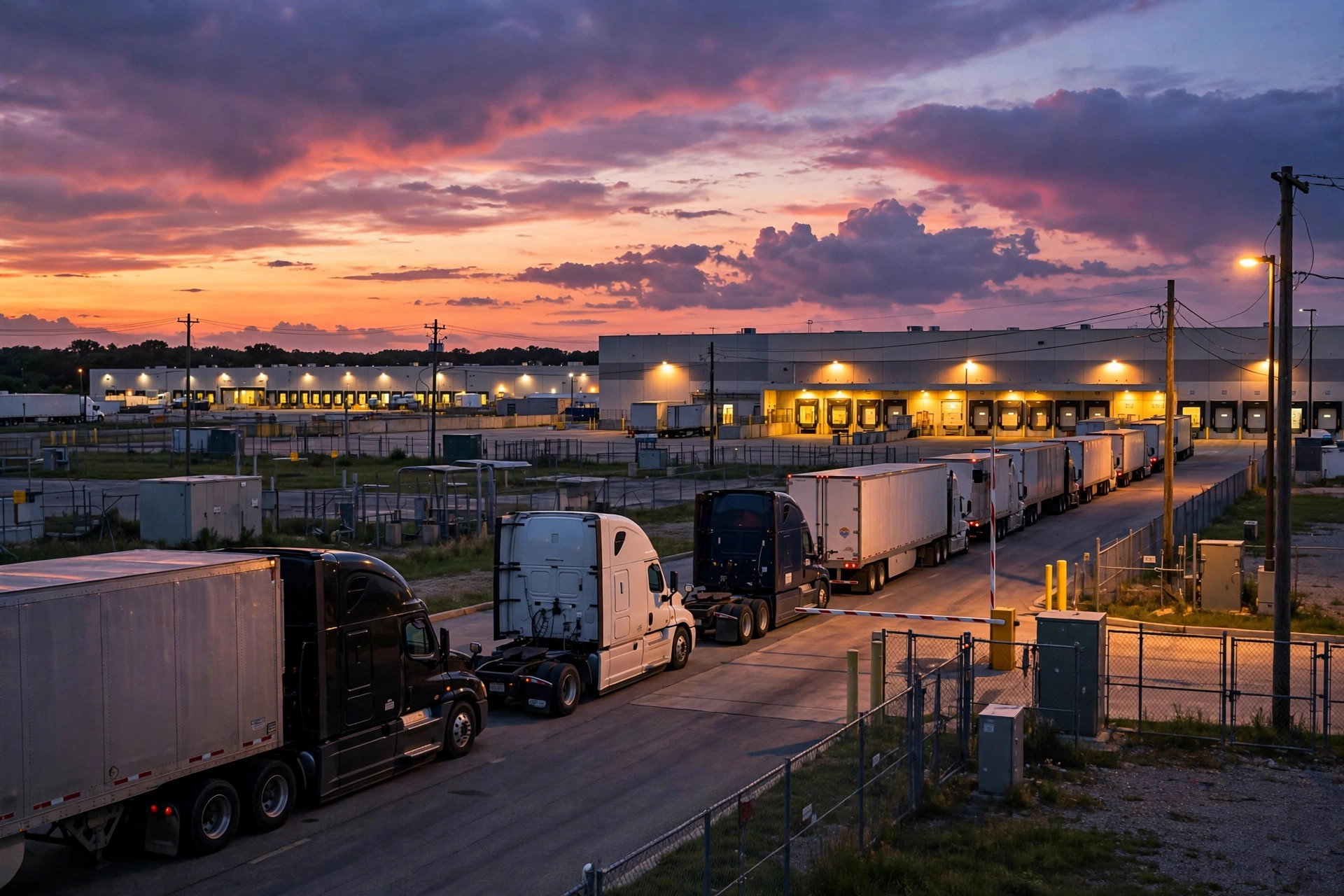
Fall 2023. A 3PL warehouse in Ontario, California — 300,000 square feet, 120 dock doors — decided to go big-bang two weeks before peak season: appointments, yard visibility, and billing, all live on the same day. By day three it was chaos. Yard positions were hand-entered by drivers and half of them were wrong; the billing module auto-fired detention invoices off those bad timestamps, carriers refused to pay, and one threatened to pull capacity for peak. It took them the entire peak season to clean up the data. Finance later calculated that the overtime and penalties cost enough to buy a second YMS.
The lesson isn't "the system is bad." It's that the sequence was wrong. The three modules sit in completely different leagues on implementation difficulty and time-to-value. Lashing them together just means they drag each other down.
Start With Appointments: The Fastest YMS Win
Appointment scheduling is the lowest-tech, fastest-ROI module in a YMS. The reason is simple: it fixes an information problem, and information problems don't need hardware.
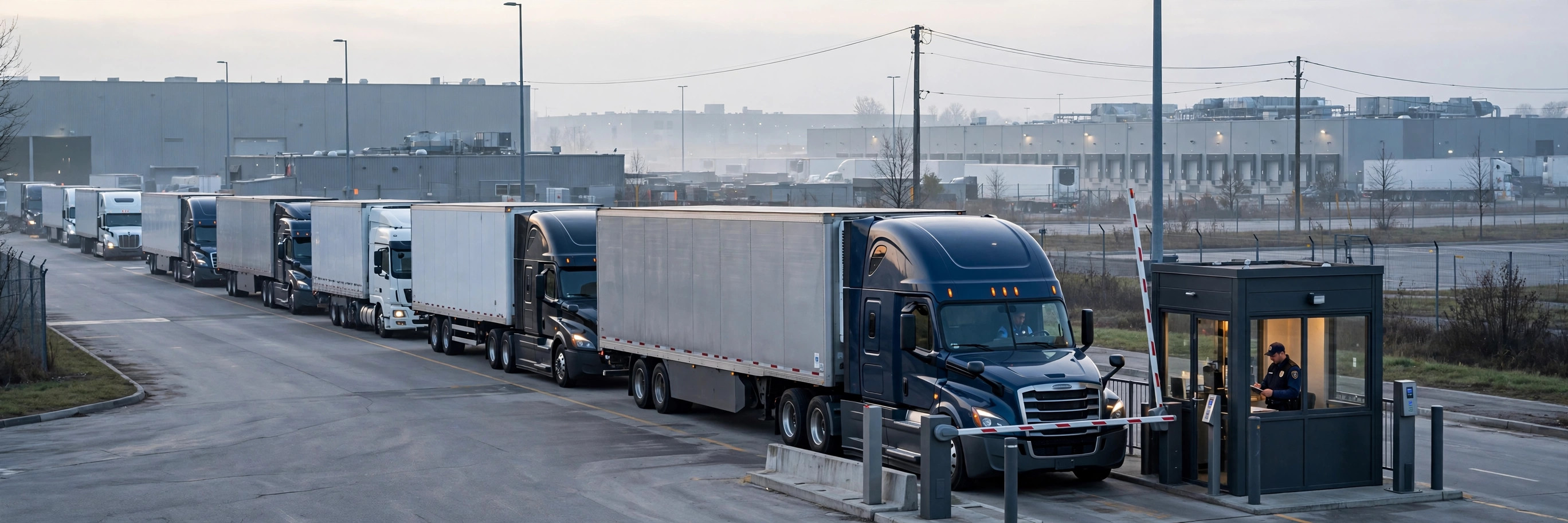
Before appointments, the daily reality at a US truck yard looks like this: a driver shows up at the gate at 6 a.m., waits two hours, and only then learns today's docks are full. Inside, the receiving team guesses the day's truck count off a spreadsheet and staffs labor on gut feel. Per DAT's industry survey, nearly two-thirds of drivers get detained at the dock for more than three hours per stop — and keep in mind, the industry's free time is usually just two hours; beyond that, detention rates typically run $30 to $100 per hour (check your carrier contracts for your actual numbers). Twenty trucks a day running over burns enough cash to cover a clerk's monthly salary.
An appointment module goes live in four to six weeks: give carriers a portal — or even start with email plus text confirmation — slice docks into time slots, and have drivers arrive on slot. In May 2024, an auto-parts 3PL in Dallas, Texas went live with appointments only. Six weeks later, average gate wait time had dropped from two hours to under 40 minutes, and receiving overtime was down roughly 30%. Those numbers came straight from their ops director in the post-mortem, and I wrote them down in my notebook.
Appointment-phase go-live checklist:
- Group dock doors by product type or carrier first — don't attempt dynamic assignment on day one.
- Start with one-hour slots, not 30-minute ones — the finer the granularity, the harder no-shaves are to manage.
- Call your top 10 carriers one by one and walk them through the portal. One mass email is not training.
- Run two weeks in parallel: phone bookings and system bookings side by side. Cut over only when the data matches.
Then Yard Visibility: The Hardest Module to Get Right
Yard visibility sounds wonderful — every trailer's position, status (loaded, empty, in repair), and dwell time on one screen. But it's the toughest of the three, because it depends on the two least reliable things in any operation: hardware and human discipline.
Your options: a yard-jockey app for move records, GPS or RFID tracking, or manual entry by the gate clerk. In early 2024, a food distributor in Atlanta chose the jockey-app route. In month one, the jockeys found it annoying and skipped logging half their moves. The system showed 40 empty trailers available; a physical count found 12. The dispatcher shut the system off in disgust and went back to the radio.
So yard visibility has to come after appointments: once appointments run smoothly, vehicle movements have trustworthy timestamps, and yard data finally has a baseline to reconcile against. I always recommend splitting it into two sub-steps — step one is just gate timestamps plus trailer ID capture, which a barcode scan at the gate handles. Run that for a month, get the data clean, then add real-time positions in step two. No shortcuts.
Save Detention Billing for Last: The Module That Burns Relationships
Here's the counterintuitive call: detention billing looks like the money-maker — automatic detention calculation, automatic invoicing — but it must go last. Billing requires timestamps nobody disputes, and timestamp trust is earned across the first two phases.
All three failures I've seen died right here: the customer, eager to collect detention revenue, switched on billing first. The timestamps came from driver-entered arrival times, carriers rejected them, and nine out of ten invoices got disputed. Worse — once carriers decide you're running a shakedown, they prioritize someone else's warehouse next peak season, and your capacity drops a tier. That costs far more than the detention itself.
The correct sequence: run appointments for two months, run yard timestamps for one month, take those three months of timestamp data and reconcile manually with your top five carriers first. Once both sides agree, then switch on automated billing. At that point dispute rates drop under 10%, and the money actually gets collected.
This is how I lay out the math for clients:
| Module | Go-live timeline | Main investment | Speed of payoff | Biggest trap |
|---|---|---|---|---|
| Appointment scheduling | 4–6 weeks | Process change plus carrier training | Fastest | Carriers don't use it |
| Yard visibility | 8–12 weeks | Hardware plus frontline discipline | Medium | Data entry is unreliable |
| Detention billing | 2–4 weeks (but needs 3 months of clean data first) | Contract alignment | Slowest, but most tangible | Timestamps get disputed |
Night-Before-Go-Live Checklist: The Three Most Common Flip Points
- Timestamp definitions aren't unified. Gate arrival, dock arrival, unload complete — three timestamps, three departments, three definitions. The night before go-live, write the definitions into the SOP and tape them to the gate window.
- Carriers weren't notified in advance. A new appointment flow needs at least three weeks' notice to all carriers, with the top 20 confirmed by individual phone calls. Don't expect one mass email to do it.
- No rollback plan. Keep paper or Excel running in parallel for week one — if the system goes down, the gate cannot stop. The Ontario warehouse's biggest mistake in 2023 was ripping out the old process on go-live day with no way back.
One thing you can do tomorrow: pull every detention penalty you've paid in the last three months and roll them up by carrier into one table. If your top three carriers account for more than 70% of the penalties, your YMS phase one has exactly one job — open appointment slots for those three carriers. Start saving the money there.
By Lin Xiao, WMS Implementation Consultant