Let me tell you something. After fifteen years hauling freight across this country, the thing I fear most isn't traffic on the highway. It's the gate at the yard. When you can't get in, the freight can't come off, and that reefer unit sits there in the sun burning diesel minute by minute — and every minute pushes your cargo one step closer to the edge.
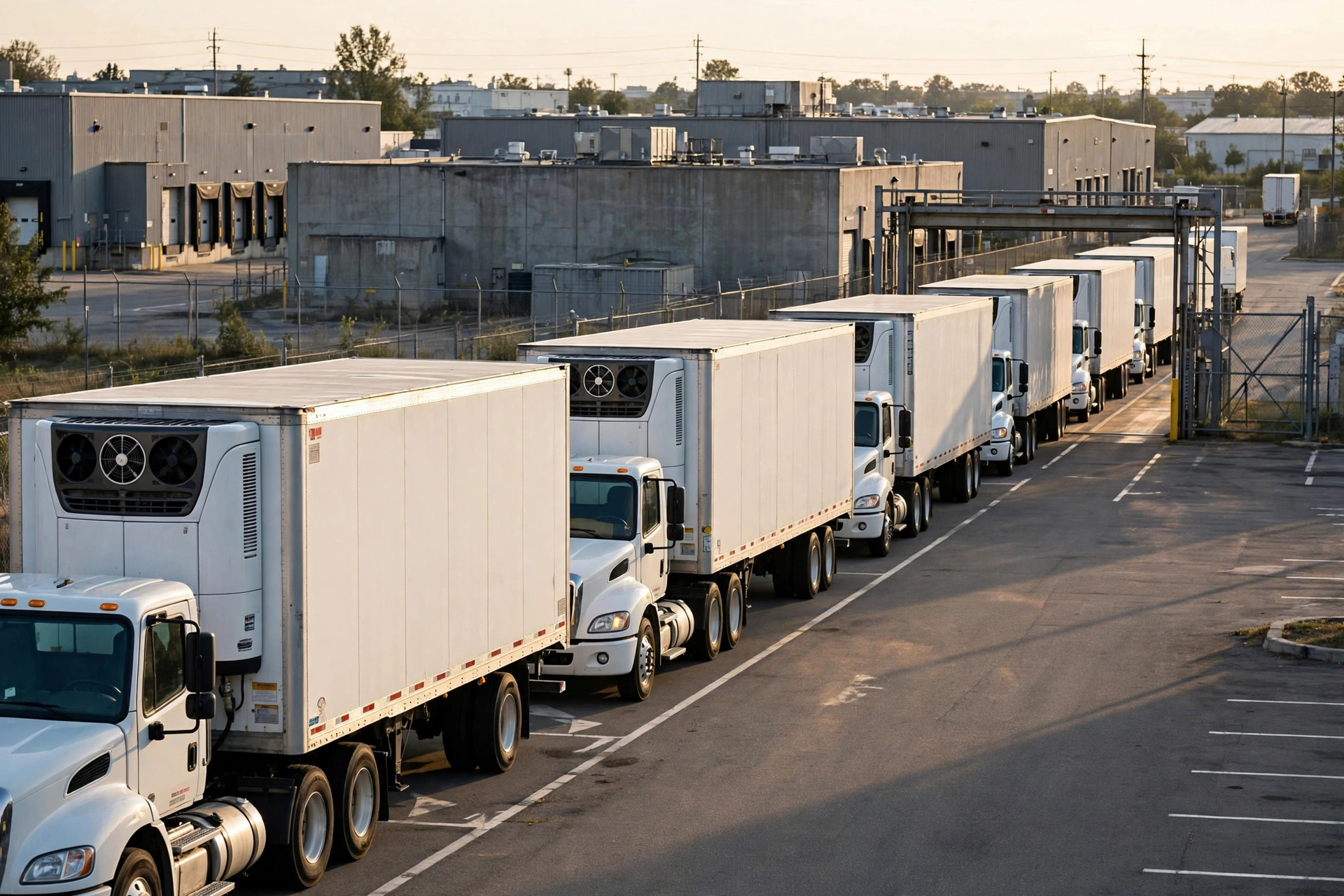
Last July I was pulling a load of strawberries into a yard out in Ontario. Seven or eight reefer trailers were already lined up at the gate, refrigeration units humming, diesel fumes mixing with the heat. The driver ahead of me said he'd been waiting nearly four hours, and his box temperature was climbing. When the receiver finally checked, the temp was over the limit. Rejected. A whole trailer of strawberries, gone. The guy just sat on his tire smoking, not saying a word. In all my years on the road, I've watched that scene play out more than once, and it hurts every time.
Reefers Can't Queue First-Come-First-Served: A YMS Has to Schedule by Risk
I talked to that yard's dispatcher afterward. Their system unloaded trucks in order of arrival. Sounds fair, right? But a reefer isn't a dry van. A dry van can sit in the yard all day and the worst that happens is an angry driver. A reefer that sits too long can lose the whole load. A "fair" queue is inherently unfair to the cold chain.
A yard management system worth its salt schedules reefers by risk, not by arrival time. Here's the pattern I've seen at the yards that actually get this right:
| Priority | Which trailers | What the system does |
|---|---|---|
| Red | Box temp near the limit / dwell over 4 hours / high-value perishables (berries, salmon) | Auto-bumped to the front, unloaded first |
| Yellow | Temps normal but dwell time climbing / ordinary refrigerated freight | Queued by arrival, auto-escalates to red on timeout |
| Green | Just arrived, temps stable, frozen goods (forgiving cargo) | Normal queue, no rush |
The key is that auto-escalation. A yellow trailer that sits too long turns red by itself — no human has to notice. That's where a YMS beats a dispatcher with a clipboard. People forget, people play favorites. The system only reads two things: temperature and time.
And here's a detail most people miss: priority shouldn't be set by the trailer alone. It's cargo plus box temperature plus dwell time, all three together. A trailer of frozen chicken wings and a trailer of fresh blueberries are both reefers, but they're not in the same risk universe. A good YMS captures the commodity at appointment time, so by the time the truck rolls through the gate, its priority is already assigned — no arguing with the guard shack.
Temperature-Breach Alerts: Tiered Response Beats Raw Sensitivity
Now the alert side. A couple of winters back, a warehouse near Fontana had a reefer dropped in the yard overnight. Around 2 a.m., the yard's temperature monitoring system fired a Level 2 alert: box temperature climbing on a parked trailer. The night guy threw on a jacket and walked out there — the reefer unit had died. Out of diesel. He called the driver, they refueled, restarted the unit, and by 3:30 the temperature was back under control. Next morning, a full trailer of salmon unloaded just fine.
Without that alert, nobody would have known until sunrise, and that salmon would have been a total loss. A rejection is the mild outcome. If spoiled product ever slips through, the food safety mess will cost you far more than one load.
But here's the counterintuitive part: more sensitive alerts are not better alerts. I know a warehouse that set its thresholds razor-tight — any temperature wiggle fired an alarm. The night shift's phone went off twenty-plus times a day, every one of them normal fluctuation from doors opening during loading. After three months of that, the guy just muted the alerts. Then came a real temperature breach. The phone rang. Nobody answered. A trailer of ice cream melted, and the claim dragged on for half a year.
So alerts have to be tiered, and every tier needs a named owner and a response clock. The yards I've seen do this well split it like this:
| Level | Trigger | Response required |
|---|---|---|
| Level 1 — Advisory | Temperature drifting toward the limit | YMS popup plus text message; on-duty staff checks the log within 30 minutes |
| Level 2 — Alarm | Over the limit / steady climb | Phone call to the on-duty mobile; someone on-site within 1 hour |
| Level 3 — Critical | Unit shutdown / runaway temperature | Call plus text, escalated to supervisor; immediate action, transload if needed |
A Level 3 alert might fire once or twice a year — but every one of them is real money. Level 1 can fire often; that's it saying "pay attention," not "fire." An alert system without clear tiers is the same as no alert system.
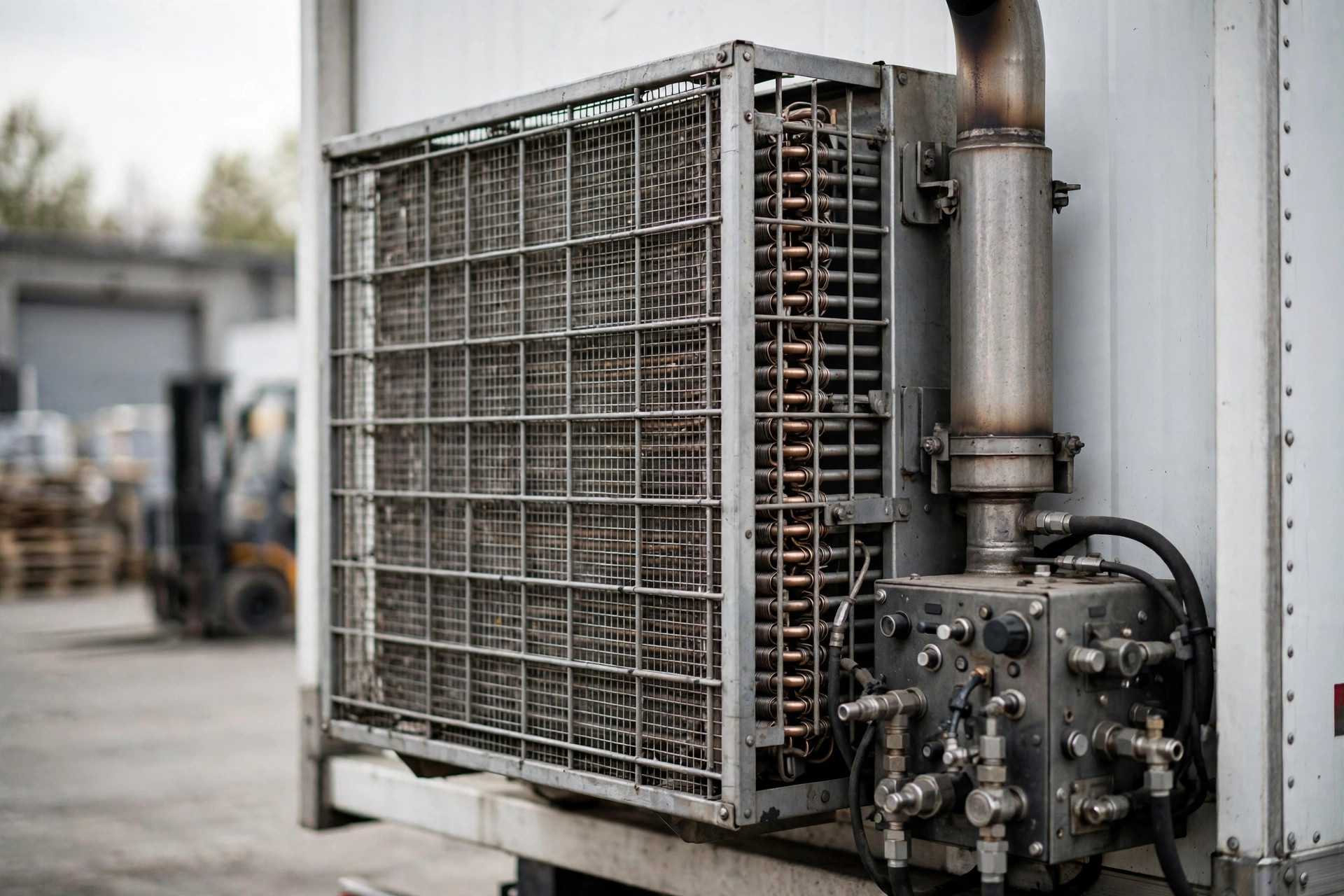
One more trap that catches rookies: a running unit doesn't mean a cooling unit. Broken belt, low refrigerant, dead sensor — the unit keeps humming and the temperature keeps climbing. Don't trust your ears. Trust the temperature curve. A YMS should be watching continuous box-temperature readings, not just the unit's on/off status. When you're shopping for a monitoring setup, ask one question: does this report the unit's status, or the actual box temperature? The difference between those two answers is one trailer of cargo.
The Math: Temperature Monitoring Pays for Itself
Let's do the arithmetic. One rejected trailer of berries — product value plus the claim — can sting a small carrier for the better part of a year. A temperature sensor plus remote monitoring for a year costs a fraction of that loss. And on the regulatory side, the FDA's sanitary transportation rules expect cold-chain temperature records (check the current rule text on the official site); if a food safety dispute ever lands on your desk and you can't produce a clean temperature log, you don't even get to argue.
There's a hidden cost too. A reefer dropped in the yard burns the driver's own diesel. Every extra hour that trailer sits, the fuel and the time come out of the driver's pocket. So good scheduling priority doesn't just protect cargo — it saves drivers money. Drivers who save money at your yard will take your loads again. That math matters to shippers and yards alike.
Straight Talk for Shippers and Yards
Shippers: put the temperature requirements in the contract before the truck rolls — set point, allowable ceiling, who provides the temperature log. Don't settle for a verbal "keep it cold." Align on the receiver's inspection standard up front, so nobody's arguing at the gate.
Yards: when you bring up a YMS, don't try to boil the ocean. Get three things solid first — capture the commodity at appointment time, auto-calculate priority at the gate, and run tiered temperature-breach alerts. Nail those three, and when reefers queue up in your yard, the drivers stay calm and you sleep at night.
Cold chain freight runs cold, but the people in it run warm — and the rules have to run iron. Temperature doesn't do favors. Get sloppy with it once, and it'll cost you a trailer. There's an old saying among drivers: a careful captain sails a steady ship. On the reefer side, I'd amend it: watch the thermometer, and the ship stays steady.
By Shifu Zhao, Trucking Veteran (15 yrs)