"What temperature should a cold storage warehouse be?" Search that exact phrase and you will find forum threads, Q&A snippets, and thin vendor pages — but almost nothing that traces the standard back to its source, maps the temperature zones, and explains the recordkeeping chain in one place. That gap is itself a phenomenon worth noting: the most-asked question in cold chain is also the most sloppily answered. Some say -18°C, some say 0°F, others insist colder is always better. Each of these is half right and half wrong. According to the FDA Food Code, the answer is actually unambiguous — except that what is unambiguous is not a single number, but a complete logic of zones, standards, and records.
Where the -18°C Line Comes From
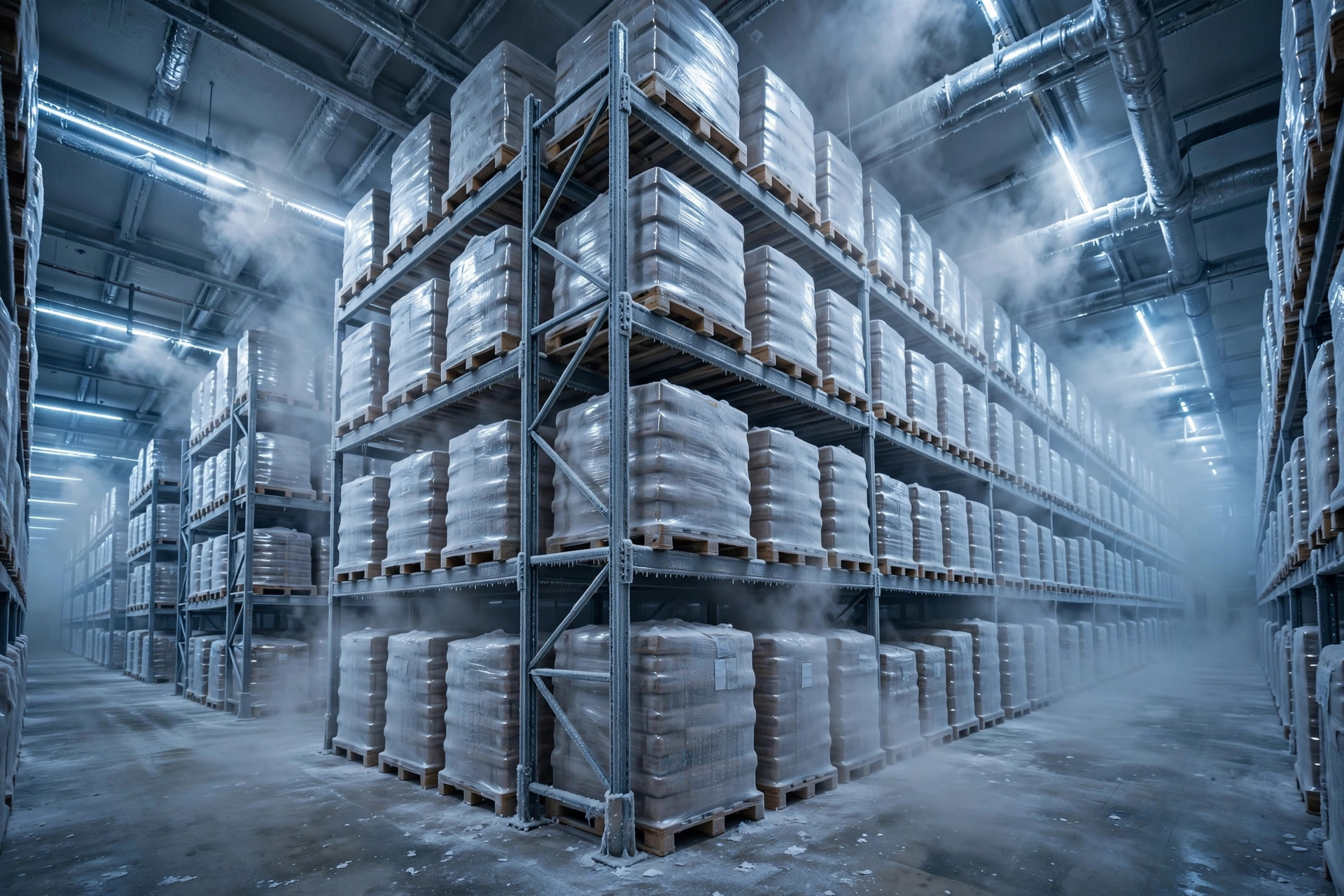
The -18°C (0°F) threshold for frozen food comes straight from the FDA Food Code: frozen food must be held at 0°F (-18°C) or below during storage and display. This is not industry habit; it is a codified requirement. The refrigerated side has its own line: the FDA Food Code requires time/temperature control for safety (TCS) foods to be held at 41°F (about 5°C) or below, while the USDA recommends keeping refrigerators at or below 40°F (4°C). In practice, most refrigerated warehouses manage to 0–4°C, tightening one notch below the regulatory line to leave room for fluctuation.
Put the three zones side by side and the logic becomes clear:
| Zone | Setpoint range | Typical goods | Standard basis | Biggest risk |
|---|---|---|---|---|
| Frozen | -18°C or below | Frozen meat, seafood, frozen meals | FDA Food Code (0°F or below) | Temperature rebound causing irreversible freeze-thaw damage |
| Refrigerated | 0–4°C | Dairy, fresh meat, produce, some pharma | FDA Food Code (41°F/5°C or below); USDA (40°F/4°C) | Frequent fluctuation; breaks hardest to detect |
| Ambient-controlled | 15–25°C | Chocolate, some drugs, wine | Mostly shipper specs | Summer heat excursions |
One detail matters more than it looks: the regulation says "held at or below" a temperature — it does not say "set the thermostat to" that temperature. Compliance is judged by what the product actually experienced, not by the number on the control panel. That distinction is where nearly every temperature claim dispute begins.
The Cost of Losing Temperature Control Lives in the Data
In early 2024, a California 3PL cold storage warehouse handling imported seafood had a refrigeration unit fail overnight. Over six hours, the freezer drifted from -18°C up to -9°C, then recovered when the unit came back online. On the panel, it looked like a brief excursion. But when the shipper pulled the continuous temperature logger data, it showed roughly 400 pallets of frozen shrimp sitting in the -9°C band for nearly four hours — well outside the tolerance window in the quality agreement. The shipment was downgraded, and the shipper filed a claim against the 3PL, settled as a proportion of cargo value. Throughout the dispute, nobody argued about the setpoint. The entire fight was over the logger curve. The setpoint was never in question; the break in the chain was proven by the record.
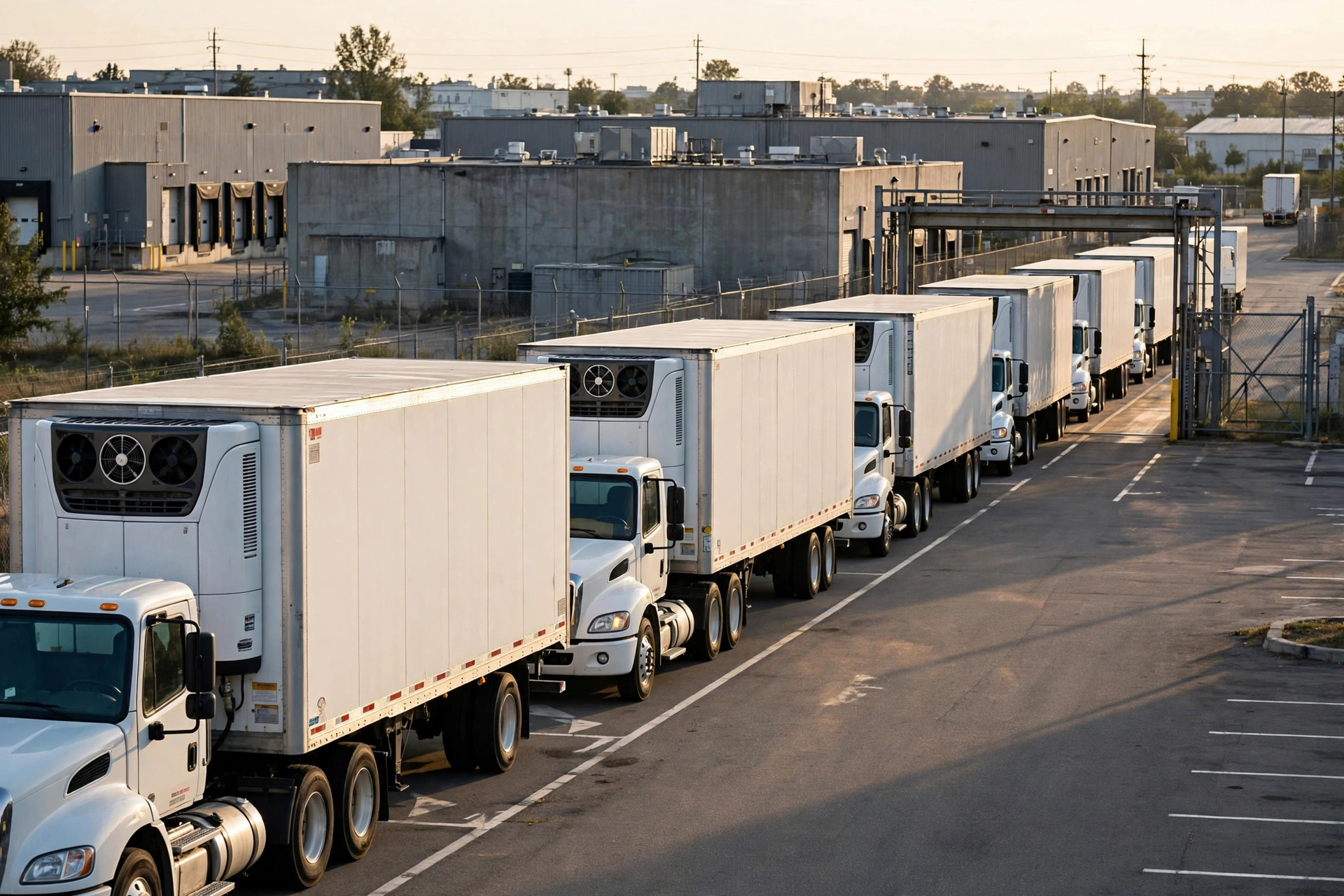
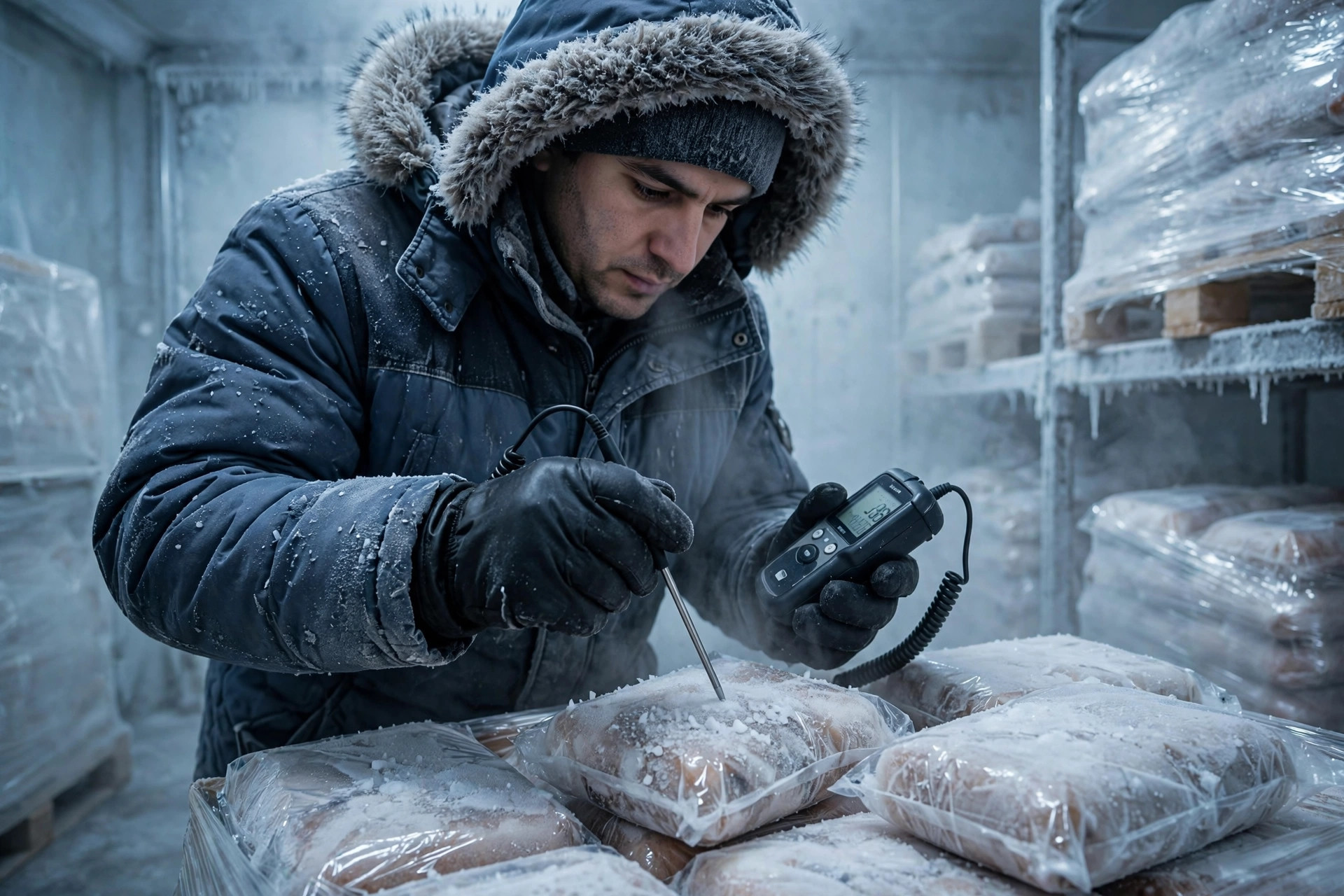
A second case played out at the receiving dock. In 2023, a Texas food distributor's receiver spot-checked an inbound reefer as procedure required: the trailer thermometer read 7–8°C against a 4°C receiving standard for that dairy load. The driver said the unit had just finished a defrost cycle. The receiver refused the load and documented everything with photos. The shipper later confirmed the call: had that product entered the warehouse, any subsequent quality issue would have become an unresolvable argument about whose leg of the chain broke. Receiving temperature verification guards the very start of the liability chain.
Both cases point to the same conclusion: in cold chain compliance, the completeness of temperature records outweighs the setpoint by an order of magnitude. Setting -18°C is only the starting line; proving the chain never broke, from receiving to dispatch, is the finish line.
The Counterintuitive Part: A Colder Cold Storage Warehouse Is Not a Safer One
There is a widespread industry instinct that does not survive contact with the regulation: that running a freezer at -25°C must be safer than -18°C. Under the FDA Food Code's logic, it is wrong — the rule requires "0°F or below," and -18°C already satisfies it. Pushing lower does not make the product any safer, while energy and equipment load rise for real. What actually decides a claim is never how many degrees below the line the setpoint sat, but three questions: was receiving temperature verified, is there an unbroken continuous in-storage record, and was temperature handed off at dispatch. Cold chain compliance is a record-chain problem, not a refrigeration-capacity problem. Moving budget from "run colder" to "record better" — continuous loggers, automated alarms, receiving verification procedures — pays back far more.
Cold Storage Temperature Management: Three Trends Already Underway
Phenomenon, standards, and cases together point to three directions. First, manual spot checks are being replaced by continuous wireless monitoring — per public materials from multiple cold chain equipment vendors, wireless loggers with automated alarming have become near-standard in new builds, for a simple reason: people skip readings, sensors do not. Second, temperature data is entering contracts and insurance terms; shippers increasingly require 3PL bidders to demonstrate historical temperature-record export capability, and "can you prove the chain never broke" is becoming a bid criterion. Third, the FDA's FSMA 204 traceability rule set its compliance date at January 20, 2026 — its core is lot-level traceability rather than temperature, but the direction is the same: regulators want end-to-end retrievable data, not paper that looks good during an audit.
So, back to the original question: what temperature should a cold storage warehouse be? The researcher's answer is that frozen means -18°C or below and refrigerated means 0–4°C — the floor set by the FDA Food Code and the USDA. But the more interesting question is what comes next: when continuous temperature data becomes the default, will "compliance" shift from "passing the spot check" to "provable end to end"? On that day, the competition will no longer be about whose warehouse runs colder, but whose data chain is more complete. That is a question for anyone building a new facility or renewing a 3PL contract.
By Dr. Chen, Supply Chain Researcher