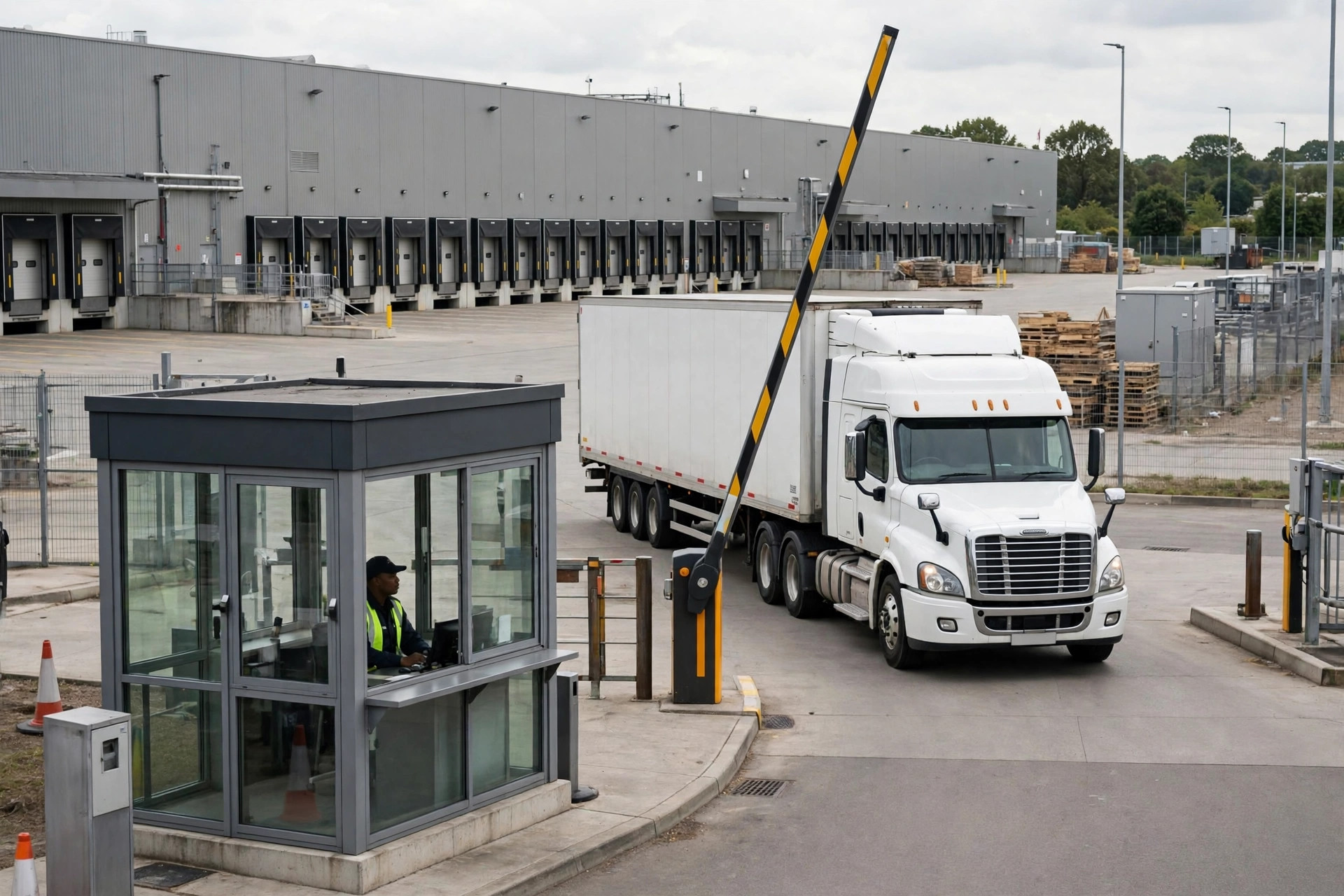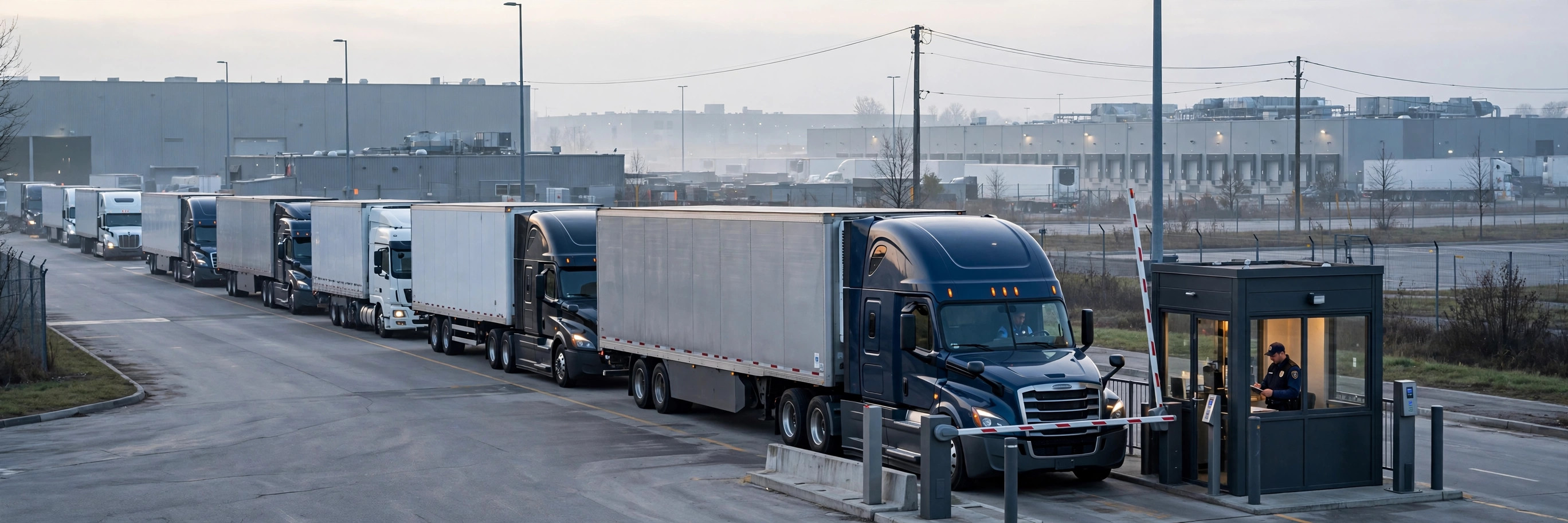
Your YMS tracks appointment times. But does it track the temperature inside the trailer?
Summer 2024: a reefer sat in a Los Angeles food warehouse's queue for five hours. Box temperature climbed from -18°C to -9°C. The appointment was on time. The truck arrived on time. The receiver rejected the entire load — over twenty thousand dollars of product — because the temperature logger's curve doesn't lie the way an appointment timestamp can.
A standard YMS manages "when the truck comes, which door it takes, how long it dwells." A food warehouse YMS has to manage one more thing: whether the freight inside is still good. Letting an under-pre-cooled trailer into your yard is inviting risk into your cooler.
Why under-pre-cooled trailers shouldn't get in
The physics is simple: a reefer is an insulated box, not a freezer. Its refrigeration unit maintains temperature; it doesn't re-freeze product. Frozen food at -18°C sitting in a -9°C box for five hours starts thawing at the surface, bacteria wake up, and refreezing doesn't restore quality. The receiver's rejection isn't being difficult — it's FDA compliance. Check the FDA's current food transportation rules for the specifics; I'm not going to quote regulations from memory.
The messier part is the blame game. Whose temperature excursion was it? The carrier says the unit was fine and the warehouse made them wait five hours; the warehouse says the box was warm on arrival. Without an arrival temperature record, that argument never resolves.
So the iron rule for food warehouses: if the pre-cool isn't met, the truck doesn't enter. Not "can't unload" — it goes and gets the box down to spec before it joins the queue. The order matters.
Managing temperature inside the YMS
A guard with an infrared gun at the gate isn't enough. Here's how the good food warehouses I've seen do it inside their YMS:
Declare at booking. The carrier books with three numbers: required product temperature, actual box pre-cool temperature, reefer unit running status. The YMS compares automatically — pre-cool more than about 3°C above the required temperature and the appointment bounces back for re-cooling and rebooking. This one screen catches most of the trouble before it starts.
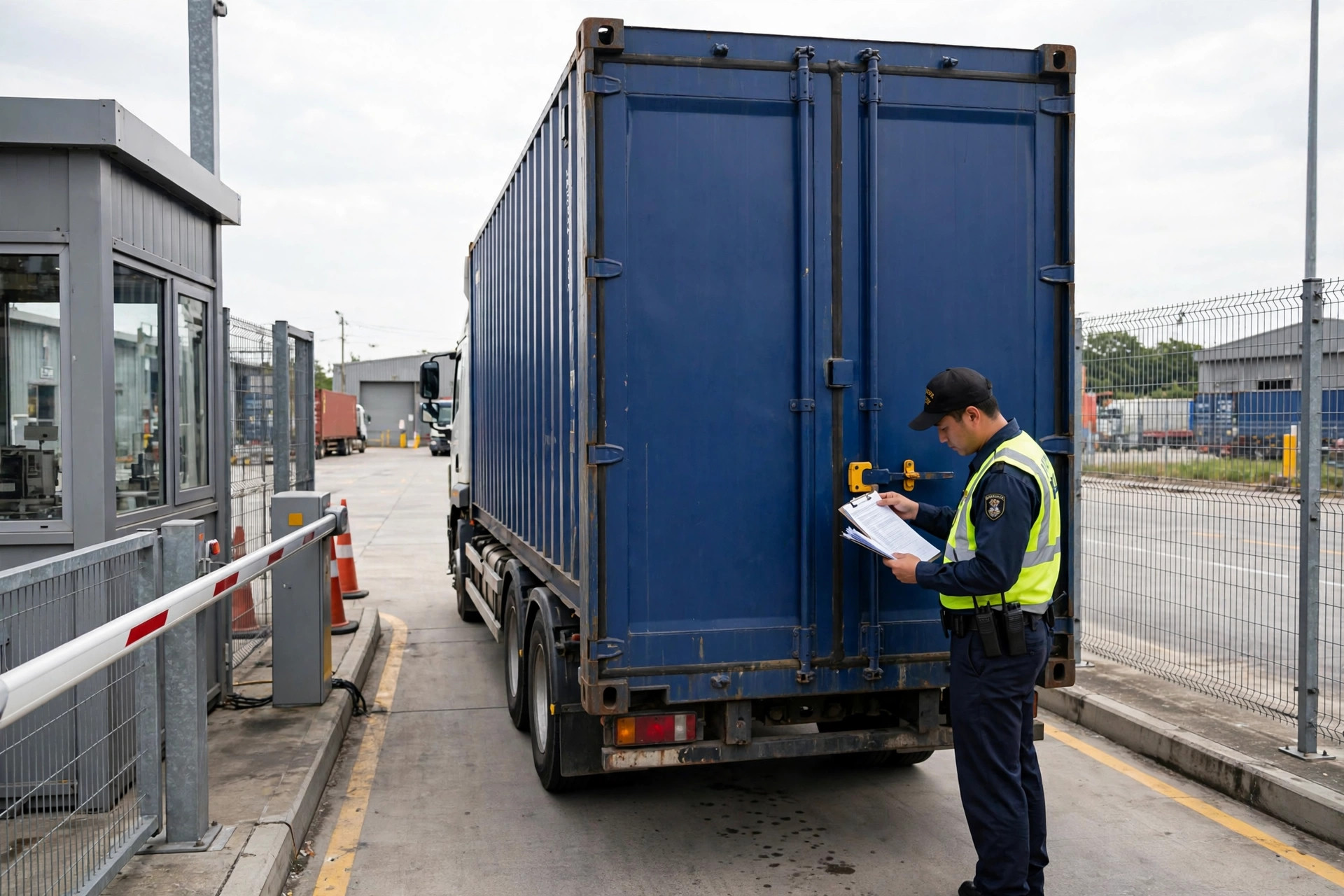
Capture temperature automatically on arrival. Temperature probes at the scale or gatehouse write the box temperature straight into the YMS arrival record, matched against the declared number. A hand-held reading is gameable six ways; an automated capture is a fact.
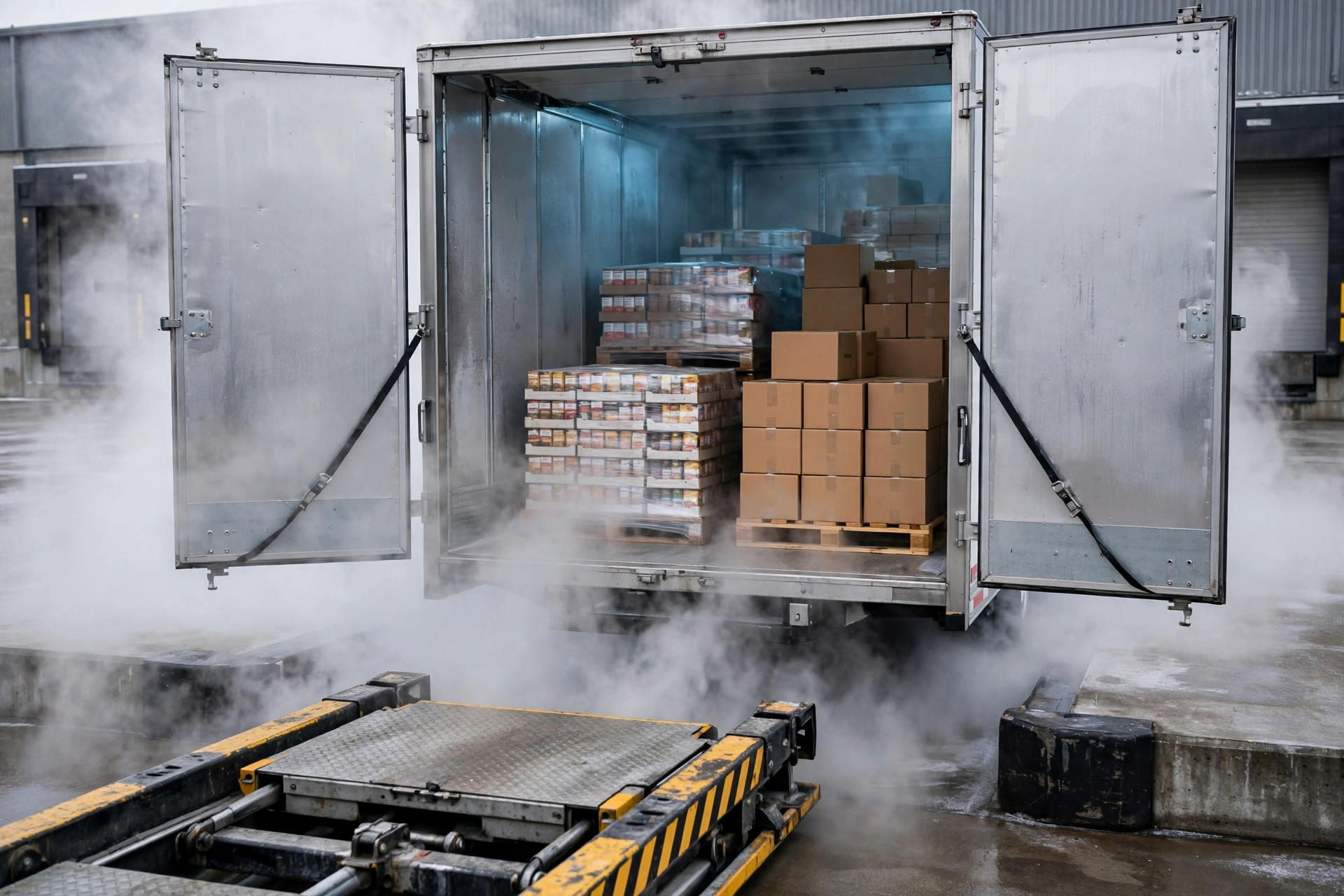
Auto-hold on excursion. Write the rules into the system instead of relying on human judgment: arrival temperature beyond the threshold flips the load to "hold" status and texts the carrier. The threshold is yours to set — frozen and chilled differ — but it must be written into the carrier agreement in black and white.
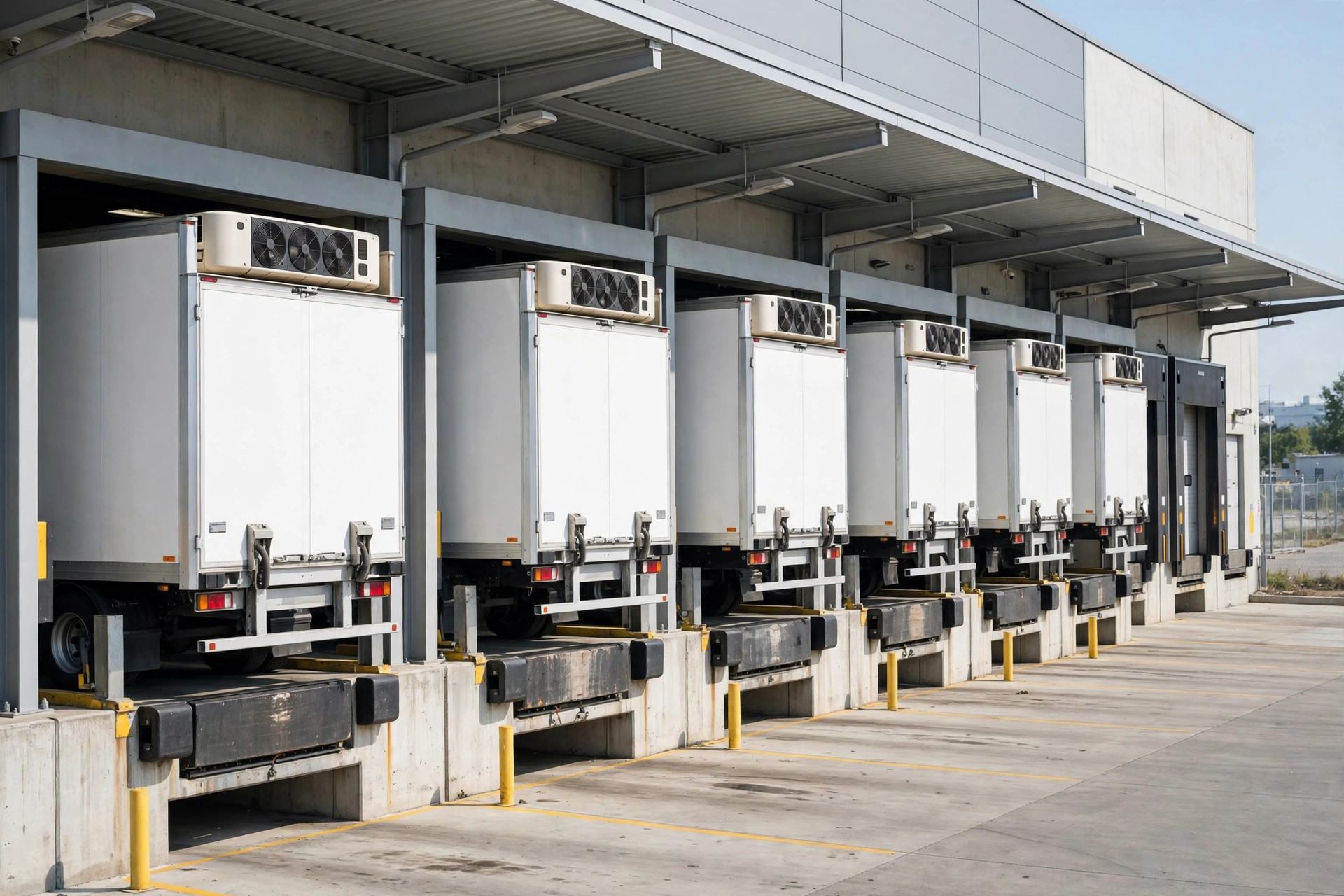
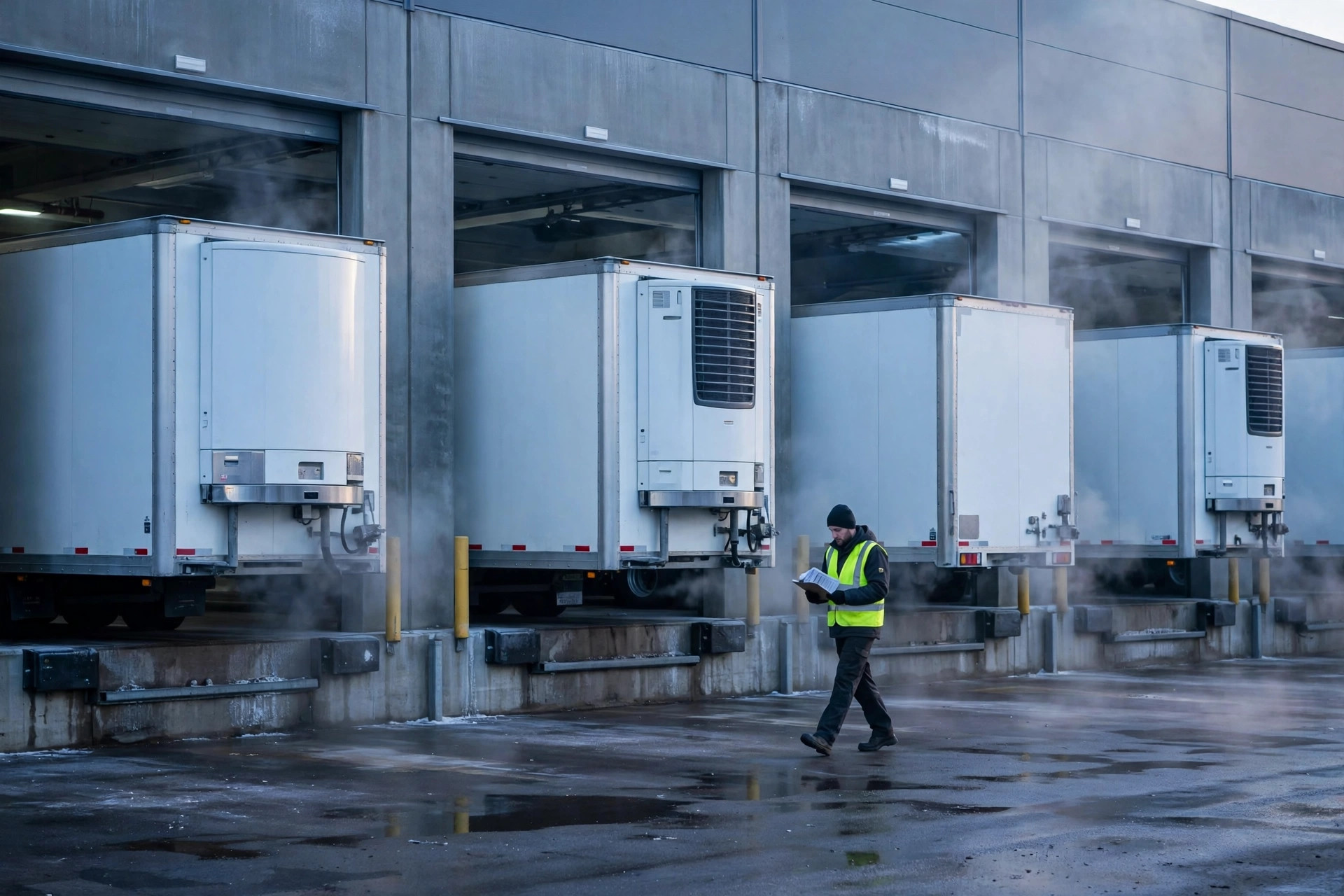
Mind the dock handoff. After entry, manage the trailer-to-door mating time too. Door open, trailer not sealed, cold air pouring out — the cooler temperature swings and the neighboring freight suffers. Capture "docked" and "unload start" timestamps in the YMS and alert on overruns.
The dock seal itself is a detail most operations overlook. A worn or wrong-sized dock seal leaves gaps around the trailer, and every minute of unloading pumps refrigerated air straight outside. In summer heat, I've seen cooler temperatures near the doors swing several degrees during a long unload — enough to push the pallets staged closest to the door out of spec. Put dock seals on the preventive maintenance schedule, match the seal to your trailer fleet's dimensions, and treat a torn seal as a temperature-control failure, not a cosmetic issue. It's a hundred-dollar part protecting a twenty-thousand-dollar load.
What if drivers won't play along?
The most realistic question of all. A driver has a living to make; telling him to go burn two hours getting his box cold will not go over well. Rules alone won't hold — you need mechanics:
Write it into the transportation agreement. Pre-cool standard, arrival temperature, excursion handling, and the deduction schedule — all signed before the first load. A verbal rule dies at the first dispute.
Give good drivers a fast lane. A carrier with ten straight compliant arrivals gets flagged "trusted" in the YMS and prioritized for doors. For drivers, skipped queue time is money. That beats fines.
Keep an escape hatch. Genuinely urgent freight, borderline temperature — have a documented "exception" flow: quality manager signs off, it's logged separately, the load gets expedited inspection on receipt. Rules are rigid but business can't seize up; the exception log shows exactly who made the call if something goes wrong.
One more mechanism that pays for itself: the carrier temperature scorecard. Every arrival's declared-vs-actual temperature delta goes into a per-carrier record, reviewed monthly. Carriers with clean records get priority booking windows; chronic offenders get a surcharge or lose the lane. Share the scorecard with the carriers — sunlight is the cheapest enforcement tool there is. A carrier that knows its temperature performance is measured and ranked will pre-cool properly without you ever raising your voice. The ones who don't respond to the scorecard are telling you exactly what kind of partner they are.
A cold-chain YMS and a dry-goods YMS look like the same system but manage different things: one manages time, the other manages temperature. One more temperature probe in the workflow, one fewer full trailer written off. Food warehouse operators can all do that math.