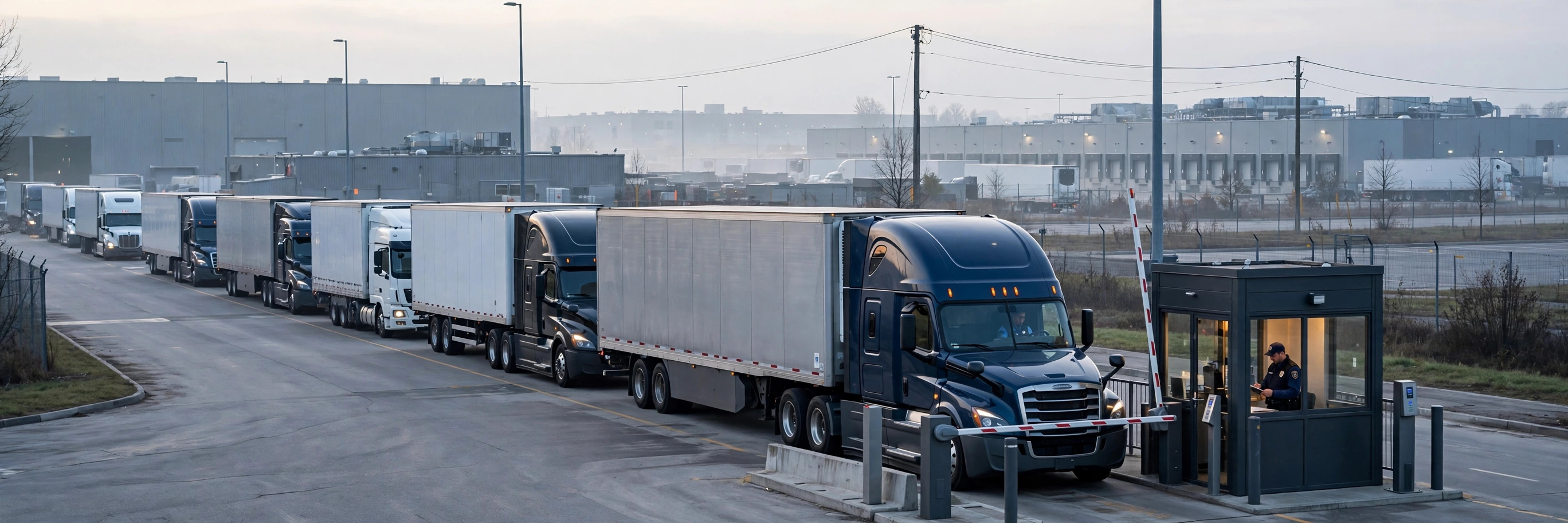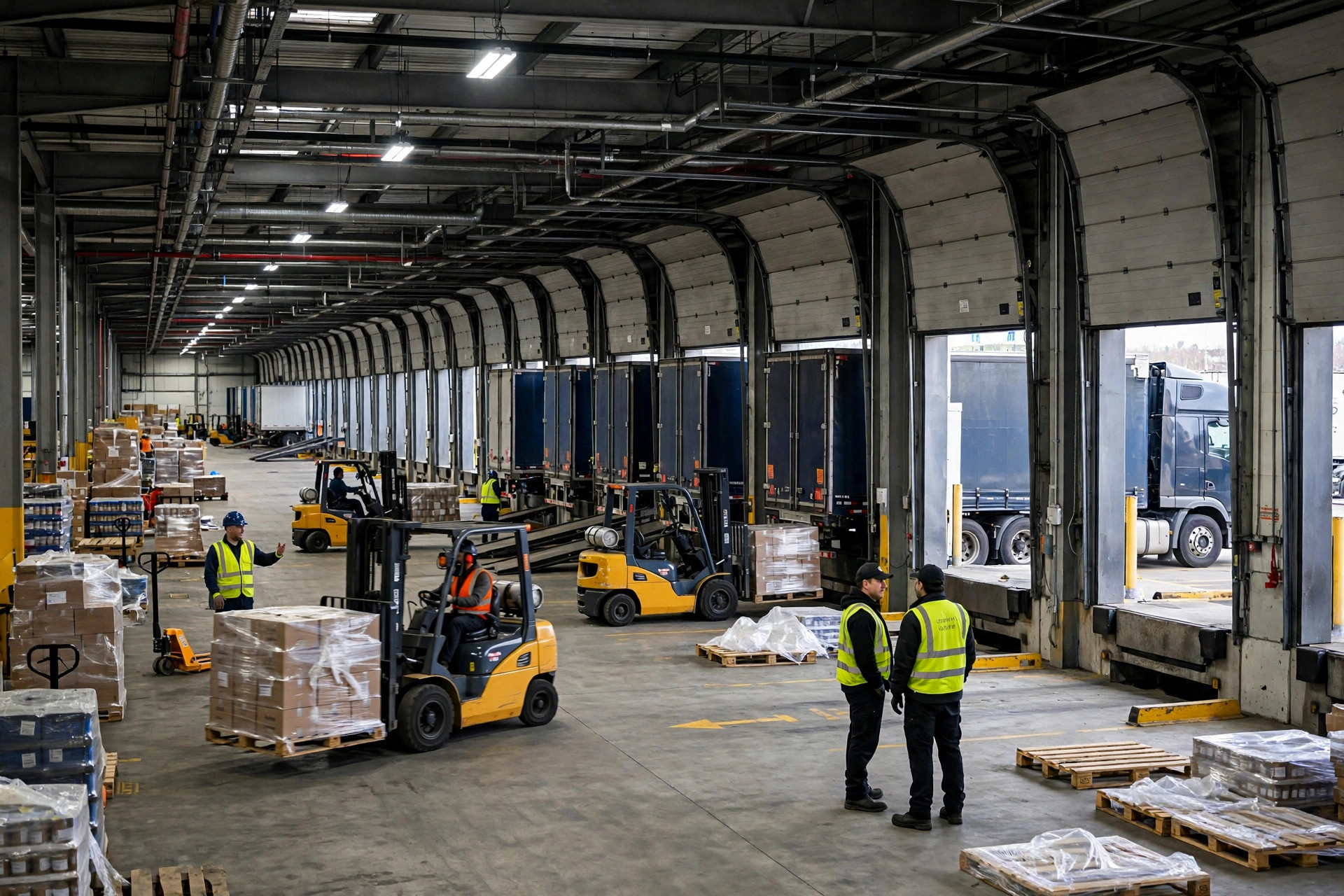
Here's a number that should embarrass the industry: most YMS dashboards I see contain everything and communicate nothing. Eighteen pages of arrival timestamps, door assignments, and carrier names — and the owner still asks the same question every Monday: "How much did we pay in detention this month?"
I spent twenty years in US warehousing operations, and I've watched this exact scene play out in Fontana, in Joliet, in Bethlehem. The system records plenty. The report answers nothing. The fix isn't more data. It's translating "what the system tracked" into "what the boss worries about."
The only three questions that matter
Money: what did we pay this month in detention and accessorial charges because trucks queued up or loading dragged on, and are we over budget? Capacity: are the doors actually enough, or do we need temp space and a night shift for peak? Carriers: who shows up late, who no-shows, and who gets cut at the next bid?
Notice what's missing: nobody upstairs cares what time door 47 went idle yesterday. Details belong to dispatchers. Executives want conclusions. My rule now is one page a week, two at most. Page one: three numbers — detention spend, door utilization, no-show rate — each with a trend arrow. Page two: exceptions only. Which carrier no-showed three times, which door's utilization fell off a cliff, any truck queued over two hours. If it fits on one page, don't write eighteen.
Reports also need to be tiered, because one report can't serve three audiences. Dispatchers need a daily sheet — today's appointments, lates, no-shows, queue status — in their hands before the shift starts; that's a working tool. The boss needs the weekly one-pager of conclusions and trends; that's a decision tool. Carriers need a monthly scorecard — on-time rate, no-show rate, the overtime list with timestamps; that's a negotiation tool. Same YMS data, three cuts. Never send the same eighteen-page dump to everyone: dispatchers find it too vague, the boss finds it too detailed, and carriers simply won't read it.
Door utilization is a vanity metric if you compute it wrong
The formula looks innocent: occupied hours divided by available hours. But I've seen this number gamed into meaninglessness more times than I can count. The classic trap is the daily average. Doors slammed all day with trucks lined up onto the street, dead empty at night — and the daily average reads 55%, perfectly healthy. Meanwhile the day shift was on fire.
Cut the day into four blocks — morning, midday, evening, night — and look at each. A block running over eighty percent with a queue forming means you genuinely need doors. A block sitting under thirty percent for weeks means shift appointments into it, or shut a few doors and save labor and power. And always read utilization next to queue length: high utilization with no queue means full but flowing; low utilization with trucks waiting means your appointment schedule is broken — doors empty, drivers waiting, the worst of both worlds.
The time blocks have an advanced use too: reverse-engineering whether your appointment template makes sense. Say the 8-to-11 AM block runs at ninety percent utilization with a permanent queue, while 2-to-4 PM sits at forty percent. Your appointment windows are in the wrong place — shift bookings from the morning peak into the afternoon valley and the queue disappears without adding a single door. I did this at a sixty-door site once: just reshuffling the appointment template took the morning queue from an average of forty minutes down to under fifteen. No new doors, no new labor. That's what YMS data is for — not recording congestion, but eliminating it.
One more detail that matters: "occupied" starts when the trailer actually docks, not when the appointment slot begins. Some systems count the booked slot as occupied, so no-show trucks inflate utilization. The boss sees "doors are full," rents extra space, and burns money on phantom demand. No-show gaps must be flagged separately, and the report should distinguish a dispatcher who failed to backfill from a carrier who never came.

On-time arrival and no-show rates are argument weapons
For carrier management, the YMS's greatest value is letting you argue with data. On-time arrival is simple: actual arrival inside the appointment window counts. But the window itself is where people cheat. I've seen sites hand out two-hour windows and brag about ninety-plus percent on-time rates — a meaningless number, because a window that wide is no measurement at all. Tighten it to one hour, run a month of data, then set your target.
No-shows hurt more. One no-show leaves a door idle for a slot; dispatch scrambles to backfill, and when they can't, that's capacity in the trash. I rank carriers by no-show rate and publish it monthly. No lecture needed — the carriers at the bottom show up to explain themselves. That ranking alone usually drags the no-show rate down within a couple of months. Nobody wants to sit at the bottom of their customer's scoreboard.
Fairness cuts both ways. Some "late" arrivals are the yard's own fault: the previous trailer took two extra hours to unload, so the next one arrives with no door to hit. Strip those out of the carrier's score, or the carrier will throw your own data back at you in the next negotiation. YMS timestamps are a double-edged sword — align on definitions first: arrival means the gate scan, docked means the door sensor or a manual confirm, departed means the exit scan. Write it into the SOP so everyone argues from the same numbers.
Settling detention with carriers: timestamps are the evidence
This is where YMS reporting pays for itself most directly. Nine out of ten detention disputes come down to one question: when does free time start? The carrier says from the appointment time; the yard says from when loading actually began. Those two or three hours of difference are real money. The four YMS timestamps — arrived, docked, loading started, loading finished — settle it cold.
My practice: at the start of each month, pull every trailer that ran over free time, attach the timestamps, and send it to the carrier for reconciliation. Most disputes die the moment they see the timestamps; what survives is worth a real conversation. And when the delay was the yard's own doing, own it on the report — the boss needs that number to decide whether the cost stays with the operation or gets shared with the shipper.
A friend running a cold-chain yard did exactly this and cut detention spend by nearly forty percent in half a year. The carriers didn't get better. The accounting did. When the timestamps are on the table, the blame game ends, because the ledger names names.
In the end, reporting isn't a software problem. It's a courage problem — are you willing to put the ugly numbers on the page? Inflated utilization, ugly no-show rates, detention over budget: the boss finds out eventually. Better it comes from your one-pager, with your read and your plan next to it, than from his own uncomfortable question. The YMS gave you the books. The report is how you close them.
So here's my question for you: if you pulled every trailer that sat in your yard over three hours last week, where would the time have gone — waiting for a door, slow loading, or waiting on release paperwork? Your answer is next week's page one.