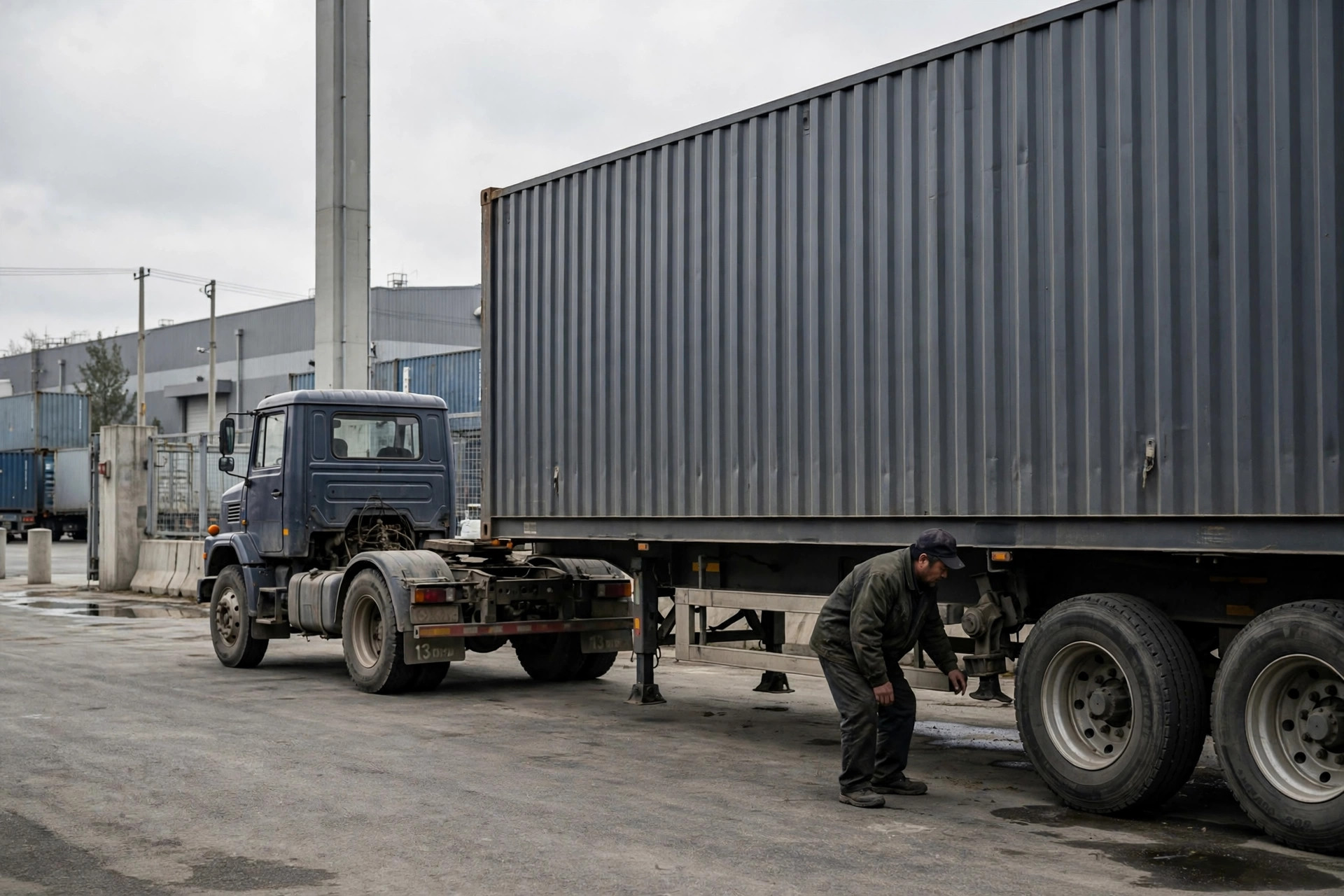
Fifteen years behind the wheel taught me this: the drop-trailer handoff is where things go wrong most often, and where nobody takes responsibility. The tractor drives off, the trailer sits in the yard, and the next driver hooks up to it days later. What shape is that trailer in — lights, tires, air brakes, seal number? It all comes down to luck. More and more yards now run their trailer inspections through YMS on a phone, turning the gate check from a gut feeling into a paper trail. That's the right direction.
A Soft Tire Turned Into a Day-Long Fight
Last November, at a logistics park in Linyi, Shandong: a drop trailer had sat in the yard for three days. The driver who hooked up — Lao Li — was in a hurry and skipped the walk-around. Near Jinan, a trailer tire blew. The roadside mechanic took one look and said it had been run soft; the sidewall was already feathered. It had probably been low on air the day Lao Li picked it up.
Rescue call, tire change, missed delivery appointment — the whole mess ran into several thousand yuan. Lao Li blamed the previous driver; the previous driver swore the trailer was fine when he dropped it. The yard cameras only covered the gate, and the trailer had been parked in a blind spot. Nobody could prove anything. In the end the carrier and the shipper split the bill, both furious, and the business relationship was done.
Here's what that tells you: a soft tire is visible at a glance. Kick it, look at the shoulder — a low tire sags and you can see it without a gauge. But nobody looked, and that five-second glance turned into thousands in damages. The cheapest item on any trailer inspection is "take a look," and it's the one that gets skipped most.
A Seal Number That Didn't Match — And Nobody Dared Haul It
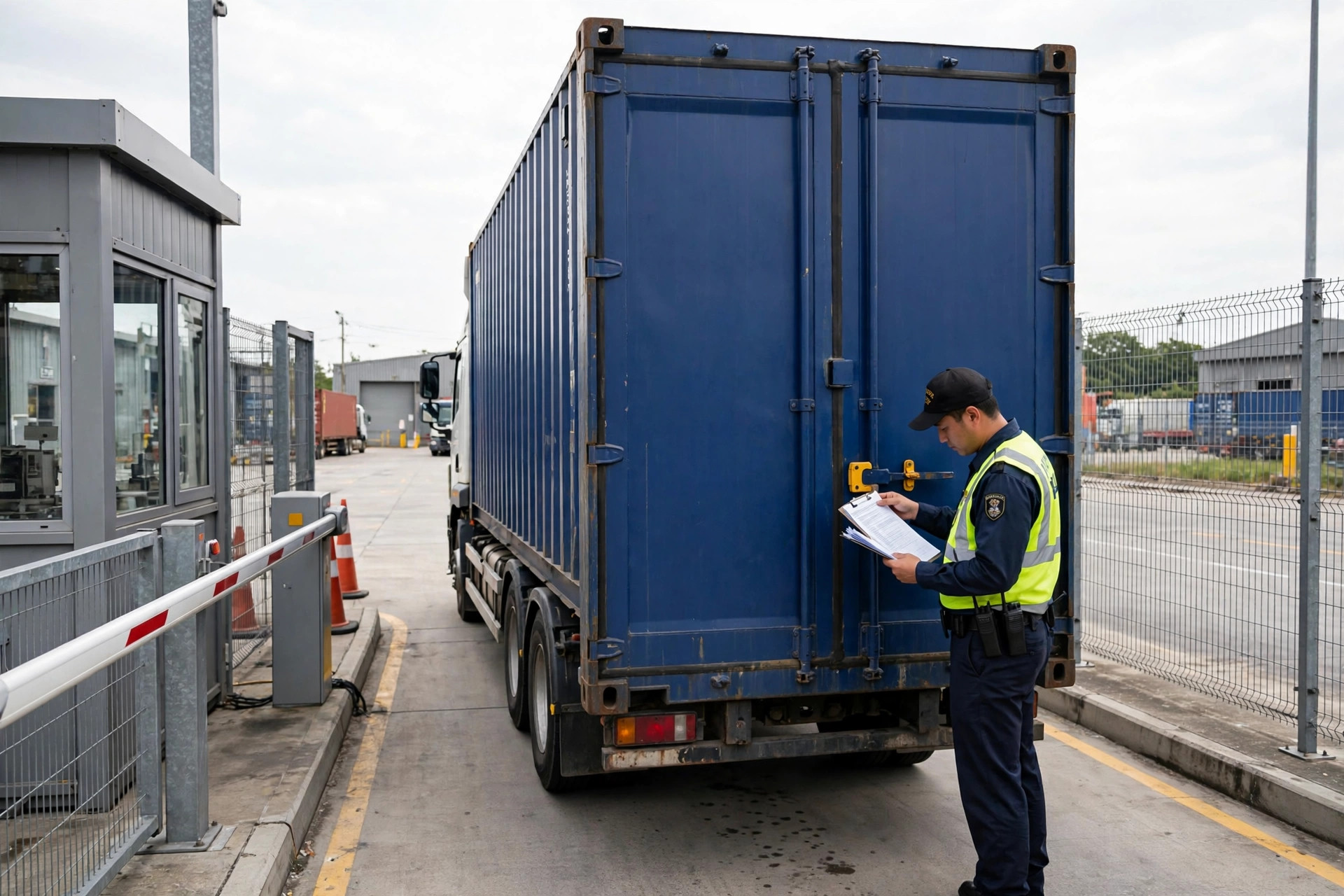
This April, at a warehouse in Baiyun, Guangzhou. A trailer had sat in the yard for over a week. Driver Lao Wang went to pick it up and checked the seal number against the paperwork: one number on the documents, a different number on the trailer. The warehouse said nobody had opened the box. Lao Wang refused to haul it — if an inspection found the numbers off, whose problem would that be?
Two hours of standoff. They opened the box: nothing missing. But who changed the seal, and when? Nobody could say. After that, the warehouse made a rule: every trailer entering the yard gets a close-up photo of its seal, archived with the paperwork. Photos don't argue back.
That's the curse of the drop-trailer handoff: the tractor and trailer split up, and so does accountability. The equipment sits for days, nobody knows who touched it or what happened in between, and it's all word against word. Words are the least reliable evidence there is. Photos are.
The Counterintuitive Truth: The Strictest Yards Have the Most Fights
Here's something that surprises people. I've seen a yard with a 40-item paper checklist — reflector tape, fire extinguisher, everything had to be ticked. And what happened? Drivers ticked all forty boxes in thirty seconds without lifting their heads. The longer the list, the less anyone actually looked. The checklist became a ritual. When something broke, that form was worthless, because everyone knew the ticks were fake.
Another yard did the opposite: cut the list to twelve items, but made one rule — anything wrong had to be photographed, and the photos carried automatic time and location stamps. Fights went down. Why? First, twelve items is a list a human being can actually check. Second, a photo is evidence; a ticked box is not. The point of a gate check was never to fill in the paper — it's to get the next driver to lay eyes on the trailer, and to leave proof that he did. Long list, more fakery; short list, real compliance. That's the trade-off: thorough-but-fake loses to short-and-enforced every time.
The Gate Inspection Checklist for Drop-Trailer Handoffs
This is the list I've put together over fifteen years. Walk around the trailer, ten minutes, done:
| Must-check | How to check | If you find a problem |
|---|---|---|
| Lights | Tail lights, brake lights, turn signals, marker lights — one person steps on the pedal, one person watches; all must light up | Log a dead bulb on the spot, replace before leaving the yard |
| Tires | Kick them, listen; check if the shoulder sags; look for bulges and nails | Low air gets topped up before departure; bulges and nails mean the spare or a repair call |
| Brake air lines | Listen for hissing leaks, check gladhand couplings, drain the air tank valve | An air leak is a death-trap item — fix it before the trailer moves |
| Landing gear | Crank it one turn, check it moves smoothly, make sure the foot pads are there | If the crank won't turn, don't force it — call for help |
| Seals and doors | Match the seal number against the paperwork, check door locks, look for major box damage | Number doesn't match? Don't haul it until the warehouse confirms |
| Kingpin and electrical | Fifth-wheel lock engages properly, seven-way plug seated tight | A loose plug means losing your lights halfway down the road — seat it and go |
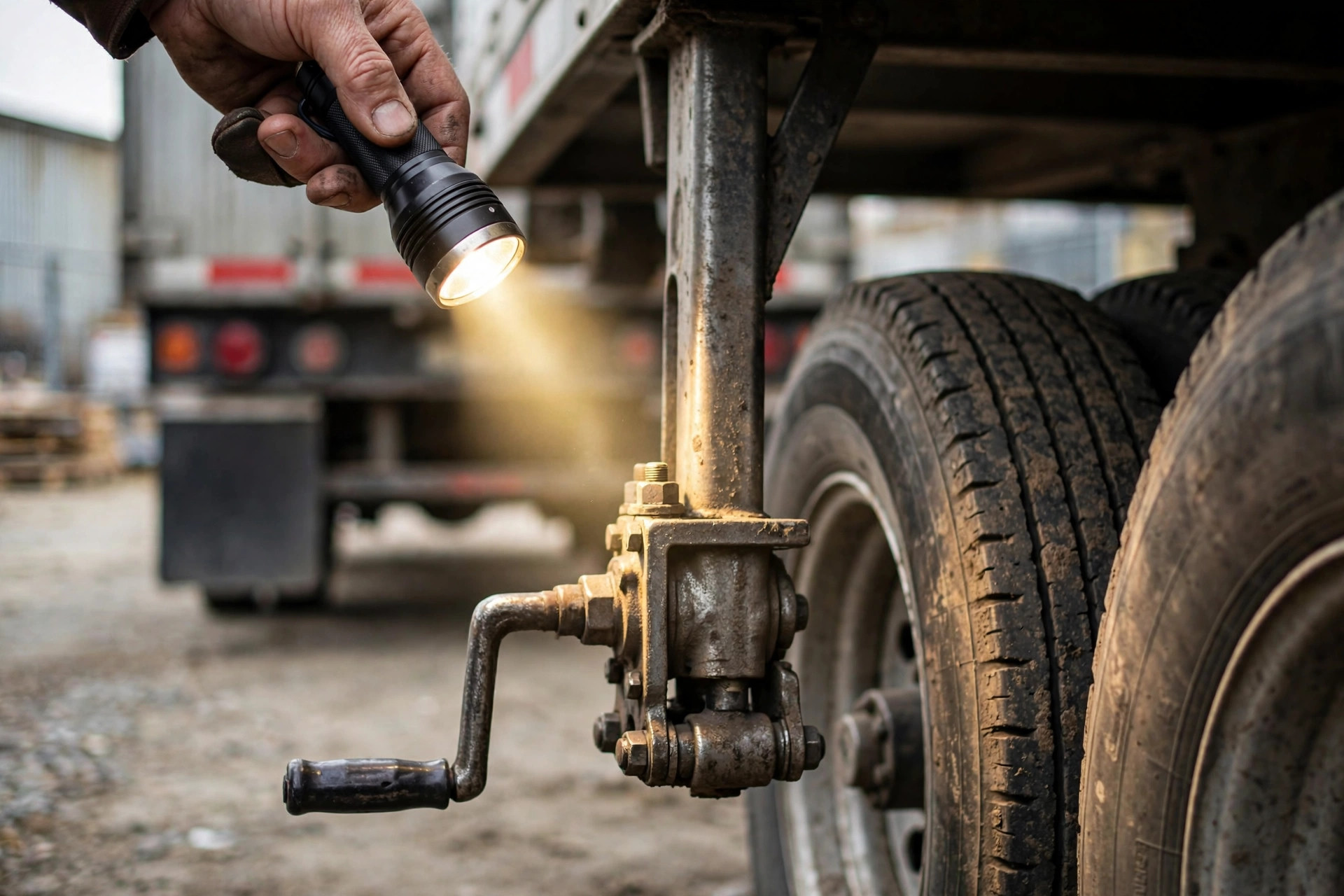
Now do the plain math: a ten-minute walk-around versus a fight that eats half a day. One blown tire on the highway — tire, rescue, missed appointment — and the whole trip is basically a loss. Ten minutes to save half a day. Every driver carries that math in his head. The trouble is nobody ever turned those ten minutes into a rule, and self-invented rules are the least reliable kind.
Digitizing the Gate Check in YMS: Proof and Accountability
Some yards now run gate inspections through YMS, and I think they've hit the nail on the head. It comes down to four things:
First, photos on entry and exit: both sides, rear, landing gear, tire close-ups — the phone stamps time and location automatically. Next argument, you pull up the photos. Better than any security camera.
Second, seal numbers get scanned and matched. Scan on entry, scan on exit, the system compares. Number doesn't match, the trailer is locked and doesn't leave the yard. Lao Wang's two-hour standoff would have been a five-minute fix with this.
Third, exceptions get reported on the phone: soft tire, dead light — one tap sends a work order straight to maintenance, and the trailer doesn't leave until it's fixed. The old paper slip just got lost.
Fourth, electronic sign-off ties responsibility to the person, not the trailer. Whoever takes over taps to confirm, and the check record is bound to that driver. The trailer sits for three days or a week — each stretch of time has a name attached. The scariest thing about drop-trailer work is that middle stretch when "nobody owns it." Digitizing it means somebody owns it, in writing.
I tell warehouse owners the same thing: don't turn this into a 40-item electronic form — that's the paper ritual with a screen. A dozen items, each backed by a photo required to close the check. The system exists to serve people, not to nag them.
Three Suggestions for Shippers and Warehouses
First, check the trailer both ways — on entry and on exit. Entry-only checks cover half the story. A trailer that sits for days changes: tires slowly leak, seals can be tampered with. The exit check is the one that keeps people alive.
Second, tie the inspection record to the person who did the handoff, not to the trailer. Trailers don't talk; people do. Whoever takes the trailer, the record carries their name. When something goes wrong, check the record first, then talk to the person — don't start with a shouting match.
Third, fix it before it leaves the yard. Never "haul it first, deal with it later." I've watched that movie too many times, and the ending is always the same: whatever you skipped in the yard comes back double on the highway or at the delivery dock.
There's an old saying among drivers: better ten extra minutes in the yard than one extra hour on the highway. Drop-trailer handoffs aren't won by whoever has the newest equipment — they're won by whoever has the tightest routine and the best evidence. Put the gate check in YMS, give every handoff a photo, a record, and a responsible name, and the fights will take care of themselves.
By Shifu Zhao, Trucking Veteran (15 yrs)