Let me be blunt: nine out of ten companies treat gate queue management as a technology problem. It isn't. It's a people problem — rules, information, and human nature.
Here's the two-sided reality: first-come-first-served sounds the fairest, but it's the least efficient. Appointment-first is the most efficient, but the hardest to enforce. Over twenty years in American distribution parks of every size, I've watched gate operations blow up in every way imaginable. Today I'm laying out the full playbook for switching queue rules: verdict first, then a pit I fell into myself, then the fix, and one last piece of advice.
The day the gate jammed: what first-come-first-served really costs
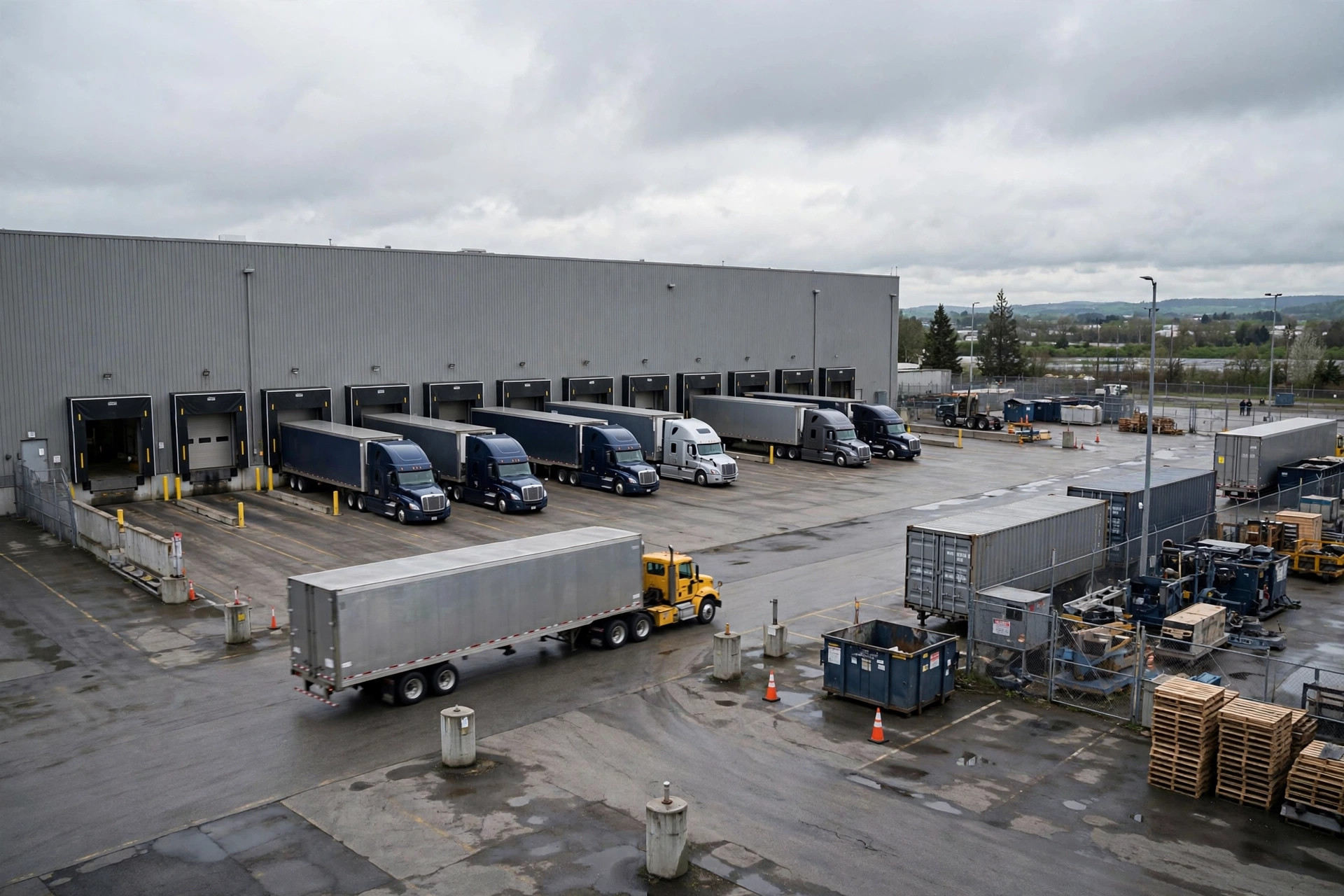
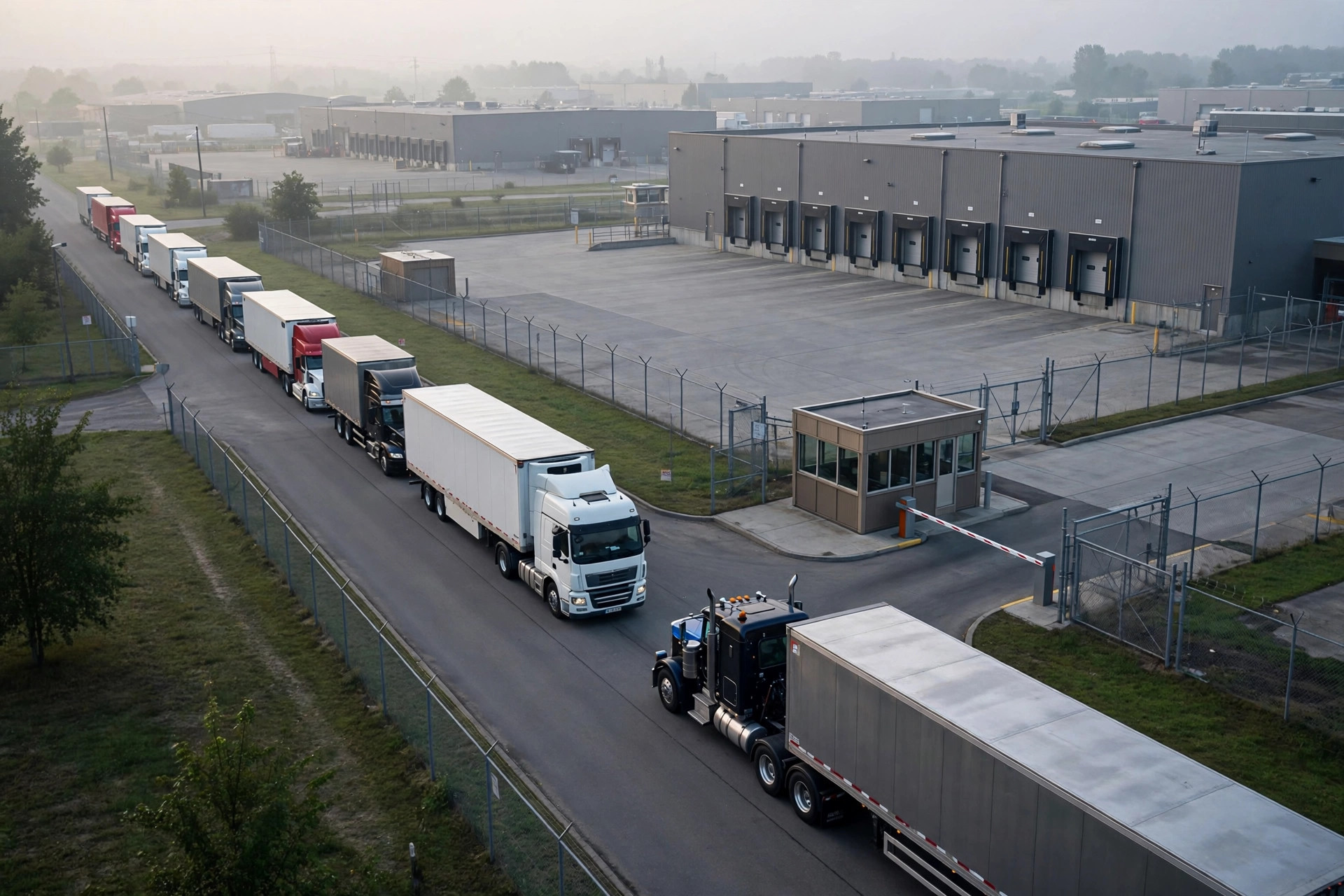
About seven or eight years ago, I was walking the yard of a food distribution client. Every morning by five, a line of trucks stretched outside the gate — veteran drivers parked on the roadside shoulder at two or three in the morning, sleeping in their cabs, a rock behind the tire counting as "holding a spot." The guard waved trucks in by recognizing faces. First arrival, first in.
The truck with an eight o'clock appointment? Blocked outside the gate for over three hours by walk-ins who'd "arrived earlier." One summer, a driver got heatstroke waiting in his cab, ended up in the ER, the park paid out, and the police posted no-parking tickets along the road. The site manager told me: "Lao Mi, our gate is busier than our docks."
The lesson stuck with me: first-come-first-served rewards showing up early and punishes playing by the rules. Build the fanciest appointment system you want — if the gate falls back to first-come, it's all wasted.
After they switched to an appointment-based call-number system, they hit a second pothole worth mentioning. Drivers complained: "I got here at eight, and my number isn't up until three?" The root cause was coarse time windows — more trucks crammed into one window than the docks could clear in a morning. The system issued numbers but ignored dock capacity. Drivers still waited outside; they'd just traded "waiting in line" for "waiting on a number." Same resentment, new packaging.
Verdict first: the real problem is outside the gate
I've seen too many companies spend big on call-number displays and SMS systems, and the gate still jams. Bluntly: the root cause of gate queues sits outside the gate — inaccurate appointment data, guards who can't see live dock status, nobody knowing where drivers actually are. Without synchronized information, the most expensive call-number software can't save you.
The order never changes: fix the rules first, then talk systems. Buying software before the rules are clear is like putting a pretty cover on a confused ledger.
Three trade-offs nobody warns you about
Every queue rule is a trade-off. Costs first, benefits second.
First: first-come vs. appointment-first. First-come costs nothing to implement and everyone understands it — but it rewards early arrival, punishes punctuality, and shreds dock planning. Appointment-first rewards the punctual and maximizes dock utilization — but it demands everyone book slots, and owner-operators and small fleets will hate you. Doubled complaint volume during the transition is normal.
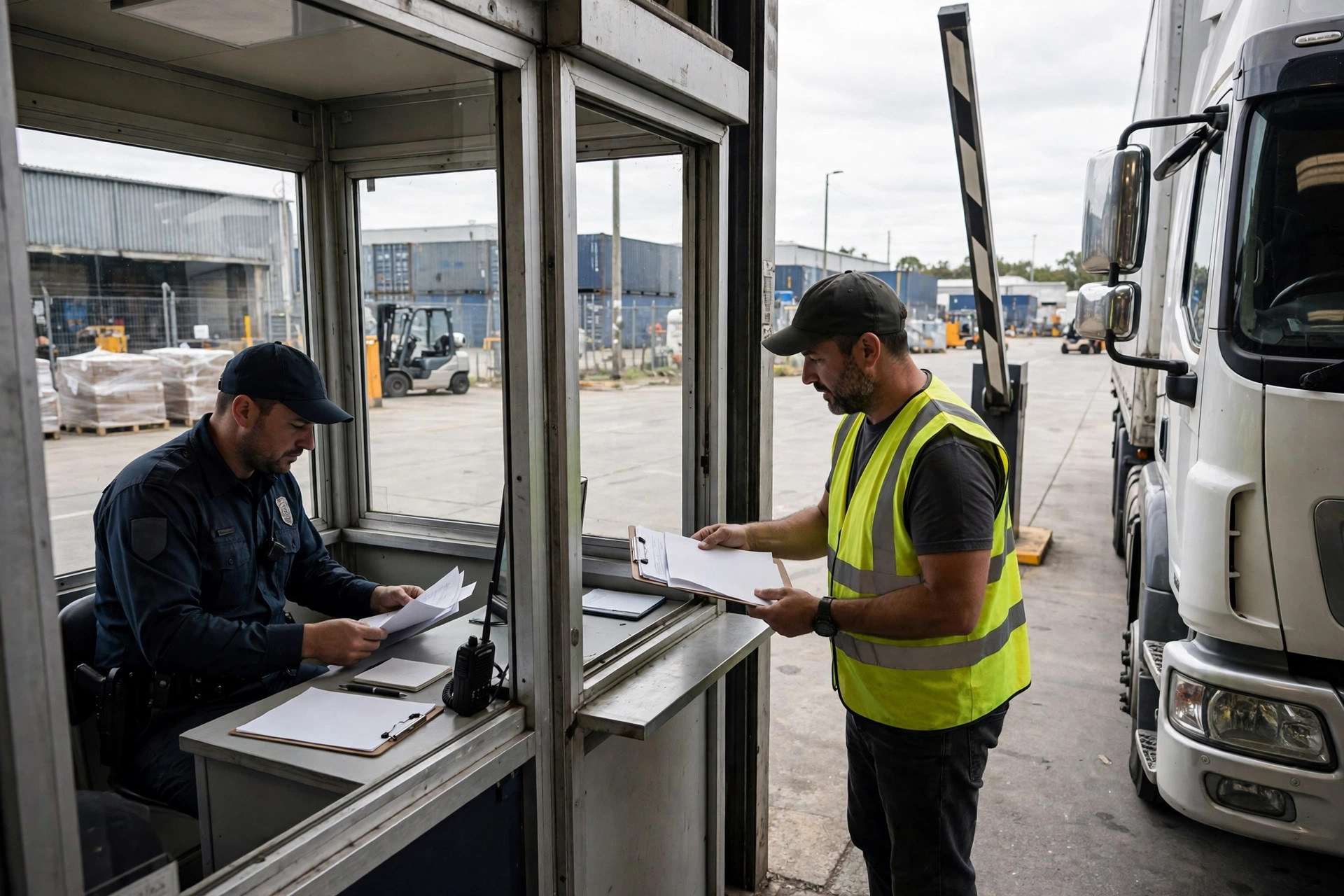
Second: strict no-show forfeiture vs. allowing queue-jumping. Strict forfeiture is clear and simple to enforce — but driver resentment runs high, and one veteran pounding the guard booth counter after a three-hour delay is more than most guards can handle. Allowing jumps keeps things human — but then the rule is dead, and everyone wants to be the exception. My compromise: a missed number automatically moves back two positions. Not rigid, not broken.
Third: high-tech call numbers vs. the low-tech way. Displays plus SMS reach drivers miles out — but the data has to be accurate and the system maintained. A whiteboard plus a loudspeaker costs almost nothing — but the information only reaches the gate, and drivers still have to hover by their trucks. My advice: don't buy software on day one. Run the whiteboard and loudspeaker for two weeks; once the rules hold, upgrade to displays or SMS.
| Rule | Favors | Hidden cost | Fits | | First-come-first-served | Early arrivals | Idle docks, blocked appointment trucks, roadside parking | Small parks, few trucks, simple operations | | Appointment-only | The punctual | Walk-ins locked out, no-show windows wasted | Brand-owned DCs with strong planning | | Appointment-first + call-number triage | Most people | Rules and data need upkeep, painful transition | 3PLs, multi-dock sites, dozens of trucks a day |
Switching the queue rules in four steps
Step one: count first. Log gate traffic for two straight weeks — which hours spike, what share of trucks have appointments, appointment punctuality, average wait per truck. Skip the data and everything you do is guesswork. The dullest step, and the most important.
Step two: set the call-number triage rules. I usually recommend three tiers: tier one, on-time appointment trucks, called first; tier two, late appointments and walk-ins, after tier one; tier three, genuine urgencies — reefer running out of time, stockout replenishment — released manually by the shift supervisor. Write the rules down, post them at the guard booth, and send them to the driver group chat. Rules that aren't transparent make the call-number system decorative.
Step three: pick the call tool. Per the trade-offs above: small sites start with whiteboard and loudspeaker, big sites go straight to SMS call numbers. The tool serves the rule, never the other way around.
One more thing: don't let the IT department write the queue rules alone. I've seen too many systems built because "the flowchart looked clean" — awkward for the guards, incomprehensible to drivers. The guard supervisor, the dispatcher, and the site manager have to sign off together; IT implements. Whoever takes the drivers' heat at the gate every day earns the right to write the rules.
Step four: dual-track transition. Week one, old and new run side by side; week two, the new rules lead; week three, the old rules retire. During the transition, station an extra person at the gate whose only job is explaining the rules and calming drivers down. Listen to week one's complaints in person. Don't hide.
Do the math: what a gate line actually costs
Take a mid-size park with dozens of trucks a day. Cutting the guard's per-truck processing from a dozen-plus minutes to a few saves a full-time headcount over a year. More importantly, every hour a driver burns outside your gate: detention is billed by the hour, one wasted afternoon runs into the hundreds of dollars, and that driver won't take your load next time. Over the long run, you're bleeding your own carrier pool dry.
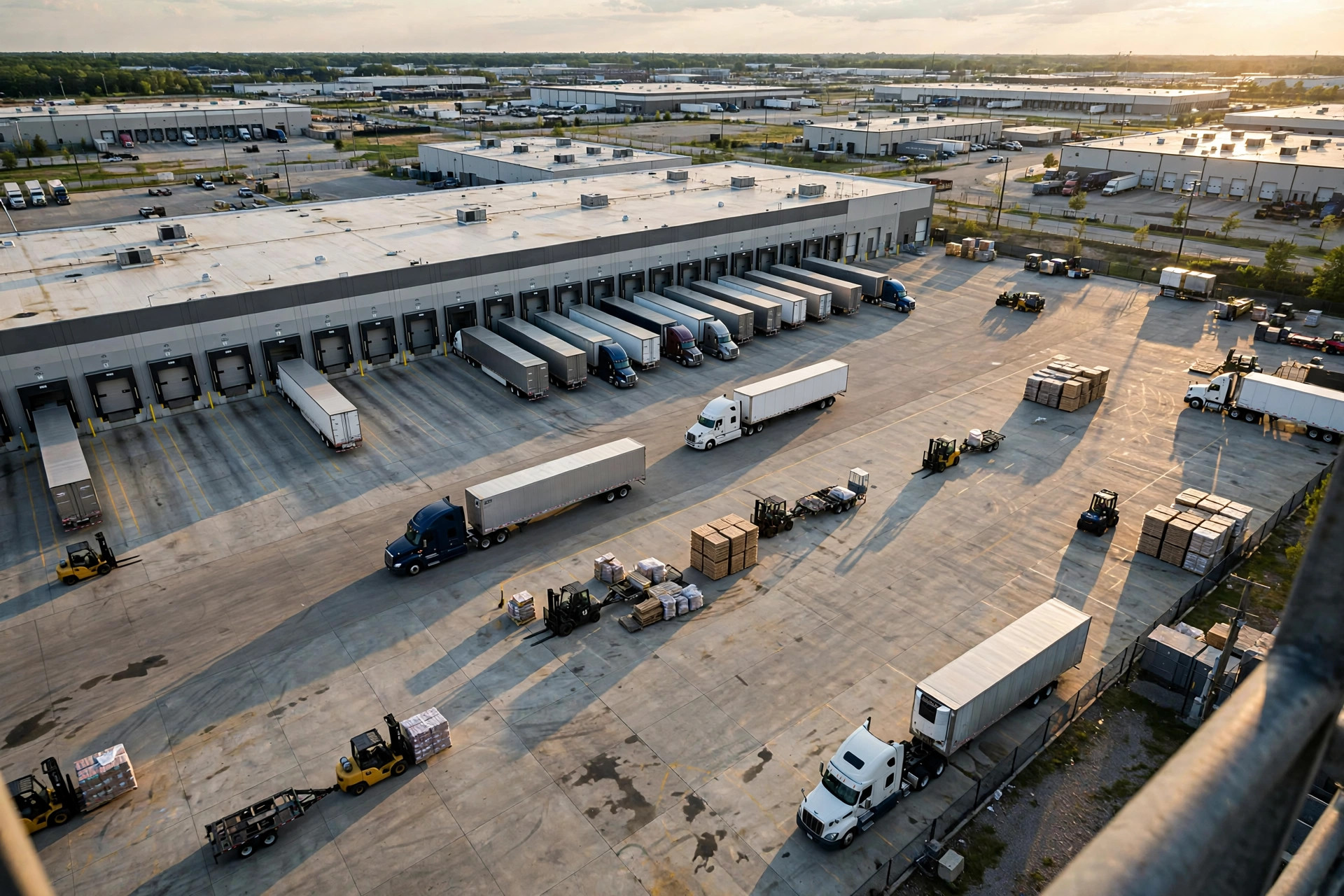
And there's a hidden ledger line: every jam at the gate means idle docks inside. Dock crews are paid by the hour — when trucks can't get in, they stand around waiting, and that's the most wasteful money you'll ever spend. That math, any owner understands.
One last word of advice: the line at your gate is a mirror of your entire operation's management. The hardest part of switching rules was never the software — it's the veteran driver who shows up three hours late on day one, pounding the counter, demanding to be let in. How you handle him, the whole park is watching.
By Lao Mi, Supply Chain Veteran (20 yrs)