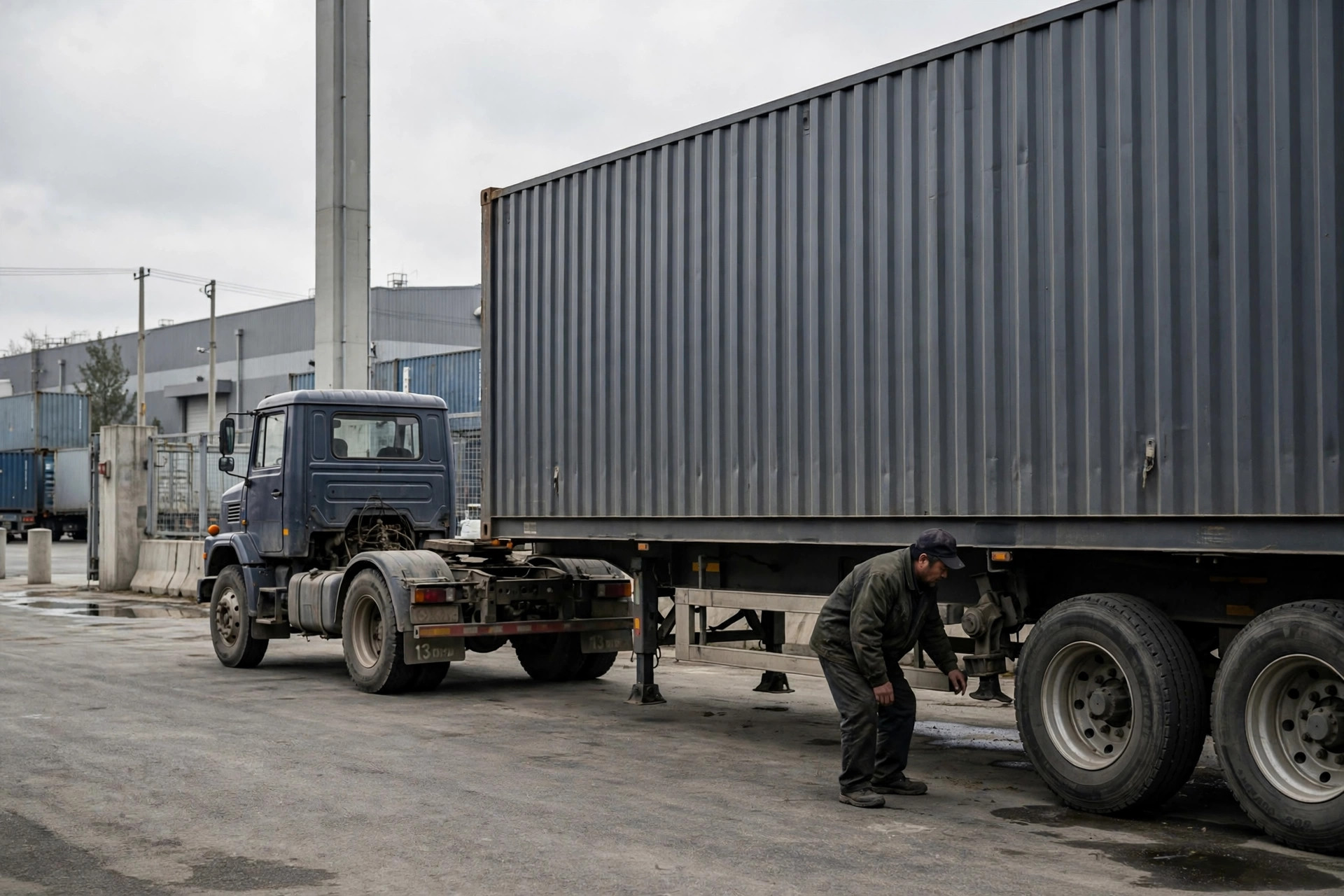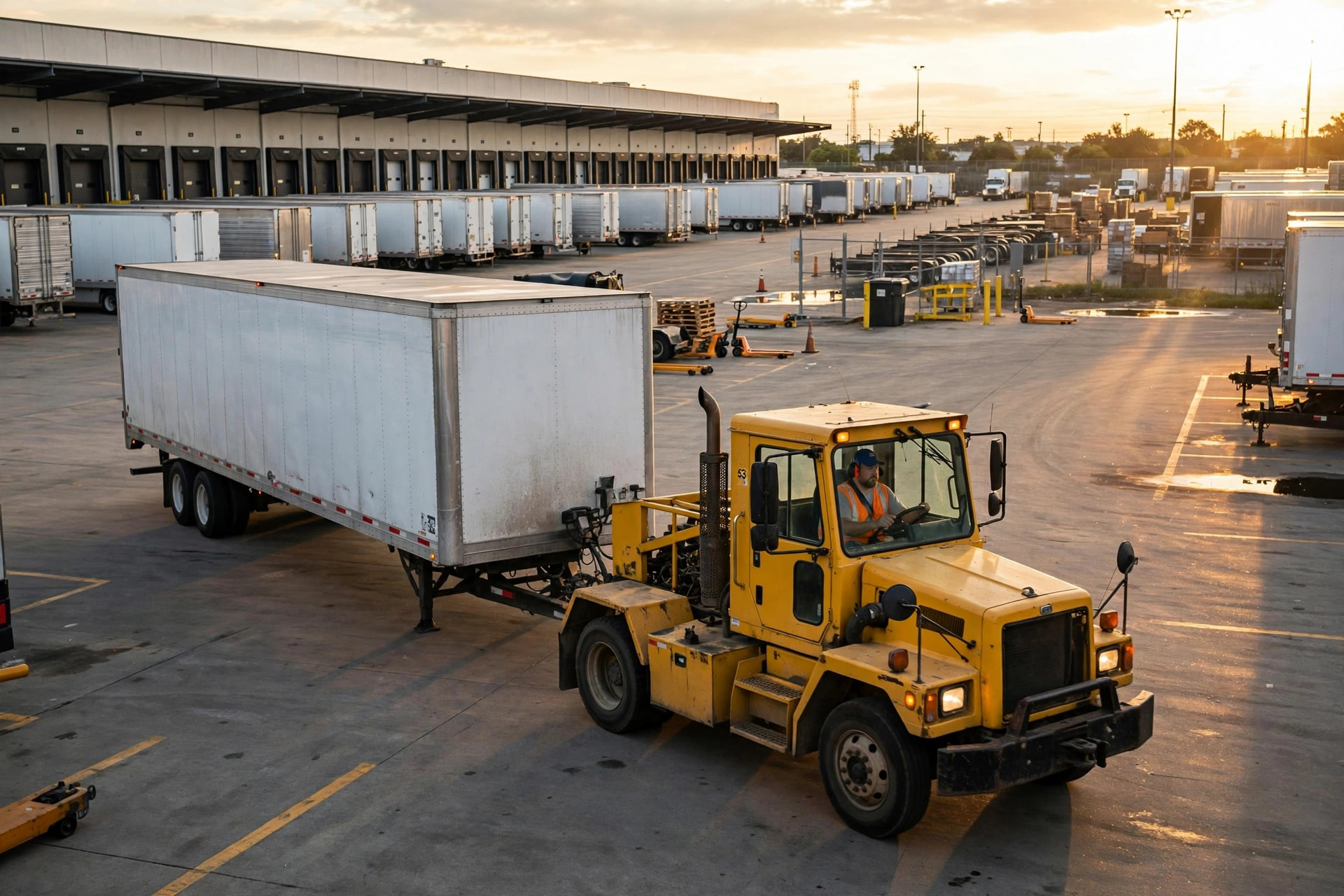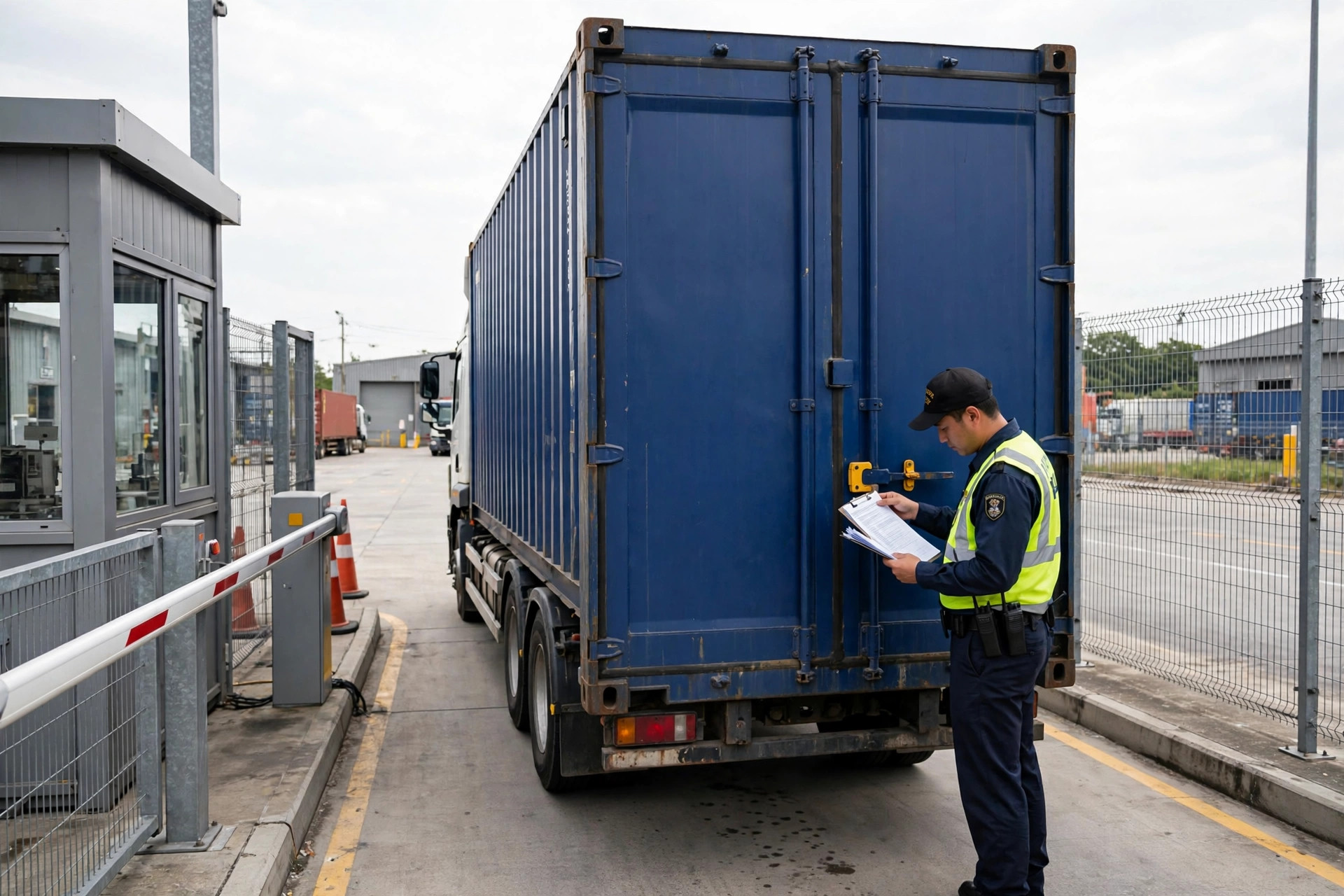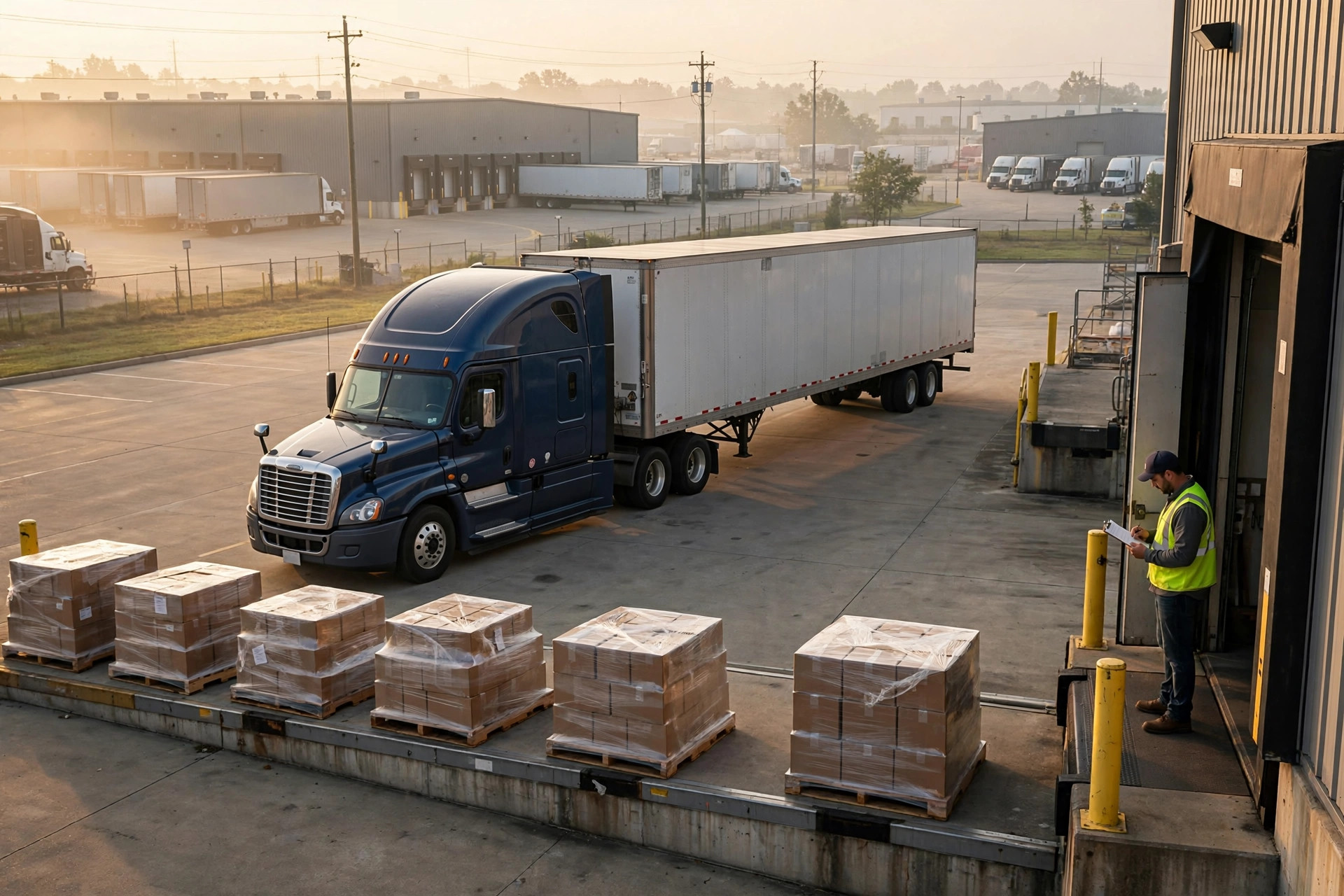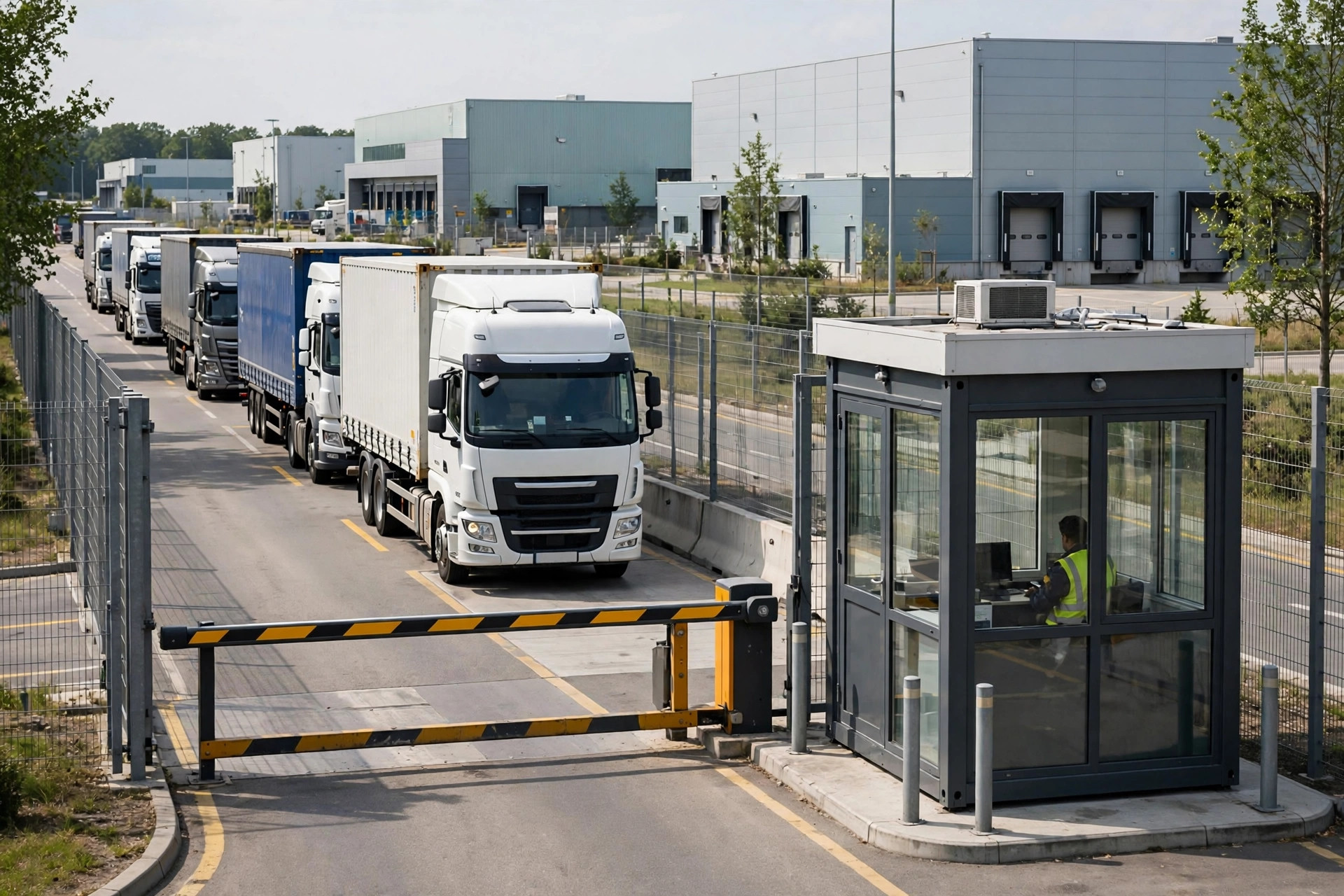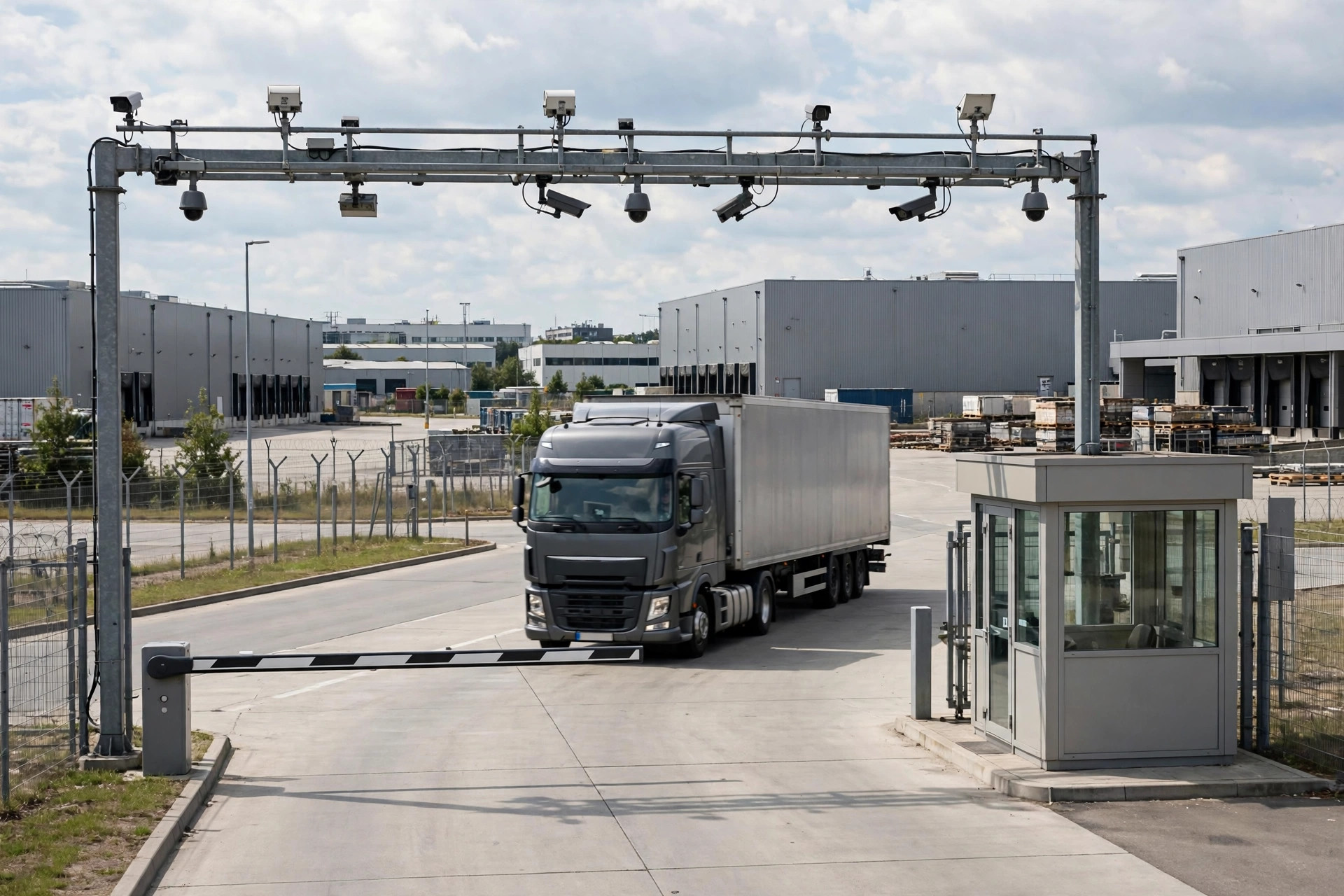
Bottom line up front: if your site handles more than 40 truck moves a day, gate automation pays for itself. Below 30 moves, stick with manual check-in and spend the budget on appointment compliance instead. That cutoff isn't a guess — it comes from two real projects: a 3PL campus doing 120 moves a day paid the system back in six months; a 25-move-a-day cross-dock was still fighting recognition failures eighteen months later.
Why does the gate deserve its own article? Because the gate is where the YMS data chain starts. Plate number, timestamp, appointment number — bind those three at the gate and everything downstream, from in-transit tracking to door assignment to detention billing, has a foundation. Manual check-in's biggest problem isn't speed, it's errors: one wrong digit in a seven-character plate and the appointment never matches, leaving the driver waiting at a door nobody assigned. I've seen this exact failure three times, and every rescue call came at night.
The implementation checklist: four steps, each executable
Step one, vendor selection: put the test conditions in the contract. Ask for recognition accuracy under three separate conditions — clear daylight, nighttime, rain and fog — as three separate numbers. If a vendor hands you a single "99%," walk away. Ask whether the camera reads the tractor plate or the tractor plus the trailer plate, and whether two-plate recognition is included in the quote or billed separately — that answer determines how you write the matching logic in step three. Ask about the fill light: infrared or white. White light blasting into the cab at night will earn you driver complaints that can stall the whole project; I watched one site get picketed by drivers over this and swap to infrared overnight. Capture distance: 3 to 8 meters is the sweet spot — go by the manufacturer's spec sheet, not the 15 meters the salesperson mentions over lunch.
Step two, camera placement: paint the lines before you mount the poles. Inbound and outbound lanes must be physically separated, and whichever end of the truck the outbound camera reads has to be consistent with the inbound logic — that inconsistency is the root of the tractor-plate-versus-trailer-plate failure. Mount the camera pole level with the plate plus about half a meter; too high and the downward angle turns night reflections into a white blur. Paint a stop line on the ground so drivers stop in the same spot every time. Don't underestimate that painted line — it eliminates more than half of all recognition failures. Trying to capture a rolling truck defeats even the best algorithm.
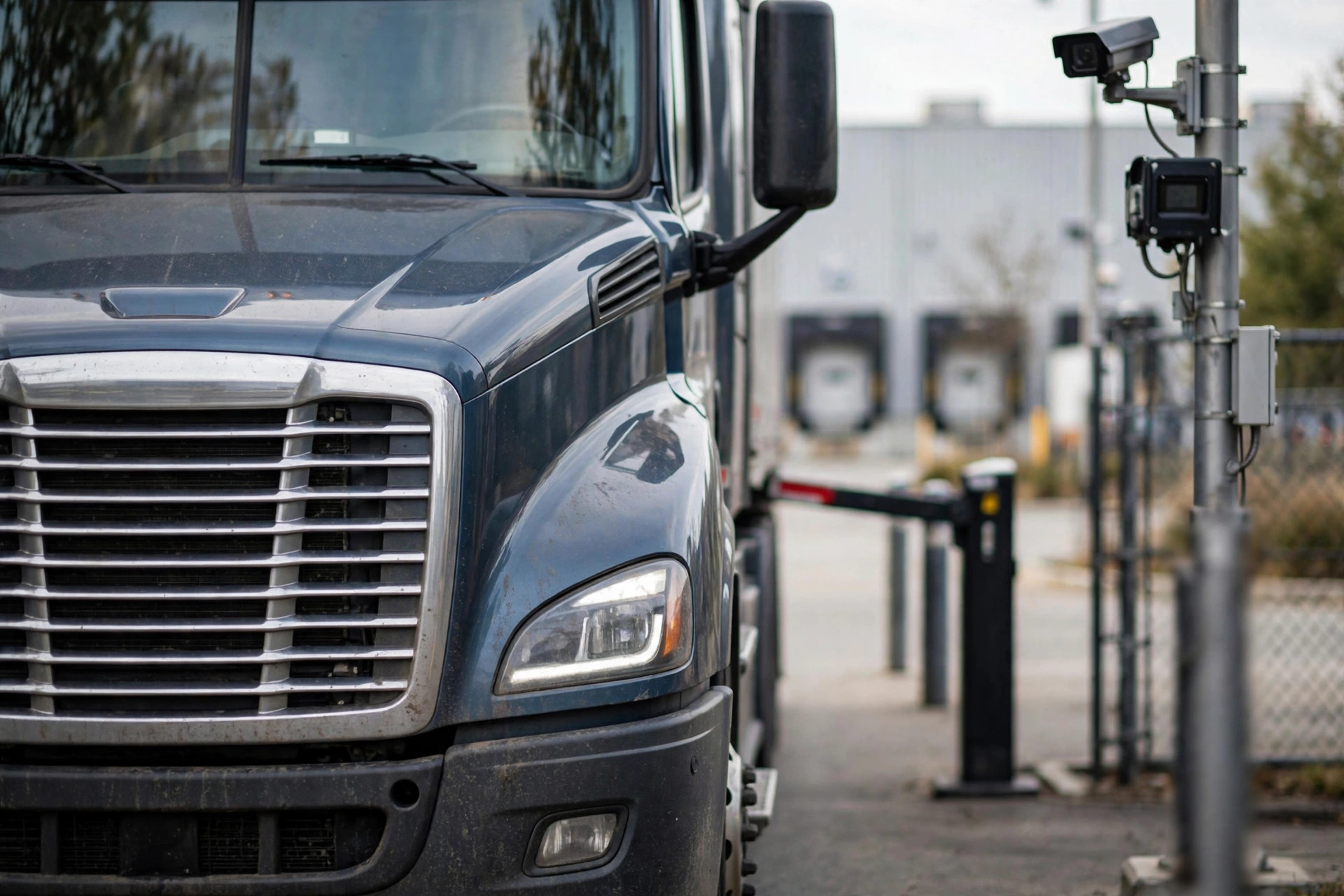
Step three, appointment matching logic: fuzzy match, not exact match. Once the plate is read, the system matches it against the day's appointments. This has to be fuzzy matching, because the truck that shows up is frequently not the truck on the appointment — that's just how the real world works. Verification runs in three layers. First, plate to appointment: only same-day valid appointments participate; expired ones and tomorrow's don't. Second, appointment to time window: arriving more than 2 hours early counts as early, more than 4 hours late counts as a no-show — make these thresholds configurable, because every site has its own temperament. Third, time window to door and parking assignment. All three layers pass and the gate arm lifts automatically; any layer fails and it routes to manual confirmation.
Step four, exception handling: always keep one manual lane. This is non-negotiable. Trucks the system can't read go through the manual lane, and that lane must exist at all times — even with no guard on duty, keep an intercom plus remote gate release. Night and fog failure rates run 3 to 5 times the daytime rate, so the system needs a one-click switch to full manual mode. Cloned plates and paper temporary tags go straight to the manual lane for license plus appointment-number verification. Don't fight the algorithm on those.
Three failure points, each paid for in blood
First, night and bad-weather recognition. The 99% in the contract is almost always a clear-daylight number; in real rain at night, the mid-80s is normal — go by the vendor's field test report, not the brochure. Two countermeasures: max out the infrared fill light, and wipe the lenses on a schedule. Mud specks on a lens hurt recognition more than the algorithm does; put that on the daily inspection sheet.
Second, tractor plate versus trailer plate. Inbound reads the tractor, outbound reads the trailer, and suddenly one truck becomes two trucks in the YMS while door assignments fall apart. I've seen this exact failure three times. Pick one fix: capture both ends on every pass, or bind "tractor plate + trailer plate" as a dual-key vehicle record in the logic layer. No half measures.
Third, cloned and temporary plates. Paper temp tags reflect and wrinkle; recognition is hopeless. Route them to the manual lane. That's a management decision, not a technical problem.
Two project stories
In 2023, a 3PL campus in California's Inland Empire ran 120 truck moves a day with two guards on rotation; 40-minute driver queues at peak were routine. After plate recognition plus appointment verification went live, average gate time dropped from 11 minutes to 3, and the gate kept a single guard for exceptions. Sounds perfect — except the first two weeks brought a complaint storm. Drivers arriving five hours early got flagged as early arrivals and denied entry, and they were furious. Widening the early-arrival threshold from 2 hours to 4 calmed it down. Lesson: threshold parameters aren't a technical question, they're a management question — align with operations before go-live.
In 2024, a Dallas cross-dock tripped on the trailer-plate problem. Inbound captured tractor plates, outbound captured trailer plates, vehicle records wouldn't reconcile, door assignments broke, and drivers circled the yard. The rescue call came at 2 a.m. The fix: a second camera lane capturing tractor and trailer on entry, with the vehicle record changed to a dual-key binding. Two weeks of rework. So when I say "ask how many plates it reads" during selection, it's to save you one midnight rescue.
The counter-intuitive part: the hardest problem isn't accuracy
A 99%-accurate system facing 30% unappointed trucks and 40% early-or-late arrivals still needs constant manual intervention. I've watched too many projects pour the budget into recognition algorithms while appointment compliance sat at fifty percent, leaving the gate effectively unmanned. So here's the bottom line again: get appointment compliance above eighty percent before you buy the system, or you're buying an expensive decoration.
A quick decision framework — find your site in this table:
| Daily truck moves | Recommended approach |
|---|---|
| Under 30 | Manual check-in; spend the money on appointment management |
| 30–80 | Semi-automated: recognition plus human confirmation |
| Above 80 | Full automation, with one manual exception lane |
Pick the right tier and the money is well spent. The night before go-live, check these four items one more time: fill lights on, manual lane open, thresholds aligned with operations, trailer-plate logic tested. Don't lift the gate until all four are green. Gate automation isn't hard — the hard part is personally verifying every spot you assumed was fine.
By Lin Xiao, WMS Implementation Consultant