Let me tell you something after fifteen years of driving trucks: it's not the traffic on the highway that drives us crazy. It's sitting in line at the warehouse gate. Gate automation — license plate recognition tied to the appointment board — is supposed to fix exactly this.
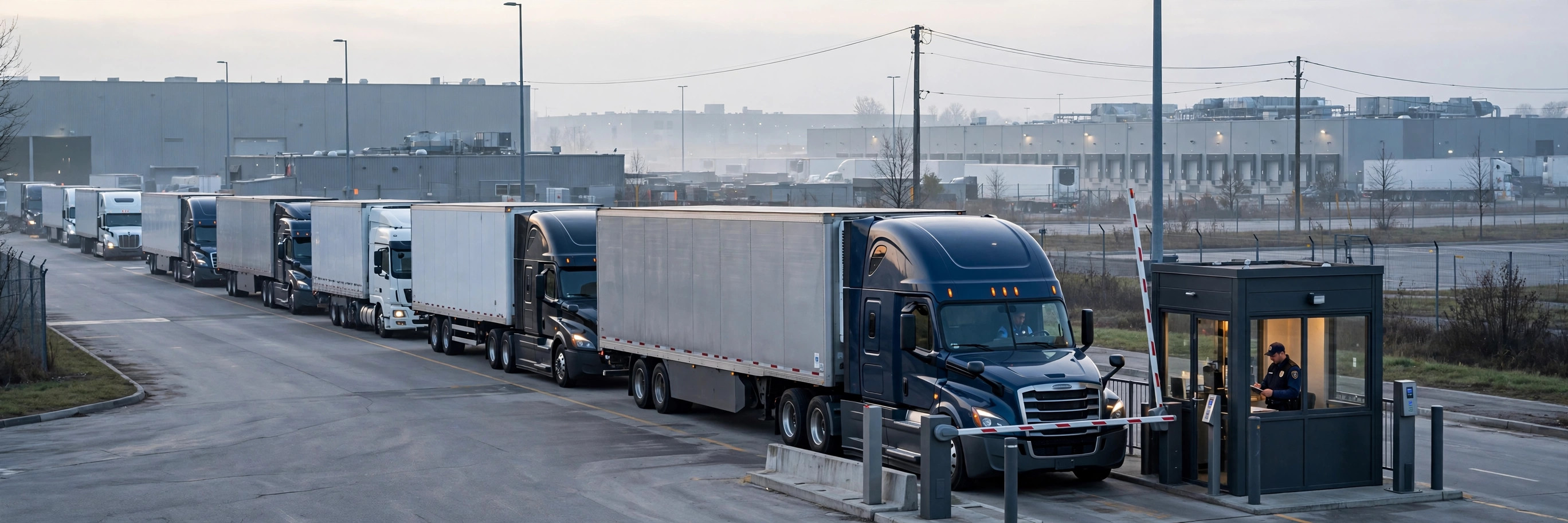
Last winter, 4:30 in the morning, I pulled into a big-box retailer's regional DC out in the Inland Empire. Eleven trucks ahead of me, all big rigs, taillights stretching down the access road. One window open. One guard, moving at his own pace: check the BOL number, look at the license, call inside to confirm the appointment, hand-write a gate pass. I sat in the cab for nearly fifty minutes before my turn came. Four in the morning, heater running, watching the fuel gauge drop. A driver ahead of me finally snapped, got out, and banged on the window — nearly got into it with the guard. Any driver reading this has lived that scene.
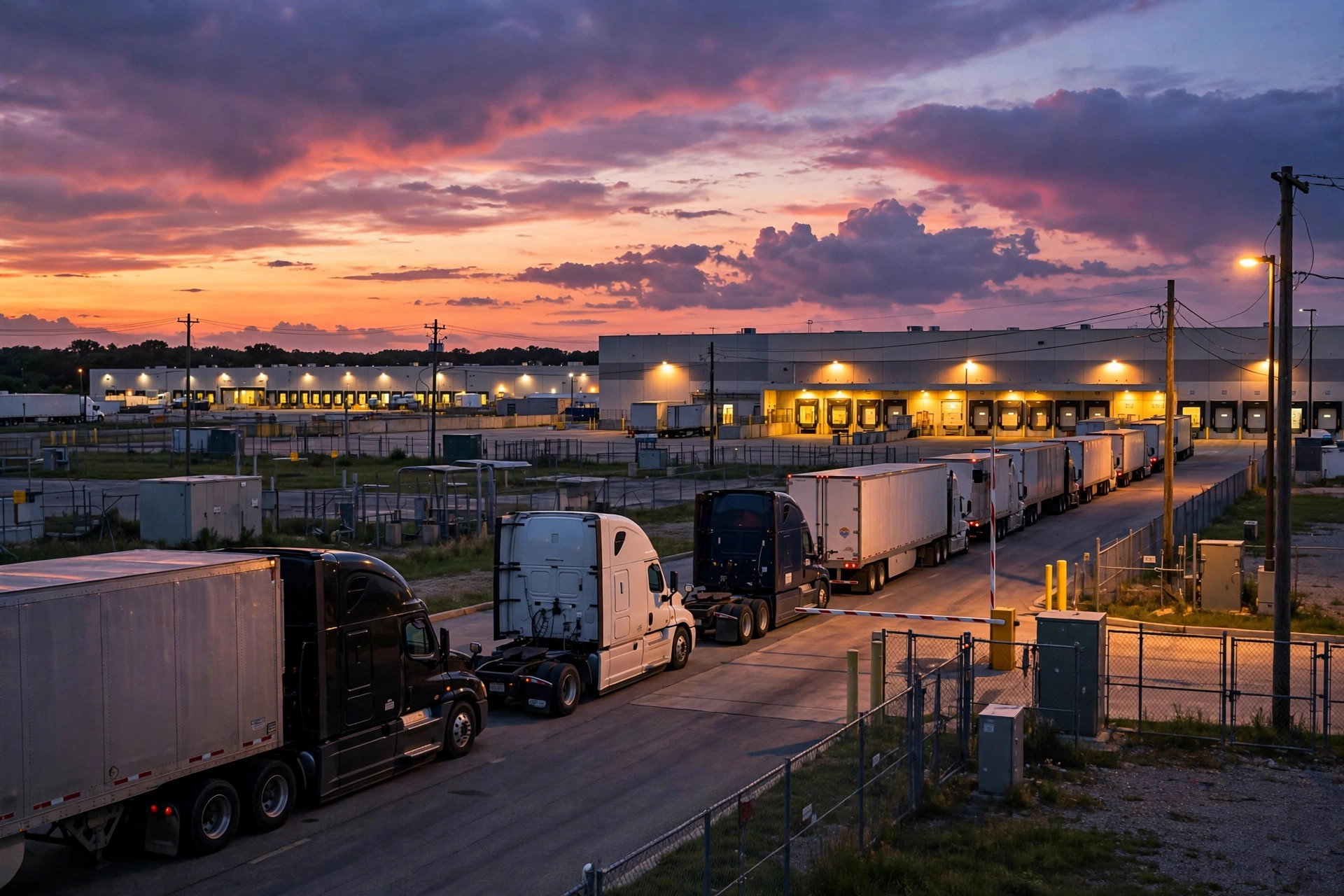
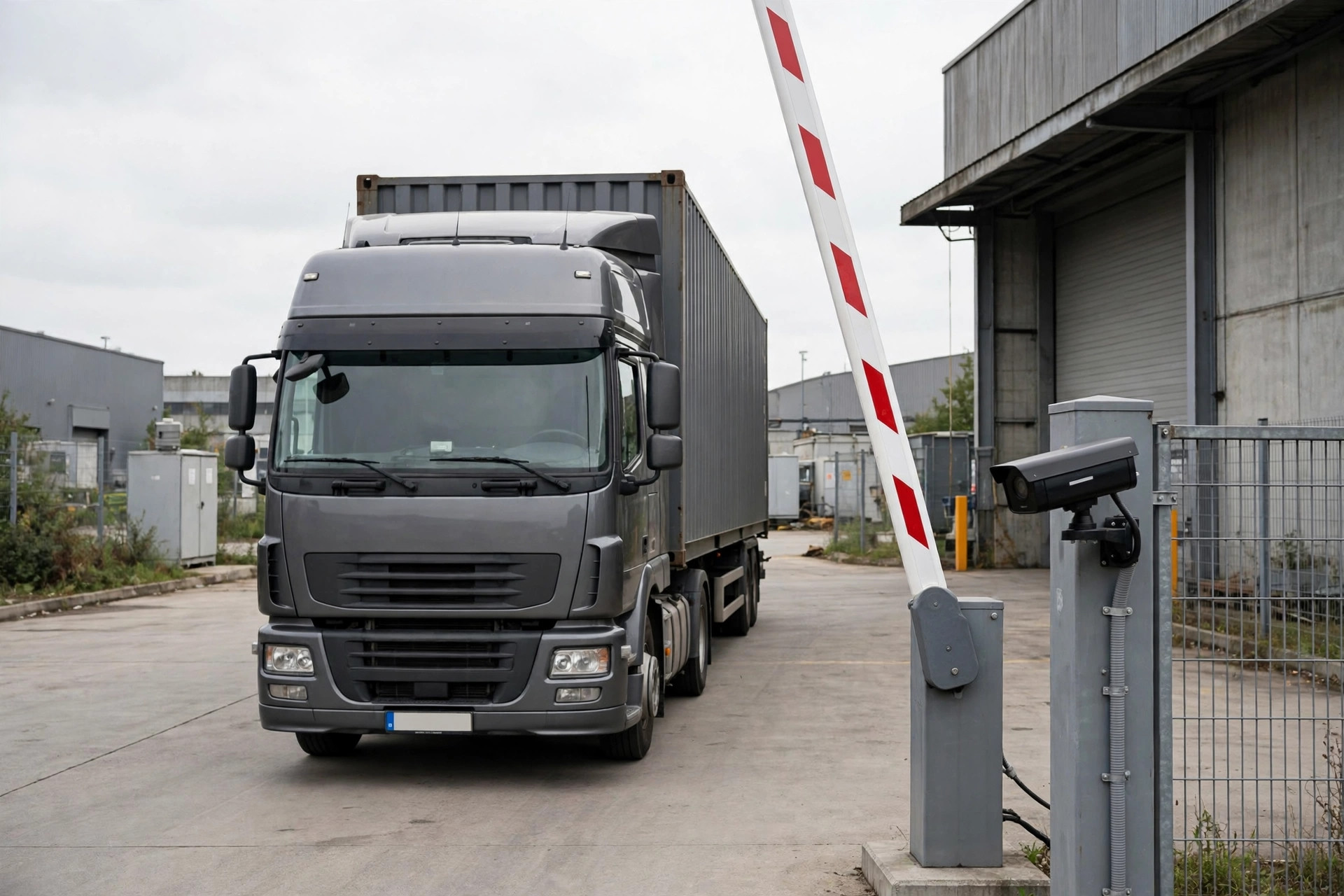
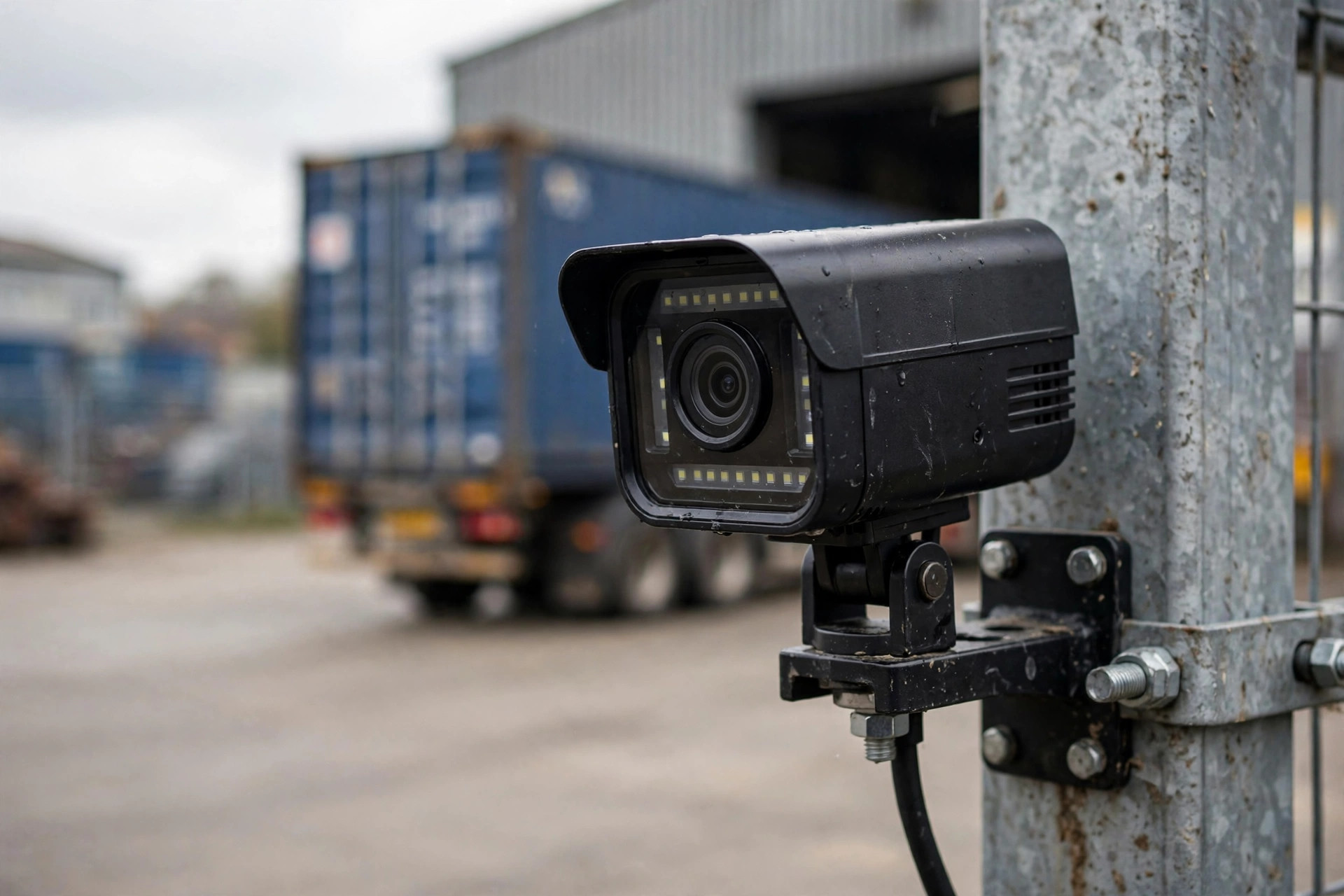
Three months later I went back to the same place. Different world. There's a camera-looking thing over the gate now. I rolled up to the barrier, heard a beep, and the arm went up. I never got out of the cab, never rolled the window down, never showed a document. Talked to a guy inside later: they'd installed license plate recognition tied into the appointment system. Camera reads the plate, the system matches plate number, appointment window, and BOL — all three check out, gate opens. Whole thing took under a minute.
Same warehouse, two visits, night and day. And it taught me something: the gate is the cheapest bottleneck in the entire warehouse. Owners will spend six or seven figures automating the inside of the building, while the gate — where hundreds of trucks pass every day — is still running on one guard and a paper logbook.
Whose time is it anyway?
Here's the math for folks who don't drive. In the US, if a driver waits past the free time (usually two hours), they can theoretically charge detention — roughly $75 to $100 an hour. But "theoretically" is doing a lot of work in that sentence. Plenty of small carriers and owner-operators never collect. Too much hassle, or they don't want to upset the shipper and lose the next load. And most waiting never even reaches detention territory: forty minutes here, an hour there, absorbed straight out of the driver's day.
A truck only has so many hours in a day, and a load only pays so much. You burn an hour of a driver's day at your gate, that's one fewer short haul he can run — or a night drive to make up the schedule. The driver's stressed, the guard's stressed, the receiving plan's a mess. Nobody wins in a gate line. The warehouse just figures the trucks are waiting outside, not taking up space inside, so it's not their problem.
Now flip it around and do the warehouse's math. A mid-size DC doing 200 truck moves a day is nothing unusual. If every truck burns 15 minutes at the gate, that's 50 truck-hours a day stuck at the entrance. Get LPR plus appointment integration down to two or three minutes a truck, and you free up more than 40 truck-hours a day. And that's before the hidden costs: lines backing up onto the public road and drawing a ticket from the city, drivers giving up and no-showing, peak season turning the entrance into a parking lot while the receiving schedule falls apart. Warehouse owners don't usually run these numbers. When they do, it gets their attention.
The uncomfortable truth: when the arm won't lift, it's usually not the technology
The concept here isn't complicated: camera reads the plate, appointment system manages the time slots, connect the two, truck rolls through. Hardware plus software — for a distribution center, this is genuinely not big money. But I've seen installations that might as well be decorative. And every time, the problem is the word "appointment."
If appointments are a mess, plate recognition is theater. Drivers still book by phone, no-show, show up three hours early, or arrive with no appointment at all. The system finds no record, the arm stays down, and the guard comes out to handle it manually. Technology solves "recognizing the truck." It does not solve "recognizing the appointment." Get the order right: appointment discipline first, gate automation second. If your booking process is still phone calls and text messages, the fanciest camera in the world won't save you.
Then there are the gotchas — every one of which I've watched happen in real life:
Dirty plates. A long-haul tractor with a mud-caked plate is normal, and it's worse in winter where they salt the roads. Camera can't read it, system stalls. The grown-up approach: keep a manual override lane, or have drivers pre-register plates at booking time so the system can do a second-chance match instead of betting everything on one camera read.
Tractor plates vs. trailer plates. In the US, the tractor has one plate and the trailer has another, and in drop-trailer operations the trailer changes constantly. The system reads the tractor plate; the appointment was booked against the trailer number. No match, no entry. An engineer in an office never thinks of this. Every driver knows it cold.
Exceptions never go away. Hot loads, swapped tractors, rescheduled appointments — warehouses live on exceptions. Gate automation needs an exception handler: either the guard shack can one-tap a manual release, or dispatch can open the gate remotely from a phone. Expecting the system to cover 100 percent of cases is fantasy.
Straight advice for shippers and warehouse operators
First, fix appointments before you automate the gate. Slice time windows finer than "morning." Have real rules for no-shows and walk-ins — trucks that arrive with no booking, bookings that never arrive. Appointments are the foundation; plate recognition is the paint job. Paint over a cracked foundation and you've wasted your money.
Second, the LPR and the appointment system must be one connected system, not two vendors' products bolted together. Before you buy, ask the blunt question: when the camera reads a plate, can it automatically pull up that truck's appointment, print the gate pass, and assign a dock door? Two systems that don't talk are worse than none.
Third, give drivers a fighting chance. Put up a sign at the gate: which lane for appointments, who to call with no appointment, which intercom button to hit when the camera can't read your plate. Add a text or app notification — "3 trucks ahead of you, about 10 minutes" — and drivers stop fuming because they know where they stand. Treat drivers well and word travels fast. The driver community is small. Everybody knows which warehouses are easy in and which ones are black holes.
Fourth, don't eliminate the human lane. Automation handles the 95 percent of routine cases. The remaining 5 percent of exceptions need a person. Free the guard from writing down every plate by hand and put him on exceptions and security instead. That's what people are for.
At the end of the day, gate automation was never a technology problem. The technology has been ready for years. The real question is whether the warehouse is willing to take the fifty meters at its entrance seriously. Every half hour a driver doesn't spend idling at your gate is half an hour earlier the freight gets received and put away. That's math worth doing.
There's an old saying where I come from: sharpen the axe before you chop the wood. Time to sharpen the axe at the gate.
By Shifu Zhao, Trucking Veteran (15 yrs)